
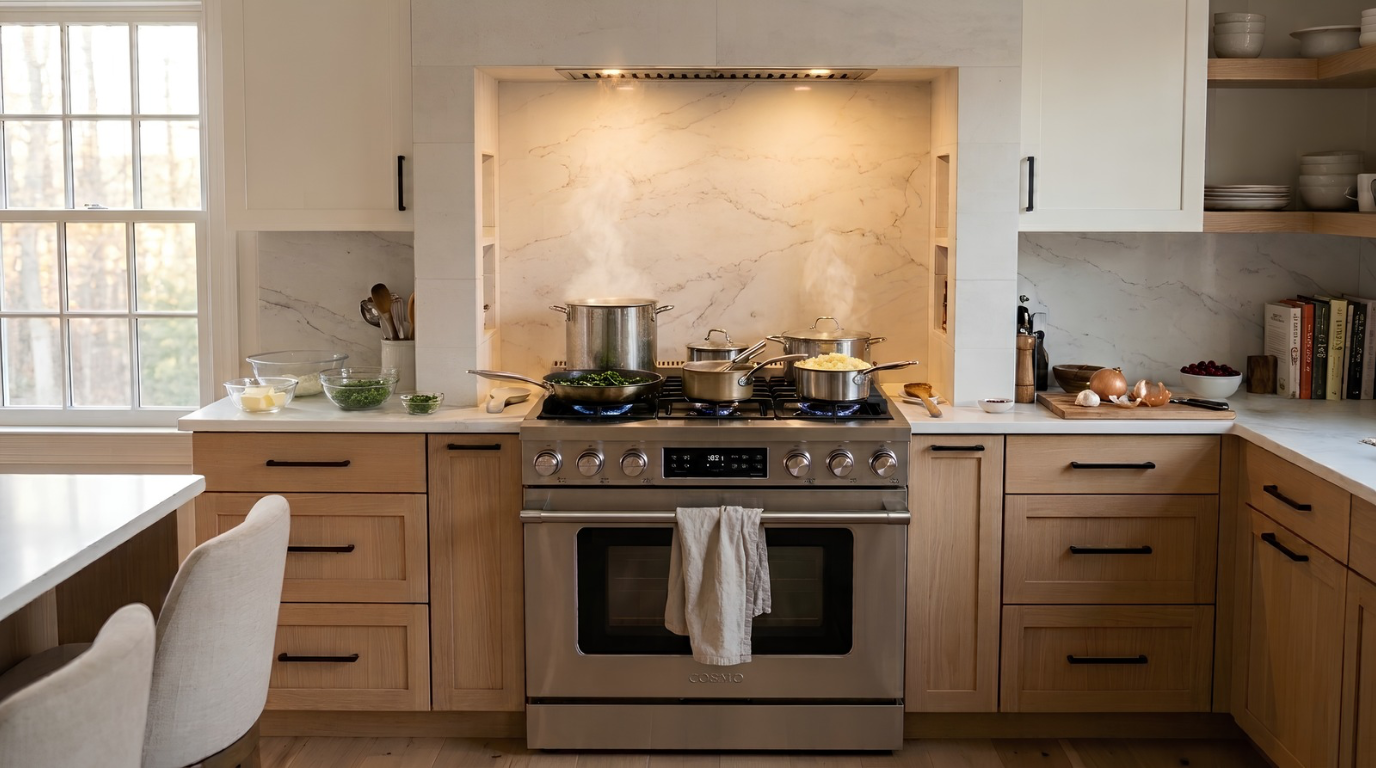
Six Burners, Twelve Dishes: A Stovetop Game Plan for Thanksgiving Sides
Every Thanksgiving host knows the moment around three thirty in the afternoon. The turkey is resting under foil, the oven is spoken for, and a counter full of pots is waiting for a burner. The menu has twelve dishes. The cooktop has six burners. Somewhere in that gap is the difference between a calm dinner and a scramble.
The good news is that twelve dishes on six burners is not a capacity problem. It is a sequencing problem, and sequencing can be solved on paper well before Thursday, November 26. This guide assigns every side to a burner, a day, and a moment, with the oven working as a quiet seventh and eighth station.
Start With Heat, Not Counter Space
Most Thanksgiving planning begins by counting pots. A better starting point is counting heat levels. Potatoes need a hard, rolling boil. A cheese sauce needs a bare simmer. Gravy needs steady medium heat and a whisk within reach. Cranberries sit somewhere in between. When every burner on a cooktop delivers roughly the same output, these dishes end up taking turns, and the schedule stretches into the evening.
A cooktop with a wide spread of outputs changes the arithmetic. The Cosmo COS-RGS366SS, a 36-inch gas range, has six sealed burners that run from a 3,500 BTU simmer burner up to a 22,000 BTU high-output burner, with an 18,000 BTU burner, two 12,000 BTU burners, and a 6,000 BTU burner filling in between. That range means the potato water, the gravy, and the cheese sauce can all sit at their correct temperatures at the same moment instead of waiting in line. The heavy-duty cast iron grates also give large stockpots and wide skillets a stable base, which matters when several heavy pots share one cooktop.
The Twelve Dishes and Where Each One Lives
This plan assumes a classic menu. Eight dishes live on the cooktop: cranberry sauce, mashed potatoes, gravy, green beans with almonds, glazed carrots, garlic greens, stovetop mac and cheese, and creamed corn. Four dishes rely on the oven: sausage dressing, sweet potato casserole, crispy Brussels sprouts, and dinner rolls. The dressing starts on the cooktop with sausage and onions, so it borrows a burner for a short while on Wednesday.
Swap in your own family favorites without changing the method. The question for every dish is the same. What heat does it need, how long does it need it, and can any of the work happen earlier?
Wednesday Does More Than You Think
The best burner time on Thanksgiving is the burner time you spend on Wednesday. Four jobs move to the day before without any loss in quality.
- Cranberry sauce. Simmer the berries with orange zest, sugar, and a splash of juice on the 6,000 BTU burner until they burst, about fifteen minutes. The sauce thickens as it cools and tastes better after a night in the refrigerator.
- Dressing base. Brown the sausage and soften the onions and celery in a wide skillet on a 12,000 BTU burner, then cool and refrigerate. On Thursday it only needs bread and broth.
- Green bean blanch. Boil the beans for a few minutes on the 22,000 BTU burner, move them to an ice bath, drain, and refrigerate. Thursday’s finish takes five minutes instead of twenty.
- Creamed corn. Cook it low on the 3,500 BTU burner until the cream reduces without scorching, then refrigerate. The gentle end of the range earns its keep here, because cream catches quickly at higher settings.
Wednesday evening, peel the potatoes and carrots, wash the greens, and grate the cheese. Potatoes can wait in cold water in the refrigerator, and everything else keeps nicely in covered containers. Thursday starts with a short list of pots instead of a pile of vegetables.
Thursday Morning Sets the Tone
Thursday morning is for staging. Take the cranberry sauce, the creamed corn, and the dressing base out of the refrigerator early enough to lose their chill, set out the pots you will need, and clear the cooktop of everything but the burners and grates. Put the sweet potato casserole together, since it needs only the oven later, and portion the cheese, butter, and cream into small bowls by dish. An hour of this feels slow, and it is the hour that makes the afternoon fast.
Put the Oven to Work as Stations Seven and Eight
The cooktop carries the long list, but the oven finishes the menu. While the turkey rests, the oven is free, and its roughly six cubic feet and two racks across six positions can handle several dishes at once. Bake the dressing on Convection Bake, where the circulating air crisps the top and heats the casserole evenly. Put the sweet potato casserole on the other rack. Then use the Air Fry function and its included tray for the Brussels sprouts, which come out browned and crisp at the edges with very little oil.
Keep Warm is the quiet hero of the last half hour. Once the dressing and casserole are done, set the oven to Keep Warm and move the finished dishes in, covered. Bake the dinner rolls last, so they reach the table warm instead of tired. For more on deciding which dishes can leave the oven altogether, see Five Weeks Out From Thanksgiving: Decide What Can Leave the Oven.
Four Habits That Keep Six Burners Calm
- Set out ingredients before the heat goes on. Measure each dish into a bowl or onto a sheet pan, and cooking becomes assembly instead of searching.
- Match the pot to the burner. A tiny saucepan on a large burner scorches, and an oversized stockpot on a small one stalls. Lids speed every boil.
- Post the schedule where you can see it. A printed list beats a phone that keeps going dark under buttery fingers.
- Wipe as you go. Sealed burners keep spills on top of the cooktop where they are easy to reach, so a quick wipe between dishes keeps the surface ready for the next pot.
After dinner, the oven’s steam clean function uses heat and moisture to loosen baked-on residue, a welcome option when the dishes are done and the guests are still talking.
When the Plan Slips
Something always slips. The turkey runs twenty minutes long, a guest arrives early, or the potatoes take longer than expected. The plan survives because most sides tolerate waiting better than they tolerate rushing. Gravy can hold on low heat, glazed carrots can rest covered, and mashed potatoes stay warm over the simmer burner. What does not wait is the quick finish work, the greens and the green beans, so save those for the final fifteen minutes and treat them as the signal that dinner is about to begin.
The Bottom Line
Twelve dishes on six burners works when the burners are assigned by heat, the prep moves to Wednesday, and the oven carries its share. A range with a true simmer burner at one end and a 22,000 BTU burner at the other, like the Cosmo COS-RGS366SS, gives that plan room to breathe, but the real tool is the schedule on the wall. Write it this week, and on Thursday afternoon the only thing left to juggle will be the compliments.