
One Week Out: The Make-Ahead Thanksgiving Timeline for Sides, Pies and Gravy
By the time the first guest rings the bell on Thursday, November 26, the calmest hosts will have been cooking for a week. They did not spend seven days chained to the stove. They spent a few well-chosen hours on the dishes that improve with time, and they saved Thursday for the work that truly has to happen fresh. Today, exactly one week out, is the right moment to begin.
This timeline sorts the classic menu by how well each dish handles waiting. Some improve in the refrigerator, others freeze beautifully, and a few belong to Thursday alone.
Start by Sorting the Menu by Staying Power
Take a sheet of paper and give every dish a place in one of three columns. The first holds dishes that freeze well, including pie dough, dinner rolls, stock, and a gravy base. The second holds dishes that keep for several days in the refrigerator, such as cranberry sauce, sweet potatoes, mashed potatoes, and the base for the dressing. The third holds the dishes that want to be finished on the day: bright green vegetables, crisp toppings, and the turkey itself.
Push as much as possible into the first two columns, starting with the freezer items because they need the most time to thaw. The schedule below follows that logic.
Today and Friday: Freeze What Freezes
Begin with pie dough. Make enough for every pie on the menu, shape it into flat discs, wrap each one tightly, and freeze. Dough keeps for a couple of months in the freezer and needs a night in the refrigerator to soften before rolling. A household baking a fruit pie can go one step further by assembling it now and freezing it unbaked, since it can move from the freezer to the oven with a little extra baking time.
Next comes the gravy base, which may be the most useful thing a host can have waiting on Thursday. Roast two or three pounds of turkey wings or necks until they are deeply browned, then simmer them with onion, carrot, and celery for a few hours and strain. Whisk together a roux of butter and flour, stir in the stock, and simmer until the gravy coats a spoon. Cool it quickly, divide it into containers, and freeze it. On Thursday the pan drippings join a base that is already rich and properly thickened, and the finished gravy takes minutes instead of a frantic half hour at the stove.
If dinner rolls are on the menu, bake them this weekend, cool them completely, and freeze them in sealed bags. They thaw on the counter Wednesday evening and warm in a few minutes on Thursday. Friday is also the day to buy everything that does not spoil, so that next week’s shopping trip covers only produce, dairy, and the bird.
Saturday and Sunday: Cook Once, Reheat Later
Weekend afternoons suit the dishes that thrive in the refrigerator. Cranberry sauce keeps well for up to a week, and its flavor settles after a few days, so it can be cooked on Saturday and forgotten. Roast and mash the sweet potatoes for the casserole and refrigerate them without the topping. Spread the bread cubes for the dressing across sheet pans and let them dry on the counter for a couple of days, since stale bread absorbs broth without turning to paste.
Sunday is a good day to clear space. Discard anything past its prime so shelves are open for Monday’s groceries.
Monday and Tuesday: The Heavy Lifting
Monday is for shopping and thawing. Buy the perishables, then move the frozen gravy base and pie dough into the refrigerator so both are ready by Tuesday. If the turkey is still frozen, check its thawing schedule against the package directions today.
Tuesday is the biggest cooking day of the week, and it is worth protecting. Roll out the dough and bake the pies. Pumpkin and pecan pies hold well for a couple of days, so let them cool completely and refrigerate them, loosely covered. Cook the sausage, onions, and celery for the dressing, cool them, and refrigerate. Blanch the green beans for a few minutes, plunge them into ice water, drain them well, and chill them. A dish that needs only a quick finish on Thursday is a dish that cannot ambush the schedule.
Wednesday: Assemble, Stage, and Reset
Wednesday is for assembly. Combine the dressing base with the dried bread and broth, and refrigerate it in its baking dish. Build the sweet potato casserole and leave the topping in a separate bowl so it stays crisp. Make the mashed potatoes with generous butter and cream, since richness helps them reheat well, and refrigerate them in a dish that can go straight into the oven. Set the table, arrange the serving platters, and write a short reheating card for each dish listing its temperature and time.
Label every container with the name of the dish and the date it was made. Cool food in shallow containers so it chills quickly, and get it into the refrigerator within two hours. When Thursday arrives, reheat each dish until it is steaming hot all the way through, adding a splash of broth or warm milk where a dish looks dry.
The Part of the Timeline Nobody Plans: The Dishes
Make ahead cooking has a hidden cost. Every session leaves behind a stack of mixing bowls, saucepans, whisks, pie plates, and a roasting pan, and a week of cooking can bury a kitchen before Thursday even begins. The dishwasher keeps that pile from becoming a problem, and it works best when it is written into the schedule instead of treated as an afterthought.
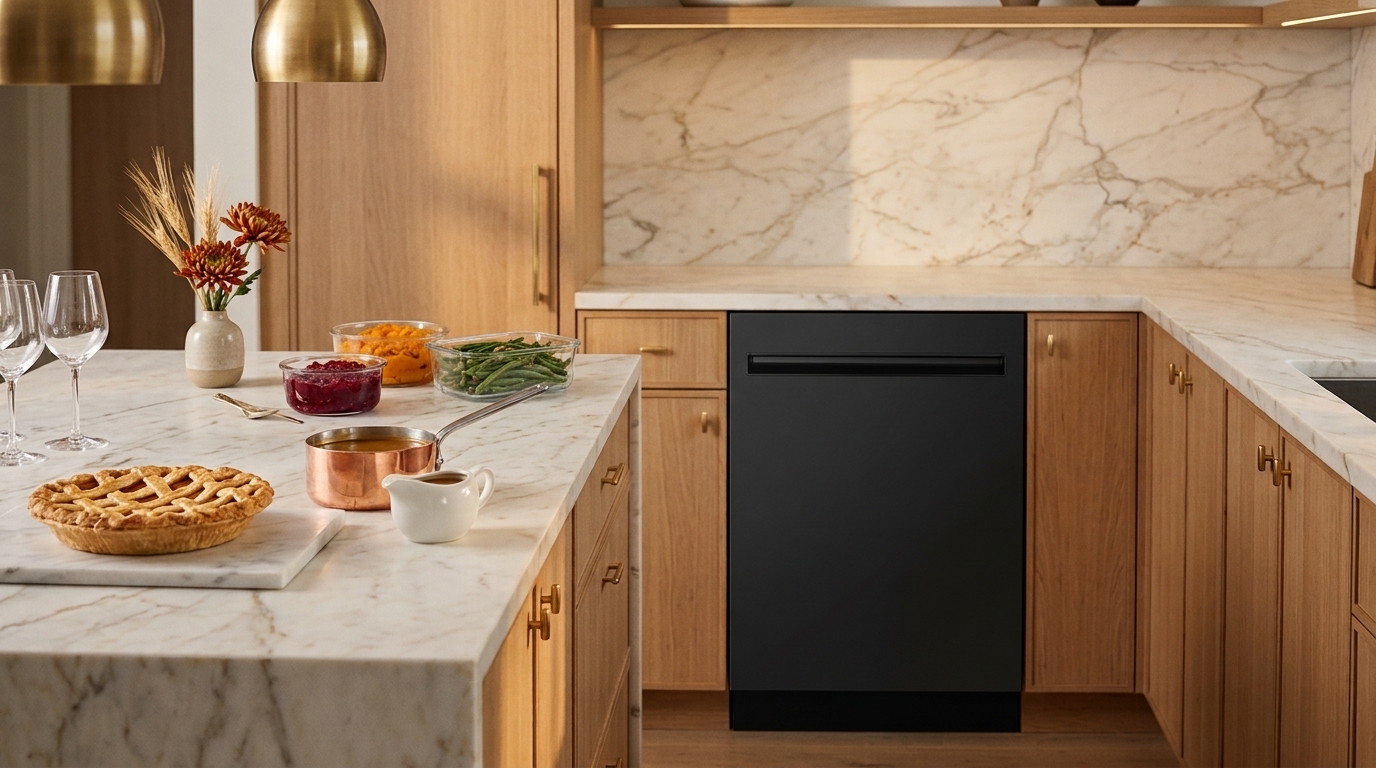
Cosmo’s COS-DWI240TTRBK, a 24 inch built in dishwasher from the Icon Collection in matte black, shows what a holiday week asks of this appliance. It holds up to 15 place settings across three racks and a silverware basket, so a full day of mixing bowls and saucepans fits in a single load. Zone Wash directs extra cleaning power at heavily soiled cookware, which suits the roasting pan left behind by browned turkey wings, and the Heavy cycle is there for pie plates with baked on filling.
Glassware matters more than most hosts expect. The upper rack has stemware holders, and the Crystal Care cycle is built for delicate pieces, so the glasses that live at the back of a cabinet all year can be washed this weekend. The same goes for the gravy boat and the serving platters, which means nothing needs a last minute rinse on Thursday.
The advanced sanitize option, which Cosmo rates at 99.99 percent bacteria reduction, is worth choosing for the cutting boards and tools that handled raw turkey wings. Auto Open Dry opens the door slightly at the end of a cycle so steam can escape, which helps storage containers finish drying before they are filled and refrigerated. At 45 decibels, roughly the sound of light rain, a cycle can run in the evening in an open kitchen without drowning out conversation. The controls sit on top of the door and stay hidden when it is closed, and the matte black finish resists fingerprints, a real advantage in a kitchen where every hand has butter on it. It needs a standard 24 inch cutout, so measure first.
A simple rhythm helps. Run the serving pieces and glassware this weekend, load a cycle each night as the cooking piles up, and use Heavy on Tuesday night after the pies. Then run a final cycle on Wednesday and empty it before bed, so Thursday begins with a machine ready for the first round of dishes.
What Is Left for Thursday
If the timeline works, Thursday is short. The turkey roasts and rests, the gravy base meets the drippings, the casseroles and potatoes take turns in the oven, the green beans get a quick sauté, and the rolls are warmed. Everything else was done quietly over the days before.
The Bottom Line
A make ahead plan does not make Thanksgiving less special. It moves the effort to the days when there is time for it and leaves the host free to enjoy the day itself. Freeze first, cook the refrigerator dishes over the weekend, bake the pies on Tuesday, and assemble on Wednesday. Give the dishwasher a place on the calendar, and the kitchen stays as organized as the menu. With seven days to go, the first step is a sheet of paper and three columns.