
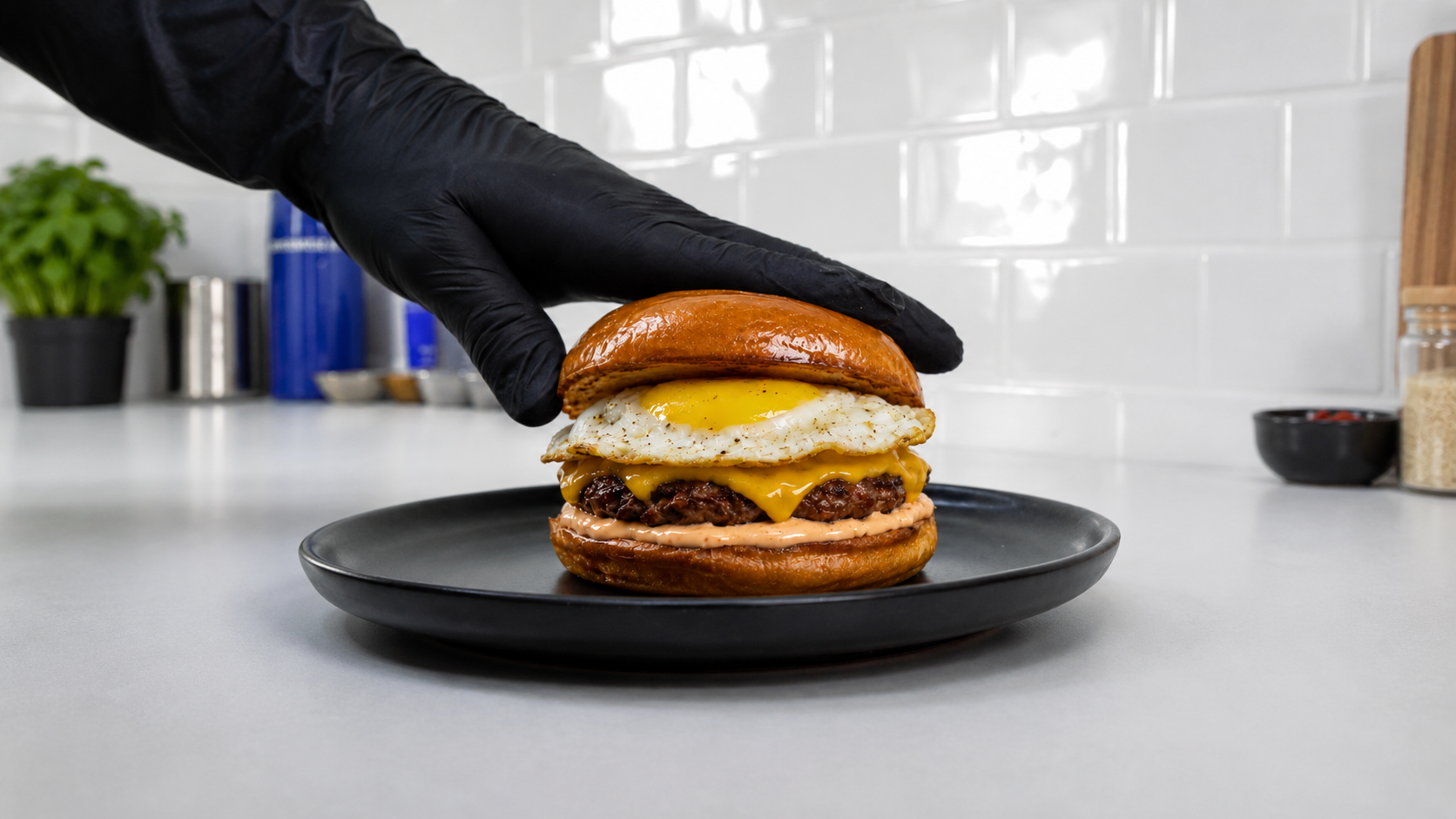
Breakfast Jalapeño Smash Burgers: Ground Beef with Fried Egg and Jalapeño Sauce
The breakfast burger occupies a specific place in the food universe that neither a standard burger nor a breakfast sandwich fully reaches. It has the structure and satisfaction of a proper burger — smashed thin, aggressively seared, loaded with melted American cheese — but the fried egg on top fundamentally changes what you’re eating. The yolk breaks when you bite through and runs down through the cheese and the sauce, adding richness that no condiment alone replicates. It’s a combination that makes complete sense once you’ve eaten it and that you’ll find yourself wanting to recreate on weekend mornings when the motivation to cook something worth eating is actually present.
This version builds the burger around jalapeño at two points — diced into the sauce that goes directly on the bun, and available as a topping for anyone who wants more heat on the finished burger. The beef itself carries a straightforward seasoning blend of salt, pepper, paprika, onion powder, and garlic powder that seasons through the patty rather than sitting only on the surface, so every bite has flavor rather than just the seared exterior. The sauce — mayo, ketchup, garlic paste, paprika, and diced jalapeño — works as both the creamy element that balances the rich egg yolk and the heat delivery system that makes this burger distinctly more interesting than a standard smash format.
The smash technique on a hot cast iron or stainless skillet does what a thicker patty can’t — it creates maximum contact between beef and cooking surface, producing the aggressive, deeply caramelized crust that defines a genuinely good smash burger. More surface area seared means more Maillard browning, which means more of the flavor complexity that browning creates. The thin patty also cooks through quickly, which matters when you’re adding a fried egg to the same skillet and timing both components to finish together.
Why This Recipe Works So Well
Several specific decisions here produce results that straightforward burger cooking doesn’t achieve.
70/30 ground beef is essential for smash burgers specifically. The higher fat content keeps the thin patty moist through the aggressive searing process that would dry out leaner beef — 80/20 produces acceptable results, but 70/30 produces the juicy, richly flavored patty that makes smash burgers worth making. The fat renders during searing and bastes the meat from within, carrying flavor through the patty rather than leaving a dry center surrounded by seared exterior.
Seasoning the beef before forming balls rather than after smashing ensures flavor distributes throughout the meat rather than sitting only on surfaces. When the ball gets smashed flat, the seasoning is already throughout the mixture rather than being a surface coating that can rub off during smashing.
Cooking the egg sunny side up in the same skillet immediately after the patties finish means everything is hot simultaneously. The egg cooks in the rendered beef fat still in the pan, absorbing flavor while the whites set around an intact yolk. The sunny side up format specifically is right for this burger — the yolk needs to be intact until you bite through the assembled burger, at which point the break releases everything at once.
Buttering and toasting the buns in the same skillet where the patties and egg cooked picks up residual beef fat and fond from the cooking surface, adding flavor to the bun itself rather than simply toasting bread. This step takes 45 seconds and adds a dimension that plain toasted buns don’t provide.
Choosing the Right Ingredients
Ground Beef: 70/30 is the spec that matters here. Buy it fresh if possible — ground beef formed into balls and smashed immediately has better texture than beef that’s been sitting in formed patty shape for hours. If your grocery store grinds beef to order at the butcher counter, this is the product to request it for.
Eggs: Large eggs work best for this format — the white spreads enough to roughly match the patty’s footprint without being so large it overwhelms the burger. Fresh eggs with firm whites hold their shape better than older eggs with thinner whites that spread too far in the pan. Room temperature eggs cook more evenly than cold eggs straight from the refrigerator — take them out 15-20 minutes before cooking.
American Cheese: Not a placeholder for a better cheese — American cheese specifically. The way it melts completely flat across a hot patty in 60 seconds, forming an even coating from edge to edge with no separation, is a characteristic of its specific formulation. Cheddar, Swiss, or other natural cheeses don’t melt the same way at the temperatures involved and produce clumpy, uneven coverage on a thin patty. For this format, American cheese is the correct choice.
Jalapeños: Fresh jalapeños diced for the sauce provide heat that’s brighter and more immediate than pickled jalapeño’s more mellow, acidic heat. The amount you dice for the sauce is adjustable — start with half a jalapeño for moderate heat and increase based on preference. If you want additional sliced jalapeño on the finished burger, slice separately from what goes into the sauce.
Burger Buns: Soft potato buns or brioche buns suit the smash burger format — their soft, slightly enriched texture complements the thin crispy patty rather than competing with it. Avoid thick artisan buns that create too much structural height relative to the thin smash patties. The burger should be a manageable single bite proposition rather than requiring jaw-stretching to get through.
Mayo: Full-fat mayonnaise for the sauce. The fat content carries the garlic and jalapeño flavors more effectively than reduced-fat versions and produces a sauce with better body that stays on the bun rather than running off immediately.
Ingredients
Serves 3-4 (makes approximately 5-6 patties at 3oz each from 1lb beef)
For the Beef:
- 1 lb 70/30 ground beef
- 1 tbsp salt
- 1 tbsp black pepper
- 1 tbsp paprika
- 1 tsp onion powder
- 1 tsp garlic powder
For the Jalapeño Sauce:
- 3 tbsp mayonnaise
- 2 tbsp ketchup
- 1 tsp garlic paste
- ½ tsp paprika
- 1-2 jalapeños, finely diced
- Salt and pepper to taste
For Assembly:
- Sliced American cheese
- Eggs (1 per burger)
- Hamburger buns
- Butter for toasting
- Cooking spray or neutral oil for the skillet
Step-by-Step Instructions
Step 1 — Season and Ball the Beef
Remove ground beef from packaging and place in a large mixing bowl. Add salt, pepper, paprika, onion powder, and garlic powder directly to the beef. Mix thoroughly with your hands until seasoning is evenly distributed throughout the entire mixture — not just the surface. Don’t overmix to the point of compacting the beef, but make sure no pockets of unseasoned meat remain.
Form the seasoned beef into 3oz balls — roughly the size of a golf ball. Place on a baking sheet and set aside. Do not flatten at this stage — the ball shape is what allows the smash to work effectively on the hot skillet surface.
Step 2 — Make the Jalapeño Sauce
In a small bowl, combine mayonnaise, ketchup, garlic paste, paprika, and diced jalapeño. Season with salt and pepper. Mix thoroughly until completely combined and the paprika color is evenly distributed throughout. Taste and adjust — more jalapeño for heat, more ketchup for sweetness, more garlic paste for depth. Set aside. The sauce can be made up to two days ahead and stored refrigerated in a sealed container.
Step 3 — Preheat the Skillet
Heat a cast iron or heavy stainless steel skillet over medium-high heat for 5 minutes. The skillet needs to be genuinely hot before any beef goes in — a drop of water should evaporate on contact immediately. Lightly grease the surface with cooking spray. Do not use butter for greasing at this stage as it burns at the temperatures required for smashing — use neutral oil or cooking spray, and reserve the butter for toasting buns.
Step 4 — Smash and Cook the Patties
Place a beef ball in the center of the hot skillet. Immediately cover with a piece of parchment paper and smash flat using a heavy spatula or burger press, applying firm downward pressure. The patty should spread to roughly 4 inches in diameter and be noticeably thin — you should be able to see the texture of the meat through the surface. Remove the parchment.
Salt the top surface lightly. Cook undisturbed for approximately 3-4 minutes — the bottom develops an aggressive, deeply browned crust while the top surface changes from pink to gray indicating the patty is cooking through. Do not move or press the patty again during this phase — the crust needs time to develop and will release naturally from the skillet when ready.
Flip in one confident motion. Immediately place a slice of American cheese on top of the hot patty. Cook for an additional 2-3 minutes until cheese is completely melted and draped evenly across the patty surface. Remove from the skillet and set aside. Repeat with remaining beef balls — cook in batches rather than crowding the skillet, which drops temperature and prevents proper searing.
Step 5 — Fry the Eggs
With the skillet still hot from the patties, reduce heat slightly to medium. The residual beef fat in the pan is all the fat the eggs need — no additional oil or butter required. Crack eggs directly into the skillet one at a time. Cook sunny side up for approximately 4-5 minutes until whites are completely set and no longer translucent while the yolk remains intact and runny. Season with salt and pepper. Remove carefully with a thin spatula to avoid breaking the yolk before assembly.
Step 6 — Toast the Buns
Add a small amount of butter directly to the skillet over medium heat. Place burger buns cut-side down in the buttered skillet. Toast for 30-45 seconds until the cut surface is golden and the butter has absorbed into the bun surface. Watch closely — buttered buns toast quickly and burn faster than dry-toasted buns. Remove and set aside.
Step 7 — Assemble and Serve
Build each burger in sequence: bottom bun first, sauce spread generously across the surface, cheese-covered patty placed directly on the sauce, fried egg placed carefully on top of the patty with the yolk intact, top bun. Serve immediately — the egg yolk should be at peak temperature and the cheese should still be soft from residual heat. Don’t let assembled burgers sit before eating.
Recipe Variations and Combinations
The breakfast smash burger format accommodates several variation directions while keeping the core technique intact.
Protein Variations:
- Double Smash Stack: Use two 2oz balls instead of one 3oz ball per burger, smashing each thin and stacking with cheese between the patties. The double stack with two thin layers of American cheese produces a different eating experience from a single thicker patty — more seared surface area, more cheese coverage per bite.
- Turkey Smash: Ground turkey at 85/15 fat ratio can be smashed with the same technique but requires slightly more oil in the skillet due to lower fat content. The seasoning blend works equally well with turkey.
- Spicy Beef Blend: Add 1 tsp cayenne to the beef seasoning alongside the existing blend for heat that carries through the patty itself rather than arriving only from the sauce.
Egg Variations:
- Over Easy: Cook the egg sunny side up for 3 minutes, then flip briefly for 30-45 seconds. The white sets completely while the yolk remains runny — slightly more contained during assembly than pure sunny side up but produces the same yolk break on the first bite.
- Scrambled Addition: Soft scrambled eggs folded gently and placed on the patty rather than a fried egg changes the texture profile significantly — creamier, less dramatic yolk moment, but an equally valid breakfast burger approach.
Sauce Variations:
- Chipotle Breakfast Sauce: Replace diced jalapeño with 1 finely minced chipotle pepper in adobo sauce plus ½ tsp adobo sauce. Smoky rather than fresh heat, works particularly well with the paprika in the beef seasoning.
- Avocado Addition: Mash half an avocado with lime juice and salt and spread on the bottom bun beneath the sauce layer. The avocado’s creaminess adds another richness dimension that complements the egg yolk.
Serving Suggestions
Breakfast jalapeño smash burgers work as a weekend brunch centerpiece or an any-time-of-day meal that happens to include an egg.
Sides That Work: Hash browns or home fries are the natural pairing — the potato and egg combination is established for good reason. A simple green salad with sharp vinaigrette provides contrast that cuts through the burger’s richness. Fresh fruit alongside keeps the meal feeling appropriate for morning hours without compromising the burger’s indulgent character.
For a Group: Smash burgers scale well for groups because each patty takes less than 10 minutes from ball to finished. Set up an assembly line — one person managing the skillet, another assembling finished burgers — and production moves quickly enough to serve a table without a long wait between the first and last burger served.
Drink Pairings: Strong black coffee is the obvious morning pairing. Fresh orange juice. For afternoon or evening service, a cold lager handles the jalapeño heat and richness effectively without competing with the burger’s flavors.
Troubleshooting Common Issues
Patty Not Getting Crispy Enough: The skillet wasn’t hot enough before the beef went in, or the patty was moved before the crust developed naturally. Let the skillet preheat fully — 5 full minutes at medium-high — and resist touching the patty until it releases on its own before flipping.
Egg White Not Setting Before Yolk Overcooks: The skillet temperature is too high. After removing the patties reduce heat to medium before adding eggs. Lower heat allows the white to set completely without the yolk cooking through before the white is done.
Cheese Not Melting Completely: American cheese melts quickly on a hot patty but needs 60-90 seconds of direct heat contact to melt fully. If cheese isn’t melting, the patty cooled slightly before cheese was added, or the skillet temperature dropped during batch cooking. Add cheese immediately after flipping — the first side’s residual heat plus the continuing cooking from the second side should be sufficient.
Buns Burning During Toast: Butter burns faster than oil. Keep heat at medium rather than medium-high for the toasting step and watch continuously — 30-45 seconds is all that’s needed and the window between golden and burnt is short.
Storage and Reheating
Breakfast smash burgers are best assembled and eaten immediately — the fried egg doesn’t store well once placed on the burger and the bun softens quickly under the weight of toppings.
Component Storage: Cooked patties store refrigerated in an airtight container for up to 3 days. The jalapeño sauce stores refrigerated for up to 5 days. Reheat patties in a dry skillet over medium heat for 2 minutes per side to restore some exterior crispiness — avoid microwaving which softens the seared crust entirely. Fry eggs fresh each time rather than attempting to store and reheat them.
Make-Ahead Sauce: The jalapeño sauce benefits from sitting overnight as the flavors meld — making it the day before actually improves the result slightly. Stir before using as the components can separate slightly during refrigeration.
Watch Our Step-by-Step Video Tutorial
Want to see the smashing technique and egg timing in action? Head to the Cosmo Appliances Instagram channel for a complete video walkthrough of this recipe from raw beef to finished breakfast burger.
Perfect for Any Occasion
The breakfast jalapeño smash burger earns its place in the regular rotation because it delivers restaurant-quality results from a single skillet in under 20 minutes of active cooking. Weekend mornings when there’s time and appetite for something worth making, late-night cooking sessions when a standard burger sounds right but something more interesting would be better, or any occasion where the combination of spiced beef, melted cheese, jalapeño sauce, and a runny egg yolk sounds like exactly what’s needed — this recipe handles all of it with a technique simple enough to execute confidently from the first attempt.