
Cyclosporiasis Outbreak: What to Avoid, What’s Safe, and How to Protect Your Kitchen
A significant foodborne illness outbreak is currently spreading across the United States, and if you haven’t heard about it yet, now is the time to pay attention. Cyclosporiasis — an intestinal illness caused by the microscopic parasite cyclospora — has surged to more than 7,000 confirmed or investigated cases across 34 states since May 1, according to the US Centers for Disease Control and Prevention. The outbreak is concentrated in Michigan and Ohio, where more than 4,000 cases have been reported, with linked cases appearing in West Virginia and Kentucky.
This isn’t a reason to panic, but it is a reason to be informed. Understanding what the parasite is, how it spreads, which foods are currently under scrutiny, and what you can do in your kitchen to protect yourself and your household helps you navigate the outbreak intelligently rather than either dismissing it or avoiding produce entirely out of fear.
What Is Cyclospora and How Does It Spread
Cyclospora cayetanensis is a microscopic parasite — too small to see without a microscope — that causes intestinal illness when consumed through contaminated food or water. Unlike many foodborne illnesses, cyclospora is not considered contagious from person to person. You can’t catch it from someone who is sick. You can only get it by consuming food or water that contains the parasite.
“Cyclospora is a very interesting organism. It’s a parasite, so it’s historically been linked to outbreaks in the past, usually foodborne outbreaks,” according to Dr. Nuwan Gunawardhana, a hospital epidemiologist and physician specializing in infectious diseases at Columbia University Irving Medical Center, who described it as “a very hardy organism” that “has the ability to adhere to the surfaces very, very well with fresh produce and fruit.”
This hardiness is one of the features that makes cyclospora particularly challenging to manage. It clings to fresh produce surfaces effectively and — as we’ll cover in detail — is resistant to some common disinfection methods that people might assume would eliminate it.
The illness typically develops two days to two weeks after exposure. Symptoms include prolonged watery diarrhea, stomach cramps, nausea, fatigue, loss of appetite, and weight loss. The word “prolonged” is important here — cyclosporiasis can last weeks if left untreated, and approximately 1 in every 11 cases has required hospitalization according to CDC data. No deaths have been reported in the current outbreak. The illness can be treated with a combination antibiotic, so seeing a doctor promptly if you develop these symptoms — particularly if you’ve recently consumed fresh produce — is important.
Who Is Most at Risk
While the illness can affect anyone who consumes contaminated food, certain populations face more serious risk from the infection.
“Those most at risk are young children, elderly individuals and immunosuppressed people,” according to Dr. Dan Barouch, director of the Center for Virology and Vaccine Research at Beth Israel Deaconess Medical Center. “In most other healthy people, disease is often mild.”
For people with weakened immune systems specifically, some health officials suggest going further than standard precautions during the current outbreak period. Dr. Gunawardhana advises that immunocompromised individuals “may want to avoid eating fresh produce altogether until a culprit is determined, given that this particular population is at a higher risk for severe disease.” If you or someone in your household falls into this category — cancer patients, people on immunosuppressive medications, those with HIV, or anyone whose immune system is compromised — this guidance deserves serious consideration until authorities identify the specific source.
What Foods Are Currently Under Scrutiny
Michigan health officials have indicated their investigation suggests lettuce or salad greens may be the culprit in the current outbreak, though no specific type, grower, or supplier has been identified. Federal health officials emphasize that other foods cannot be ruled out while the investigation continues.
What to Avoid Right Now: Precut and packaged lettuce and salad products represent the highest current concern. Bagged salad mixes and kits have been specifically linked to previous cyclospora outbreaks in the United States and Canada. “It’s probably a good idea to avoid bagged lettuce products and bagged salad products for now. And if those are desired, then to rewash them at home, even if they come prewashed, because the actual source of the outbreak is not yet known,” according to Dr. Barouch.
Beyond the current outbreak’s focus, it’s worth knowing which foods have been linked to cyclospora outbreaks historically — raspberries, basil, salad mixes including vegetable trays and coleslaw, cilantro, berry and fruit mixes, lettuce, and snap peas have all appeared in past outbreak investigations. This historical pattern doesn’t mean these foods are currently contaminated, but it provides useful context for understanding which produce categories this parasite has previously been associated with.
What to Buy Instead: Michigan health officials specifically recommend purchasing whole head lettuce rather than prepackaged alternatives. The reasoning is straightforward — whole, uncut produce typically undergoes less handling than prepackaged options, reducing exposure opportunities. If using whole head lettuce, officials suggest discarding the outer two to three layers of leaves and thoroughly washing the remaining inner leaves before using.
More broadly, whole fruits and vegetables that can be peeled offer an additional layer of protection. “If you are eating produce that you’re able to peel, that’s also a very optimal way to prevent ingesting these organisms, because when you’re peeling the fruits or vegetables, you’re getting rid of the contaminated surfaces as well,” according to Dr. Gunawardhana.
Importantly — don’t abandon fresh produce entirely. “Whole fruits and vegetables, including leafy greens, should not be avoided completely because they are still an important part of a healthy diet,” according to Don Stoeckel, an environmental microbiologist and associate at the Produce Safety Alliance. The vast majority of fresh produce in the market is safe, and the nutritional cost of avoiding it entirely is real. The goal is informed caution, not wholesale avoidance.
The Right Way to Wash Produce
This is where many people make mistakes that they believe are protective but aren’t. Cyclospora has specific characteristics that require understanding what washing actually accomplishes and — critically — what it doesn’t.
What Does NOT Work: Do not wash produce with soap, bleach, or commercial household cleaners. These substances are not intended for food contact and may leave harmful residues. “Stay away from soaps and detergents or other additives that are not meant to be eaten. Dilute sanitizers are not effective against protozoan pathogens like Cyclospora and could cause more harm than good,” according to Stoeckel.
Chlorine is also not a reliable solution. “People think that maybe chlorinated tablets might help, but actually, cyclospora is highly resistant to chlorine, and so that’s just another thing to be aware of,” Dr. Gunawardhana said. The CDC explicitly states that chemically disinfecting or sanitizing produce might not fully eliminate cyclospora — a critical point that means even produce labeled as pre-washed should receive additional washing before consumption.
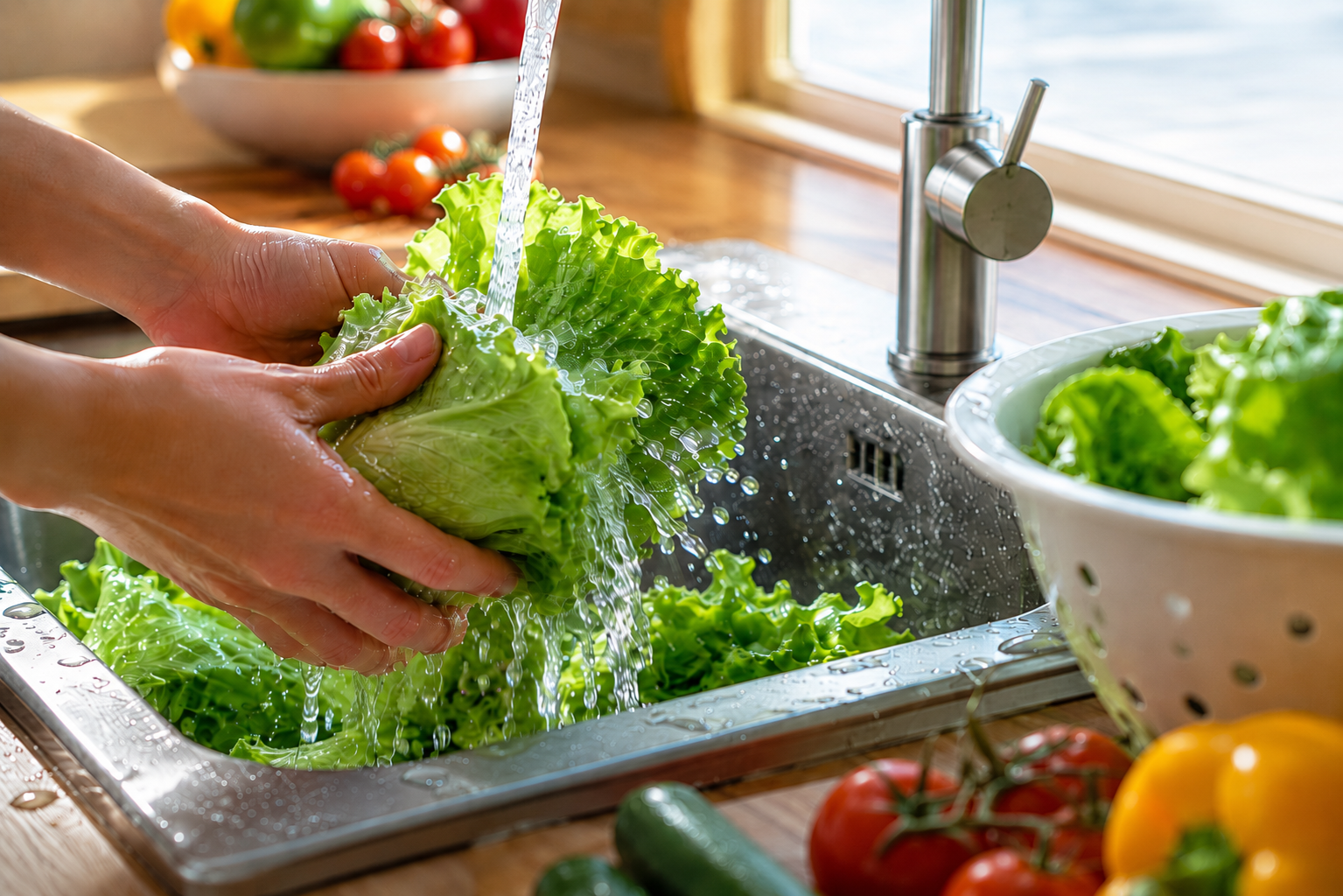
The Correct Washing Method: Dr. Gunawardhana outlines three steps for washing produce properly. First, wash your hands thoroughly with soap and water before handling any produce. Second, place produce under clean running water. Third, add friction by physically rubbing or scrubbing firm produce such as cucumbers, melons, and potatoes with your hands or a clean brush. The physical friction is doing meaningful work here — the parasite adheres to surfaces, and mechanical removal through scrubbing is more effective than water alone.
What Washing Can and Cannot Do: Be realistic about what washing achieves. It reduces contamination meaningfully — particularly on firm produce where scrubbing is possible — but cannot guarantee complete removal of cyclospora, particularly from leafy greens, herbs, and delicate berries where thorough scrubbing isn’t possible without damaging the produce. Washing “enhances protection when combined with cooking or peeling,” according to Michigan health officials — a framing that correctly positions washing as one layer of protection rather than a complete solution.
Heat Is Your Most Reliable Defense
This is the most important piece of information in the entire outbreak context for home cooks: heat destroys cyclospora reliably in a way that washing alone cannot.
Cooking food to an internal temperature of 158°F (70°C) or higher kills the parasite, according to the Michigan Department of Health and Human Services. “The best way to actually prevent getting sick from this particular organism is really thoroughly cooking it,” Dr. Gunawardhana said. “Getting the food to being cooked to at least 70 degrees Celsius or 158 degrees Fahrenheit is the best way to kill off this organism.”
What this means practically: cooked vegetables carry significantly lower risk than raw produce during the current outbreak. Sautéed spinach rather than a raw spinach salad. Cooked bell peppers in a stir-fry rather than raw bell pepper strips on a crudité platter. Roasted vegetables instead of salad as the vegetable component of meals. This doesn’t mean avoiding all salads permanently, but during an active outbreak where the source hasn’t been identified, shifting toward cooked vegetable preparations where possible is a meaningful risk reduction strategy.
For raw produce you’re choosing to continue consuming — which is reasonable with appropriate precautions — washing as described above, peeling where possible, and discarding outer layers of leafy vegetables provide layered protection even if none of them provides complete elimination of risk.
Kitchen Practices That Reduce Risk During the Outbreak
Beyond washing and cooking, how you handle produce in your kitchen affects your household’s risk. Several practices apply specifically to this outbreak and some represent universal food safety principles worth reinforcing regardless.
Prevent Cross-Contamination: Keep unwashed produce separate from ready-to-eat foods and separate from raw meat, poultry, and seafood. Cross-contamination — where a pathogen transfers from one surface or food to another during preparation — is one of the primary mechanisms through which foodborne illness spreads beyond the originally contaminated ingredient. Cutting boards, knife blades, and countertop surfaces that contact unwashed produce should be cleaned before they contact other foods.
Keep Work Surfaces Clean: “Universal advice, not just during outbreaks, is to always practice good hygiene in food preparation areas. Keeping work surfaces clean, including hand washing, to prevent cross-contamination from one food item to another,” according to Stoeckel. This is particularly relevant now — wiping down cutting boards and counters thoroughly after preparing raw produce before moving to the next preparation task limits the potential spread of contamination.
Wash Hands Consistently: Hand washing before and after handling produce, between handling different food items, and before eating isn’t new advice but its importance elevates during an active outbreak. The parasite can transfer from contaminated produce to hands to other surfaces and foods if hand washing discipline slips.
Use a Probe Thermometer for Cooked Vegetables: The 158°F threshold for killing cyclospora is specific enough that guessing whether cooked vegetables have reached it isn’t good enough during an active outbreak. Using a probe thermometer to verify that cooked vegetables have reached the target temperature removes the guesswork. This is particularly relevant for vegetable dishes where produce is the primary ingredient rather than a side accompaniment to a protein.
Discard Damaged Produce: Bruised, damaged, or moldy fruits and vegetables should be avoided and discarded. Physical damage creates additional surface area and entry points for pathogens that otherwise wouldn’t access the interior of the produce, increasing risk relative to undamaged items.
Following the Investigation as It Develops
The current outbreak is active and evolving. Authorities have not yet identified the specific food source, grower, or supplier responsible — a reality that makes highly targeted avoidance impossible and general precaution more important.
“Stay up to date on health alerts and use standard safety practices when washing food,” according to federal health officials. Following updates from the CDC and your state health department as the investigation progresses provides the most current guidance available and will alert you when a specific source is identified, potentially allowing for more targeted avoidance or a return to normal practices once the source is controlled.
The CDC’s food safety alerts page and your state health department’s website are the most reliable sources for investigation updates. Michigan and Ohio residents in particular should monitor their state health department’s guidance actively given the high concentration of cases in those states.
Dr. Biggerstaff of the CDC summarized the approach simply: follow standing food safety practices and guidelines, and stay aware of food safety alerts and investigation updates, “so that they know what foods are safe and they know how to keep their families safe and protected.”
The Practical Kitchen Takeaway
The current cyclospora outbreak requires practical adjustments to how you shop and prepare food, not panic and not business as usual. The core adjustments are straightforward and manageable.
When shopping, choose whole head lettuce over prepackaged salad greens, select whole uncut produce where possible, avoid bruised or damaged items, and prioritize produce that can be thoroughly washed and peeled. When preparing food, wash hands before and after handling produce, wash all produce under running water with physical friction applied, peel what can be peeled, and shift toward cooked vegetable preparations where possible given that heat reliably destroys the parasite at 158°F. Maintain clean work surfaces and prevent cross-contamination between unwashed produce and other foods.
These practices reduce risk meaningfully without requiring you to abandon fresh produce entirely — which carries its own nutritional cost that doesn’t serve your health either. The goal is informed, practical caution that matches the actual risk level while maintaining a healthy, varied diet that fresh produce makes possible.
Stay current with CDC and state health department updates as the investigation develops. When a specific source is identified, guidance will become more targeted. Until then, the precautions outlined above represent the most protective approach available given what is currently known.