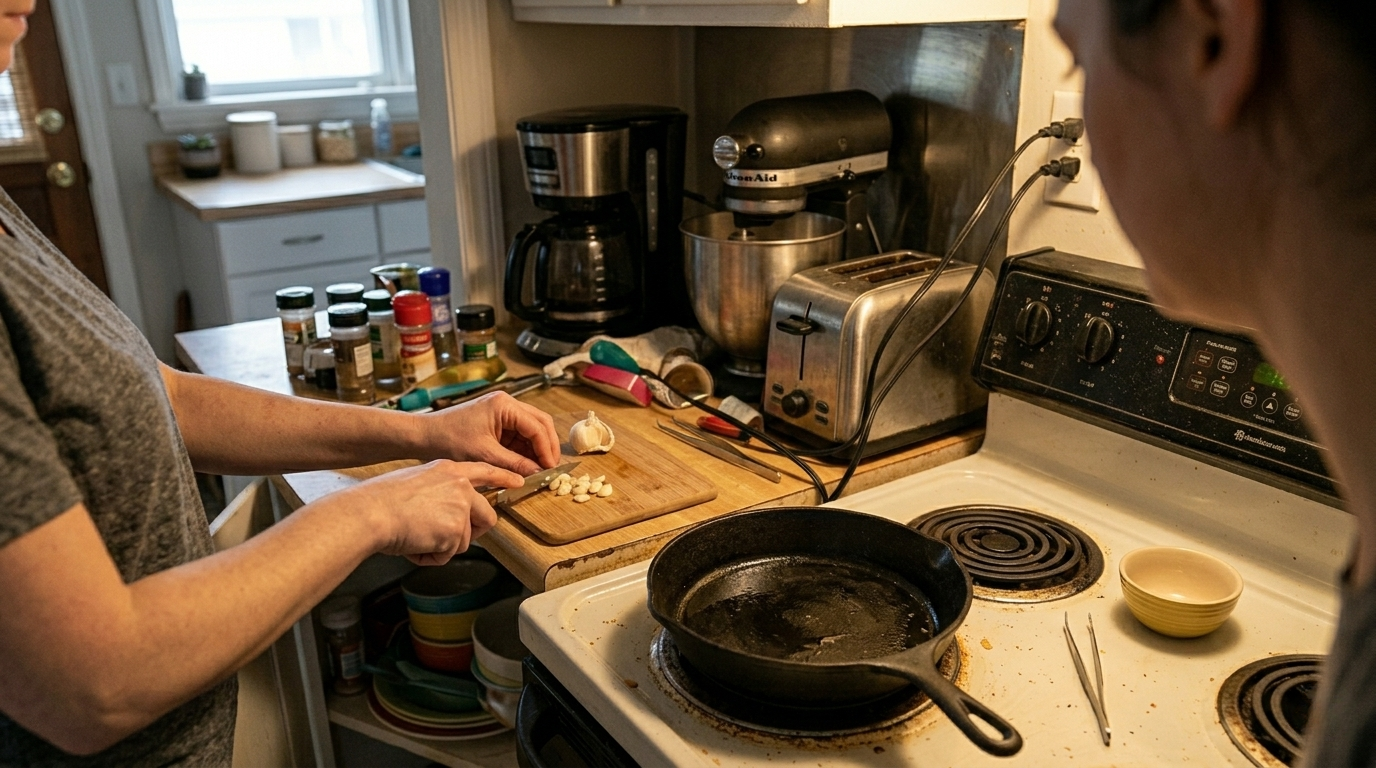

Your Sink Is in the Wrong Spot (And Why It Matters)
Most kitchens place the sink under a window for the view. This positioning ignores how you actually cook and creates workflow problems you’ve adapted to without realizing they’re problems. The sink-under-window convention comes from pre-dishwasher era when washing dishes meant standing at the sink for extended periods. A window view made the tedious task more bearable. Modern kitchens inherited this layout without questioning whether it still makes sense. Your sink location affects cooking efficiency more than almost any other kitchen design choice. Wrong placement adds steps, creates awkward reaches, and forces inefficient movement patterns during food preparation. Here’s why standard sink placement causes problems, where sinks should actually go based on cooking workflow, and what you can do about your existing kitchen without renovating. The Window Wastes Your Best Counter Space Windows occupy prime real estate in kitchens—exterior walls with natural light. Dedicating that space to a sink means your brightest, most pleasant kitchen area gets used for dish washing instead of food preparation. Natural light matters for detailed work like chopping vegetables, reading recipes, or plating food. The window area provides the best natural illumination in the kitchen. Putting the sink there means you’re doing dishes in the best light while prepping food in dimmer interior spaces. This backwards priority wastes the window location on tasks that don’t require good lighting. Counter space beside window-mounted sinks often ends up narrow and awkward. Window placement constraints leave minimal workspace flanking the sink, creating cramped prep areas. The view argument assumes you spend significant time staring out windows while doing dishes. With modern dishwashers, hand-washing time is minimal. You’re not standing at the sink long enough to justify sacrificing prime counter real estate for the view. Better window use would be placing your primary prep area there—cutting board, ingredient staging, detailed work that benefits from natural light. Save the sink for interior wall placement where windows don’t matter. Sink-to-Stove Distance Creates Unnecessary Walking Standard kitchen layouts often place sinks far from stoves because window locations dictate sink placement rather than cooking workflow dictating design. Think about cooking tasks requiring both sink and stove: draining pasta, transferring parboiled vegetables, filling pots with water, rinsing ingredients mid-cooking. Each task involves carrying heavy, hot, or wet items between sink and stove. Distance between these two workstations multiplies throughout cooking. A recipe requiring five trips between sink and stove in a poorly-designed kitchen might need ten steps per trip. That’s fifty extra steps for one meal. Water spills happen during sink-to-stove transfers. Carrying full pots across the kitchen drips water on floors creating slip hazards and mess. Heavy pot handling over distance strains arms and creates dropping risk. A full stockpot weighs significantly. Carrying it ten feet versus three feet matters for safety and effort. Ideal sink-to-stove distance measures three to six feet. This range allows easy transfer without excessive walking while providing enough separation that sink splashes don’t reach the stovetop. Many kitchens exceed this distance by placing sinks on opposite walls or far corners from stoves. The extra steps add up over years of daily cooking. You’re Prepping in the Wrong Location Most people prep food wherever counter space exists, not where prep should logically happen based on cooking workflow. Prep happens between ingredient retrieval (refrigerator) and cooking (stove). The prep area should sit geographically between these two points creating logical left-to-right or right-to-left workflow. Many kitchens force prep in locations requiring backtracking. You grab ingredients from the refrigerator, walk to the sink area to prep, then walk back past the refrigerator to reach the stove. This backwards flow wastes motion. The sink attracts prep work because it’s where you wash vegetables and dispose of scraps. But using the sink as your prep center puts you in the wrong location relative to refrigerator and stove. Ideal prep location sits between refrigerator and stove, with the sink accessible but not central. You grab ingredients, prep them while moving toward the stove, and cook. Linear workflow without backtracking. Current kitchen layouts often create triangular movement patterns—refrigerator to sink to stove and back—instead of efficient linear flow. The triangle adds unnecessary distance to every cooking task. Observe your own cooking movement. If you’re constantly walking back and forth across the kitchen rather than moving in one general direction from ingredient storage to cooking, your layout forces inefficient patterns. The Dishwasher Dictates More Than You Think Dishwasher placement affects kitchen workflow beyond just dish loading. It determines where clean dishes get stored and how post-cooking cleanup happens. Dishwashers installed far from dish storage cabinets create extra steps during unloading. You’re walking across the kitchen repeatedly carrying plates and glasses to their storage locations. Logical dishwasher placement sits adjacent to dish storage cabinets. Open dishwasher, transfer dishes directly to nearby cabinets. Minimal walking during unloading. Many kitchens place dishwashers next to sinks (logical for plumbing) but put dish storage on the opposite side of the kitchen (illogical for workflow). This split creates unnecessary unloading distance. The dishwasher also affects cleanup workflow. Scraping plates and loading the dishwasher works best when the dishwasher sits near where you eat, not necessarily near where you cook. Some kitchens benefit from dishwasher placement between cooking area and dining area—convenient for both cooking cleanup and dish loading from dining table. This middle-ground location serves both functions. Standard kitchen design puts dishwashers beside sinks without considering whether sink location makes sense for overall dish workflow. The dishwasher follows the sink regardless of whether that placement is optimal. Counter Depth Matters More Than Length Kitchens emphasize counter length—how many linear feet of counter space exists. But counter depth determines usability more than length. Standard counter depth measures 24-25 inches from wall to edge. This depth barely accommodates cutting board, ingredient bowls, and working space simultaneously. Deep counters (30+ inches) provide adequate working space for multiple tasks. You can stage ingredients behind your active cutting board without things falling off the back edge. Shallow counters force choosing between tool placement. The cutting board occupies most