
The Cooking Shortcuts That Actually Save Time
The Cooking Shortcuts That Actually Save Time
Every cooking blog promises quick weeknight meals and time-saving tips. Most of these shortcuts either don’t actually save time or create more work through cleanup, prep, or disappointing results requiring do-overs.
Real time savings come from understanding which steps genuinely matter and which ones are unnecessary tradition. Some shortcuts sacrifice quality. Others eliminate pointless effort without affecting the final dish.
The difference between useful shortcuts and false efficiency is whether they create downstream problems. Skipping a step that saves five minutes now but creates fifteen minutes of cleanup later isn’t a shortcut—it’s deferred work.
Here’s what actually saves time in the kitchen, what looks efficient but isn’t, and how to distinguish between smart efficiency and corner-cutting that backfires.
Pre-Chopped Vegetables Are Worth It (Sometimes)
The internet loves mocking pre-cut vegetables as wasteful and expensive. For some vegetables and some situations, they’re actually efficient.
Pre-chopped onions save real time. Onions take longer to peel, dice, and clean up after than most vegetables. The time saved multiplies across multiple meals. Pre-diced onions from the store eliminate ten minutes of work including cleanup.
Pre-minced garlic makes sense for dishes where garlic cooks long enough that fresh versus jarred doesn’t matter. Garlic mincing is fiddly work producing minimal volume for the time invested. In pasta sauce simmering for an hour, jarred minced garlic tastes identical to fresh.
Pre-washed lettuce saves significant time. Washing, drying, and storing lettuce properly takes fifteen minutes. Pre-washed greens eliminate this entirely. The slight quality difference rarely justifies the time investment for everyday salads.
Where pre-cut fails: delicate herbs losing flavor quickly, vegetables with short shelf life creating waste, and items where fresh cutting takes thirty seconds anyway. Pre-sliced mushrooms cost three times more to save ninety seconds of knife work.
The efficiency question is whether the pre-cut item saves more time than it costs in money and quality. For onions and lettuce, yes. For bell peppers, probably not.
One-Pot Meals Create More Work Than Separate Pans
One-pot cooking sounds efficient. Everything cooks in one vessel meaning less cleanup. Reality proves otherwise for most dishes.
One-pot recipes force sequential cooking instead of parallel cooking. Brown meat, remove it, cook vegetables, add liquid, return meat. This sequential approach takes longer than cooking components simultaneously in separate pans.
Temperature compromises in one-pot cooking create mediocre results. Everything cooks at one temperature. Vegetables that need high heat get steamed. Ingredients needing gentle cooking get blasted. The result requires longer cooking time to compensate for wrong temperatures.
Cleanup savings are minimal. One large pot plus utensils for removing and returning ingredients creates similar dish load to two smaller pans. The “one pot” often requires more scrubbing than multiple pans because everything browns onto one surface.
Better approach: use multiple pans simultaneously. While protein sears, vegetables roast. While pasta boils, sauce simmers. Parallel cooking completes meals faster than sequential one-pot methods.
One-pot dishes work for soups, stews, and braises where everything benefits from long combined cooking. For quick dinners, separate pans finish faster despite additional dishes.
Mise en Place Wastes Time at Home
Professional cooking demands mise en place—everything measured and prepped before cooking starts. Home cooking doesn’t.
Restaurant cooks prep once and cook the same dish repeatedly. Mise en place makes sense when preparing fifty orders of the same pasta. Measuring everything beforehand allows fast repetitive execution.
Home cooks make one portion once. The time spent measuring ingredients into bowls, washing those bowls, and transferring ingredients adds steps without benefit.
Progressive prep during cooking saves time. While onions soften, chop the next vegetable. While vegetables cook, measure spices. This parallel workflow keeps you moving without creating extra dishes.
Exception: baking requires accurate ratios so measuring beforehand prevents mistakes. For baking, mise en place makes sense because precision matters.
For everyday cooking, skip the prep bowls. Add ingredients directly as you go. The TV cooking show aesthetic of ingredient bowls looks organized but creates extra work.
Garlic Presses Are Faster Than Knife Mincing
Kitchen snobs hate garlic presses. They’re wrong about efficiency.
Knife mincing garlic takes time: peel cloves, mince finely, scrape board, clean knife, wash hands to remove smell. This process takes three to four minutes for multiple cloves.
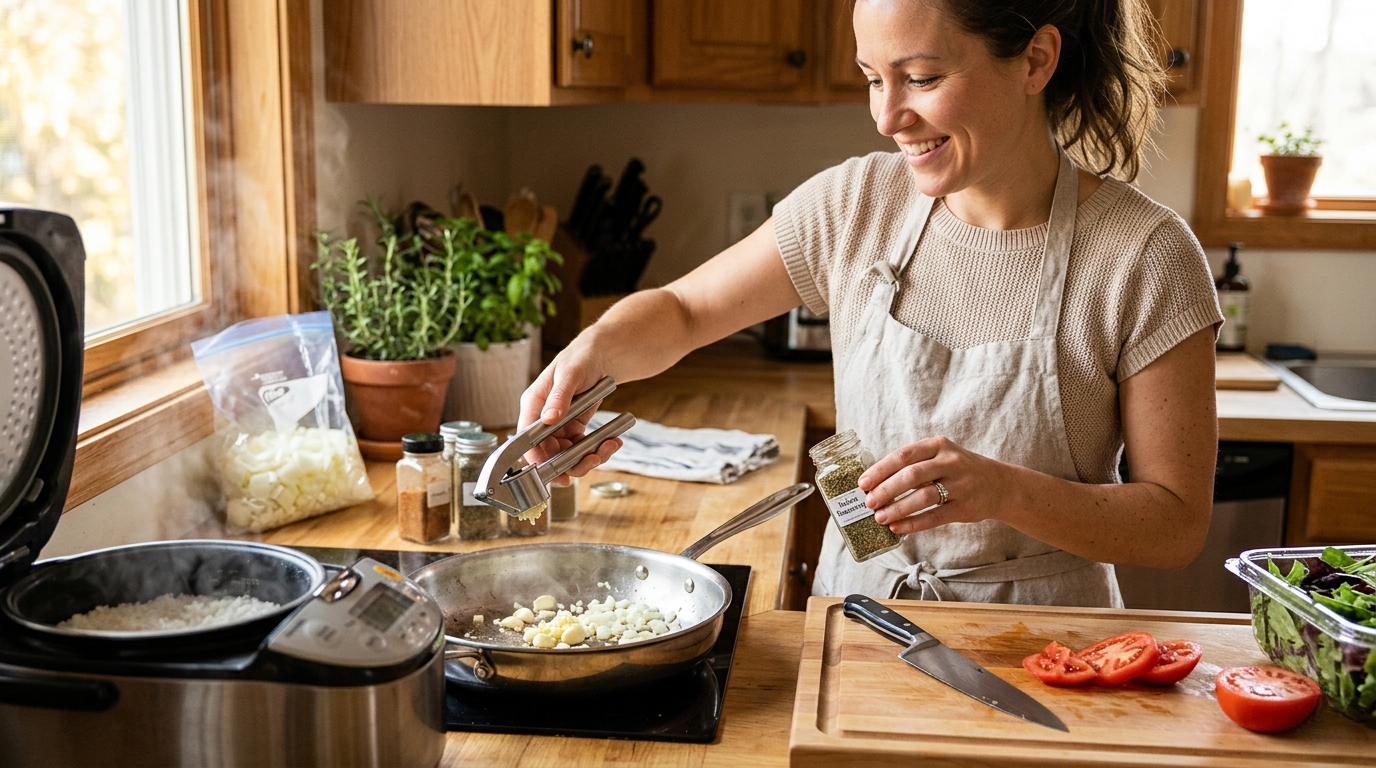
Garlic press takes thirty seconds: peel cloves, squeeze, scrape out garlic, rinse press. The time difference multiplies across meals.
Cleanup arguments against presses ignore that knife mincing requires cleaning cutting board, knife, and removing garlic smell from hands. The press requires rinsing one tool.
Texture differences between pressed and minced garlic matter only in raw applications like Caesar dressing or garlic bread. In cooked dishes, the difference disappears.
Buy a good press. Cheap presses are frustrating and break. Quality presses last years and pay for themselves in time saved.
The anti-press argument is aesthetic, not practical. If the goal is saving time, use the press.
Batch Cooking Backfires Without Proper Storage
Cooking large quantities seems efficient. Make five meals at once, reheat through the week. This works only with proper containers and freezer space.
Without adequate storage, batch cooking creates problems. Food in wrong containers dries out, absorbs freezer odors, or takes excessive freezer space. Reheating failures waste the entire batch.
Batch cooking requires significant upfront time. The five-hour Sunday cook session feels productive but that’s five hours unavailable for other activities. The time isn’t saved—it’s concentrated.
Better approach: double recipes instead of quintupling them. Make two portions instead of five. This provides one extra meal without overwhelming storage or creating food fatigue.
Batch cooking works best for components, not complete meals. Cook large batch of rice, roast sheet pans of vegetables, brown ground meat. These components assemble into varied meals throughout the week preventing boredom.
The freezer limitations matter. Most home freezers hold three to four complete meals comfortably. Cooking eight meals at once creates storage problems and food quality issues from extended freezing.
Batch component cooking saves time. Batch complete meal cooking often doesn’t.
Sharp Knives Actually Save Time
This seems obvious but bears repeating: dull knives are slow knives.
Sharp knives cut with single strokes. Dull knives require sawing back and forth multiple times per cut. A tomato taking one slice versus six sawing motions multiplies across ingredients.
Knife sharpening takes five minutes every few weeks. This investment saves minutes daily through faster cutting.
Dull knives create dangerous compensating behaviors. Pressing harder, cutting at weird angles, and using excessive force all slow cutting while increasing injury risk.
The efficiency difference is substantial. Prepping vegetables for stir-fry takes eight minutes with sharp knife, fifteen with dull. Over time, this difference is significant.
Home knife sharpening isn’t complicated. Pull-through sharpeners work adequately for kitchen knives. Professional sharpening costs minimal money for substantial time savings.
Sharp knives save time. Keep them sharp.
Frozen Vegetables Beat Fresh (For Cooking)
The fresh-is-better mantra ignores practical reality and actual nutrition.
Frozen vegetables are picked and frozen at peak ripeness. “Fresh” vegetables are picked early, shipped, stored in warehouses, displayed in stores, and sit in your fridge. By the time you cook them, they’re a week or more from harvest.
Frozen vegetables require zero prep. No washing, trimming, or chopping. Open bag, use what you need, return rest to freezer. This saves five to ten minutes per meal.
Nutritional content in frozen often exceeds “fresh” because freezing happens immediately after harvest. Storage time degrades nutrition in transported “fresh” produce.
Where fresh wins: salads, raw applications, and vegetables where texture matters critically. Frozen lettuce is disgusting. Frozen tomatoes for sandwiches fail. But frozen broccoli for stir-fry, frozen spinach for pasta, or frozen peas for soup work perfectly.
The fresh produce romanticism ignores time cost. If choosing between no vegetables because fresh prep takes too long or frozen vegetables ready in minutes, frozen is better.
Stop feeling guilty about frozen vegetables. They save time without sacrificing quality for cooked applications.
Pre-Made Spice Blends Beat Individual Spices
Measuring six individual spices takes time. Pre-blended mixes are faster.
Taco seasoning, Italian seasoning, curry powder, and similar blends eliminate measuring multiple spices. One tablespoon of blend replaces measuring six spices individually.
The flavor difference is minimal for most home cooking. Yes, individually toasted and ground spices taste incrementally better. The time investment rarely justifies the marginal improvement.
Custom spice blends you make yourself save even more time. Mix large batches of frequently-used combinations. Store in jars. Use by the spoonful instead of measuring six things per meal.
Where individual spices matter: when one spice defines the dish or when heat level needs adjustment. But for general seasoning, blends are efficient.
Make your own versions of commercial blends to control quality while maintaining convenience. Homemade taco seasoning without fillers takes ten minutes to mix but provides a month of instant seasoning.
Spice blends save time. Use them.
Rice Cookers Are Faster Than Stovetop
Rice cookers seem like unnecessary unitaskers. They save substantial time through automation and attention-free operation.
Stovetop rice requires monitoring, timing, and attention. Bring to boil, reduce heat, simmer covered, check doneness, rest. This process demands periodic attention for twenty-five minutes.
Rice cooker operation: add rice and water, press button, walk away. The cooker manages temperature and timing automatically. Come back to perfect rice whenever convenient.
The time savings isn’t in cooking duration—it’s in freed attention. Stovetop rice holds your attention intermittently for twenty-five minutes. Rice cooker rice requires zero attention after starting.
Attention is a resource. Freeing attention to prep other meal components, set table, or help kids with homework represents real time savings even if clock time stays similar.
Rice cookers also keep rice warm after cooking without degrading quality. Make rice early, leave in cooker, serve when ready. This flexibility saves timing stress.
The unitasker criticism misses the efficiency point. Tools that free attention save time even when they don’t save minutes.
What Actually Matters for Time Savings
Real shortcuts eliminate unnecessary work without creating downstream problems. False shortcuts defer work or create quality issues requiring fixes.
Useful shortcuts: pre-cut vegetables for time-intensive prep, sharp knives for faster cutting, frozen vegetables eliminating prep, spice blends reducing measuring, attention-free appliances like rice cookers.
False shortcuts: one-pot meals forcing sequential cooking, extreme batch cooking creating storage problems, mise en place adding unnecessary steps, avoiding garlic presses for aesthetic reasons.
The test for any shortcut: does it actually reduce total time including cleanup, or does it just shift time around? Does it maintain food quality, or does the shortcut create results requiring compensation?
Time savings stack. Using four or five real shortcuts per meal saves fifteen to twenty minutes of active cooking time. These minutes accumulate across weeks and months creating substantial efficiency gains.
The goal isn’t cutting every corner. It’s identifying which corners don’t matter and which steps provide little value for their time cost. Stop measuring spices into prep bowls if you’re making one dinner. Use the garlic press. Buy the frozen vegetables. Sharp
en your knife. Let the rice cooker handle the rice while you cook everything else. Time-saving shortcuts work when they eliminate genuinely unnecessary effort without creating new problems or sacrificing results that actually matter to you.