
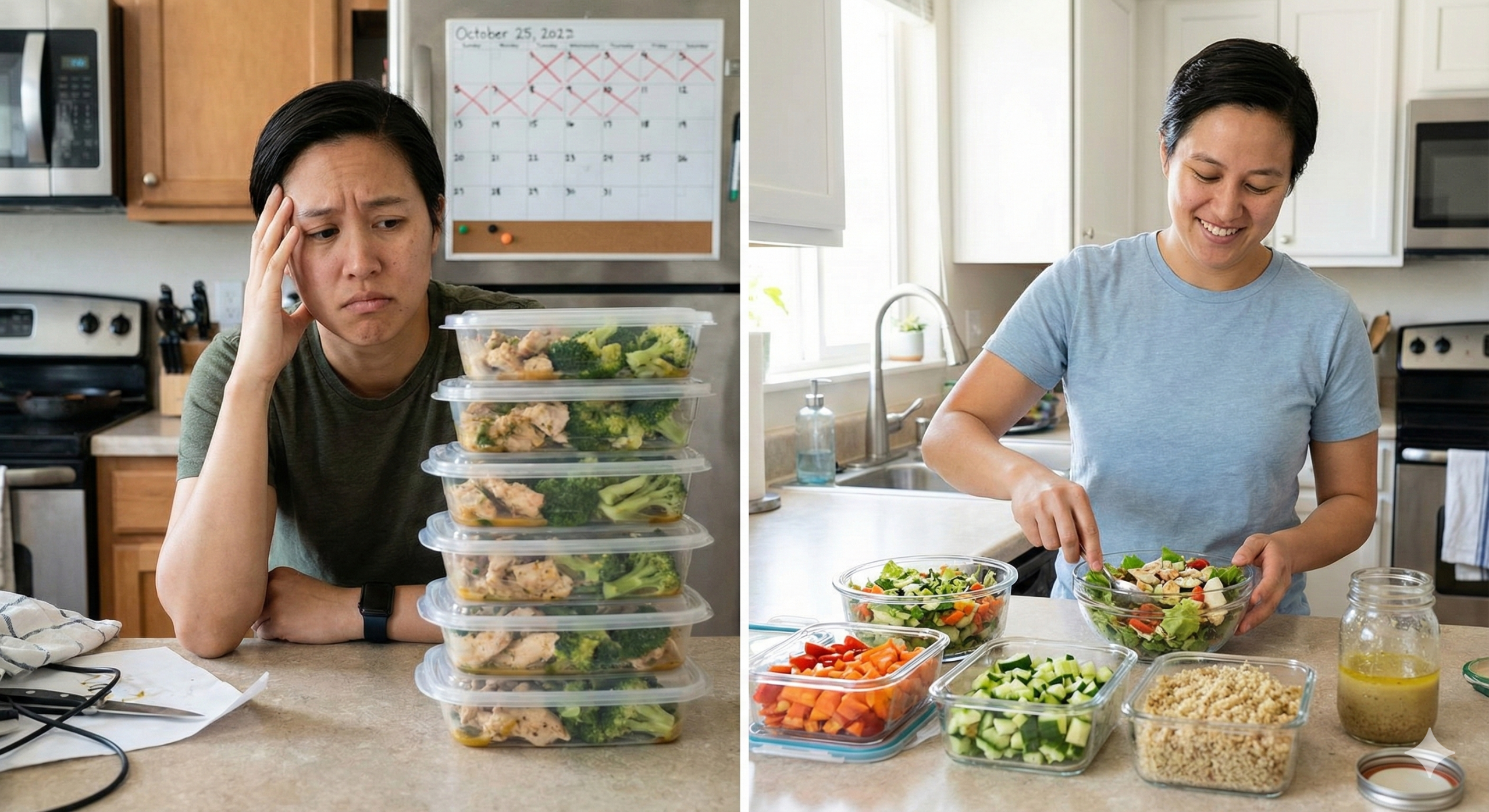
Why Meal Prep Never Works (And What Actually Does)
You’ve seen the Instagram posts – neat rows of identical containers filled with perfectly portioned meals for the week, promising time savings, healthier eating, and simplified weeknight dinners. You’ve tried meal prepping multiple times, spending Sunday afternoons cooking and packing meals, only to abandon the system within days when the reality doesn’t match the promise. The failure isn’t about lacking discipline or organization skills – it’s that traditional meal prep as promoted on social media doesn’t align with how most people actually want to eat, how life actually works, or what makes food appealing throughout a week.
The meal prep movement oversells benefits while glossing over significant drawbacks that make the system unsustainable for most people. Eating identical meals multiple days in a row gets boring quickly. Food quality degrades over days in the refrigerator. Life’s unpredictability makes rigid meal schedules impractical. And the time investment required for proper meal prep often exceeds what most people can realistically sustain week after week. Understanding why traditional meal prep fails points toward alternative approaches that provide similar benefits without the unsustainable all-or-nothing commitment.
The Food Gets Boring Too Quickly
The fundamental problem with traditional meal prep is that eating the same meal four or five days in a row simply isn’t appealing to most people, regardless of how delicious it was on day one.
Taste fatigue sets in faster than meal prep advocates acknowledge. That chicken and rice bowl tastes great Monday, acceptable Tuesday, boring Wednesday, and by Thursday you’re ordering takeout despite having prepared meals in your refrigerator.
Appetite varies day to day based on activity levels, stress, weather, and dozens of other factors. Committing to predetermined meals a week in advance ignores this natural variation in what sounds appealing.
Social unpredictability makes rigid meal schedules impractical. Unexpected lunch meetings, dinner invitations, or simply not feeling like the meal you prepped creates wasted food and guilt about abandoning your plan.
The monotony of eating identical meals contradicts our natural preference for variety. Humans evolved eating diverse foods, and our taste preferences reflect this – we get bored eating the same things repeatedly even when they’re nutritionally adequate.
Meal prep enthusiasts often cycle through this pattern: excited prep session, three days of compliance, boredom setting in, abandoned containers in the back of the fridge, guilt about wasted effort and food, abandoning the system entirely.
The solution isn’t more discipline to force yourself to eat boring food – it’s acknowledging that variety matters and building flexibility into your approach.
Food Quality Degrades Over Days
Even with proper storage, prepared meals lose quality throughout the week as textures change, flavors meld inappropriately, and fresh ingredients deteriorate.
Vegetables get soggy sitting in dressing or sauce for days. That crisp salad or fresh vegetable side dish on Sunday becomes limp and unappealing by Thursday, making meals less satisfying even if technically edible.
Grains and starches change texture dramatically after refrigeration. Rice becomes hard and dry, pasta turns gummy, and quinoa gets weird and clumpy. Reheating helps but doesn’t restore original texture.
Proteins dry out from repeated refrigeration and reheating. Chicken, in particular, becomes increasingly dry and tough over days, even when initially moist and well-cooked.
Sauces separate or get absorbed into other components, creating mushy texture where distinct elements existed initially. Meals that looked appealing on prep day look increasingly unappetizing as the week progresses.
The contrast between day-one quality and day-five quality creates diminishing satisfaction throughout the week. You start with something fresh and appealing and end with something you’re forcing yourself to eat despite not wanting it.
This quality degradation isn’t about poor storage or improper technique – it’s the inevitable result of preparing food days before consumption. Fresh will always taste better than several-days-old.
The Time Investment Is Front-Loaded and Exhausting
Meal prep requires dedicating several hours on a single day to cooking and packing meals, creating an exhausting marathon cooking session that many people can’t sustain weekly.
Sunday afternoons spent entirely in the kitchen cooking multiple meals, cleaning dishes constantly, and packing containers feels overwhelming rather than empowering. The sheer effort required makes meal prep feel like a chore rather than a helpful system.
Decision fatigue from planning an entire week of meals at once creates mental strain that daily meal planning distributes across the week. Choosing seven dinners simultaneously is harder than choosing one dinner seven times.
Kitchen chaos from preparing multiple dishes simultaneously creates stress and mess. You’re managing several cooking processes, multiple timers, and constant cleanup while trying to stay organized.
The all-or-nothing nature of meal prep means that missing a prep session leaves you with no meals rather than just one missing meal. This setup creates pressure that makes the system feel rigid and stressful.
Recovery time after marathon prep sessions often extends into Monday when you’re still tired from Sunday’s effort. The time savings on weeknights come at the cost of weekend exhaustion.
Many people discover they’d rather spend 30 minutes cooking dinner six evenings than three hours on Sunday, even though the total time is similar, because distributed effort feels more manageable.
It Assumes Stable Weekly Schedules
Meal prep works best for people with predictable schedules who eat all their meals at home, but most people’s lives involve more variability than meal prep accommodates.
Work schedules that vary week to week make it difficult to predict when you’ll eat at home versus when you’ll eat out or grab something quick.
Social plans that arise mid-week create leftover buildup when you skip prepped meals for dinner with friends or family events.
Travel disrupts meal prep cycles entirely. A business trip or weekend away means wasted food and broken routines that are hard to restart.
Family dynamics with different schedules for different members make uniform meal prep impractical. Everyone eats at different times or has different preferences that single-batch cooking can’t accommodate.
The assumption that life will proceed predictably ignores reality for most people whose weeks involve variability, spontaneity, and changes that rigid meal plans can’t accommodate.
Effective food systems need to accommodate life’s unpredictability rather than requiring perfect adherence to predetermined plans.
What Actually Works: Component Prep Instead of Complete Meals
Rather than preparing complete meals, prepping versatile components that assemble into various meals throughout the week provides flexibility while reducing daily cooking time.
Protein prep involves cooking plain proteins – grilled chicken, roasted turkey, hard-boiled eggs, cooked ground meat – that work in multiple dishes rather than committing to specific meals. These components stay interesting across the week because you’re using them differently each time.
Grain and starch prep means cooking rice, quinoa, pasta, or roasted potatoes that serve as bases for different meals. Plain grains stay fresh longer than complete meals and adapt to whatever you feel like eating.
Chopped vegetables ready to use save time without committing to specific meals. Washed lettuce, chopped onions, sliced peppers, and prepped vegetables speed up cooking while leaving meal choices flexible.
Sauce and dressing prep provides flavor variety from the same base ingredients. Having several sauces ready means the same chicken and rice becomes different meals throughout the week.
The component approach allows daily assembly based on what sounds good rather than eating predetermined meals. Monday’s chicken bowl becomes Wednesday’s chicken tacos using the same prepped ingredients differently.
This flexibility eliminates boredom while providing the time-saving benefits of advance prep. You’re not eating the same meal repeatedly – you’re using prepped components in varied ways.
What Actually Works: Batch Cooking Items That Freeze Well
Rather than refrigerating complete meals for the week, batch cooking freezer-friendly items provides future convenience without the quality degradation of refrigerated meals.
Soups and stews freeze excellently and reheat without quality loss. Making double or triple batches when you cook soup provides future meals that taste as good as fresh.
Casseroles and baked dishes freeze well and go from freezer to oven for future dinners without advance planning. These represent genuine make-ahead convenience without eating the same meal all week.
Cooked grains and beans freeze effectively in portion sizes, giving you components ready to thaw and use without cooking from scratch each time.
Sauces, marinades, and broths freeze well and elevate quick meals. Having homemade sauce ready to thaw transforms simple pasta into something special.
Cookie dough, muffin batter, and baking components freeze successfully, allowing fresh-baked items without full prep each time.
The freezer approach spreads your prep work across weeks or months rather than forcing you to eat everything within days. You’re building a library of options rather than committing to a single week’s menu.
This method eliminates the pressure of eating prepped food before it spoils while providing genuine convenience when you need it.
What Actually Works: Strategic Doubling
Instead of dedicating separate time to meal prep, simply making extra whenever you cook provides future meals without additional dedicated effort.
Double the recipe when cooking dishes that keep or freeze well. Making eight servings instead of four takes only marginally more time than making four but provides multiple future meals.
Cook once, eat multiple ways by preparing versatile bases that transform throughout the week. Roast a whole chicken Sunday, eat it for dinner, use leftovers for sandwiches and salads, simmer the carcass for soup stock.
Breakfast doubling works particularly well since most breakfast items reheat successfully or eat well cold. Make extra frittata, breakfast burritos, or oatmeal for grab-and-go breakings later in the week.
Side dish multiplication means roasting extra vegetables or cooking extra grains whenever you’re already preparing these items. These components add to future meals without requiring separate prep sessions.
The strategic doubling approach integrates prep into normal cooking rather than requiring dedicated marathon sessions. You’re investing an extra 10-15 minutes while already cooking rather than blocking off entire afternoons.
This incremental approach feels more sustainable because it doesn’t require major time commitments or complete routine changes.
What Actually Works: Practical Shortcuts and Semi-Homemade
Combining convenience products with fresh ingredients provides quick, decent meals without the all-or-nothing commitment of full meal prep.
Rotisserie chicken from grocery stores provides cooked protein for multiple meals without any cooking time. Use it in salads, tacos, sandwiches, soups, or pasta throughout the week.
Pre-washed greens and chopped vegetables save significant prep time while staying fresh throughout the week better than complete prepared salads.
Quality frozen vegetables often taste better than “fresh” vegetables that spent days in transport and storage. They’re pre-prepped and ready to use.
Pre-cooked grains and rice in shelf-stable or frozen packages provide convenience for single servings without requiring bulk cooking.
Good quality prepared sauces and dressings transform simple ingredients into complete meals without making everything from scratch.
The semi-homemade approach acknowledges that some convenience products provide excellent value while others don’t. Choose shortcuts strategically for items where homemade doesn’t provide proportional value to effort.
This balanced approach creates decent meals quickly without requiring hours of prep or settling for entirely pre-made meals.
What Actually Works: Realistic Weeknight Cooking
Many meals cook faster than the time meal prep advocates claim you’ll save, making simple weeknight cooking more practical than elaborate prep sessions.
20-minute meals are genuinely achievable with practice and simple recipes. Pasta dishes, stir-fries, eggs with vegetables, and simple proteins with sides all cook quickly.
One-pot meals minimize both cooking and cleanup time. Sheet pan dinners, skillet meals, and simple soups provide complete nutrition with minimal effort.
Repeating simple favorites rather than constantly trying new recipes speeds up cooking through familiarity. Having five weeknight meals you can make almost on autopilot provides reliable quick dinners.
Accepting simple meals as adequate rather than striving for elaborate spreads every night makes weeknight cooking sustainable. A well-seasoned chicken breast with roasted vegetables and rice is perfectly fine.
The cooking-adjacent time for meal prep – planning, shopping, prep session, cleanup, packing containers – often exceeds the time for simple weeknight cooking when you account for everything involved.
Many people would rather spend 25 minutes cooking dinner each evening than three hours on Sunday plus cleanup and planning time.
What Actually Works: Organized Shopping and Pantry Management
Sometimes the issue isn’t cooking time but decision-making and shopping, which proper planning addresses without requiring actual meal prep.
Pantry staples that support multiple quick meals eliminate the need to shop before every cooking session. Well-stocked basics let you create various dishes from what you have.
Flexible ingredient shopping rather than recipe-specific shopping provides options throughout the week. Buying proteins, vegetables, and grains you like rather than specific recipe requirements allows spontaneous meal decisions.
Template meal planning provides structure without rigidity. Knowing Monday is typically pasta, Tuesday is typically tacos, Wednesday is typically soup gives a framework while leaving specifics flexible.
Organized storage that makes inventory visible prevents buying duplicates while helping you use what you have. Seeing what’s available makes meal decisions easier.
The planning and organization that meal prep requires can be applied to shopping and pantry management instead, providing similar benefits without actual meal prep.
The Bottom Line on Meal Prep
Traditional meal prep as promoted on social media doesn’t work for most people because it requires eating the same meals repeatedly, accepts food quality degradation, demands unsustainable time investments, and assumes schedule predictability that doesn’t match real life.
What works instead varies by individual but typically involves flexibility, component prep rather than complete meals, strategic use of convenience products, simple weeknight cooking, and realistic expectations about what’s actually achievable.
The goal isn’t perfect meal prep adherence – it’s having decent food available when you need it without the stress, time investment, or rigidity that makes traditional meal prep unsustainable.
Stop trying to force yourself into systems that don’t work and instead build food routines around your actual life, preferences, and capabilities. Imperfect systems you actually maintain beat perfect systems you abandon after two weeks.
The best approach is whatever you’ll actually do consistently, which for most people isn’t marathon Sunday prep sessions resulting in identical meals all week.