
Pool Snacks That Actually Work in the Heat: No Melting, No Mess
Anyone who has tried to eat cheese and crackers beside a pool in 90°F heat knows the problem. The cheese softens within minutes, the crackers absorb ambient humidity and lose their snap, and by the time the second person has served themselves the whole situation has become an unappetizing warm mess that nobody wants to touch. Chips go stale. Chocolate melts. Dips separate. Ice cream is a race against physics that you always lose.
Pool snacking has specific constraints that indoor entertaining doesn’t — heat that accelerates every form of food degradation, humidity that attacks textures, direct sunlight that raises surface temperatures above ambient air, and the practical reality that people are wet, moving between water and food constantly, and don’t want to deal with plates, utensils, or anything that requires careful handling while dripping. The snacks that actually work in this environment are designed around these constraints rather than ignoring them.
This isn’t about health food or sophisticated entertaining. It’s about finding the foods that hold up structurally and flavor-wise in genuine summer heat, that can be eaten with one hand or directly from a vessel without drama, and that survive the window between being set out and actually being consumed without becoming something you’d rather not eat. The categories that work in the pool environment are more specific than most people assume — and they’re genuinely satisfying once you know what they are.
The Rules That Pool Snacks Need to Follow
Before the specific foods, the framework that separates pool-viable snacks from ones that fail in the environment.
Heat Stability Above Everything Else: Anything containing chocolate, whipped cream, soft cheese, or mayonnaise-based components exposed directly to sun will fail within 20-30 minutes at typical summer pool temperatures. These aren’t borderline cases — they’re predictable failures. Heat-stable snacks are either dry and shelf-stable, naturally cold enough to have a long warm-up window, or preserved by acidity or salt rather than refrigeration.
Structural Integrity When Wet: Pool snacking happens with damp or fully wet hands. Crackers that crumble when touched, delicate chips that shatter, and anything requiring two-hand coordination to eat without spilling are poor pool snack choices regardless of flavor. Foods that can be picked up with wet fingers, bitten cleanly, and eaten without consequence work. Foods that require careful handling don’t.
No Plate Dependence: Ideal pool snacks eat directly from the container, the skewer, or the hand without requiring a plate to catch components. Foods that fall apart into multiple pieces, require a fork, or create crumbs that scatter into pool furniture don’t suit the environment. Finger foods, skewered items, and anything in its own natural container are the formats that work.
Flavor That Holds at Temperature: Some foods taste best cold and become disappointing as they warm. Others are designed for room temperature or warm serving and aren’t compromised by ambient heat. Understanding which category your snack falls into determines whether it’s a pool-appropriate choice or one that will disappoint guests 30 minutes after being set out.
Skewered Foods: The Definitive Pool Snack Format
Skewers solve most pool snack problems simultaneously — they provide a dry handle that keeps wet hands away from food, they create portion control that makes serving from a communal tray easy and hygienic, and they keep food off surfaces that attract insects and collect debris.
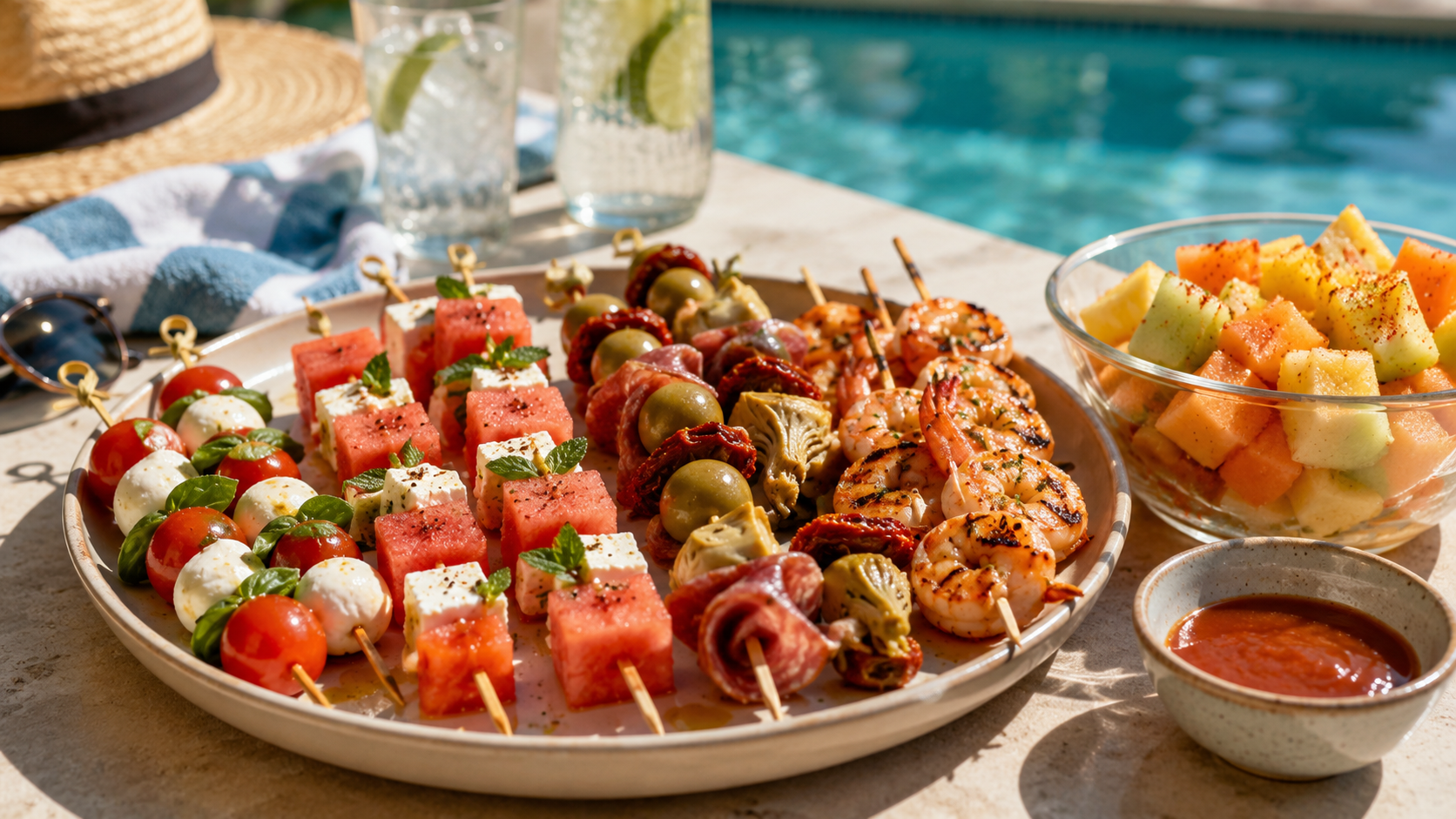
Caprese Skewers: Cherry tomatoes, fresh mozzarella ciliegine, and fresh basil leaves threaded onto short bamboo skewers. Drizzle with good olive oil and a pinch of flaky salt before serving. These hold up well in heat longer than a plated caprese because the individual components stay distinct rather than sitting in accumulated liquid. The mozzarella will soften slightly after 45 minutes but remains completely edible — the serving window is generous. Keep them in a cooler until 15-20 minutes before serving.
Watermelon and Feta Skewers: Cubed watermelon with small cubes of firm feta alternating on short skewers, finished with a few mint leaves and a crack of black pepper. The sweet-salty-herby combination is one of the most refreshing possible pool snack flavor profiles, and watermelon’s high water content means it stays cool longer than other fruits after coming out of the cooler. Feta’s salt content makes it more heat-stable than fresh cheeses.
Antipasto Skewers: Salami folded in quarters, pitted olives, marinated artichoke hearts, sun-dried tomatoes, and cubes of provolone on full-length skewers. All of these components are naturally shelf-stable or salt-preserved, meaning heat affects them much less than fresh dairy or mayo-based items. These hold up at pool temperatures for 45-60 minutes without quality degradation — one of the more forgiving pool snack formats available.
Grilled Shrimp Skewers: Pre-grilled shrimp on skewers served at room temperature with a dipping sauce on the side. Cook shrimp with garlic, olive oil, lemon, and paprika, thread on skewers, grill until just done, and refrigerate until serving. Room temperature shrimp on skewers is a completely appropriate serving temperature — shrimp doesn’t need to be hot to be good, and the grill seasoning holds up as it warms. Serve with a small cup of cocktail sauce or spicy aioli per person rather than a shared dip.
Fruit Skewers with Tajín: Cubed melon, pineapple, and mango on skewers dusted with Tajín — the chili-lime salt that has become the definitive fruit seasoning for outdoor eating. Tajín is specifically good for pool snacking because the salt and acid slow fruit from becoming watery and the heat-compatible flavors don’t suffer as fruit warms slightly. Prepare from a cooler and these hold a good eating window of 30-40 minutes before becoming too warm.
Cold Items That Have Long Warm-Up Windows
Not everything needs to stay cold — but some items can come out of the cooler and hold acceptable quality for long enough that they’re genuinely practical for pool service.
Frozen Grapes: Wash grapes, pat dry, and freeze on a sheet pan before transferring to a freezer bag. Serve directly from frozen in a bowl or cup. Frozen grapes function as both a snack and a cooling device — they’re cold enough to be refreshing, structured enough to eat with wet fingers, sweet enough to satisfy, and they take approximately 20-30 minutes to fully thaw, giving you a generous serving window. They’re mess-free, require no utensils, and please everyone from children to adults. One of the most underrated pool snacks available.
Frozen Watermelon Cubes: Cut watermelon into 2-inch cubes, freeze on a sheet pan overnight, and serve from a bowl directly from the freezer. Similar logic to frozen grapes — they start frozen and take time to reach ambient temperature, extending the quality window significantly versus fresh watermelon that warms immediately. The frozen texture is actually better than fresh for pool eating — firmer, less dripping.
Chilled Edamame: Steam edamame pods, season with flaky sea salt, and refrigerate until cold. Serve in a bowl or cup directly from the refrigerator. Edamame holds its temperature well due to its density and protein content, doesn’t melt, doesn’t create mess, and has a warm-up window of 40-50 minutes before becoming unpleasantly warm. The pod serving format means no utensils and natural portion control.
Cucumber Rounds with Toppings: Thick-sliced cucumber rounds topped with a small amount of cream cheese or hummus and a single piece of smoked salmon, everything bagel seasoning, or a sliced cherry tomato. The cucumber itself is water-dense and stays cool significantly longer than its ambient temperature would suggest. This format holds 20-25 minutes at pool temperatures before the cucumber loses its crispness — serve in small quantities refreshed from cooler supply rather than putting the full batch out at once.
String Cheese and Meat Packs: Individual string cheese portions and pre-portioned deli meat rolled into tubes. Both are individually packaged, don’t require refrigeration for short periods, and are completely hand-friendly. Children especially appreciate the familiar format. Keep in a cooler and set out in small batches.
Dry and Shelf-Stable Snacks Done Right
The category of dry snacks that don’t require temperature management is the most reliable pool snack format — the challenge is finding options that are interesting enough to actually want.
Spiced Nuts: Mixed nuts roasted with olive oil, rosemary, smoked paprika, cayenne, and flaky salt, cooled completely and stored in a sealed container. Heat doesn’t compromise roasted nuts — they’re already cooked and their low moisture content means humidity affects them slowly. Store in a sealed container and scoop into cups for serving rather than a shared bowl. The cup-serving format eliminates the communal dipping that spreads pool water contamination.
Seasoned Popcorn: Freshly popped popcorn with bold seasonings — truffle salt and parmesan, everything bagel seasoning, or smoked paprika and lime. Popcorn’s weakness at pools is humidity rather than heat — once it gets humid it loses its crunch relatively quickly. Serve in individual paper bags or cups within 20-30 minutes of popping and consume quickly. The individual portion format works better than a shared bowl.
Pita Chips and Shelf-Stable Dips: Thick-cut pita chips with hummus, baba ganoush, or tzatziki kept cold in a small cooler-adjacent bowl. The chips themselves are fully shelf-stable. The dips hold reasonably well in heat — hummus and baba ganoush particularly — for 30-40 minutes before the surface quality degrades. Tzatziki separates faster due to its dairy content. Serve dips in small individual cups rather than a shared bowl for both hygiene and temperature management.
Pretzels with Mustard: Hard pretzels — not soft — with individual mustard packets or a small cup of spicy brown mustard per person. Hard pretzels are among the most humidity-resistant dry snacks available. They don’t go stale quickly even in humid pool environments. The mustard dip is shelf-stable and heat-tolerant. Simple, reliable, universally appealing.
Plantain Chips: Denser and more substantial than potato chips with significantly better humidity resistance. Plantain chips maintain their snap noticeably longer in humid outdoor conditions than standard potato chips. Season with lime and chili salt if you want to make the bag-straight option more interesting.
Seaweed Snack Packs: Individual seaweed snack packages — thin roasted nori sheets seasoned with sesame and salt — are individually packaged, shelf-stable, and completely pool-appropriate in terms of eating format. They’re light enough that they don’t feel heavy poolside and the umami-salt flavor profile satisfies savory cravings without requiring any cold component.
Air Fryer Snacks That Travel Well to the Pool
The air fryer produces pool-viable snacks when you make them in advance and let them reach room temperature before transport — these hold their quality at ambient temperature better than oven-baked equivalents.
Air Fryer Chickpeas: Crispy air-fried chickpeas seasoned aggressively — smoked paprika and cumin, za’atar and lemon, or chili and lime — stored in an airtight container once completely cooled. These are among the most pool-appropriate snacks available: completely shelf-stable at pool temperatures, crunchy enough to eat with wet fingers without crumbling, satisfying enough to function as genuine snack food rather than filler, and individually edible without utensils. Make a large batch the morning of and store in a sealed container. They hold their crunch for several hours at ambient temperature.
Air Fryer Pigs in Blankets: Mini sausages wrapped in crescent dough and air-fried until golden, served at room temperature. Room-temperature pigs in blankets are entirely appropriate — the pastry holds its structure and the sausage flavor carries well as it warms. Make a batch in the morning, let cool completely, and transport in a container. These hold quality at pool-ambient temperatures for 45-60 minutes before the pastry begins to soften.
Air Fryer Mini Corn Dogs: Mini corn dogs from frozen, air-fried to golden, served at room temperature with individual ketchup and mustard cups. Children specifically request these and they hold up well at pool temperatures for a reasonable window. The cornbread exterior stays structured even as it warms.
Setting Up the Pool Snack Station
How you set up the serving area affects quality and hygiene as much as what you serve.
Cooler-Adjacent Rather Than Cooler-Open: Keep the primary food supply in a cooler and set out small refill quantities on the snack station rather than opening the cooler constantly. Every cooler opening introduces warm humid air that melts ice faster and reduces the cold supply available for the rest of the day. Small batches set out frequently preserve both food quality and cooler efficiency.
Individual Portion Containers: Cups, individual bags, and skewers keep wet hands out of communal food supplies. A shared chip bowl that multiple wet hands reach into becomes a hygiene issue and a humidity problem simultaneously. Individual portions solve both.
Shade Positioning: Position the snack station in shade rather than direct sunlight. The temperature difference between a shaded serving area and one in direct sun can be 15-20°F — a difference that meaningfully extends the quality window of every food on the table. A beach umbrella positioned specifically over the snack station is worth the setup effort.
Keep Plates and Napkins Anchored: Wind at outdoor pool environments sends plates and napkins airborne constantly. Weighted plate holders, small rocks on napkin stacks, or simply using cups rather than plates eliminates the napkin and plate chasing that interrupts pool relaxation continuously.
Label Heat Restrictions: If you have items that need to be eaten within a certain time window — items that will be disappointing if left too long — a small card noting “best within 30 minutes” prompts guests to prioritize those items rather than discovering them degraded later. This is a small hosting detail that prevents waste and improves the overall food experience.
The Drinks Side of Pool Snacking
Snacks and drinks at a pool function together rather than independently, and the drink choices affect which snacks work best.
Sparkling Water with Fruit: Canned sparkling water or pre-mixed sparkling water with fresh citrus wheels stays appropriately cold for longer than still water due to the insulating effect of carbonation. Keeps the palate refreshed between snacks without the sugar load that sweetened drinks add.
Agua Fresca: Blended watermelon, cucumber, or hibiscus with water, lime juice, and a small amount of sugar, made ahead and kept in a sealed pitcher in the cooler. Serves from the cooler directly into cups — no ice required since the base liquid is pre-chilled. Refreshing, not too sweet, and the kind of homemade detail that makes a pool day feel intentional.
Frozen Lemonade Pops: Lemonade poured into popsicle molds and frozen overnight. Serve directly from the freezer — they take 15-20 minutes to fully melt, which is approximately the time it takes to eat them. The popsicle format eliminates the cup-spilling issue that drinks create in pool environments and the frozen temperature actively cools from the inside.
The pool snack problem is solvable — it just requires selecting for the environment rather than defaulting to whatever snacks would work at an indoor party. Foods that are inherently heat-stable, individually portioned, structurally sound when wet, and requiring no utensils cover the pool snack brief completely. Build a spread from two or three categories above, keep the cooler stocked and the servings small, position everything in shade, and the pool snack situation becomes one of the easier parts of hosting a summer day that everyone actually enjoys.