
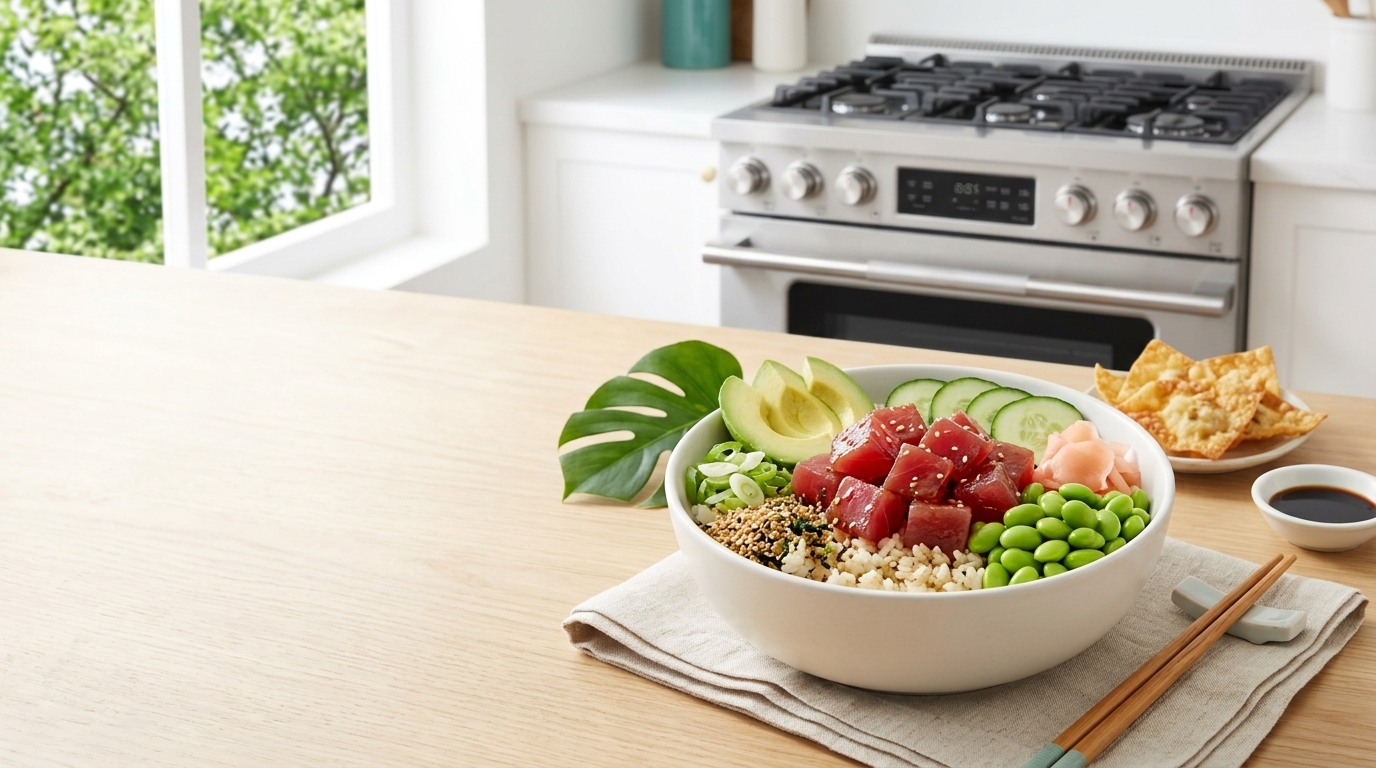
Ahi Shoyu Poke for Poke Day, With Crisp Wonton Chips and Perfect Sushi Rice
Poke, pronounced poh-KAY, comes from the Hawaiian verb meaning to slice or cut crosswise into pieces, and the dish it names is one of the oldest and most enduring foods of the islands. Long before Western contact, Native Hawaiian fishermen cut freshly caught reef fish into bite-sized pieces and seasoned them simply with coarse sea salt, limu (edible seaweed), and inamona, a paste of roasted and crushed kukui nut. Octopus and skipjack tuna, known locally as aku, were among the traditional choices, and the preparation was as much about respect for the catch as it was about flavor. Nothing was hidden, and nothing was wasted. The dish changed as Hawaii did. Japanese, Chinese, Korean, and Filipino laborers who arrived to work the plantations from the late nineteenth century onward brought soy sauce, sesame oil, and green onion, and over the decades those ingredients became so embedded that shoyu poke now reads as the classic version. Yellowfin ahi eventually became the fish of choice. Today poke is sold by the pound at island grocery counters, packed into plastic containers for beach days, and set out at family gatherings, birthdays, and graduations, where it functions as a symbol of hospitality and community. In the last decade it traveled far beyond Hawaii, first to West Coast poke shops and then to menus and home kitchens across the country.
The Recipe for Ahi Shoyu Poke Bowls
Every September 28, Poke Day gives home cooks a reason to try it themselves, and the dish is far more approachable than its restaurant reputation suggests. This version keeps the traditional soul of shoyu poke, then builds a complete meal around it with seasoned sushi rice and crisp wonton chips. Cosmo’s kitchen blog already has a salmon and avocado version if you prefer that direction. This recipe leans toward the classic ahi approach and makes four servings.
For the poke
- 1½ pounds sushi-grade ahi (yellowfin) tuna
- ⅓ cup sweet onion, finely diced
- 3 tablespoons low-sodium soy sauce
- 1 tablespoon toasted sesame oil
- 1 teaspoon fresh grated ginger
- 2 scallions, thinly sliced
- 2 tablespoons finely chopped macadamia nuts, a widely used stand-in for inamona
- 1 tablespoon toasted sesame seeds
- Pinch of flaky sea salt, and red pepper flakes if you like heat
For the rice and chips
- 2 cups short-grain sushi rice, rinsed until the water runs clear
- 2¼ cups water
- 3 tablespoons rice vinegar
- 1 tablespoon sugar and 1 teaspoon salt
- 12 wonton wrappers, cut into triangles
- 1 tablespoon neutral oil, plus flaky salt for finishing
For serving
- Cubed avocado, sliced cucumber, shelled edamame, pickled ginger, and furikake
Method
- Chill and cut the fish. Keep the tuna refrigerated until the moment you cut it. Using a very sharp knife, slice it into ¾-inch cubes, cutting cleanly rather than sawing, since a dull blade bruises the flesh. If knife work is a weak spot, The Knife Skills Gap covers the fundamentals. Return the cubes to the refrigerator in a chilled bowl.
- Cook the rice. Combine the rinsed rice and water in a heavy pot, bring it to a boil, then cover and reduce the heat to the lowest setting for 15 minutes. Turn off the heat and let it steam, covered, for 10 more minutes. Warm the vinegar, sugar, and salt until dissolved, then fold it gently through the rice with a paddle, using cutting motions rather than stirring.
- Make the chips. Toss the wonton triangles with the oil, spread them in a single layer, and air fry at 375 degrees for 4 to 6 minutes, turning once, until golden and blistered. Sprinkle with flaky salt while hot.
- Dress the poke. Just before serving, fold the onion, soy sauce, sesame oil, ginger, scallions, and macadamia nuts into the tuna. Use a gentle hand, since the fish should look glossy, not mashed. Let it rest in the refrigerator for 10 to 15 minutes, no longer, because soy sauce firms and darkens the fish the longer it sits.
- Build the bowls. Divide the warm rice among four bowls, spoon the poke on top, and add avocado, cucumber, and edamame. Finish with sesame seeds, pickled ginger, furikake, and wonton chips on the side for crunch.
Buying and Handling Raw Fish Safely
Because poke is served raw, the fish matters more than any other ingredient. Buy from a fishmonger you trust and ask specifically for tuna intended to be eaten raw. Look for a deep, translucent red color with a clean, briny smell, and avoid anything dull, brown, or fishy. Keep it on ice on the way home, store it in the coldest part of the refrigerator, and use it the same day. The same principle behind The Ingredients You’re Storing Wrong applies here. Raw fish is also not recommended for pregnant women, young children, older adults, or anyone with a weakened immune system.
Timing also matters for the rest of the meal. Rice and wonton chips can be made an hour or two ahead, and the toppings can be prepped in the morning, so the only last-minute task is dressing the fish. Set out the components buffet style and let guests build their own bowls, which suits a group with different tastes, and offer extra soy sauce, chili flakes, and lime wedges on the side.
If serving raw fish is not right for your table, sear the tuna instead. Season a thick steak with salt and pepper, sear it for 60 to 90 seconds per side in a very hot skillet, slice it, and serve it over the same rice with the same toppings and dressing.
The Range Behind the Bowl
Poke itself needs no heat, but nearly everything around it does, and that is where a capable range earns its place. Cosmo’s COS-RGS366SS, a 36-inch gas range from the Stellar Collection, handles each supporting task in this recipe.
Sushi rice depends on gentle, steady heat, and this range’s six burners span a wide output. A 3,500 BTU simmer burner holds a covered pot at the low, even temperature that keeps rice from scorching on the bottom. If you choose the seared ahi variation, the 22,000 BTU high-output burner on heavy-duty cast iron grates delivers the intense heat a cast iron skillet needs to sear a tuna steak in about a minute per side, leaving the center cool and rare. That range of control, from a whisper to a roar on the same cooktop, is hard to fake.
The oven side is just as useful. The range’s 6.1 cubic foot convection oven includes an air fry function with a dedicated tray, which is a natural fit for wonton chips. Circulating hot air crisps thin wrappers evenly in minutes, using a fraction of the oil of a deep fryer and without dragging a countertop air fryer out of storage. The same function can crisp shallots or thin-sliced sweet potato as alternative toppings. The oven’s rack positions and the range’s storage drawer keep sheet pans within reach, and the digital touch controls, clock, and timer make it easy to time the chips against the rest of the prep. Front-mounted metal knobs handle the burners, so adjusting the flame is simple even with wet hands after rinsing rice.
There is a practical benefit to working this way, too. A meal that involves raw fish, rice, and a crisp element can easily turn into a juggling act, with several dishes needing attention at different moments. Having the burners and the oven both up to the job means the rice can rest on the stovetop while the chips finish in the oven, and nothing has to wait its turn in a separate appliance. It keeps a weeknight version of the dish realistic, and it scales comfortably when the guest list grows for a weekend gathering.
Cleanup is straightforward too. The steam clean function loosens splatters with heat and moisture, and the brushed stainless steel finish fits into nearly any kitchen. For a fuller look at what the range can do through the roasting season, see First Day of Fall.
A Simple Way to Celebrate
Poke rewards good ingredients, a sharp knife, and restraint. Season it lightly, serve it cold over warm rice, and let the fish speak for itself. For households that want the whole meal, the rice, the crisp chips, and an optional seared variation, to come together on one cooktop, the COS-RGS366SS offers the burner range and the built-in air fry oven to do it.