
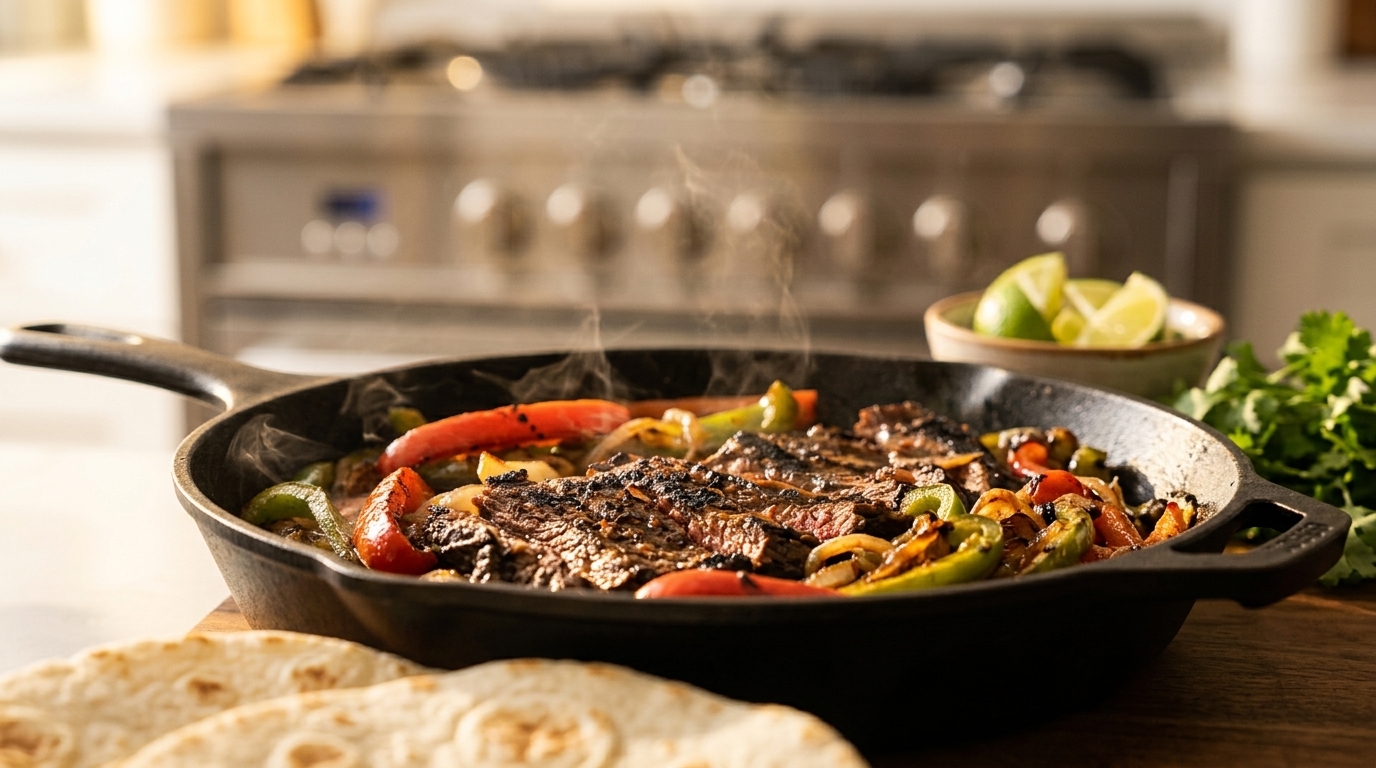
Sizzle, Season, Serve: A Toast to National Fajita Day
Every August 18th, the unmistakable hiss of a cast-iron skillet hitting a table announces that National Fajita Day has arrived. It is a holiday built entirely around sound and smell, the sizzle of seared beef and peppers, the sharp scent of lime and cumin cutting through the air, and the small ceremony of wrapping it all in a warm tortilla. Few dishes carry quite as much theater to the table as the fajita, and fewer still can trace their journey from a discarded cut of beef to a national celebration with such a clear, well-documented path.
From Ranch Hand’s Pay to Restaurant Staple
The story of the fajita begins in the 1930s, on the ranch lands of South Texas along the Rio Grande Valley. Mexican vaqueros working cattle ranches were frequently paid, in part, with the cuts of beef that butchers and ranch owners did not want, and skirt steak, thin, tough, and unglamorous by the standards of the day, was near the bottom of that list. Rather than let it go to waste, vaqueros marinated the meat, grilled it quickly over open coals, sliced it thin against the grain, and tucked it into a tortilla for a portable, filling meal between long stretches of ranch work. The name itself comes from the Spanish word faja, meaning “belt” or “strip,” a direct reference to the shape of the cut.
For decades, this remained a regional tradition, largely unknown outside the ranches and family kitchens of South Texas. That changed in 1973, when Ninfa Rodriguez Laurenzo, known to generations of Houstonians simply as Mama Ninfa, opened a small Tex-Mex restaurant on Navigation Boulevard. Her tacos al carbon, built around that same marinated, grilled skirt steak, sold 250 orders on opening day alone. Word spread quickly, other Houston restaurants began serving their own versions, and by the 1980s the dish, now called by its Spanish name directly, had become a full-blown Tex-Mex phenomenon, complete with the sizzling cast-iron platter presentation that remains its signature to this day.
How National Fajita Day Came to Be
National Fajita Day was established in 2016 by On the Border Mexican Grill and Cantina, with the date officially registered and proclaimed by the National Day Calendar that same year. Compared to some food holidays with murkier origins, Fajita Day has a clear founding story and a clear purpose: giving a dish with genuine working-class Texas roots its own day of recognition, distinct from the broader, often vague celebration of Tex-Mex cuisine as a whole.
What Actually Makes a Fajita a Fajita
A true fajita is defined less by its ingredients than by its method. Thin strips of well-marinated meat, traditionally skirt steak, though chicken, shrimp, and vegetable versions have all found their place, are cooked over very high, direct heat just long enough to develop a deep, charred crust while the interior stays tender. Bell peppers and onions are seared alongside, often in the same pan, until they soften and pick up their own touch of char. Everything gets sliced thin, piled onto warm tortillas, and finished with whatever a household considers essential: pico de gallo, guacamole, sour cream, a squeeze of lime.
The technique matters more than any single ingredient. A fajita cooked over gentle, even heat turns gray and steamed rather than seared, losing the char that gives the dish its character. That is precisely why fajitas have always demanded serious heat, whether from an open ranch fire in the 1930s or a home range today.
Why High Heat Is Non-Negotiable
Searing meat and vegetables at the speed a proper fajita requires puts real demands on a stovetop. A burner that cannot deliver intense, sustained heat will steam the meat before it chars, and a pan that cools too quickly between additions will never build the crust a good fajita depends on. This is where the Cosmo COS-965AGFC, a 36-inch professional style gas range, earns its place in a kitchen built for this kind of cooking. Its 18,000 BTU triple ring burner is engineered specifically for exactly this demand, delivering the kind of fast, aggressive heat that a cast-iron skillet or griddle needs to properly char skirt steak and blister peppers in minutes rather than steam them slowly. The heavy-duty cast iron grates hold a pan rock-steady over that heat, so a full skillet of sizzling fajita filling can go straight from stovetop to table without a wobble. Four additional burners, ranging from an 8,800 BTU rapid burner down to a 5,000 BTU auxiliary burner, mean the tortillas can warm on one side of the range while the beef sears on the other, and the 4.4 cu. ft. convection oven underneath handles a side of Mexican rice or a tray of roasted vegetables at the same time, without anyone waiting on the stovetop to clear.
Fajitas, American Style
Since crossing over from ranch tradition to restaurant menu, the fajita has taken on a distinctly American shape. Tex-Mex kitchens across the country lean into bold marinades built on lime, garlic, and chili powder, and the sizzling cast-iron presentation, largely a Houston restaurant invention rather than a ranch-era tradition, has become inseparable from how Americans expect fajitas to arrive at the table. Chicken fajitas, virtually unheard of in the dish’s earliest days, are now just as common an order as the original beef version, and shrimp and vegetable fajitas have carved out their own steady following on menus nationwide.
Celebrating at Home
Marking National Fajita Day does not require anything elaborate. A simple marinade of lime juice, garlic, cumin, and chili powder needs only thirty minutes to work into thin-sliced skirt steak or chicken, and from there the entire dish comes together in the time it takes to slice a couple of bell peppers and an onion. The real key is committing to real heat rather than easing into it, letting the pan get properly hot before the meat goes in, and resisting the urge to crowd the skillet, which drops the temperature and turns a sear into a simmer.
For those looking to host, a build-your-own fajita bar, sliced steak or chicken, a tray of seared peppers and onions, warm tortillas, and a spread of toppings, turns a weeknight dinner into an easy, low-stress gathering. It is a format that scales naturally from a family of four to a backyard full of guests, and it keeps the cook out of the kitchen and in the conversation once the searing is done.
Whether it is a solo skillet of steak fajitas on a Tuesday night or a full spread for friends, National Fajita Day is a fitting excuse to turn the burner up, let the char build, and enjoy a dish that traveled a long way from a South Texas ranch to become a genuine American favorite.
If your range has been struggling to keep up with the heat a real fajita sear demands, take a look at the Cosmo COS-965AGFC and the rest of our gas range lineup, built for the kind of high-heat cooking this holiday calls for.