
High-Protein Cooking, Beyond the Smoothie
Protein has quietly become the defining nutritional concern of the decade. What began as a fitness-culture talking point has moved firmly into the mainstream, showing up in grocery aisle labeling, restaurant menus, and a steady stream of home cooking content built around getting more protein into ordinary meals without sacrificing flavor. Most of that conversation has stayed confined to the blender: protein smoothies, shakes, and overnight oats dominate the search results and the social feeds built around them. That leaves a significant amount of ground uncovered, because some of the most effective ways to build protein into a diet are not blended at all. They are baked, proofed, and fermented, and they depend far more on precise, low-temperature cooking than they do on a good blender.
This is worth taking seriously rather than treating as a passing wellness trend. Fermentation and slow, controlled protein cookery are old techniques experiencing new demand, driven by a public that is increasingly interested in both protein content and gut health simultaneously. Search interest in homemade yogurt, high-protein baking, and fermented staples has climbed steadily as consumers grow more skeptical of processed protein powders and more curious about where their protein actually comes from. Getting either one right in a home kitchen depends on a variable most cooks rarely think about: how accurately an oven can hold a low, steady temperature over an extended period.
Why Protein Cooking Is a Different Discipline
Most home cooking is organized around speed and high heat. A hot pan sears a steak, a hot oven crisps a roast, and a hot burner reduces a sauce. Protein-focused cooking, particularly the slower techniques associated with fermentation and dairy-based baking, runs almost entirely counter to that instinct. It rewards patience, tight temperature tolerances, and equipment that can behave predictably over long stretches of time rather than short, high-intensity bursts.
This is part of why so many home attempts at yogurt-making, tempeh culturing, or protein-enriched bread underperform compared to what a recipe promises. The technique itself is usually sound. What fails is the environment the technique depends on. A recipe that calls for holding milk at 110 degrees for eight hours assumes an appliance capable of actually doing that, consistently, without drifting five or ten degrees in either direction over the course of an afternoon or overnight.
Why Low, Slow, and Steady Beats Hot and Fast
Protein-dense cooking techniques share a common requirement that stands in direct opposition to how most home cooking gets done. A seared steak wants high heat delivered quickly. A loaf of yogurt-based bread, a tray of baked eggs, or a batch of homemade tempeh wants the opposite: a gentle, unwavering temperature held for an hour or more, often well below the range most ovens are built to manage precisely.
This distinction matters because protein and the beneficial bacteria involved in fermentation are both sensitive to temperature swings in ways that fat and carbohydrate are not. Dairy-based proteins toughen and separate above certain thresholds, releasing moisture and turning grainy in a way that cannot be reversed once it happens. Live cultures used in yogurt, tempeh, and sourdough-adjacent baking die off entirely if the environment runs too hot, and stall out or fail to activate if it runs too cool. A conventional oven that cycles several degrees above and below its set point, the kind of variance that goes unnoticed in a batch of cookies, is often the exact reason a homemade yogurt turns out thin, a batch of tempeh fails to culture properly, or a protein-enriched loaf comes out dense and gummy in the center.
The Hidden Cost of an Inconsistent Oven
It is worth being specific about what “inconsistent” actually means in practical terms. Most conventional ovens operate on a cycle: the heating element fires until the interior slightly overshoots the set temperature, shuts off, and then fires again once the temperature drops a few degrees below target. For most baking, this swing, often five to fifteen degrees in either direction, is invisible in the final result. Bread, cookies, and roasted vegetables are forgiving enough that a few degrees of drift changes almost nothing about the outcome.
Protein-focused techniques do not have that same margin. An oven swinging between 100 and 120 degrees while a recipe calls for a steady 110 will produce a yogurt that cultures unevenly, thinner in some spots and firmer in others, sometimes with a slightly sour or off flavor where the temperature ran too high for too long. The same swing applied to a low-temperature custard or a protein-enriched bake produces the graininess and moisture separation that ruins texture even when the flavor is otherwise correct. In both cases, the recipe was not the problem. The equipment was.
What This Actually Requires From an Oven
Where true convection and precise holding make the difference. Cosmo’s wall oven, the C51EIX, a 24-inch stainless steel single electric wall oven built with Turbo True European Convection, is designed around exactly this kind of demand. Its dedicated rear heating element and fan circulate air evenly throughout the cavity, which matters considerably more for a two-hour yogurt incubation or a slow-proofed, protein-enriched dough than it does for most everyday baking. Uneven heat in this context does not just produce an inconsistent bake; it can mean one section of a tray cultures properly while another does not culture at all, leaving a single batch with two entirely different textures depending on where it sat in the oven.
Equally important is how tightly the oven holds its target temperature rather than swinging around it. Many fermentation and slow-protein techniques call for a narrow window, often in the 100 to 130 degree range for yogurt culturing or the mid-300s for protein-rich baked goods like high-protein bread or baked custards. The C51EIX’s convection system is built to minimize that drift, which is precisely the kind of consistency these techniques depend on. An oven that cannot hold a low setting accurately effectively rules out an entire category of protein-focused cooking before the ingredients are even involved, no matter how carefully the recipe itself is followed.
The triple-layer glass door on the C51EIX also plays a quieter but genuinely useful role here. Better insulation around the door means less heat loss and less temperature fluctuation every time the interior is checked, which matters more than it sounds like it should during a long, low fermentation cycle where the door might be opened several times to check progress.
Three Techniques Worth Adopting
- Oven-set high-protein yogurt. Warmed milk cultured with a live yogurt starter and held at a low, steady temperature for six to eight hours produces a noticeably higher-protein result than store-bought varieties, without the added stabilizers many commercial brands rely on. Straining the finished yogurt through cheesecloth for a few hours afterward concentrates the protein further, producing something closer to a thick Greek-style yogurt or a base for labneh.
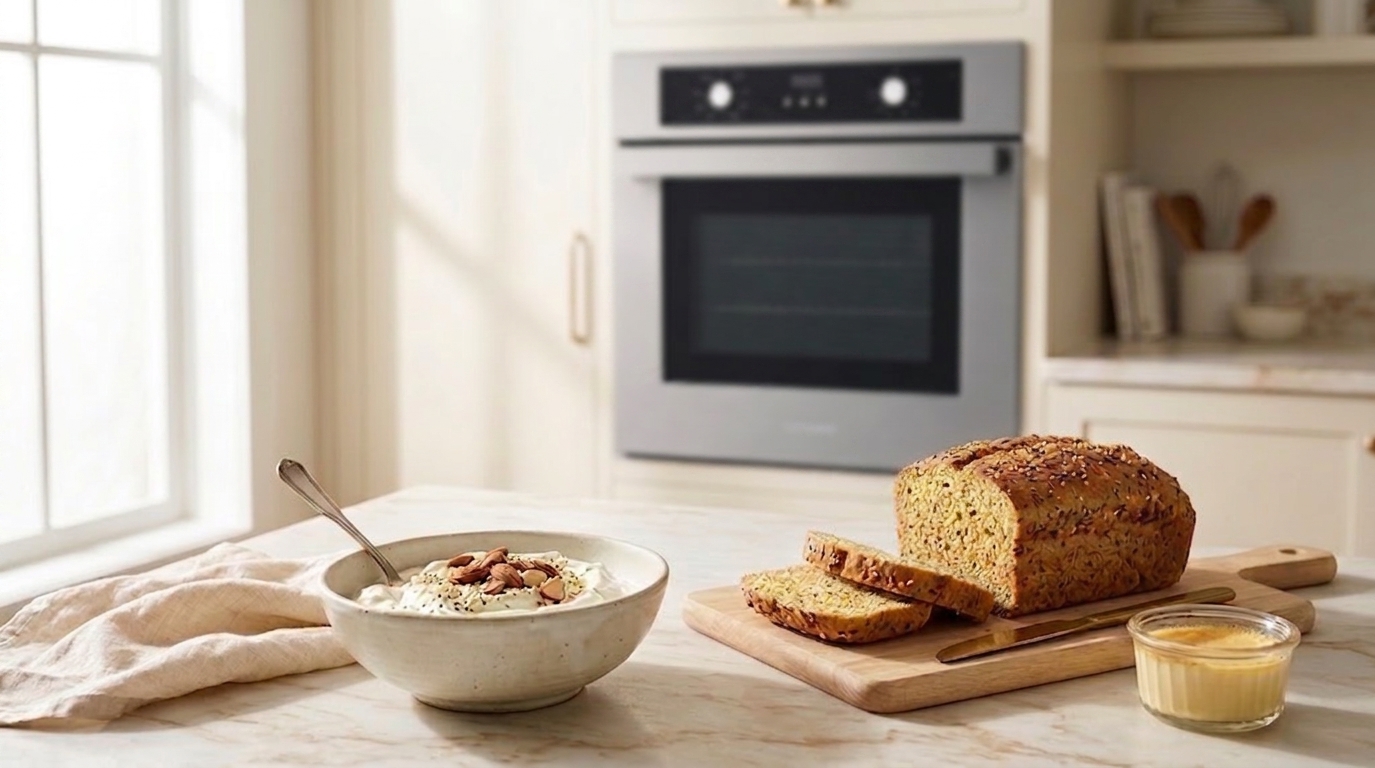
- Slow-baked protein bread, built with a cottage cheese or Greek yogurt-enriched dough, requires a longer, gentler bake than a standard loaf to set properly without drying out, making oven consistency the difference between a dense, tender crumb and a dry, crumbly one. These doughs also tend to brown faster on the outside than they finish setting on the inside, which is another place where even, circulating heat prevents a loaf from looking done before it actually is.
- Baked egg and dairy custards, similar in principle to a traditional savory strata, benefit from the same low, even heat that a sweet custard requires, and deliver a substantial protein count per serving without relying on powders or additives. A savory version built with cottage cheese, eggs, and a modest amount of cheese can function as a make-ahead breakfast that reheats well throughout the week, which fits neatly into the batch-cooking habits that tend to accompany a higher-protein diet.
Building This Into a Weekly Routine
None of these techniques are meant to replace quick, everyday protein sources like grilled chicken or a fried egg. They work best as a weekend project that pays off across the following week. A batch of oven-cultured yogurt, started Saturday morning and ready by Saturday evening, becomes breakfast and snack material through the following Friday. A protein-enriched loaf, baked once and sliced, covers a week of higher-protein toast without requiring daily effort. Framed this way, the extra time these techniques demand upfront is not a daily cost, it is a once-a-week investment that quietly raises the protein content of meals that would otherwise default to something less substantial.
This is also where a reliable, precise oven earns its place in a kitchen beyond the obvious roasting and baking tasks. An appliance that can be trusted to hold a low temperature unattended for six or eight hours, without needing to be checked constantly, is what makes this kind of weekend batch cooking realistic for a household that does not have the time to babysit a stovetop double boiler all afternoon.
Common Mistakes That Sink a First Attempt
Most first attempts at oven-set yogurt or protein-enriched baking fail for a small number of predictable reasons, and almost none of them are about ingredient quality. Using milk that has not been properly scalded and cooled before adding the culture is one of the most common issues, since residual bacteria in unscaled milk compete with the yogurt culture and produce an inconsistent set. Opening the oven frequently to check progress is another, since every open door resets the internal temperature and extends the culturing time unpredictably. And perhaps the most common mistake of all is simply assuming a home oven’s dial is accurate. Ovens are frequently off by ten degrees or more from their displayed setting, which does not matter much for a pizza but matters enormously for a culture that needs to stay within a narrow band for hours at a time. An oven thermometer, left inside during a bake or a culturing session, is a small investment that removes most of the guesswork before it becomes a wasted batch of milk.
Getting Started Without Overhauling a Routine
None of this requires a dedicated fermentation setup or specialty equipment beyond what most kitchens already have. A large glass jar, a thermometer, a live culture starter, and an oven capable of holding a low, steady temperature cover the basics for yogurt. A standard loaf pan and a reliable low-and-slow setting cover protein bread. The barrier for most people is not access to equipment, it is uncertainty about whether their current oven can actually hold the temperature a recipe assumes it can. Testing that assumption once, with an inexpensive oven thermometer left in place for a full cycle, answers the question definitively and either confirms the oven is ready for this kind of cooking or reveals why previous attempts came out inconsistent.
A More Substantial Approach to a Real Trend
Protein is not a passing fixation, and treating it as something that only belongs in a blender leaves out some of the most rewarding cooking techniques available to a home kitchen. Fermentation and slow, protein-focused baking reward patience and precision rather than speed, and they depend on equipment that can actually deliver the steady, low-temperature environment these methods require. The payoff is a category of homemade staples, yogurt, bread, and custard among them, that most households currently buy pre-made without realizing how achievable the alternative actually is.
Have you experimented with baking or fermenting your own high-protein staples at home? Share what has worked in the comments, and if your current oven has struggled to hold a low, steady temperature, take a look at the C51EIX and the rest of our wall oven lineup, built around true convection and precise temperature control.