
National Monte Cristo Day: Why America’s Strangest Sandwich Deserves a Comeback
Every food holiday calendar is crowded with days built around something simple: a fruit, a cut of meat, a regional specialty everyone already understands at a glance. September 17 is different. National Monte Cristo Day celebrates a sandwich that has spent most of its life confused about what it actually is, part diner classic, part French toast, part deep-fried indulgence, and dusted with powdered sugar as if daring anyone to take it seriously. That confusion is exactly what makes it worth revisiting. The Monte Cristo is one of the few sandwiches built entirely around a cooking technique rather than a specific filling, and getting that technique right at home is a genuinely useful kitchen skill, not just a novelty for one day a year.
What a Monte Cristo Actually Is
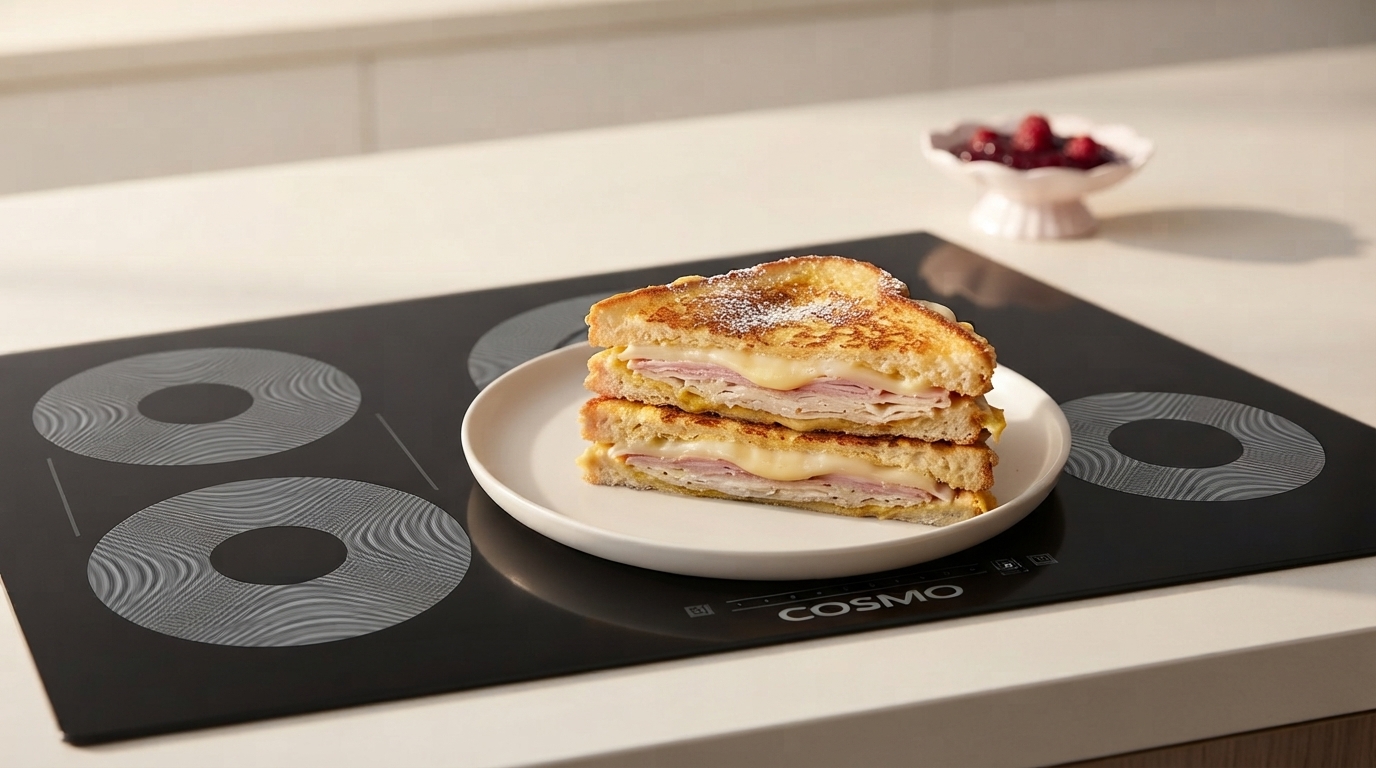
Strip away the theatrics and a Monte Cristo is a ham and cheese sandwich, usually built with turkey or ham, sometimes both, layered with Swiss or Gruyère, that gets dipped in an egg batter closer to French toast custard than anything resembling a standard sandwich preparation. The whole thing is then griddled or fried in butter until the bread turns golden and slightly custardy, the cheese melts through the layers, and the outside develops a texture somewhere between a grilled cheese and a savory French toast. Restaurants that serve it well finish the plate with a dusting of powdered sugar and a small dish of raspberry or currant jam alongside, leaning fully into the sweet-savory contrast rather than apologizing for it.
Food historians trace the sandwich back to the French croque-monsieur, by way of American diners and Southern California drive-ins in the mid-twentieth century, where it picked up its egg-batter treatment and its slightly theatrical presentation. Disneyland’s version, deep-fried rather than griddled and served with strawberry preserves, is probably the most famous American iteration and the reason a lot of people have heard of the sandwich at all without ever having made one. That lineage is part of why the Monte Cristo tends to divide people so cleanly. It reads as either a genuinely great use of leftover ham and cheese or a slightly unhinged experiment in what a sandwich is allowed to be, and honestly, both reactions are fair.
A Sandwich That Lives or Dies on Heat Control
What separates a good Monte Cristo from a soggy, undercooked mess comes down almost entirely to technique, and specifically to heat control during the cooking step. A slice of bread dipped in egg custard behaves differently on a hot surface than a dry slice of bread does. Too much heat too fast and the outside scorches while the center stays wet and eggy, essentially raw custard sandwiched between two burnt slices. Too little heat and the bread absorbs the egg mixture without ever developing the structure that holds a sandwich together, leaving something closer to bread pudding than a sandwich a person can actually pick up.
This is the specific gap that separates a Monte Cristo made on a standard stovetop burner from one made with real, deliberate heat control. A traditional coil or open-flame burner tends to run hot in the center and cooler at the edges, which is a minor inconvenience for most cooking and a genuine problem for a dish that needs even, moderate heat across the entire surface of the pan for several minutes at a stretch. Restaurant kitchens solve this with a flat-top griddle, a continuous cooking surface that holds a steady temperature edge to edge, which is exactly why the Monte Cristo shows up so much more often on diner menus than in home kitchens. Most home stovetops simply are not built to replicate that surface.
Bringing Griddle-Level Heat Control Into a Home Kitchen
That gap is closing faster than most home cooks realize, largely because of a feature that has quietly become common on modern electric cooktops: the ability to bridge two burners into a single unified heating zone. Cosmo’s COS-304TBECC, a 30-inch electric cooktop with four burners and a black ceramic glass surface, includes exactly this kind of sync burner, a function that connects two adjacent elements into one continuous heating area sized for a griddle, a fish poacher, or any other oversized cookware that would otherwise straddle two separate burners at two separate temperatures. For a dish like a Monte Cristo, where a full flat-bottom griddle pan needs consistent heat from one edge to the other, that bridged zone is the difference between a sandwich that cooks evenly and one that scorches on one side while staying pale on the other.
The cooktop’s touch controls matter just as much here as the sync burner itself. Because a Monte Cristo needs steady, moderate heat rather than a quick sear, the finer temperature graduations of a touch-based electric control give a cook more precision than a mechanical knob typically allows, the difference between a dial that jumps from medium to medium-high with nothing in between and a control that can hold a specific, consistent setting for as long as a batch of sandwiches takes to cook through. The cooktop’s triple-zone element, with its small, medium, and large selectable heating areas on a separate burner, also solves a smaller but real problem in a Monte Cristo kitchen: keeping a small saucepan of raspberry jam warm alongside the griddle without dedicating a full-size burner to a job that needs a fraction of the heat.
None of this is complicated technology in the abstract. It is simply heat control built to match what a specific dish actually needs, rather than forcing a home cook to improvise around a stovetop designed primarily for pots and pans rather than a flat griddle surface.
Making One Well, Start to Finish
For anyone tackling a Monte Cristo for National Monte Cristo Day, the technique is straightforward once the heat is under control. Build the sandwich first, ham, turkey, or both, layered with a good melting cheese like Swiss or Gruyère between slices of a sturdy white or egg bread that can hold up to a custard dip without falling apart. Whisk eggs with a splash of milk, a pinch of salt, and, for anyone leaning into the diner-style version, a touch of sugar and vanilla, closer to a subtle French toast batter than a savory egg wash. Dip the assembled sandwich briefly on each side, long enough to coat the bread without soaking all the way through, and move it straight to a preheated, moderately hot griddle surface with a generous pat of butter.
Cook slowly enough that the cheese has time to fully melt before the outside overcooks, generally a few minutes per side over steady medium heat, flipping once the underside is deep golden brown rather than rushing the process with higher heat. A sandwich cooked too hot will look done on the outside well before the cheese has actually melted through, which is the single most common mistake in a home kitchen attempting this for the first time. Rest the finished sandwich briefly before cutting, dust with powdered sugar, and serve with a small dish of raspberry or currant jam for dipping, the sweet contrast that makes the whole combination work rather than reading as a mistake.
A Sandwich Worth Taking Seriously
The Monte Cristo has spent decades as a novelty, the sandwich a diner menu includes for the person who wants something a little different, rather than a dish most households consider making at home. That status says more about the technique it demands than about the sandwich itself. Once the heat control problem is solved, with a genuine griddle surface and a cooktop capable of holding steady, even temperature across it, a Monte Cristo is not actually a difficult dish. It is a dish that has simply been waiting for home kitchens to catch up to the equipment diners have relied on for decades. A cooktop like the COS-304TBECC, with a sync burner built specifically to turn two elements into one true griddle zone, closes that gap directly, proof that the right kitchen setup can turn a diner novelty into a genuinely reliable weeknight sandwich.