
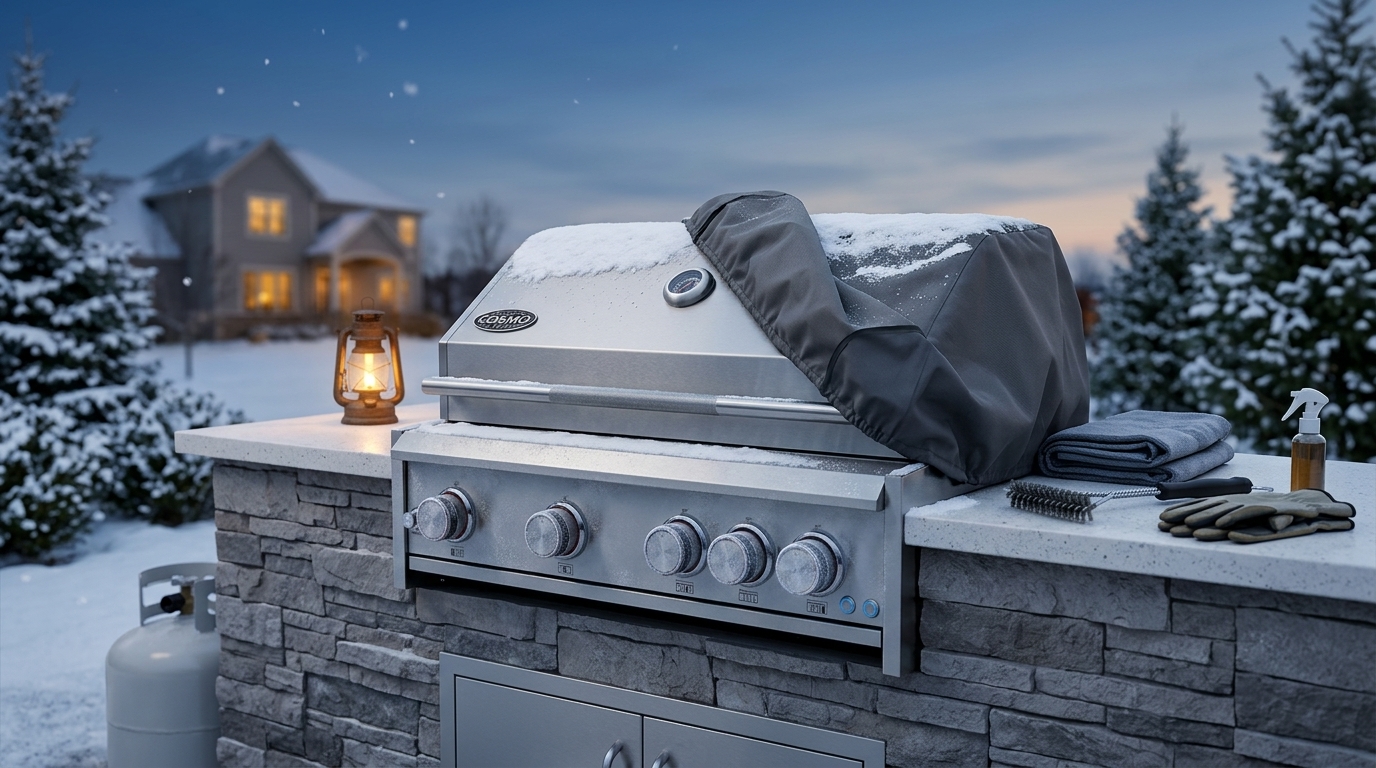
Winterizing the Outdoor Grill Without Giving Up Grilled Thanksgiving Turkey
Thanksgiving lands on November 26 this year, and for many hosts the cold has already made one decision for them. The turkey goes in the oven, and the grill stays under its cover until spring. That is a reasonable call, but it gives up something worth keeping. A turkey cooked outdoors comes off with deeply browned skin and a light smoky edge, and it hands the oven back to the side dishes that always compete for it on Thursday afternoon.
The good news is that winterizing a grill and grilling a turkey are not competing goals. The same steps that protect a grill through the cold months also make it a dependable tool on the one day you want it most. This guide covers how cold changes a grill, how to prepare it, how to cook a bird outdoors safely, and what to do if the forecast turns against you.
How Cold Weather Changes a Grill
Cold does not stop a propane grill from working. Propane boils at 44 degrees below zero Fahrenheit, so a November afternoon will not keep the gas from flowing. What the cold changes is how quickly the grill loses heat. Metal, wind, and every opened lid pull warmth out of the cooking chamber, so a grill that holds its temperature easily on a July evening has to work harder on a windy 30 degree day.
Three habits make up for that loss. First, preheat longer than you normally would. Plan on 10 to 15 minutes, and let the grill come fully up to temperature before the turkey goes on. Second, keep the lid closed. Opening it hardly matters in summer, but in winter every peek costs real heat, so rely on a lid thermometer or a remote probe instead of lifting the lid to look. Third, plan for a longer cook and more fuel. Colder air means slower cooking, so build extra time into the schedule and keep a spare propane tank on hand.
Placement matters as well. A grill sheltered from the wind loses less heat, so if you have a choice, cook where a wall or fence breaks the gusts, while still keeping clear of vinyl siding and low eaves.
Winterizing Steps That Protect the Grill
Start with a thorough cleaning. Scrape the grates, empty the drip tray, and wipe away built up grease, since old grease is the likeliest fuel for a flare up when you later cook a fatty bird. Check the hose and connections for wear, and test them for leaks using the method in your owner’s manual. Keep the propane tank at least half full, and have a second tank ready, because a long cold cook burns more fuel than most people expect.
Then protect the grill itself. A fitted cover prevents the buildup of ice, snow, and moisture, so put it on every time the grill cools, and brush snow off the lid and the surrounding area before lighting. If yours is a built in model set into an outdoor kitchen, give the island the same attention by keeping the countertop and the path to it clear of snow and wet leaves. Store the rotisserie spit and forks indoors, where they stay clean and dry until the turkey needs them.
Finally, do a trial run. Light the grill a week or two before Thanksgiving and confirm that every burner ignites, that the lid thermometer reads sensibly, and that the rotisserie motor turns freely. Finding a dead igniter on a Tuesday is a nuisance. Finding it at noon on Thursday is a crisis.
Why a Rotisserie Turkey Suits Cold Weather
A rotisserie is one of the better answers to winter grilling, because it keeps the lid down while the bird turns and bastes itself in its own juices. The Cosmo COS-BGGN325K, a 32 inch built in propane grill, includes a motorized rotisserie kit and a rear infrared burner rated at 10,000 BTU for exactly this kind of slow turning roast. Four main burners round out the cooking surface, three at 12,000 BTU and one infrared burner at 13,500 BTU, which brings the total to roughly 59,500 BTU. That reserve matters in cold weather, when a grill has to work harder to hold its temperature.
Two other details earn their place in November. The built in lid thermometer lets you track the cooking chamber without lifting the lid, and the interior halogen lights and LED lit control knobs keep the dials and the bird visible as daylight fades early in the evening.
Size the bird to the grill. The USDA says a whole turkey on a covered grill should weigh about 12 to 15 pounds, so choose a bird in that range and check your owner’s manual for the rotisserie weight limit before you buy.
A Thursday Game Plan
Start by thawing the turkey completely. The USDA recommends about 24 hours in the refrigerator for every 4 to 5 pounds, so a 14 pound bird needs roughly three days. Do not stuff it. The USDA advises against stuffing a turkey cooked by outdoor methods, so bake the dressing separately.
Pat the bird dry, season it generously, and truss it so the wings and legs stay close to the body and turn evenly on the spit. Then use indirect heat. The USDA recommends a water pan under the bird to catch drippings and prevent flare ups, and on a standard grill it suggests keeping the turkey away from the lit burner. Follow your manual for which burners to use with the spit.
Plan on 15 to 18 minutes per pound for a covered grill, which puts a 14 pound bird at roughly three and a half to four hours before you add a cushion for the cold. The turkey is done when a thermometer reads 165 degrees Fahrenheit at the thickest part of the breast, the deepest part of the thigh, and the wing. Then let it stand for 20 minutes before carving, tented loosely with foil, and use that time to make the gravy.
A Backup Plan Inside the Kitchen
Even a well prepared grill cannot control the weather. Sleet, a hard wind, or a freezing evening can make outdoor cooking miserable, so a good host keeps a plan B. The best version splits the work so that nothing depends on a single appliance.
That is where an indoor range earns its place. The recently released Cosmo COS-RIS365SS, a 36 inch slide in induction range from the Stellar Collection, pairs five induction burners with a 6.1 cubic foot convection oven that includes Keep Warm and Air Fry functions. On a mild Thanksgiving the turkey stays on the grill while the oven handles the dressing, sweet potatoes, and rolls, and Keep Warm holds finished dishes while the bird rests. If the weather turns, the oven is ready to take over the roasting, so confirm ahead of time that your roasting pan fits with the racks where you want them.
Decide which plan you are following by Wednesday evening, and prep for both, so that Thursday morning is a matter of choosing rather than scrambling.
Food and Fire Safety in the Cold
Cold weather raises the stakes on a few basics. Never move a portable grill into a garage, an enclosed porch, or any covered space to escape the wind, because carbon monoxide can build up quickly. Keep the grill away from siding, eaves, and overhangs, and follow the clearances in your manual. Clear snow and ice from the walkway between the kitchen and the grill so no one carries a hot, heavy bird across a slick surface.
Stay with the grill while it is lit, and keep children and pets back from it. If a flare up occurs, close the lid and turn off the burners rather than reaching for water.
Food safety matters just as much. Trust the thermometer, not the clock, and check all three spots, since a cold, windy day makes cooking times harder to predict. When the meal is over, refrigerate leftovers within two hours instead of leaving them on a cold porch or in the garage.
The Bottom Line
Winter does not have to take the grill out of Thanksgiving. Clean it, protect it from moisture, test it before the holiday, and give it more time and more fuel than a summer cookout would need. A rotisserie roast on a grill like the Cosmo COS-BGGN325K keeps the lid down and the bird turning, while an indoor range with a capable oven stands by if the weather has other plans. With a month to go, there is plenty of time to do the work now, so that Thanksgiving Day is about the turkey and not about the grill.