
National Chicken Fried Steak Day and the Oil Temperature That Keeps the Crust From Going Soggy
The name chicken fried steak makes two promises and keeps neither. No chicken goes into the pan, and the beef is nothing like a thick restaurant steak. The name describes a method instead: a thin, tenderized cutlet of beef coated in seasoned flour, fried in hot oil the way a Southern cook fries chicken, and finished with a peppery cream gravy.
Every October 26, National Chicken Fried Steak Day gives home cooks a reason to make it, and it doubles as a lesson in heat control. Oil that runs slightly too cool produces a greasy crust, and oil that runs slightly too hot burns the coating before the beef cooks through.
A Texas Favorite With European Ancestry
The precise origins of the dish are unclear, but many sources credit German and Austrian immigrants who settled in Texas in the nineteenth century and adapted their Wiener schnitzel to the beef that was plentiful there. In 2011, the Texas House of Representatives recognized October 26 as Texas Chicken Fried Steak Day, and the observance has since spread nationwide. By some estimates, Texans order 800,000 plates of it daily, and Oklahoma includes it in its official state meal. Country fried steak is a close cousin, but it typically has a simpler coating and a brown gravy instead of the white pepper gravy.
Why Oil Temperature Decides the Crust
Frying works because the coating sets quickly. When the oil is in the right range, the flour crust firms on contact and seals the surface, which keeps oil from soaking in. Most guidance places pan frying between 350 and 375 degrees Fahrenheit, and a shallow fry in a heavy skillet is often held between 350 and 365.
The margin for error is narrow in both directions. Below that range, the cutlet sits in the oil too long and absorbs it, leaving a pale, heavy crust. Above it, the exterior darkens and burns while the center is still catching up. A thin cutlet makes this more demanding, because it has little time to cook and no room to recover from a mistake.
A second variable gets less attention. Adding cold, floured beef pulls the oil temperature down, sometimes into the low 300s. A heavy pan with plenty of mass absorbs that drop, which is why cast iron is the traditional choice. The heat source matters just as much, because it decides how quickly the pan recovers and how precisely you can correct course.
Heat Control Starts at the Cooktop
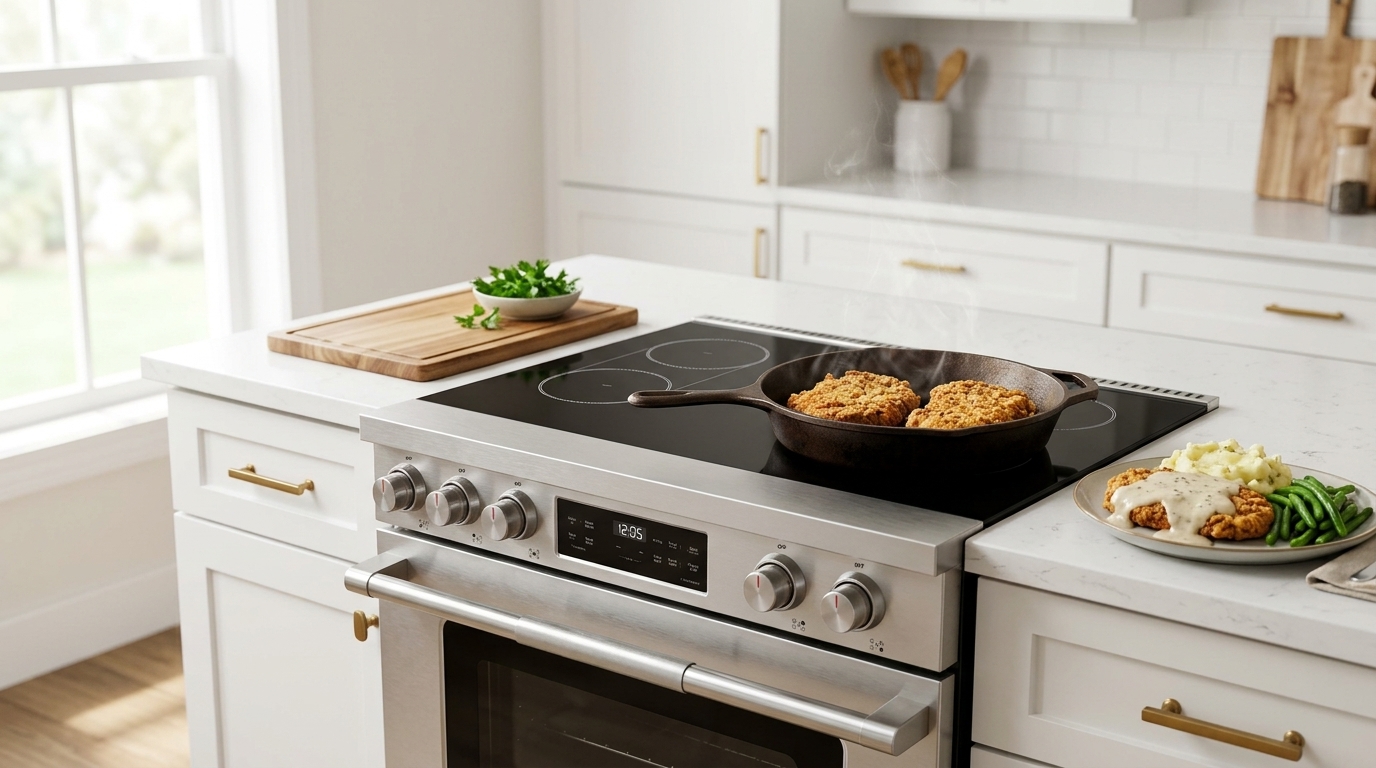
Induction suits this dish well, and one of Cosmo’s newest ranges shows why. The recently released Cosmo COS-RIS365SS is a 36 inch slide in induction range from the Stellar Collection, introduced in September. Its smooth ceramic glass cooktop has five induction burners, and induction heats compatible cookware directly through electromagnetic energy instead of warming a flame or a coil first. That direct heating gives a cutlet the responsive control it demands, so the oil reaches temperature quickly and responds fast when you adjust the knob.
A cast iron skillet pairs naturally with induction, since magnetic cookware is what these burners are built to heat. Confirm that any pan you plan to use is compatible before cooking. The cooktop also includes a sync bridge that joins two zones to accommodate larger cookware such as a griddle. Knob controls keep adjustments simple, and a thermometer clipped to the pan remains the best way to confirm the oil is where you want it.
The oven contributes too. Its 6.1 cubic foot convection cavity includes a Keep Warm setting, so finished cutlets can rest on a rack while the gravy comes together on the stove. For a lighter weeknight version, the Air Fry function and included tray offer another route to a crisp coating with less oil.
Technique for a Crisp, Tender Cutlet
Start with cube steak or round steak pounded to roughly a quarter inch. Pounding it evenly matters because a cutlet of uniform thickness cooks at the same rate across the pan. Cube steak is already tenderized, and without that step the result turns tough. Pat the cutlets dry, then season the flour generously with salt, black pepper, paprika, and garlic powder.
Use a double coating for a shaggy, substantial crust: flour first, then a dip in egg and buttermilk, then flour again, pressing firmly so it clings. Let the coated cutlets rest on a rack for about ten minutes so the coating hydrates and holds during frying.
Heat about a quarter inch of neutral oil in the skillet to 350 degrees Fahrenheit. Fry in batches without crowding, and wait for the oil to return to temperature before each new batch. Expect roughly three to four minutes per side, depending on thickness. Because mechanically tenderized beef carries a higher food safety consideration, the USDA recommends cooking it to 145 degrees Fahrenheit with a three minute rest, so check the thickest part with an instant read thermometer. Move finished cutlets to a wire rack rather than paper towels, which keeps the underside crisp.
If the crust slides off, the cutlet was probably wet or the coating was not pressed firmly enough. If the crust turns dark before the beef is done, lower the burner slightly and give the oil a minute to settle. If the crust is pale and oily, the oil was too cool, so raise the heat and let it recover before the next batch.
Chicken Fried Steak With Cream Gravy
Serves 4. Prep time 20 minutes, resting time 10 minutes, cook time 25 minutes.
Ingredients
- 4 cube steaks, about 5 ounces each
- 2 cups all purpose flour, seasoned with 2 teaspoons paprika, 1 teaspoon garlic powder, 1 teaspoon black pepper, and 1 teaspoon salt
- 2 large eggs beaten with 3/4 cup buttermilk
- Neutral oil for frying
- 1/4 cup flour for the gravy
- 2 1/2 cups whole milk
- 1 teaspoon black pepper, plus salt to taste
Method
- Dredge each cutlet in the seasoned flour, dip it in the egg mixture, and coat it in flour again. Rest the cutlets on a rack for 10 minutes.
- Heat a quarter inch of oil in a 12 inch cast iron skillet over medium high heat until it reaches 350 degrees Fahrenheit.
- Fry two cutlets at a time for 3 to 4 minutes per side until deep golden and 145 degrees Fahrenheit inside. Hold them on a rack in a warm oven for at least 3 minutes.
- Pour off the oil, leaving 1/4 cup of drippings and browned bits. Whisk in 1/4 cup flour and cook for one minute. Add the milk gradually, whisking constantly, then simmer 4 to 5 minutes until thick. Season with pepper and salt.
- Serve the steaks smothered in gravy with mashed potatoes and green beans.
Keep extra gravy warm at the table. Leftover cutlets reheat well on an Air Fry setting, which restores more of the crust than a microwave does.
Ventilation, Oil Safety, and Cleanup
Frying sends fine grease droplets and strong odors into the air, so switch on the range hood before the oil heats and leave it running for ten to fifteen minutes after the pan comes off the burner. Keep a lid within reach as well. If oil ever ignites, turn off the burner, slide the lid over the pan to smother the flames, and never use water. Let the oil cool completely before straining or discarding it, and never leave a hot pan unattended.
Cleanup is where induction earns additional credit. Because the burners heat the pan instead of the glass, splatter is easier to wipe from the cooktop once it cools. Inside, the COS-RIS365SS offers a Steam Clean function that uses heat and moisture to loosen baked on residue, although it is not a full self clean cycle and still calls for a wipe down afterward.
National Chicken Fried Steak Day is a reminder that a humble dish rewards careful technique. Control the oil, protect the crust, and the rest follows: a crisp cutlet, a velvety gravy, and a plate worth the effort. With a responsive cooktop like the one on the recently released Cosmo COS-RIS365SS, holding that temperature becomes far more manageable, whether you cook the classic version in a cast iron skillet or lighten a weeknight meal with Air Fry.