
Your Air Fryer Is Thanksgiving’s Third Oven: Crisping, Reheating and Rescuing Sides While the Turkey Holds the Range
Somewhere around three thirty on Thanksgiving afternoon, the kitchen hits a familiar traffic jam. The turkey is resting under foil, the oven is finally free, and four dishes need it at the same moment. The rolls want a warm-up, the dressing wants a crisp top, and the green bean casserole is still waiting its turn. The cooktop is full of pots, and the microwave can warm a plate but cannot make anything crunchy.
Most advice for this problem points to the stovetop or a slow cooker. There is a third option that many hosts forget until the day itself: the air fryer. It is a small, fast convection oven that sits on the counter and stays out of the range’s way. With Thursday, November 26 close, this guide covers what to hand to the air fryer, what to keep away from it, and when each job fits into the day.
The Math Behind a Third Oven
The range is booked first, and the turkey books it for a long time. According to the USDA, with the oven set no lower than 325 degrees, an unstuffed bird of 12 to 14 pounds takes roughly three to three and three quarter hours, and an 18 to 20 pound bird takes about four and a quarter to four and a half hours. The turkey then needs to stand for around 20 minutes before carving. That rest is the main oven’s only open window, and every dish on the menu wants it.
The cooktop is the second station, and a crowded one. What remains is a pile of small jobs: a few minutes of crisping, a quick reheat, a last-minute fix. Those are exactly the jobs an air fryer does well. For a full count of oven hours, see our guide to how much oven, microwave and reheating capacity you actually need for Thanksgiving.
What an Air Fryer Does Best, and Where It Stops
An air fryer moves very hot air quickly around a small chamber. That dries the surface of food and browns it, which is why it excels at finishing. It is much less suited to cooking a big, wet or deep dish from raw.
Be honest about capacity. A 5.8 quart basket handles a pound of vegetables or a few portions of a side, not a full casserole pan of dressing. Think of it as a finishing station, not a second kitchen. Everything below follows that rule: small batches, short times, and food that is already cooked.
Crisp: Small Jobs That Make the Table Look Finished
Dinner rolls. Rolls that have sat in a basket go dull and a little tough. Two to four minutes at around 320 to 350 degrees brings back a soft inside and a lightly crisp crust.
Fried onion topping. Canned fried onions turn limp once the container has been open for a while. A minute or two in the basket refreshes the crunch. Add them to the green bean casserole in the final minutes, and watch closely, because they go from golden to burnt quickly.
Dressing portions. The big pan of dressing belongs in the main oven, but a second round for late arrivals works well in the air fryer. Spoon a portion into an oven safe ramekin, confirm it fits in the basket with room on every side, and cook it at about 350 degrees for five to eight minutes. The top crisps while the middle heats.
Roasted vegetables. Carrots, cauliflower and potatoes roasted earlier in the day soften as they sit. Spread them in a single layer and give them three to five minutes at 400 degrees to bring the edges back. Crowded vegetables steam, so work in rounds rather than piling them in.
Reheat: One Portion at a Time
Thanksgiving dinner rarely happens at one moment. A guest arrives late, or the cook finally sits down after everyone else has finished. In those moments a plate of cooled food needs warming without turning the kitchen upside down.
The air fryer handles drier foods best: stuffing, roasted vegetables, rolls, and anything with a crust. Lower the temperature to around 300 to 325 degrees for denser dishes, add a splash of broth to dressing before it goes in, and allow a few extra minutes. The USDA advises that leftovers reach 165 degrees when reheated, so use a food thermometer rather than guessing by steam.
Some foods are better left alone. Mashed potatoes, gravy, cranberry sauce and creamed dishes lose moisture quickly in moving air, so they belong on a low burner with a lid or in the microwave. Sliced turkey deserves the same caution, since it dries fast.
Rescue: When a Side Goes Sideways
Every Thanksgiving has at least one near miss, and a countertop appliance makes the fix easy.
- The rolls came out pale. A few minutes in the basket finishes the browning without sending the whole tray back to the main oven.
- The roasted vegetables went soft. The high setting fixes this faster than any other method on the counter.
- The dressing is cold in the middle. Portion it into ramekins and finish it in rounds, and it arrives hot with a proper top.
- The casserole topping is pale. Heavier toppings such as pecans or crushed crackers can brown in the basket in a minute or two. Light toppings like marshmallows and loose breadcrumbs can blow around in the airflow, so skip the air fryer for those.
A Sample Thursday Run Sheet
Times below assume the turkey comes out around four and dinner is at five. Slide everything to fit your own schedule.
- Early afternoon: Clear a heat safe spot with open space on every side, and set out ramekins and a thermometer.
- 4:00 to 4:20, while the turkey rests: The main oven takes the dressing and the casserole. The air fryer handles roasted vegetables in two quick rounds.
- 4:35: Rolls go into the basket for their final warm-up.
- 4:45: Casserole comes out, onions go on, and everything stands a few minutes.
- After the first plates: Keep the basket free for late arrivals. Reheat one portion at a time and check the temperature.
Where the COS-58AFAKSS Fits
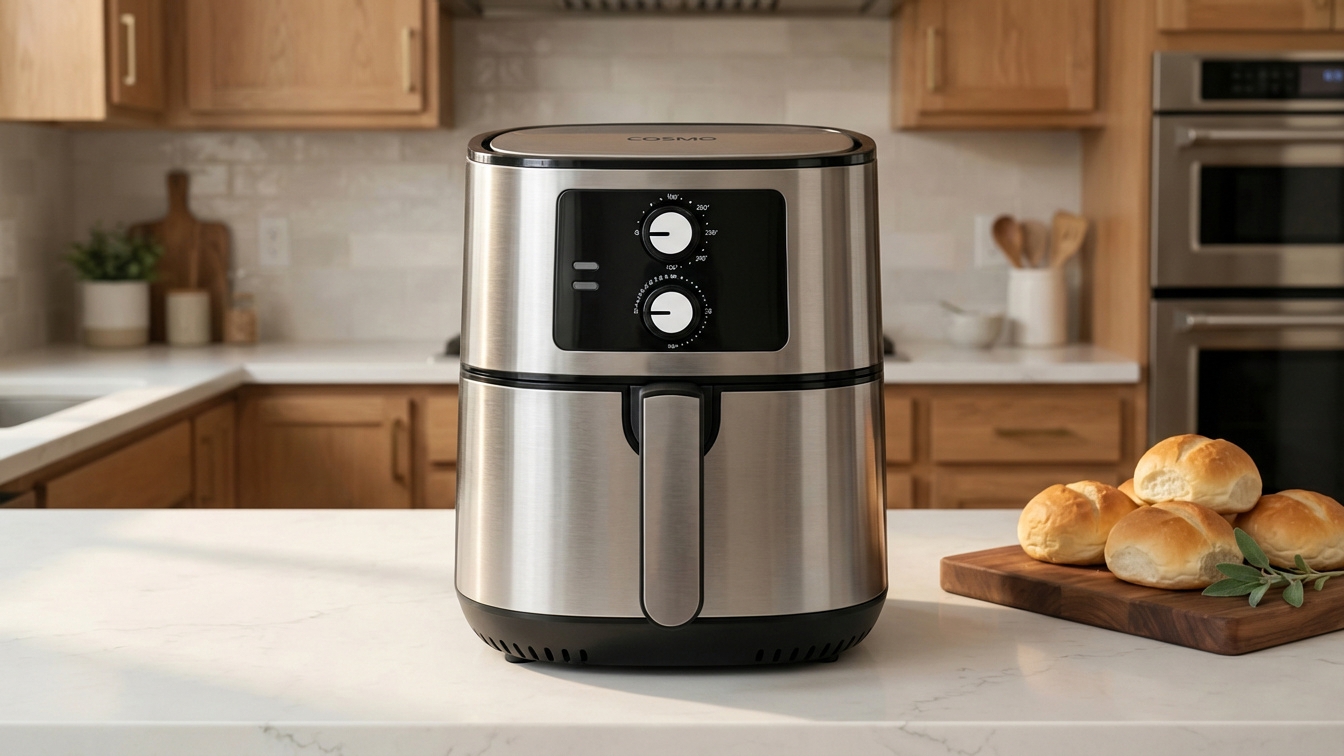
A plan like this depends on an air fryer with enough room and controls that are quick to adjust. Cosmo’s COS-58AFAKSS is a 5.8 quart electric hot air fryer with a 1400 watt heating system. According to Cosmo, the basket fits three chicken thighs or a full pound of Brussels sprouts in a single layer, which is the condition that produces a crisp finish. That makes it a good size for Thanksgiving finishing work: a round of vegetables, a few rolls, or a ramekin or two of dressing.
Separate knobs set temperature and timer, and the temperature range runs from 180 to 400 degrees. You can warm dressing gently at the lower end, finish rolls in the middle, and crisp vegetables at the top. Cosmo lists the unit as needing little to no preheating, so moving from one job to the next is quick.
The timer runs up to 30 minutes and includes auto shut off, a helpful backup when several things compete for attention, though no substitute for staying close while food cooks. The basket and grill pan have a nonstick coating and are dishwasher safe, so the crumbs and drips from a day of finishing work go straight into the dishwasher.
One limit is worth stating plainly: it is one basket, so jobs happen in rounds. The run sheet works because each job takes only a few minutes.
Safety and Setup Notes
- Place the air fryer on a heat safe surface with open space on every side while it runs.
- A 1400 watt appliance draws a meaningful share of a standard household circuit, so avoid plugging it into the same circuit as the microwave or other heating appliances running at the same time.
- Avoid loose parchment or light foil, since the fan can lift it toward the heating element, and check the manual before covering anything. Never leave the air fryer running unattended, even with auto shut off.
- Refrigerate perishable leftovers within two hours of cooking, and bring reheated food to 165 degrees.
The Bottom Line
Thanksgiving is a scheduling problem before it is a cooking problem, and one good scheduling trick is giving the small jobs a home of their own. When the turkey holds the range and the pots hold the cooktop, an air fryer can crisp the rolls, revive the vegetables, and rescue the side that went sideways, a few minutes at a time. Learn what it does well, keep it away from the gravy, and plan its jobs before Thursday.