
Beating the Heat: How to Keep Your Refrigerator Running Efficiently During August Heatwaves
August has a way of turning kitchens into the hottest room in the house. Between the afternoon sun pouring through the windows and the oven getting less use in favor of quick, cool meals, one appliance quietly works harder than almost anything else in the home during a heatwave: the refrigerator. It runs around the clock in every season, but when the ambient temperature climbs into the 90s, the compressor has to work overtime just to hold a steady 37°F. Understanding why that happens, and what can be done about it, is the difference between a fridge that sails through summer and one that struggles, runs up the electric bill, or lets food spoil early.
Why Heatwaves Put Extra Strain on Your Fridge
A refrigerator does not create cold so much as it removes heat, pulling warmth out of the interior and releasing it into the surrounding room through the condenser coils. That process depends on a meaningful temperature difference between the inside of the unit and the air around it. When a kitchen climbs from a comfortable 72°F to a stuffy 85°F or more, that gap narrows, and the compressor has to run longer and more often to move the same amount of heat. The result is a refrigerator that cycles almost constantly, uses more electricity, and, if conditions are severe enough, may still struggle to keep the interior as cold as it should.
This is compounded by the fact that summer is often when refrigerators are asked to do the most work. Warm-weather grocery habits mean more cold drinks, more produce, more ice for entertaining, and more trips to the door as everyone reaches for something cool. Every open door lets warm, humid air rush in, and the compressor has to counteract that before it can rest again.
Signs Your Refrigerator Is Working Too Hard
A refrigerator under heat stress usually gives some warning before food actually spoils. It helps to know what to watch for so small issues can be addressed before they become expensive ones.
- The compressor runs almost continuously rather than cycling on and off.
- The exterior sides or back feel unusually warm to the touch.
- Ice cream or frozen items become noticeably softer than usual.
- Condensation builds up inside the fridge or around the door seals.
- The energy bill creeps upward without any other explanation.
Give the Coils Room to Breathe
Every refrigerator relies on its condenser coils to release the heat it pulls from inside the cabinet, and those coils need open air around them to do that job well. A unit pushed flush against the wall, or boxed in by cabinetry with no ventilation gap, cannot shed heat efficiently no matter how well it was engineered. Leaving a few inches of clearance on the sides and back, and vacuuming dust and pet hair off the coils every few months, keeps that heat exchange working the way it was designed to. Placement matters just as much as clearance. Direct sunlight through a nearby window, or standing next to a stove or dishwasher that generates its own heat, forces the refrigerator to fight a losing battle against its immediate surroundings. A shaded, well-ventilated spot away from other heat-generating appliances gives the compressor the best possible conditions to work in, heatwave or not.
Check the Door Seals
The rubber gasket running around the refrigerator and freezer doors is one of the most overlooked parts of the entire appliance, and one of the most important during hot weather. A worn, cracked, or loose seal lets cold air leak out and warm, humid air seep in continuously, forcing the compressor to run far more than it should. A simple test is to close the door on a piece of paper or a dollar bill; if it slides out easily, the seal has likely lost its grip and should be cleaned, and replaced if cleaning does not solve the problem.
Keep It Stocked, But Not Crowded
A refrigerator that is reasonably full actually holds its temperature more efficiently than an empty one, because the mass of cold food and drinks helps absorb the warm air that rushes in every time the door opens. During a heatwave, keeping a few extra bottles of water in otherwise empty spots can genuinely help the unit recover faster after each opening. The line to watch is overcrowding. Packing shelves so tightly that air cannot circulate around the contents forces the compressor to work harder to reach every corner, which defeats the purpose. Leaving a little breathing room between items, especially near the vents, keeps cold air moving evenly throughout the cabinet.
Dial In the Right Temperature
It is tempting to turn the dial to its coldest setting during a heatwave, but that usually just means the compressor runs longer without meaningfully improving food safety. The recommended range for the refrigerator compartment is 35°F to 38°F, and 0°F to 5°F for the freezer, and a simple appliance thermometer is the most reliable way to confirm the unit is actually holding those numbers rather than trusting the dial alone. Refrigerators with digital touch controls make this considerably easier to manage, since a precise, readable setpoint takes the guesswork out of finding the right balance between food safety and energy use.
Be Deliberate About Opening the Door
Every time the refrigerator door opens, warm kitchen air rushes in and cold air spills out onto the floor, and the compressor has to work to recover that lost cold. During a heatwave, when the air rushing in is both hotter and more humid than usual, that recovery takes longer. Deciding what is needed before opening the door, rather than standing with it open while scanning the shelves, and making sure the door is fully closed and sealed each time, adds up to a meaningful difference in how hard the compressor has to work over the course of a hot day.
Where Design Makes a Real Difference
Some of the burden of a heatwave can be engineered out of the equation before the appliance ever reaches the kitchen. Counter-depth French door refrigerators, for instance, are built to sit closer to cabinetry while still leaving room for airflow at the back and sides, which helps with the ventilation concerns mentioned earlier without requiring a deep, freestanding footprint. Tighter door seals and a well-ventilated cabinet design work together in this style of refrigerator, giving the compressor a real advantage when the kitchen itself is already working against it.
Slide-out freezer drawers and well-organized crisper bins also play a quiet role here, since food that is easy to find gets pulled out and put back quickly, which means less time with the door standing open. Soft-close door mechanisms help too, ensuring that a hastily shut door still seals completely rather than resting slightly ajar, which is an easy way to lose cold air unnoticed on a busy summer evening.
A Refrigerator Built With Summer in Mind
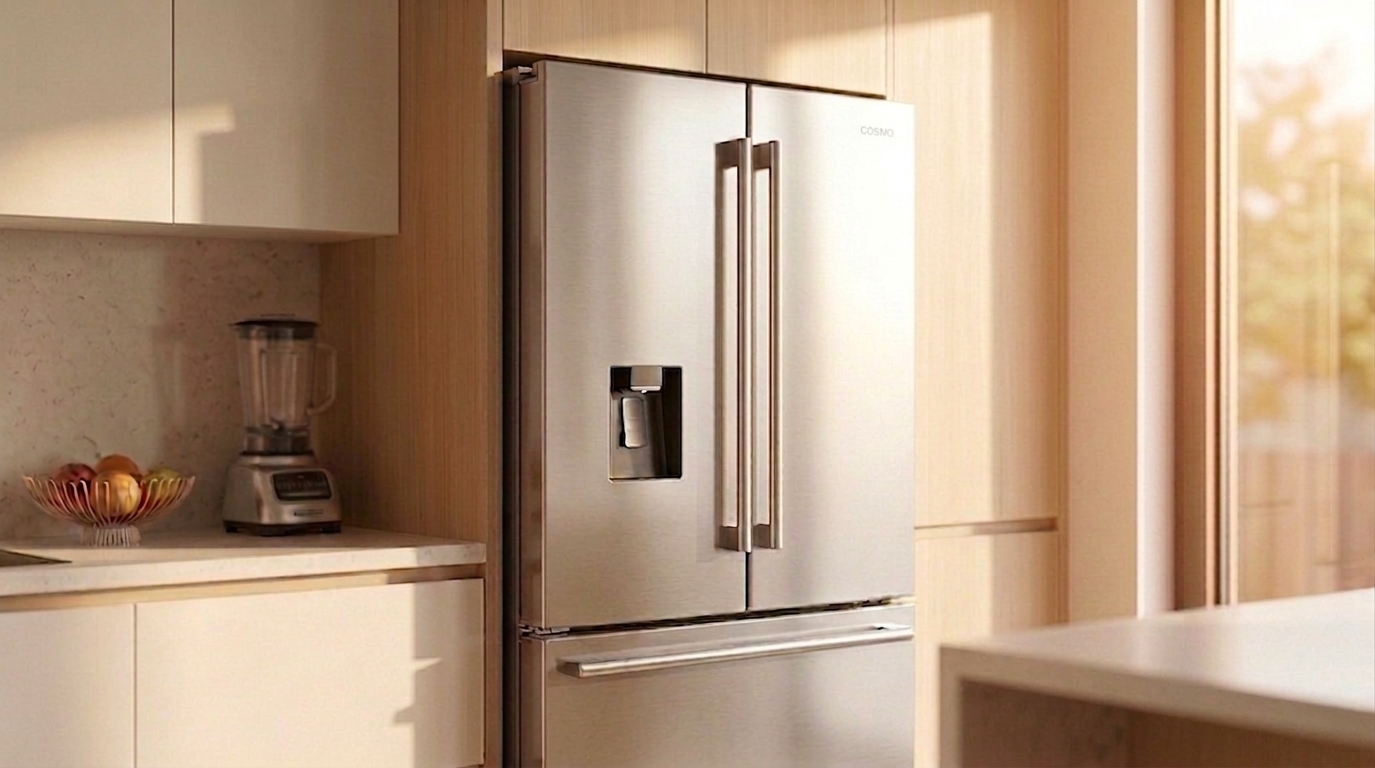
The Cosmo COS-FDR223GWSS, a 36-inch, 22.4 cu. ft. French door refrigerator, reflects a number of these design choices directly. Its counter-depth profile gives it a built-in look while still preserving the ventilation clearance a compressor needs to run efficiently, and its 15.5 cu. ft. refrigerator compartment paired with a 6.9 cu. ft. freezer offers enough capacity to keep a household well stocked with cold drinks and frozen essentials through the hottest stretch of summer without resorting to overcrowded shelves. Digital touch controls make it simple to dial in a precise setpoint in both compartments rather than guessing at a dial, and the slide-out freezer drawer keeps frozen goods organized and easy to reach, which shortens the time the door needs to stay open. A soft-close mechanism on both the refrigerator and freezer doors means a quick, one-handed close still seats the door fully, and the fingerprint-resistant stainless steel exterior holds up well to the extra traffic a kitchen sees when everyone is reaching for something cold. Door bins and dedicated crisper drawers round out the interior, keeping produce fresher for longer and giving smaller bottles and condiments a home that does not compete with the main shelves for space.
A Few Extra Habits Worth Building
Beyond the refrigerator itself, a handful of kitchen habits can ease the load during a heatwave.
- Let hot leftovers cool to room temperature briefly before placing them inside, since a large amount of hot food raises the internal temperature significantly.
- Group similar items together so the door does not need to stay open while searching.
- Run the dishwasher and oven in the evening when possible, since both release heat that a nearby refrigerator has to work against.
- Consider a portable fan aimed at improving general kitchen airflow on the most extreme days, which indirectly helps every appliance in the room, including the fridge.
Staying Cool Through the Rest of Summer
A refrigerator rarely gets much attention until something goes wrong, but a little seasonal awareness goes a long way toward preventing that. Clearing space around the coils, checking the door seals, keeping the unit reasonably stocked, setting the temperature correctly, and being deliberate about how often the door opens are all small, low-effort habits that add up to real savings on the electric bill and real peace of mind about food safety during the hottest weeks of the year.
For households whose refrigerator is showing its age, or simply was not built with ventilation and sealing in mind, an upgrade to a model designed around those principles, such as the Cosmo COS-FDR223GWSS, can make the difference between an appliance that fights the heat all summer and one that barely notices it is there.