
Pressed, Packed, and Perfect: A Toast to National Panini Day
Once a year, on August 11th, a modest but beloved culinary tradition gets its moment in the spotlight. National Panini Day honors the pressed, grilled sandwich that has become a staple on lunch menus, coffee shop counters, and home kitchens alike. It is a day that invites us to slow down, appreciate craftsmanship in something as simple as bread and filling, and recreate that signature crisp, golden crust at home. But behind the crunch of the crust and the pull of melted cheese lies a story that spans centuries, crosses continents, and reflects the evolution of how people eat on the go without sacrificing quality or flavor.
A Sandwich Rooted in Italian Tradition
The word “panini” is the plural of “panino,” Italian for “small bread roll.” In casual English, it describes a pressed sandwich, though purists note the linguistic error. The sandwich’s origins date back to the sixteenth century, with Italian cookbooks referencing pressed bread-based dishes. However, the modern panini emerged in the twentieth century, particularly in Italy’s Lombardy region, especially Milan, during the 1970s and 1980s. Office workers needed a quick, tasty lunch option, and the panino, filled with cured meats, cheeses, and vegetables, pressed and warmed, filled that gap. It offered speed without feeling like fast food, spreading from Milanese cafes to global menus. By the 1980s and 1990s, the panini reached the United States, embraced by coffee shops and delis. The electric panini press allowed restaurants and home cooks to recreate its signature crisp exterior and gooey interior without traditional methods.
How National Panini Day Came to Be
National Panini Day, observed annually on August 11th, is part of National Panini Month, which spans the month of August. Established in 2008 by Sargento Foods, an American cheese company known for promoting creative cheese use in cooking, the month celebrates cheese’s role in paninis.
National Panini Day, first observed on August 11, 2016, was created by John-Bryan Hopkins, the food enthusiast behind Foodimentary. Unlike National Panini Month, which provided a full month of recognition, National Panini Day offers a more focused celebration, similar to how many broader food months have a signature day.
While seemingly lighthearted, such days serve a purpose for the food industry and consumers. They encourage experimentation in restaurants, grocery stores, and homes, foster social sharing and community engagement, and provide an accessible entry point for learning about the history and craftsmanship of foods.
What Makes a Panini a Panini
A panini is defined by its method, not a strict recipe. Two slices of bread or a split roll are filled with ingredients and pressed under steady heat until golden and crispy, while the interior warms and the cheese melts. This distinguishes it from cold sandwiches or grilled cheeses, which lack the ridged press marks and even heat distribution.
Bread choice is crucial. Ciabatta, focaccia, baguette, and rustic Italian loaves are popular choices. They must be sturdy enough to hold up to pressing without becoming soggy, yet tender enough to bite through easily.
Fillings range from traditional Italian combinations to modern interpretations. A classic Milanese-style panini might include prosciutto, mozzarella, arugula, and olive oil. Other popular combinations include mortadella with provolone, roasted vegetables with fontina, or turkey with brie and cranberry. The unifying thread is a cheese that melts beautifully, as that gooey, stretchy quality is often what people imagine when they picture a well-made panini.
The Rise of the Panini Press, and What Has Replaced It
The panini press, a tool responsible for its widespread popularity, revolutionized the process of making paninis. In its traditional Italian form, pressing was done with simple equipment like a heavy pan, a brick wrapped in foil, or a specialized cast-iron press. These tools relied on direct contact and weight to flatten the sandwich and transfer heat evenly, creating the signature ridged crust that remains a visual hallmark of the panini today.
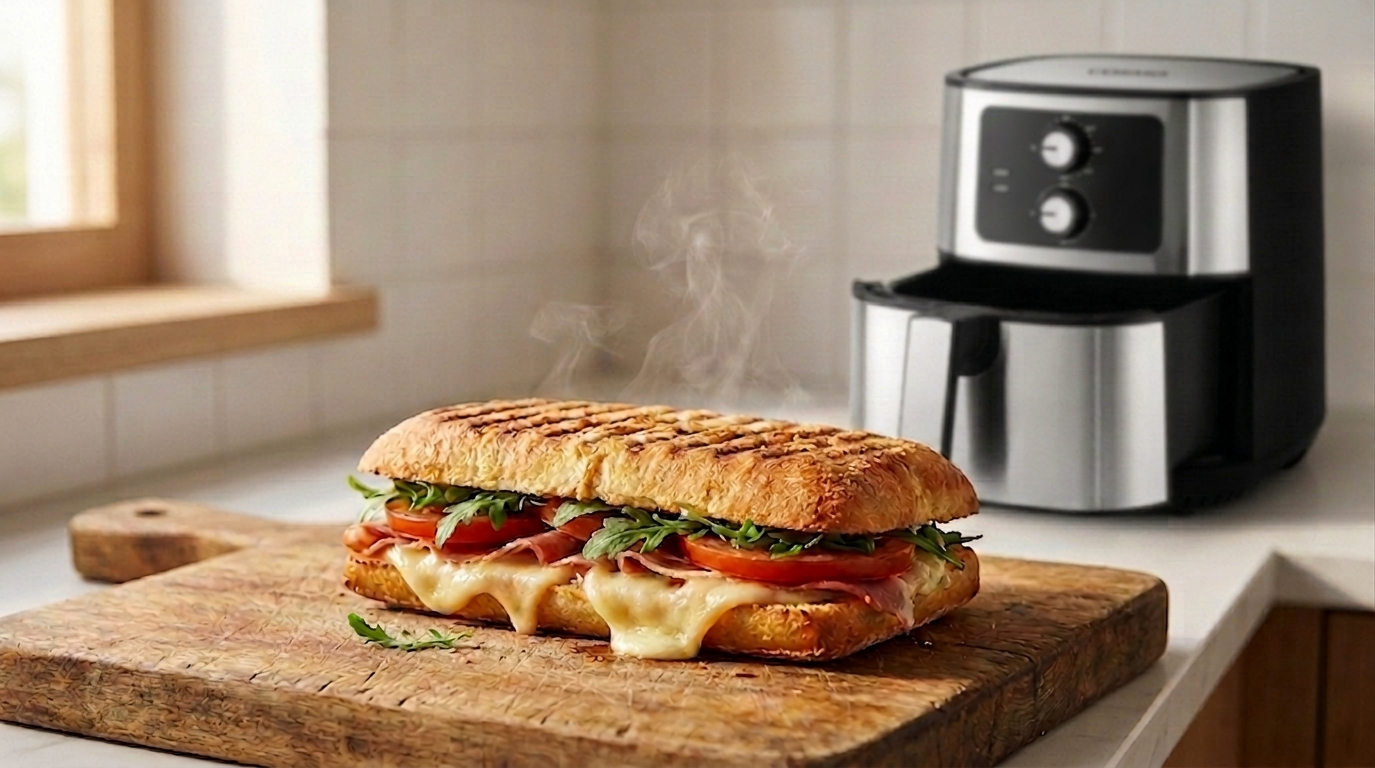
The modern electric panini press, available to home cooks since the 1990s, transformed sandwiches from specialty items to mainstream menu staples. Countertop air fryers, with circulating hot air and top-mounted grill elements, can crisp bread and melt cheese as effectively as dedicated presses, offering the added convenience of handling fries, vegetables, and other meals. In our own test kitchen, a batch of paninis came out of a Cosmo air fryer with the same golden crust and melted center as one made on a traditional press, just with a bit less cleanup afterward. It is a quiet, practical shift, less about replacing tradition and more about finding it a new home in kitchens where counter space and versatility both matter.
Today, tools for making a great panini range from simple stovetop setups to elaborate commercial-grade presses used in cafes and restaurants. What unites them is the same basic principle: even heat, applied with a bit of pressure, turns an ordinary sandwich into something worth celebrating.
Panini Around the World
Paninis, with their Italian roots, have spread globally, leading to regional adaptations. In the US, they often feature hearty fillings like grilled chicken with pesto and mozzarella or roast beef with caramelized onions and provolone, catering to a culture that values substantial lunches. In France, similar sandwiches may include brie, fig jam, or Dijon mustard, blending Italian technique with French flavors.
In Latin America, a related tradition exists, notably the Cuban sandwich, which shares the pressing method but has a distinct filling of roast pork, ham, Swiss cheese, pickles, and mustard on Cuban bread. While not technically a panini in the strict Italian sense, its shared technique highlights how pressing a filled sandwich for improved texture and flavor has emerged independently across different cultures.
This global patchwork of pressed sandwich traditions underscores the universal appeal of a warm, crisp, melty sandwich, even if the specific ingredients and names vary.
Celebrating National Panini Day at Home
For those looking to mark the occasion, National Panini Day offers plenty of ways to participate, regardless of culinary skill level. The simplest approach is to visit a local cafe or deli and order a panini, supporting small businesses while enjoying a ready-made version of the classic sandwich. Many restaurants and shops run promotions or specials around the holiday, making it an ideal time to try a new flavor combination.
For those who prefer to cook, the day is a great excuse to put whatever equipment is already on hand to good use, whether that is a dedicated press, a heavy skillet, or a countertop air fryer. A Cosmo air fryer, in particular, makes for an easy substitute for a press: its roomy basket and top grill element brown the bread and melt the cheese at the same time, so there is no need to flip the sandwich or watch it closely. Starting with quality bread and a cheese that melts well, such as mozzarella, provolone, or fontina, lays a strong foundation. From there, the possibilities are nearly endless, whether one leans toward a traditional Italian combination or a more experimental pairing inspired by regional cuisines.
The Cosmo COS-58AFAKSS, a 5.8-quart electric hot air fryer, was built with exactly this kind of everyday cooking in mind. Its separate timer and temperature knobs make it simple to dial in a range between 180°F and 400°F, which covers everything from gently warming a delicate filling to driving a deep, crackling crust into a heartier sandwich, and there is little to no preheating needed before the first panini goes in. The top grill browns from above while the basket crisps from below, so both sides of the sandwich finish evenly without flipping. Because the basket holds 5.8 quarts, it comfortably fits several sandwiches side by side, which matters when a whole household or a gathering of friends all want a panini at once rather than one at a time.
Cleanup is part of the appeal as well. The included food basket and grill pan are both non-stick and dishwasher-safe, so melted cheese that would otherwise stick to a press or a pan wipes away with little effort. An auto shut-off feature ends the cooking cycle automatically once the timer runs out, which takes the guesswork out of watching the clock, and the unit is ETL listed, meeting recognized North American safety standards. Beyond paninis, the same appliance handles frying, baking, grilling, and roasting, so it earns its spot on the counter well beyond National Panini Day.
Hosting a small gathering centered around a panini bar can also be a memorable way to celebrate. Setting out an assortment of breads, meats, cheeses, vegetables, and spreads allows guests to build their own combinations before sending them through a press or a Cosmo air fryer to order. Because the COS-58AFAKSS’s basket can hold more than one sandwich at a time, it keeps the line moving without anyone waiting long for their turn. This approach turns a simple lunch into an interactive, shared experience, fitting for a holiday centered on food and community.
A Small Holiday with a Meaningful Message
National Panini Day, though not a major cultural or historical observance, offers a reminder to appreciate everyday foods that bring comfort, convenience, and craftsmanship. The panini’s journey from sixteenth-century Italian cookbooks to modern kitchens and cafes reflects how food traditions evolve, travel, and adapt.
Whether celebrated with a local cafe, homemade creation, or simply enjoying a sandwich, National Panini Day encourages us to recognize the craft behind a dish often taken for granted. So, on August 11th, consider honoring the pressed sandwich that has earned its place on tables worldwide.
If you’re retiring your old panini press or looking for a versatile appliance, the Cosmo COS-58AFAKSS 5.8 QT. Electric Hot Air Fryer is ready for it. Bring one home and put it to work this National Panini Day.