
Cozy Meals, Less Cleanup with One-Pan Dinners for Busy Weeknights
When the day has been full, dinner should feel like a welcome pause, not another project. One-pan meals bring the ingredients, cooking, and cleanup together, making them a practical choice for busy weeknights. With a little preparation and a hot oven, a single sheet pan can turn vegetables, grains, and proteins into a satisfying meal with very little hands-on work.
The appeal goes beyond fewer dishes. Cooking ingredients together lets their flavors mingle: vegetables take on the savory juices from chicken, while herbs and spices season the whole pan. And because much of the cooking happens in the oven, you can use the time to set the table, help with homework, or simply take a breath before dinner.
Build a balanced dinner on one pan
A reliable sheet-pan dinner starts with three parts: a protein, vegetables, and a source of flavor. Chicken thighs, salmon, tofu, sausage, or chickpeas can all work well. For vegetables, choose a mix that suits the season and cooks in roughly the same amount of time. Potatoes, carrots, broccoli, cauliflower, onions, and bell peppers are dependable choices.
Cut ingredients into pieces of similar size so they cook evenly. Dense vegetables such as potatoes and carrots need more time than tender options such as zucchini or asparagus. If you want both, give the denser vegetables a head start, then add the quicker-cooking ingredients later.
Seasoning can be as simple as olive oil, salt, pepper, and garlic. Add lemon, smoked paprika, rosemary, cumin, or a favorite spice blend to give the meal a distinct direction. A finishing touch, such as chopped herbs, grated cheese, a squeeze of citrus, or a spoonful of yogurt sauce, to make a familiar combination feel new.
Start with a dependable formula
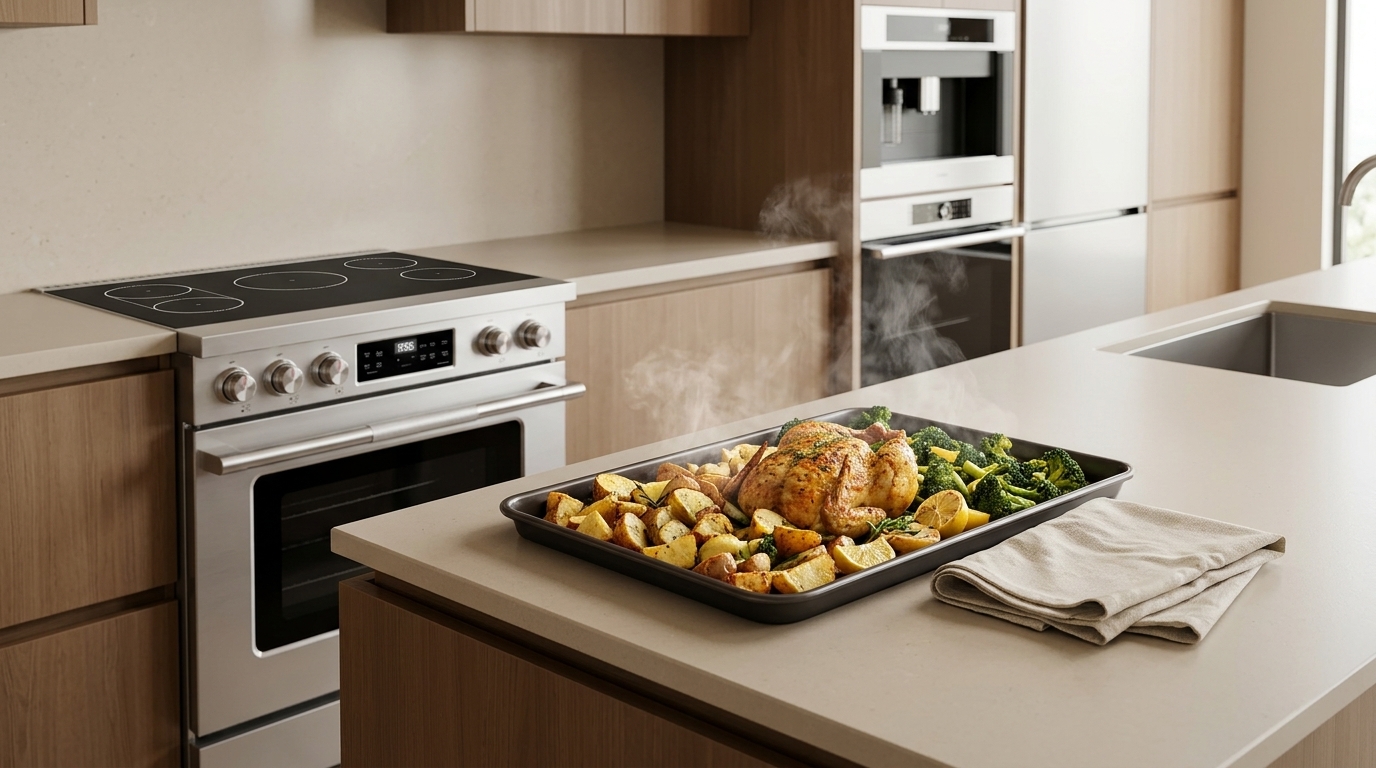
For an easy weeknight dinner, try lemon-herb chicken with potatoes and broccoli. Cut potatoes into small wedges, toss them with olive oil, salt, pepper, and dried rosemary, and spread them across a sheet pan. Roast them until they begin to soften. Meanwhile, season chicken thighs with lemon zest, garlic, and a little more oil. Add the chicken to the pan, leaving space between the pieces, and roast until nearly cooked through. Add broccoli florets for the final stretch so they become tender with lightly browned edges.
The exact cooking time depends on the size of the pieces and your oven, so use a food thermometer to check chicken. The thickest part should reach 165°F. If the vegetables need more color, move the pan closer to the top of the oven for a few minutes, keeping an eye on it.
This approach also works with other combinations. Try salmon with green beans and cherry tomatoes, or sausage with sliced peppers, onions, and small potatoes. For a meat-free option, roast chickpeas with cauliflower and red onion, then serve with warm flatbread or a quick tahini sauce. Keeping the basic structure in mind makes it easier to improvise with what you have.
Give ingredients room to roast
One of the most common sheet-pan pitfalls is crowding. When ingredients sit too close together, they release moisture that can collect on the pan. Instead of browning, the food may steam. Use a large, rimmed baking sheet and arrange ingredients in a single layer, leaving a little breathing room where possible. If you’re cooking for a crowd, use two pans rather than piling everything onto one.
A hot, fully preheated oven helps encourage browning. For many sheet-pan dinners, a temperature around 400°F to 425°F is a useful starting point, though the right setting depends on the ingredients and recipe. Turn vegetables once during cooking if you want color on more than one side. For an even roast, keep the pan centered and avoid opening the oven door repeatedly.
Parchment paper can make cleanup easier, particularly for sticky marinades or roasted vegetables. Check the paper’s temperature guidance before use, and keep it from touching an oven element. For extra browning, roast directly on a clean pan and soak it soon after dinner.
Use your oven’s features thoughtfully
Your oven can do more than supply heat. Convection cooking uses a fan to circulate hot air, which can help food brown more evenly and may shorten cooking time. If you’re using convection, follow the recipe’s guidance or check the food a little earlier than you otherwise would. Every oven behaves differently, so visual cues and a thermometer are more reliable than the clock alone.
For home cooks considering an appliance upgrade, Cosmo’s recently released 36-inch Stellar Collection induction range, model COS-RIS365SS, brings several cooking functions together in one appliance. Its 6.1-cubic-foot convection oven includes bake, convection bake, broil, and air fry modes. For a sheet-pan dinner, convection bake can help circulate heat around the food, while broil can add a little extra color at the end when used carefully. The range also has a steam-clean cycle designed to loosen baked-on residue. Features like these can make it easier to adapt one-pan cooking to a household’s routines and kitchen setup.
Whatever appliance you use, take a moment to learn its settings. An oven thermometer can help you understand whether the displayed temperature matches the heat inside. Keep the rack position in mind, too: the center rack is a practical starting point for most sheet-pan dinners, while moving the pan higher can increase browning near the end.
Make prep and cleanup easier
A few small habits can make one-pan cooking feel even more manageable. Prep vegetables while the oven heats, and measure seasonings before you start. If a recipe calls for a marinade, combine it in a bowl or directly in a reusable storage container. Dry ingredients such as potatoes and broccoli before adding oil; less surface moisture helps them brown.
Choose vegetables with overlapping cooking times, or add ingredients in stages. For example, put potatoes in first, then add chicken, then finish with quick-cooking green beans. This lets everything come together on one pan without overcooking the most delicate ingredients.
When dinner is done, transfer the food to plates or a serving platter and let the pan cool slightly. If food has stuck, soak the pan in warm, soapy water while you eat. Wiping away grease and crumbs before they harden can save scrubbing later. A silicone or wooden spatula can help lift browned bits without scratching the pan.
Plan once, enjoy twice
One-pan dinners can also make tomorrow’s lunch easier. Roast a little extra protein and vegetables, then use the leftovers in grain bowls, wraps, salads, or omelets. Store leftovers promptly in shallow containers in the refrigerator, and reheat them until steaming hot. Keeping sauces separate helps preserve texture and gives the next meal a fresh finish.
A simple weekly plan can reduce last-minute decisions without making dinner feel repetitive. Choose one chicken-based pan, one fish or tofu option, and one vegetarian meal. Change the seasonings to create variety: Mediterranean herbs one night, curry spices another, or chili and lime for a brighter flavor. A pantry staple such as couscous, rice, or canned beans can round out the meal without adding much work.
A calmer way to get dinner on the table
The best weeknight meal is one that fits the people, schedule, and kitchen you have. One-pan cooking offers a flexible starting point: choose ingredients you enjoy, give them room to roast, and let the oven handle most of the work. With a dependable sheet pan and a few favorite seasonings, dinner can be nourishing and full of flavor while leaving fewer dishes in the sink.
On a busy evening, that small shift can make the kitchen feel more welcoming. Put on a tray of vegetables and protein, set the table while everything cooks, and look forward to a warm meal that brings the household together.