
Why Your Nachos Go Soggy(and How Broiler Heat Fixes It)
Nachos seem like one of the easiest things to put out for a crowd: scatter chips on a tray, add cheese and toppings, and heat until everything melts. Then the pan reaches the table, and a few minutes later the bottom layer is soft, the toppings have slid into a puddle, and everyone is reaching for the chips around the edge. The problem is not that nachos are difficult. It is that crisp chips and wet toppings are working against each other.
A broiler delivers intense heat from above, melting cheese quickly instead of leaving chips in a hot oven long enough to steam. Manage moisture and layering, and the platter can stay crisp through dinner.
Why Nachos Turn Soggy
Tortilla chips are crisp because they are dry. Once water reaches them, they soften. That moisture can come from obvious sources, such as salsa, sour cream, or queso, but it also comes from ingredients that look fairly dry. Beans release moisture as they warm. Vegetables give off steam. Meat can carry juices or excess sauce. Even melted cheese can trap steam between layers if the pan is crowded and cooked slowly.
The arrangement matters as much as the ingredients. A thick pile of chips blocks heat from reaching the center, while the chips underneath absorb moisture from everything above them. If you pour salsa or queso over the finished tray, the liquid runs into the gaps and starts softening the chips immediately. Nachos are at their best when the hot ingredients are distributed lightly and the wet toppings are added at the last moment—or served on the side.
Time matters, too. A long bake gives moisture time to move through the pan, so chips can steam before the cheese melts. Microwaving leftovers can be worse: steam softens the chips while the cheese heats.
What the Broiler Does Differently
A broiler is essentially an overhead heat source. Instead of surrounding the food with moderate heat for an extended bake, it sends strong radiant heat down onto the surface. Cheese melts quickly, the tops of the toppings warm, and exposed edges can brown before the whole tray has time to steam itself soft.
That speed is the advantage. A broiler will not rescue chips already soaked in salsa, but it can finish a well-built tray before steam has time to soften it. Follow your oven manual’s rack guidance and stay close: cheese can go from melted to scorched quickly.
A Cosmo range with an oven broiler makes this finish convenient during a holiday meal. Cosmo’s COS-305AGC gas range, for example, has a built-in broiler in its 5.0-cubic-foot oven. Finish a snack-size tray just before serving, and follow your range manual for rack position and broiling guidance.
Build a Better Pan of Nachos
Choose sturdy chips. Thin chips can buckle under toppings, so use thicker tortilla chips that can hold beans, meat, and cheese. Save the small broken pieces for soup or a taco salad.
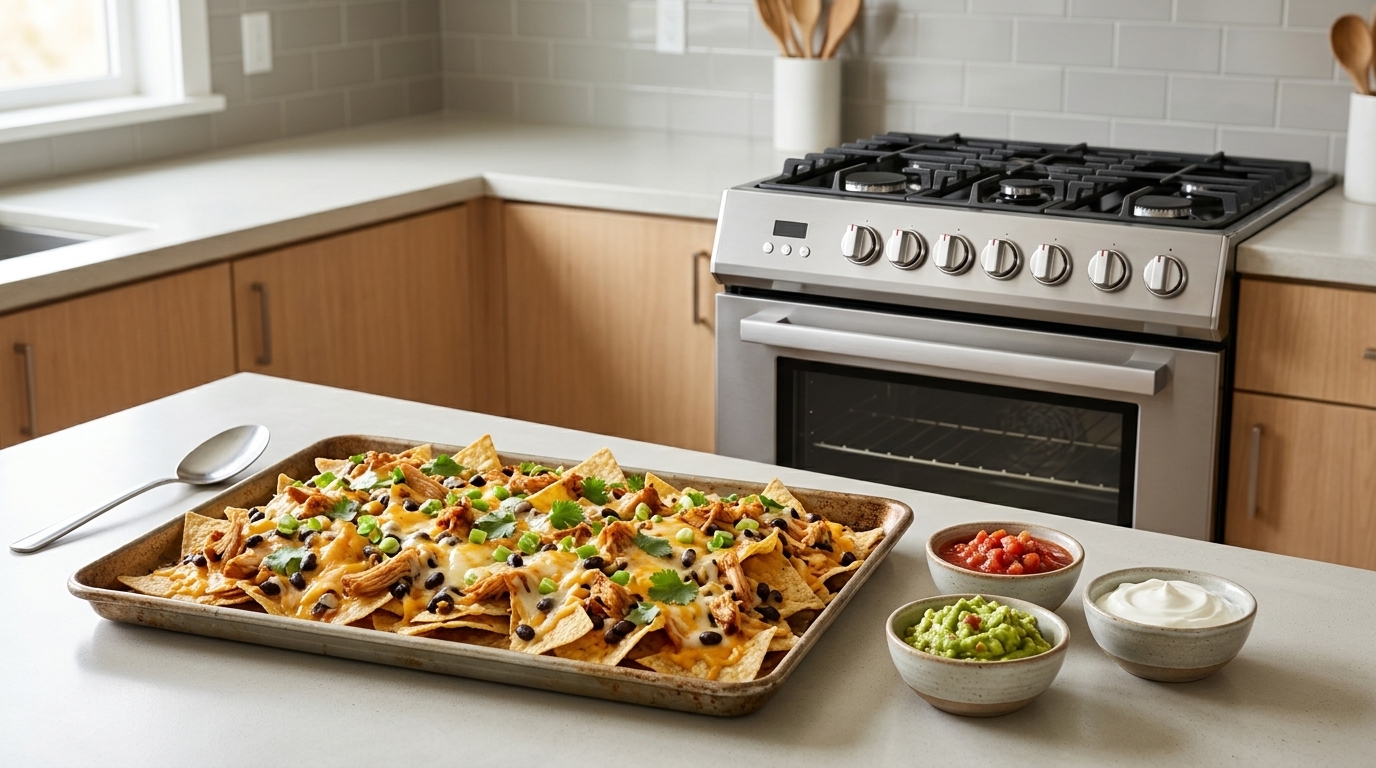
Use a wide pan and spread chips in a mostly single layer. A rimmed baking sheet exposes more chips to heat than a deep dish. For a crowd, make two trays instead of stacking one; the extra surface area means more even melting and fewer soggy chips underneath.
Drain and dry the toppings. Rinse canned beans and let them drain well. If you are using cooked ground beef, chicken, or turkey, spoon off excess liquid and keep the meat lightly seasoned rather than wet with sauce. Pat ingredients such as roasted peppers or pickled jalapeños dry before they go on the tray. The less free liquid you add, the more crunch you keep.
Layer for coverage, not height. Start with chips, then scatter a modest amount of shredded cheese and toppings across the pan. A second light layer is fine, but avoid building a tall stack. Cheese helps toppings cling to chips, so spread it across the surface rather than creating a thick blanket in one spot. Keep juicy ingredients for later.
Add the wet toppings after the heat. Salsa, sour cream, guacamole, crema, and queso are easier to control when served in bowls or spooned over individual portions. This also makes the platter more flexible: guests can add what they like, and the chips that remain on the tray have a better chance of staying crisp.
Thanksgiving Leftover Nachos
This method works especially well with Thanksgiving leftovers because turkey, beans, and cheese can be reheated quickly while cranberry salsa or a spoonful of gravy can stay off the chips until serving. The result feels like a fresh snack rather than a plate of leftovers reheated into softness.
You will need:
- 1 large bag sturdy tortilla chips
- 1 to 1½ cups shredded cooked turkey, patted dry if moist
- 1 cup black beans, rinsed and well drained
- 1½ to 2 cups shredded Monterey Jack or cheddar
- ½ cup corn, drained and patted dry
- 2 scallions, thinly sliced
- Pickled jalapeños, optional
- Salsa, sour cream, and guacamole for serving
To make them:
- Heat the oven to 375°F on Bake. Spread the chips across a rimmed sheet pan in a mostly single layer.
- Scatter the turkey and beans over the chips. Add the corn and jalapeños if using, then distribute the cheese evenly over the top.
- Bake for about 5 to 7 minutes, just until the cheese begins to melt and the turkey is hot. Cooking time can vary by pan and oven, so check early.
- Switch to Broil and move the pan to the rack position specified by your oven manual. Broil briefly, watching constantly, until the cheese is fully melted and a few chip edges are golden, usually around 1 to 2 minutes.
- Finish with scallions. Serve right away with salsa, sour cream, and guacamole on the side.
If you are serving a large group, keep a second tray assembled but unheated. Broil the next tray when the first one is nearly gone instead of trying to keep one oversized pan warm for half an hour. Freshly finished nachos will have better texture than a tray that waits under a lid or in a low oven.
Reheating Nachos Without Losing the Crunch
For leftover nachos that have not yet been topped with salsa or sour cream, use the oven or broiler rather than the microwave. Spread them in a single layer on a sheet pan and warm them at about 350°F until the cheese softens and the toppings are hot. Finish with a brief broil if the cheese needs more color, keeping a close eye on the pan. Avoid reheating the same chips more than once; each round gives moisture more time to soften them.
If the leftovers already have wet toppings, separate what you can before reheating. Remove dollops of sour cream or guacamole, and scrape off excess salsa. The chips may not return to their original crunch, but spreading them out on a pan and using dry heat will give them a better chance than trapping steam in a microwave. Add fresh toppings after the tray is hot.
A Cosmo oven’s broil function can be useful for both a fresh tray and a small portion of leftovers: the goal is to heat the top quickly, then bring the pan to the table before steam has time to collect. Keep the kitchen ventilated when broiling, and use oven mitts when handling the hot sheet pan. The pan and rack remain hot after the broiler is off.
Serve Them While They Are Ready
Nachos do not like to wait. Set out salsa and creamy toppings before the pan comes out, and let everyone serve themselves while the cheese is warm. Small bowls protect the chips and let guests customize each bite. If you are serving them alongside a full Thanksgiving meal, start with a modest tray and keep the remaining chips and toppings separate. You can make another pan after dinner without leaving the first batch to soften while everyone eats.
Soggy nachos are usually the result of too much moisture, too much stacking, or too much time in the oven. Control those three things, and the broiler can do what it does best: melt and brown the top quickly, leaving the chips crisp enough to scoop. With a sturdy chip, well-drained toppings, and a Cosmo range or oven broiler ready for the final minute, nachos can move from a quick snack to a reliable crowd-pleaser—without the soggy center that always seems to disappear last.