
Food Safety at Summer Parties | What Heat Actually Does to Your Buffet
Food Safety at Summer Parties: What the Heat Actually Does to Your Buffet
There’s a specific set of conditions that summer outdoor parties create for food safety that indoor entertaining simply doesn’t replicate. Ambient temperatures of 85-95°F, direct sunlight beating down on serving dishes, food sitting out for hours while guests graze casually, and the social dynamics of a party where nobody wants to be the person who announces that the potato salad has been sitting out too long — all of these combine into a situation where foodborne illness risk is meaningfully higher than most hosts realize or want to acknowledge.
The statistics behind summer food poisoning are not reassuring. The CDC estimates that roughly 48 million Americans experience foodborne illness each year, with cases spiking significantly during summer months when warm outdoor temperatures create ideal conditions for bacterial growth. The connection between summer parties and foodborne illness isn’t coincidental — it’s a predictable consequence of serving temperature-sensitive food in environments where maintaining safe temperatures is genuinely difficult.
Understanding what actually happens to food at different temperatures, why the two-hour rule exists and what it’s based on, and which foods carry the most risk under outdoor summer conditions gives you the practical knowledge to host parties where everyone goes home feeling good rather than experiencing the delayed consequences of something that sat in the sun forty-five minutes too long.
The Temperature Danger Zone: What It Is and Why It Matters
The phrase “danger zone” gets used frequently in food safety contexts without much explanation of what’s actually happening in the food during that temperature range, which makes the guidance feel abstract rather than grounded in something real.
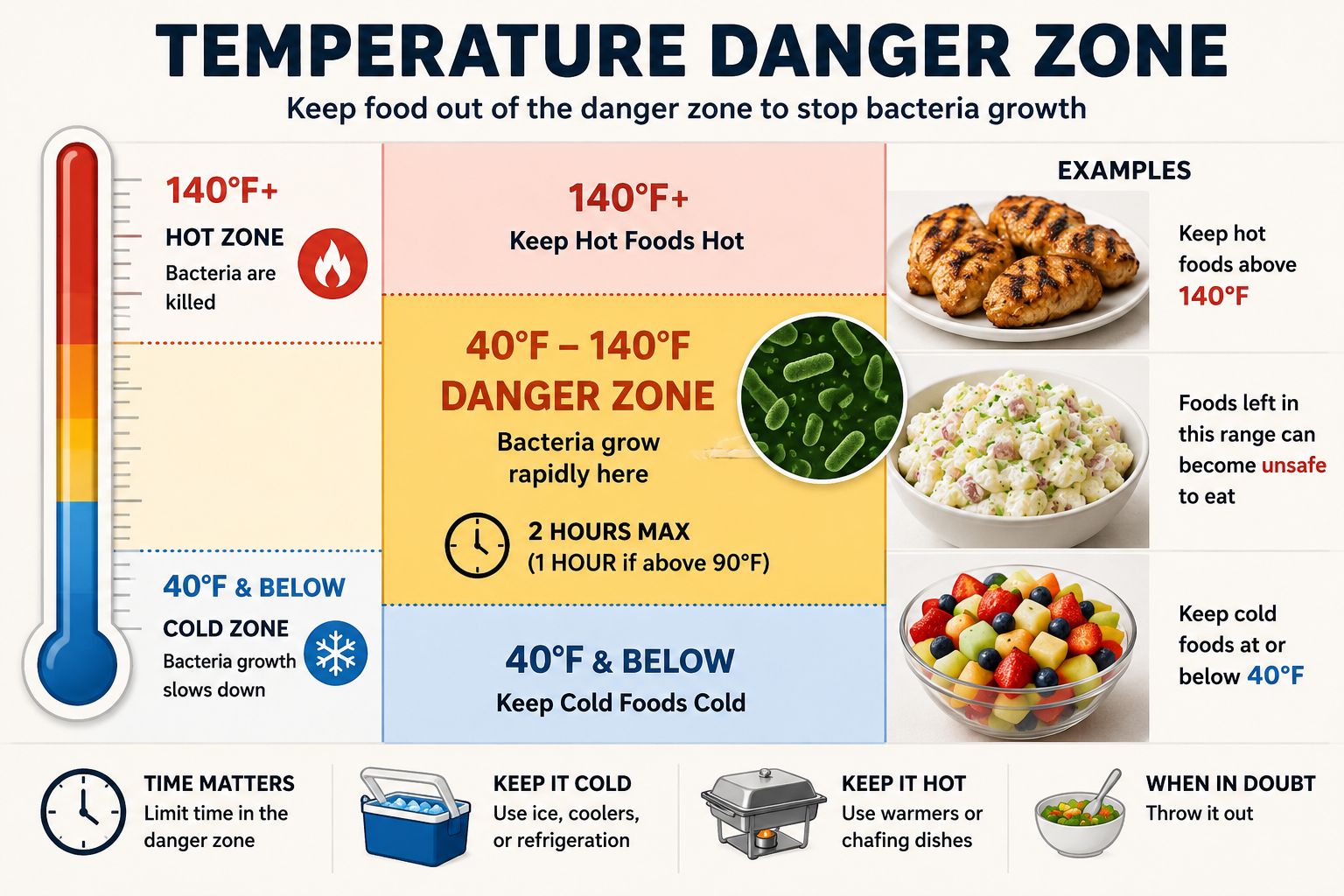
What the Danger Zone Is: The temperature range between 40°F and 140°F is where bacteria that cause foodborne illness grow most rapidly. Below 40°F, bacterial growth slows dramatically — cold temperatures don’t kill bacteria, they just make reproduction extremely slow. Above 140°F, most bacteria responsible for foodborne illness die off — the higher the temperature, the faster the kill rate. Between these two points, bacterial populations can double every 20 minutes under ideal conditions.
What Doubling Every 20 Minutes Means in Practice: Start with 100 bacteria — an amount invisible and harmless. After 20 minutes in the danger zone: 200. After 40 minutes: 400. After 1 hour: 800. After 2 hours: approximately 6,400. After 4 hours: more than 400,000. The number at which many bacterial pathogens can cause illness in a healthy adult is somewhere in the thousands to tens of thousands range, depending on the specific organism. This is why the two-hour rule exists — it’s not an arbitrary conservative guideline, it’s a reflection of the bacterial growth curve that makes food genuinely dangerous past this window at room temperature.
Summer Outdoor Temperature Acceleration: The two-hour rule is calculated for room temperature environments — roughly 70°F indoors. Outdoors in summer, ambient temperatures of 85-95°F are common, and direct sunlight can raise the surface temperature of serving dishes and food significantly above ambient air temperature. At 90°F ambient, the two-hour window compresses to approximately one hour. At temperatures above 90°F, the FDA and USDA recommend discarding perishable food after just one hour outdoors. This is the detail most summer party hosts don’t know and that makes outdoor summer entertaining significantly higher risk than typical room-temperature indoor serving.
What High Heat Does to Different Food Categories
Not all party foods carry equal risk in summer heat, and understanding which categories are most vulnerable helps you make targeted decisions about what needs the most protection rather than applying uniform anxiety to everything on the table.
High Risk: Protein-Based Dishes
Protein-rich foods — particularly those containing eggs, dairy, meat, and fish — provide ideal growth environments for the bacteria most commonly responsible for foodborne illness: Salmonella, Staphylococcus aureus, Listeria, and E. coli.
Egg-Based Dishes: Potato salad, egg salad, macaroni salad with mayonnaise, deviled eggs, and similar preparations are among the highest-risk summer party foods. The combination of protein from eggs, fat from mayonnaise, and starchy carbohydrates from potatoes or pasta creates a nutrient-dense environment that supports rapid bacterial growth. The commercial mayonnaise itself — which contains vinegar and is quite acidic — is not the risk factor that most people assume. Eggs, potato, and any other protein additions in these salads are where the risk lives.
Myth Correction: Many people believe that mayonnaise causes these salads to spoil quickly, when actually commercial mayonnaise’s acidity is a mild preservative. The problem is everything mixed with the mayonnaise, not the mayonnaise itself. However, this distinction doesn’t meaningfully change the food safety calculus — potato salad in the sun for three hours is dangerous regardless of what’s causing the danger.
Cooked Meats: Grilled chicken, pulled pork, sliced brisket, and similar proteins that are cooked and then held for serving represent significant risk when they drop below 140°F and enter the danger zone. The challenge with cooked meats at outdoor parties is that they often start at serving temperature and cool through the danger zone gradually over the course of the party. Chafing dishes and covered serving vessels help maintain temperature, but without active heat sources, cooked meats cool to dangerous temperatures faster than hosts typically account for.
Dips Containing Dairy or Protein: Queso dip, buffalo chicken dip, cream cheese-based dips, and similar preparations need active temperature maintenance. These are frequently served in the same bowl or slow cooker insert from the moment guests arrive until the party ends — a window that can easily exceed two to three hours at outdoor temperatures.
Moderate Risk: Dairy-Based Items
Dairy products — cheese boards, sour cream, cream cheese, whipped cream — carry moderate risk that varies significantly based on moisture content and preparation form.
Cheese: Hard cheeses like aged cheddar, parmesan, and similar low-moisture varieties are considerably more stable at room temperature than soft cheeses. A properly aged hard cheese can sit at room temperature for 2-3 hours without significant safety concern. Soft cheeses — brie, camembert, fresh mozzarella, ricotta, cream cheese — are high-moisture and support bacterial growth more readily. Keep soft cheeses cold and serve in small portions that can be replenished from cold storage rather than setting out the full quantity at once.
Sour Cream and Yogurt-Based Accompaniments: These items visually signal when they’ve been out too long — they develop a separated, watery appearance and off-smell before they reach the point of guaranteed illness. However, visual signs lag behind bacterial growth, meaning food can be dangerous before it looks wrong. The temperature and time limits apply regardless of appearance.
Whipped Cream: Fresh whipped cream or canned whipped cream on desserts sitting in summer heat breaks down quickly both aesthetically and from a food safety perspective. Apply whipped cream immediately before serving rather than having it pre-applied on dishes sitting out.
Lower Risk: Acidic, High-Sugar, and Dried Items
Some summer party staples are genuinely lower risk and don’t require the same level of temperature vigilance.
Condiments: Commercial ketchup, mustard, relish, hot sauce, and similar high-acid condiments are specifically formulated for ambient temperature stability. These don’t require refrigeration during a party.
Whole Fruits: Intact, uncut whole fruit has natural surface protection and lower moisture exposure than cut fruit. The risk from whole fruit on a fruit display is minimal compared to cut fruit salads.
Chips, Crackers, and Bread: Dry, low-moisture items don’t support bacterial growth at room temperature because bacteria need moisture to grow. A bowl of chips or a bread basket doesn’t carry meaningful foodborne illness risk from sitting out.
Pickled Items: Pickles, pickled jalapeños, and properly acidified pickled vegetables carry very low risk due to their high acidity and salt content.
The Two-Hour Rule in Outdoor Summer Practice
Applying the two-hour rule (or the one-hour rule above 90°F) practically at a summer party requires planning that most hosts don’t build into their event structure.
Why Guests Don’t Self-Regulate: Guests don’t know when food was put out. They don’t know the ambient temperature’s impact on safety windows. They see a spread of food and assume it’s safe to eat because it’s been set out by a host they trust. The host bears the responsibility for managing food safety because guests don’t have the information required to make safe decisions on their own.
The Replenishment Strategy: Rather than setting out the full quantity of every dish at the start of the party, keep the majority of each dish cold in the refrigerator and replenish the serving dish at regular intervals — every 45-60 minutes during active serving. A smaller amount of potato salad in the serving bowl gets consumed before it reaches dangerous temperature, and you bring out a fresh cold portion to replace it. This approach requires more active hosting management but dramatically reduces the food safety risk compared to setting out a large bowl at noon and finding it half-full at 4pm.
Timer Management: Set a timer when food goes out. This sounds unnecessarily regimented for a casual summer party, but it’s the only reliable way to track the elapsed time accurately when you’re socializing, managing the grill, and attending to guests simultaneously. Many hosts severely underestimate how long food has been sitting out because their attention is distributed across many tasks. A phone timer set for 60-90 minutes from when each dish goes out removes the guesswork.
The Visual Test Is Unreliable: Food looks fine long after it has become unsafe. The bacteria responsible for most foodborne illness don’t produce visible mold, change the color of food, or necessarily produce obvious off-odors at the concentrations that cause illness. “It looks fine” is not a reliable safety assessment. Time and temperature are the reliable indicators.
Keeping Cold Food Cold
The cold side of the temperature equation — keeping salads, dips, and other cold dishes properly cold throughout a summer party — requires active infrastructure rather than wishful thinking.
Ice Baths: Nesting serving bowls inside larger bowls or trays filled with ice is the most reliable low-tech solution for keeping cold dishes cold at outdoor parties. The ice directly surrounds the food container and maintains temperature significantly better than simply setting a cold bowl on a table in the sun. Replenish ice as it melts throughout the party — a supply of extra ice bags should be planned into the party setup rather than used as an afterthought.
Insulated Serving Dishes: Vacuum-insulated serving bowls maintain cold temperatures significantly longer than standard serving ware. For a summer party, investing in insulated serving options for the highest-risk cold dishes — potato salad, egg salad — is worthwhile. These aren’t specialty items — many standard kitchenware brands offer them.
Small Portion Servicing: Small serving bowls replenished frequently from a refrigerator supply keep food colder longer than large bowls that sit out. A small bowl is consumed quickly, reducing the time any portion of the dish spends in the danger zone, while the bulk supply stays refrigerated.
Shade Positioning: The location of your serving table matters more than most hosts account for. Direct sunlight on serving dishes raises food temperature dramatically faster than shade. A serving area positioned in shade — under a tent, umbrella, overhang, or natural tree coverage — maintains food at safer temperatures significantly longer than the same setup in direct sun. If your outdoor entertaining space has limited shade, a pop-up canopy specifically positioned over the food serving area is a worthwhile investment for summer parties.
Keeping Hot Food Hot
Cooked foods intended to be served warm present the opposite challenge — maintaining temperatures above 140°F throughout the party period.
Chafing Dishes: The standard catering solution for keeping food hot at events works for home parties too. Chafing dishes use small Sterno fuel cans beneath a water pan to maintain food temperature above the danger zone threshold. For a summer party with cooked meats, a covered casserole, or any warm side dish meant to hold temperature over an extended period, chafing dishes are the appropriate equipment. The water pan beneath the food pan provides even, moist heat that prevents the food from drying out while maintaining safe temperatures.
Slow Cookers for Dips and Sauces: A slow cooker set to the warm or low setting maintains queso, buffalo chicken dip, and similar preparations at safe serving temperatures throughout the party. The slow cooker’s built-in thermostat manages temperature automatically without monitoring. Position it with a long enough power cord to reach an outdoor outlet, or use a heavy-duty extension cord rated for appliance use.
Covered Serving Vessels: Covering hot food — with lids, foil, or serving covers — retains heat significantly longer than uncovered serving. Food that’s uncovered in summer conditions cools faster from wind and evaporative cooling in addition to ambient heat exchange. Covers also protect from insects and airborne contamination that outdoor serving environments create.
Grill Holding Strategy: Grilled meats meant to hold for a crowd can be kept warm in a low oven (175-200°F) inside until serving time rather than sitting on a cooling grill. This approach maintains temperature above 140°F reliably while you continue grilling subsequent batches without serving cold food to early rounds of guests.
The Specific High-Risk Scenarios Worth Avoiding
Beyond general food safety principles, certain specific summer party scenarios create concentrated risk worth addressing directly.
The Potluck Transportation Problem: Food brought by guests travels in cars — environments that may be significantly warmer than safe temperature ranges for perishable food, for unknown amounts of time. A potato salad prepared properly and refrigerated correctly before the party arrives in a hot car trunk for a 45-minute drive, having spent 30 minutes at the host’s kitchen before loading, and gets set out at the party immediately without temperature assessment. The cumulative time in unsafe temperature conditions may already exceed safe limits before it’s touched by a single guest. Potluck hosts should ask guests to bring dishes in coolers with ice and assess temperature on arrival rather than setting out everything automatically.
The Leftover Question After a Summer Party: Leftovers from a summer outdoor party represent concentrated food safety risk. Food that spent multiple hours in outdoor conditions — even if it appeared to stay within the time window for the first serving — should be evaluated skeptically. When in doubt, discarding rather than refrigerating and serving again is the appropriate choice. The cost of throwing away leftover potato salad is trivial compared to the cost — in suffering and potential healthcare expense — of a foodborne illness outbreak among your guests.
Serving Stations That Nobody Restocks: At parties where guests serve themselves from a buffet, serving utensils get moved, food gets mixed between dishes, and the general discipline of the serving station degrades over time. Cross-contamination between dishes — particularly between raw and cooked items, or between high-risk and lower-risk foods — introduces additional safety risks beyond temperature alone. Designating one person responsible for the food table during the party — restocking, managing time limits, replacing serving utensils — reduces the probability of these compounding problems.
Practical Summer Party Food Safety Checklist
Translating all of this into an actionable pre-party checklist makes it less overwhelming to implement.
Before the Party: Plan your menu with food safety in mind — minimize the number of high-risk dishes that require careful temperature management, and identify which dishes will need ice bath, chafing dish, or slow cooker support. Purchase enough ice for both drinks and food temperature management — these are separate needs that often compete for the same ice supply. Set up shade coverage over the food serving area if natural shade isn’t available.
At Setup: Set up ice baths before food goes out. Position the serving table out of direct sunlight. Set your first timer when the first dish goes out. Keep the majority of each high-risk dish refrigerated and bring out smaller portions to replenish.
During the Party: Check ice baths every 30-45 minutes and replenish as needed. Follow your timer and replace or discard dishes that have been out too long. Monitor hot food temperatures if using chafing dishes — Sterno cans burn out and need replacement during long parties. Replenish cold dishes from refrigerator supply rather than combining new cold food with the existing dish that’s been sitting out.
After the Party: Refrigerate leftovers within two hours of being set out — or within one hour if ambient temperature exceeded 90°F. Discard anything that exceeded these windows. Throw away anything you’re uncertain about rather than eating it in the days following the party.
Food safety at summer parties isn’t about anxiety or excessive caution — it’s about understanding what actually happens to food in summer heat and making informed decisions that protect your guests. The bacterial growth curves, the temperature thresholds, and the time limits that define food safety guidelines aren’t bureaucratic conservatism. They’re based on the actual biology of the organisms that make people sick and the conditions under which those organisms thrive. Summer heat creates exactly those conditions, and the parties that become memorable for the right reasons are the ones where every guest leaves having had a great time rather than spending the following two days experiencing the delayed consequences of food that sat in the sun too long.