
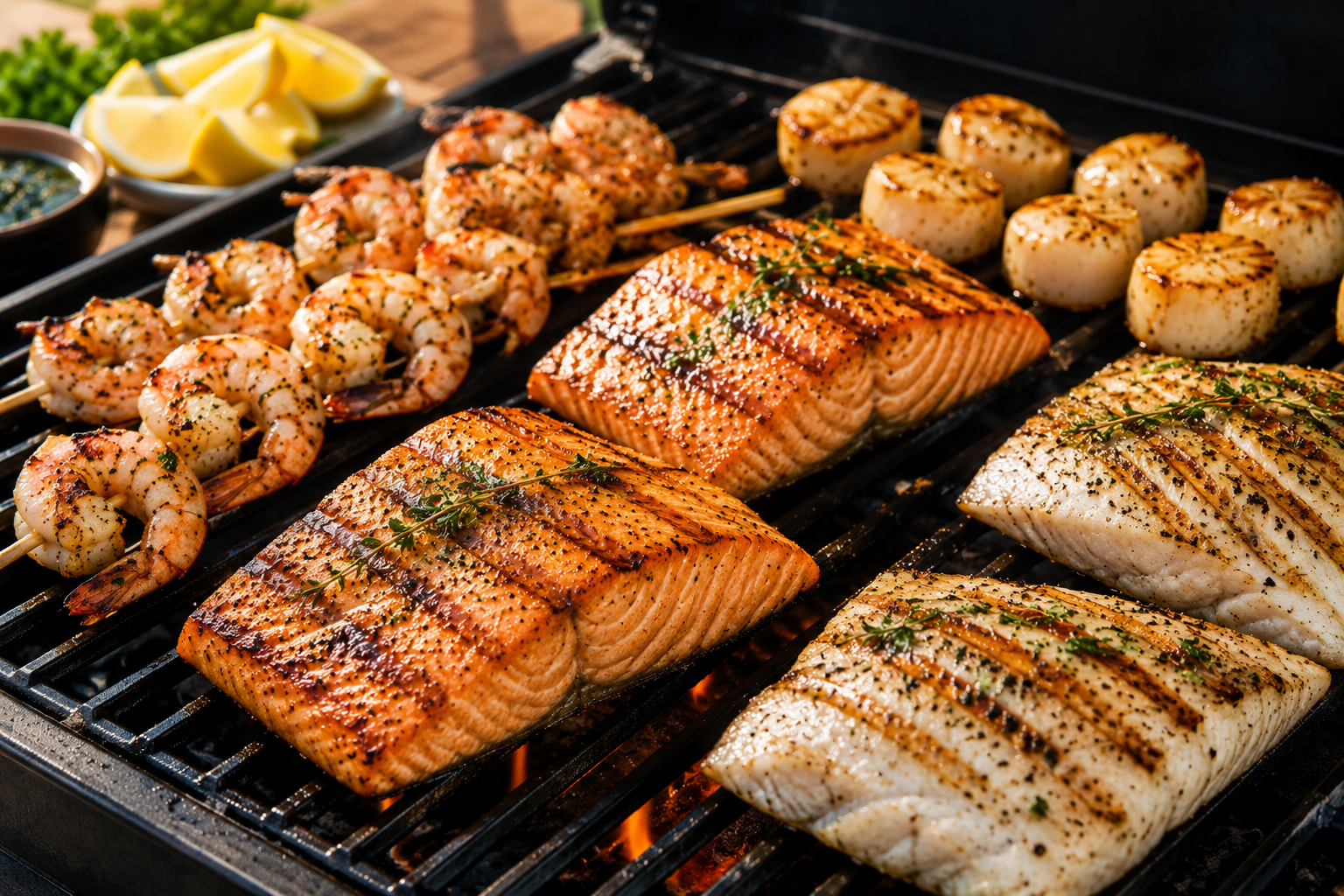
How to Grill Fish and Seafood | The Underrated Summer BBQ Category Explained
Every backyard cookout follows roughly the same script. Burgers go on first, hot dogs follow, maybe some chicken thighs, perhaps a rack of ribs if someone planned ahead. Fish and seafood almost never appear, and when they do it’s usually as an afterthought — a single salmon fillet for the guest who doesn’t eat red meat, cooked with less confidence than everything else on the grill and served with an apology.
This is a missed opportunity of considerable magnitude. Fish and seafood are some of the best things you can cook on a grill — faster than any other protein, genuinely enhanced by high heat and smoke in ways that other cooking methods don’t replicate, and capable of producing results that make everything else on the table feel slightly ordinary by comparison. A properly grilled whole fish, a skewer of charred shrimp, or a swordfish steak with defined grill marks and a smoky, caramelized exterior represents the ceiling of what summer cooking can achieve, and most backyard cooks never get there because the category feels intimidating.
The intimidation is understandable but mostly unfounded. Grilling fish and seafood does require different technique than grilling beef — but it’s not harder technique, just different. Understanding what actually makes fish stick, why some seafood species grill beautifully while others fall apart, and how timing works across different types removes most of the anxiety and replaces it with a category of summer cooking that rewards the small learning investment many times over.
Why Fish and Seafood Belong on Your Summer Grill
Before the technique, the case for making this category a regular part of the summer cooking rotation rather than an occasional experiment.
Speed That Changes Dinner: Most fish and seafood cook in 8-15 minutes on a properly preheated grill — significantly faster than chicken, ribs, or any other protein that typically anchors a cookout. Shrimp takes 4-6 minutes total. A fish fillet takes 8-10 minutes. A whole fish takes 15-20 minutes depending on size. This speed makes fish and seafood ideal for weeknight grilling where extended cook times aren’t realistic, and for the later rounds of a cookout when guests are hungry again and waiting 45 minutes for something isn’t appealing.
Flavor Enhancement from High Heat: The Maillard reaction that creates browning and flavor complexity on grilled proteins applies as meaningfully to fish and seafood as to beef — arguably more so, because fish and seafood’s lighter inherent flavor makes the contribution of grill char and caramelization proportionally more significant to the overall flavor experience. A seared tuna steak with defined grill marks and charred exterior tastes dramatically different from pan-seared tuna at the same doneness. The grill adds something that no other cooking method provides.
Summer Ingredient Alignment: The best fish and seafood of the year is available in summer — not universally, but broadly. Summer is peak season for many shellfish varieties, domestic shrimp supply is abundant, and the overlap between what’s seasonal and excellent in seafood and what summer cooking calls for is significant. Eating grilled seafood in summer is eating what the season actually offers rather than fighting against it.
Health Profile: Fish and seafood are among the leanest, highest-protein foods available, with the omega-3 content of fatty fish species adding nutritional value that most other proteins don’t carry. A summer diet that incorporates regular grilled fish alongside typical BBQ fare produces a healthier overall nutritional pattern without requiring any sacrifice in flavor or satisfaction.
The Sticking Problem: Why It Happens and How to Prevent It
Sticking is the primary reason people avoid grilling fish, and it’s worth addressing directly and completely because once you understand it, it’s almost entirely preventable.
Why Fish Sticks More Than Beef: Fish proteins are more delicate than the proteins in beef, chicken, or pork. When fish contacts a grill surface, the proteins bond chemically with the metal in a way that’s more pronounced than with denser proteins. The fish also has higher moisture content than most meats, which creates steam at the contact surface that initially lifts the fish from the grates before the exterior has set — and if you try to move it before the exterior has cooked enough to release naturally, it tears rather than lifting cleanly.
The Natural Release Principle: This is the single most important concept in grilling fish. A piece of fish placed on a properly preheated, properly oiled grill will stick initially, then release naturally when its exterior has cooked enough to set. If you try to lift or move the fish before this release happens, it will tear and stick. If you wait until the release happens, it will lift cleanly. The timing of this release — typically 3-5 minutes depending on heat and thickness — is what most people don’t wait for. They try to flip at 2 minutes, the fish sticks and tears, and they conclude that fish is difficult to grill. It isn’t difficult. It requires patience.
Grill Temperature Is the Foundation: A properly preheated grill reduces sticking more than any other single factor. Cold or warm grates stick far more aggressively than properly hot grates where proteins set on contact rather than bonding with metal during a slow heat increase. Preheat your grill to medium-high heat with the lid closed for at least 10-15 minutes before placing any fish on it. The grates should be genuinely hot — a drop of water flicked onto them should evaporate immediately on contact.
Cleaning the Grates: Residue from previous cooking creates additional sticking surfaces. Clean grates thoroughly with a grill brush immediately before cooking fish — while the grates are hot from preheating — to remove any accumulated residue. Clean grates reduce sticking and prevent old carbon residue from transferring off-flavors to delicate seafood.
Oil the Grates, Not Just the Fish: Many cooks oil only the fish before grilling, which helps but doesn’t address the metal contact surface. Oiling the grates themselves — using a folded paper towel dipped in neutral oil, held with tongs, wiped across the hot grates — creates a non-stick surface that dramatically reduces bonding. Apply oil to grates immediately before adding fish while grates are hot. Do not use a spray bottle near open grill flames — oil a paper towel and wipe manually.
Oil the Fish Too: Coat all surfaces of fish and seafood lightly with neutral oil (or the olive oil that most marinades include) before grilling. The oil prevents moisture from creating steam between fish and grate and helps conduct heat evenly to the contact surface.
The Grill Basket and Foil Options: For fish species that are simply too delicate to grill directly on grates — flaky white fish particularly — grill baskets and foil pouches provide alternatives that allow grilling without direct grate contact. Grill baskets sandwich fish between two hinged wire frames and allow flipping without direct handling of delicate fillets. Foil pouches create a steam environment around fish that is technically grilling but produces a more steamed result than direct grate contact. Both are legitimate tools; they just produce different results from direct grate grilling.
Fish Species and Their Grillability
Not all fish grill equally well, and choosing the right species for direct grill cooking versus more protected methods determines how successful your result is before technique even comes into play.
Excellent for Direct Grill Cooking
Salmon: The most reliable and forgiving fish to grill, with enough fat content to withstand high heat, a firm enough texture to hold together through flipping, and flavor that develops beautifully from char and smoke. Salmon fillets with skin on grill best — the skin side goes down first, the skin crisps against the grates and protects the flesh from direct heat, and when the time comes to flip, the skin releases cleanly. Salmon steaks are even more durable than fillets and suit people nervous about fillet fragility. Internal temperature of 125-130°F for medium doneness where the flesh is just set and still slightly translucent in the center — the most appealing cooked state for salmon’s fat content and flavor.
Tuna: Tuna steaks grill like beef steaks — high heat, short time, served medium-rare for best results. The firm, dense flesh holds together through flipping without the fragility concerns that flaky fish present. Sear tuna steaks on a very hot grill for 2-3 minutes per side for rare-to-medium-rare where the exterior is charred and the interior is still deep red to pink. Well-done tuna is dry and disappointing — the high-heat short-sear approach is what makes grilled tuna genuinely excellent.
Swordfish: Another steak-format fish that grills with the confidence of beef. Dense, meaty texture that holds grill marks beautifully and doesn’t flake apart. Swordfish steaks cut 1-1.5 inches thick grill for approximately 4-5 minutes per side at medium-high heat. Internal temperature of 130-135°F produces moist, firm flesh. Swordfish absorbs marinades well — olive oil, lemon, garlic, and fresh herbs is the classic approach and suits the fish’s assertive flavor.
Mahi-Mahi: Firm white flesh that grills reliably with good results. The natural sweetness of mahi-mahi develops nicely from grill char. Fillets of moderate thickness (¾-1 inch) cook in 4-5 minutes per side. Flipping can be done with confidence — the flesh holds together well for a white fish. Pairs particularly well with tropical flavors — mango salsa, lime, cilantro — that complement the natural sweetness.
Whole Fish: Grilling whole fish — branzino, red snapper, sea bass, trout — produces results that fillet grilling simply cannot match. The bones protect the flesh from drying out, the skin crisps from direct grill contact, and the presentation of a whole fish on a platter makes an impression that individual fillets don’t. Scoring the flesh on both sides with diagonal cuts allows heat to penetrate more evenly and gives marinade access to the interior. Cook whole fish 8-10 minutes per side depending on size, watching for the flesh to pull away from the bone at the thickest point near the head end.
Better with Assistance
Halibut: Excellent flavor but tends toward dryness if overcooked, which happens quickly given its relatively lean flesh. Oil generously and don’t exceed medium internal temperature (130-135°F). A grill basket helps with the fragility of thinner fillets.
Cod and Similar Flaky White Fish: Very good flavor but the flaky texture makes direct grate grilling genuinely challenging — these fish fall apart when flipped unless handled with extreme care. Grill baskets or foil pouches are the practical choice. Alternatively, cod can be placed on the grill skin-side down and never flipped — cooked through from the bottom with the lid closed, basting the exposed top occasionally.
Seafood on the Grill
Shrimp: The fastest and most accessible seafood to grill — jumbo shrimp cook in 2-3 minutes per side at medium-high heat and are done when they turn fully pink and curl into a C-shape. Leave on slightly longer and they curl into a tight O-shape, which indicates overcooking. Shell-on shrimp grill with more flavor and more protection against overcooking than peeled shrimp, though they’re less convenient to eat. Skewering shrimp prevents them from falling through grate gaps and makes flipping multiple shrimp at once practical rather than tedious. Marinate briefly — 15-30 minutes maximum — in olive oil, garlic, lemon, and herbs before grilling.
Scallops: Large sea scallops sear beautifully on a hot grill. The key is surface dryness — pat scallops completely dry with paper towels before grilling to remove all surface moisture. Moisture on the scallop surface prevents the searing that creates the caramelized crust that makes grilled scallops exceptional. Brush with oil and place on a very hot grill for 2-3 minutes without moving — the natural release principle applies here as much as with fish. Flip once and grill 1-2 more minutes until just cooked through. Scallops become rubbery quickly when overcooked — they should still have a slightly translucent center when removed from heat.
Lobster Tails: Split down the middle lengthwise with kitchen shears, brush the exposed flesh with garlic butter, and grill flesh-side down for 5-6 minutes until the flesh is opaque and lightly charred. Flip shell-side down and grill 2-3 more minutes to cook through. The shell acts as a natural cooking vessel that prevents the delicate flesh from direct grate contact on the second side. Lobster tails on the grill are genuinely one of summer’s most impressive preparations relative to the effort involved.
Oysters: Grilling oysters is one of the simplest and most spectacular preparations in the seafood category. Place whole oysters directly on grill grates over high heat, flat-side up. Within 3-5 minutes the shells will pop open slightly as internal steam builds. Once open, the liquid inside begins to bubble — this is when they’re ready. Top immediately with a small amount of compound butter (herb butter, garlic butter, chipotle butter) that melts into the hot oyster. The oyster steams in its own shell with the added butter and is ready to eat directly from the shell with no additional utensils required.
Clams and Mussels: Grill similarly to oysters — directly on hot grates until they open. Discard any that don’t open after 8-10 minutes. Serve immediately with crusty bread to absorb the briny liquor that collects in the shells.
Marinades and Seasoning Approaches
Fish and seafood’s delicate flavor requires a different seasoning philosophy than beef or pork — less is often more, and the timing of marinade application matters considerably more than with denser proteins.
Marinade Timing Is Critical: Fish and seafood should not marinate in acidic ingredients for more than 30 minutes to 1 hour maximum. The acid in citrus juice and vinegar begins to denature fish proteins — essentially starting the cooking process chemically — within minutes of contact. Marinating salmon in lemon juice for four hours produces fish that has partially cooked from the acid before it even reaches the grill, resulting in a different texture than briefly marinated fish grilled at high heat. For highly acidic marinades, 15-30 minutes is adequate. For oil-based marinades with minimal acid, up to 2 hours works.
The Simplicity Principle: Fish with exceptional flavor — fresh wild salmon, scallops in season, live lobster — need minimal seasoning that enhances rather than covers their natural character. Good olive oil, salt, pepper, lemon, and fresh herbs is a complete seasoning approach for these ingredients. Reserve the more complex rub and sauce applications for species with stronger or more neutral flavor profiles that can absorb complexity without it overwhelming the seafood’s own character.
Herb Compatibility: Fresh herbs work beautifully with grilled fish and seafood in ways that dried herbs don’t replicate as effectively. Dill with salmon, tarragon with shrimp, basil with swordfish, cilantro with mahi-mahi — these pairings have become standard because they genuinely complement the natural flavors. Add fresh herbs after grilling rather than during — delicate herbs burn at grill temperatures and lose both color and flavor.
Citrus Finishing: A squeeze of fresh lemon, lime, or orange immediately off the grill is the most effective finishing touch for nearly all grilled fish and seafood. The acid brightens the charred, smoky flavors from grilling and adds freshness that cooked fish benefits from. This is different from pre-marinade acid — finishing acid applied to fully cooked fish adds flavor rather than denaturing protein.
Compound Butters: A small disc of compound butter (softened butter mixed with herbs, citrus zest, garlic, or spices, rolled in plastic wrap and chilled) melted over grilled fish immediately after plating adds richness and flavor complexity that elevates simple preparations significantly. Make a log of herb butter at the beginning of the week and slice off discs for each evening’s grilled fish — it takes five minutes to make and lasts a week in the refrigerator.
Practical Grill Setup for Fish and Seafood
Direct vs. Indirect Heat: Most fish and seafood grill over direct medium-high heat for their entire (brief) cooking time. The exception is whole fish, which benefits from starting over direct heat to develop skin crispiness and char, then moving to indirect heat to cook through the center without burning the exterior. For most fillets and shellfish, direct heat throughout the cooking time produces the best results.
Two-Zone Setup for Safety Margin: Setting up a two-zone fire — high heat on one side, lower or no heat on the other — gives you a safety margin for seafood that’s developing char faster than the interior is cooking through. Moving items to the indirect zone to finish cooking without additional charring is the same technique used for beef steaks and applies equally to thicker fish preparations.
Lid Management: Close the lid during fish cooking to create a convective cooking environment that helps cook the top surface of fillets through without requiring flipping, reducing the handling that causes flaking and breaking. For shellfish and thin preparations, the lid is less critical.
Side Dishes That Complete a Seafood Grill Session
Grilled fish and seafood suit lighter, brighter sides than the heavy BBQ accompaniments that burgers and ribs typically anchor.
Grilled vegetables — corn, zucchini, asparagus, bell peppers — cooked simultaneously on the same grill complement seafood without competing with it. A simple green salad with sharp vinaigrette. Crusty bread that absorbs the juices and any finishing butter or citrus. Rice or grain salads dressed with herbs and lemon. These sides keep the overall meal feeling as light and fresh as the fish itself, maintaining the summer eating character that makes grilled seafood so appropriate for the season.
The reason fish and seafood are underrepresented at summer BBQs isn’t that they’re difficult — it’s that most people haven’t been shown how to do them with confidence. The sticking problems that give fish a difficult reputation are almost entirely preventable with the right approach. The timing that makes seafood easy to overcook is short enough to manage with attention. The flavor rewards for getting it right are significant enough to make the learning investment genuinely worthwhile. This summer is the right time to make grilled fish and seafood a regular part of the rotation rather than a category saved for restaurants.