
organizational tips

The Pantry Organization That Stays Organized (Without Clear Containers)

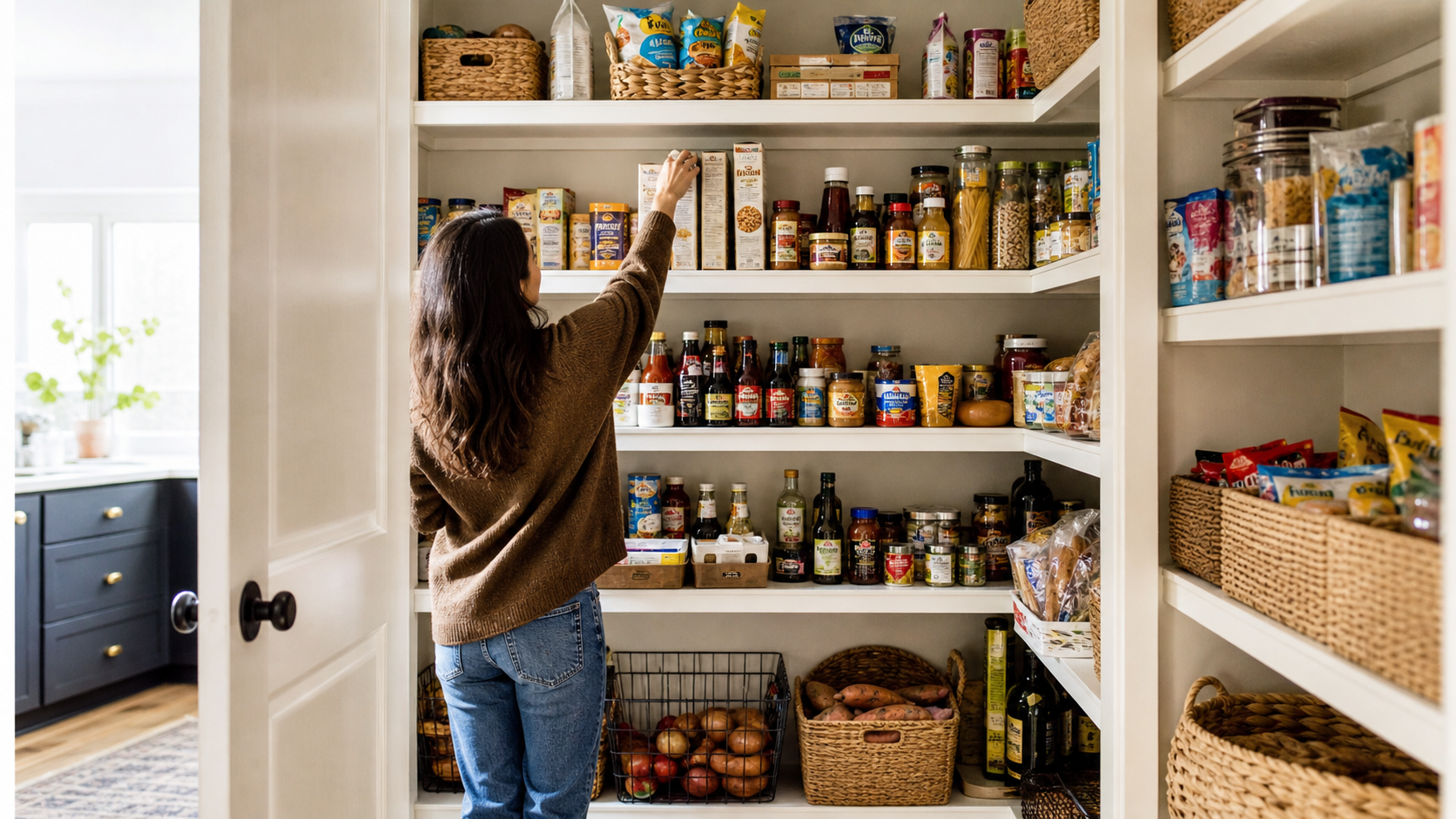
Pinterest pantries look like product photography. Everything decanted into matching clear containers. Perfect labels. Color-coordinated. Zero chance you’ll maintain it past the first grocery run. Those elaborate pantry systems fail because they fight against how you actually use food. They add steps between grocery bags and cooking. They require constant maintenance and perfect discipline. They assume you buy the same items in the same quantities every single week. Real pantry organization works with your habits, not against them. It accommodates irregular shopping, varied package sizes, and cooking patterns that change weekly. It stays organized through actual use rather than falling apart the moment reality hits. Here’s why Instagram pantries fail, what actually keeps pantries functional long-term, and how to organize food storage without buying fifty matching containers. Decanting Everything Creates More Work The aesthetic pantry photos show flour, sugar, pasta, and rice transferred from original packaging into clear containers. This looks beautiful and functions terribly. Transferring food adds steps. Instead of opening package and using contents, you’re opening package, pouring contents into container, labeling container, and discarding package. This happens for every shelf-stable item you buy. You’ll do this enthusiastically for the first shopping trip. By the third trip, half the items stay in original packaging while the other half live in containers. Now you’ve got inconsistent storage making items harder to locate. Package information matters. Cooking instructions, expiration dates, ingredient lists, and nutritional information live on original packaging. Transfer food to containers and you’re searching for discarded boxes every time you need cooking temps or allergen information. Container sizing creates problems. That flour container holds exactly one standard bag. Buy a different brand or size and it doesn’t fit. Now you’ve got partial bags plus containers creating more chaos than original packaging alone. Most people don’t use food fast enough to justify decanting. If you’re buying flour monthly, keeping it in the bag works fine. Decanting makes sense only when buying enormous bulk quantities needing portioning into smaller working amounts. The clear container aesthetic fights against practical food storage. Save your money and cabinet space. Perfect Labels Are Maintenance Hell Elaborate labeling systems require updating labels constantly as you swap between different brands, flavors, and sizes throughout the year. That beautiful chalkboard label saying “pasta” works until you’ve got three pasta shapes stored together. Now you need labels specifying penne, rigatoni, and fusilli. But next month you buy different shapes and need new labels. Printed labels from label makers look perfect initially but become outdated immediately. Product changes, you buy different varieties, labels no longer match contents. Peeling off labels and replacing them becomes a chore you’ll skip. Expiration date tracking on labels assumes you’ll update them. Write purchase dates or expiration dates on containers and you’re committing to maintenance every shopping trip. Miss one update and your system becomes unreliable. Label clarity matters more than label beauty. If you can see the contents through original packaging or clear bags, you don’t need labels. Only label truly ambiguous items where visual identification fails. The time spent labeling and updating labels exceeds the time saved from having labels. Most pantry items are visually identifiable without text labels screaming their identity. Zone Organization Beats Container Organization Instead of matching containers, organize by how you actually cook. Group items used together regardless of what containers they live in. Baking zone contains flour, sugar, baking powder, baking soda, vanilla, chocolate chips—everything you grab when baking. Doesn’t matter if they’re in original packaging, bags, or mismatched containers. They’re together when needed. Pasta zone holds pasta shapes, pasta sauce, canned tomatoes, Italian seasonings. Asian cooking zone groups soy sauce, rice vinegar, sesame oil, rice. Mexican cooking zone contains tortillas, beans, salsa ingredients, taco seasonings. Zone organization works with how you think while cooking. You’re not thinking “I need something from the ‘grains’ category.” You’re thinking “I’m making stir-fry.” Grouping Asian ingredients together supports this thought process. Zones accommodate varied packaging without looking chaotic. Bottles, boxes, bags, and cans sitting together make sense when they’re all part of taco night even if they don’t match aesthetically. Adjusting zones happens naturally as your cooking evolves. Start making more Indian food and create an Indian zone. Stop baking regularly and the baking zone shrinks. Zones adapt to your changing habits without requiring new containers. The zone approach focuses on function over form. It’s less photographable but more usable. Visibility Matters More Than Uniformity You’ll use what you can see. Hidden food gets forgotten and wasted regardless of how perfectly organized the hiding system is. Deep shelves create visibility problems. Items at the back disappear behind front items. Out of sight means out of mind and eventual expiration. Single-row depth prevents hiding. Shallow shelves where everything sits in one row guarantee visibility. Every item remains visible without moving other items. Risers and tiered organizers work when deep shelves can’t be avoided. Stair-step arrangement brings back items forward making them visible despite shelf depth. Clear front containers help only if you can actually see their contents. Containers buried behind other containers provide no visibility advantage over opaque packaging. Vertical space matters for visibility. Tall items block short items. Store tall items toward the back or sides, short items toward the front where you can see them over taller neighbors. The most organized pantry with perfect containers still fails if you can’t see what you have. Visibility prevents buying duplicates of items already owned and ensures food gets used before expiring. Inventory Systems Nobody Maintains Pantry inventory lists promise to track what you have and what needs restocking. In reality, nobody updates them consistently enough to remain accurate. The inventory list works perfectly until the first time you grab something without updating the list. Once the list becomes even slightly inaccurate, trusting it becomes impossible. Multiple household members doom inventory systems. You track items carefully. Your partner grabs pasta without noting it. The list says you have pasta. You don’t have pasta. The system has failed. Scanning apps and smart
The Drawer Organization That Actually Stays Organized

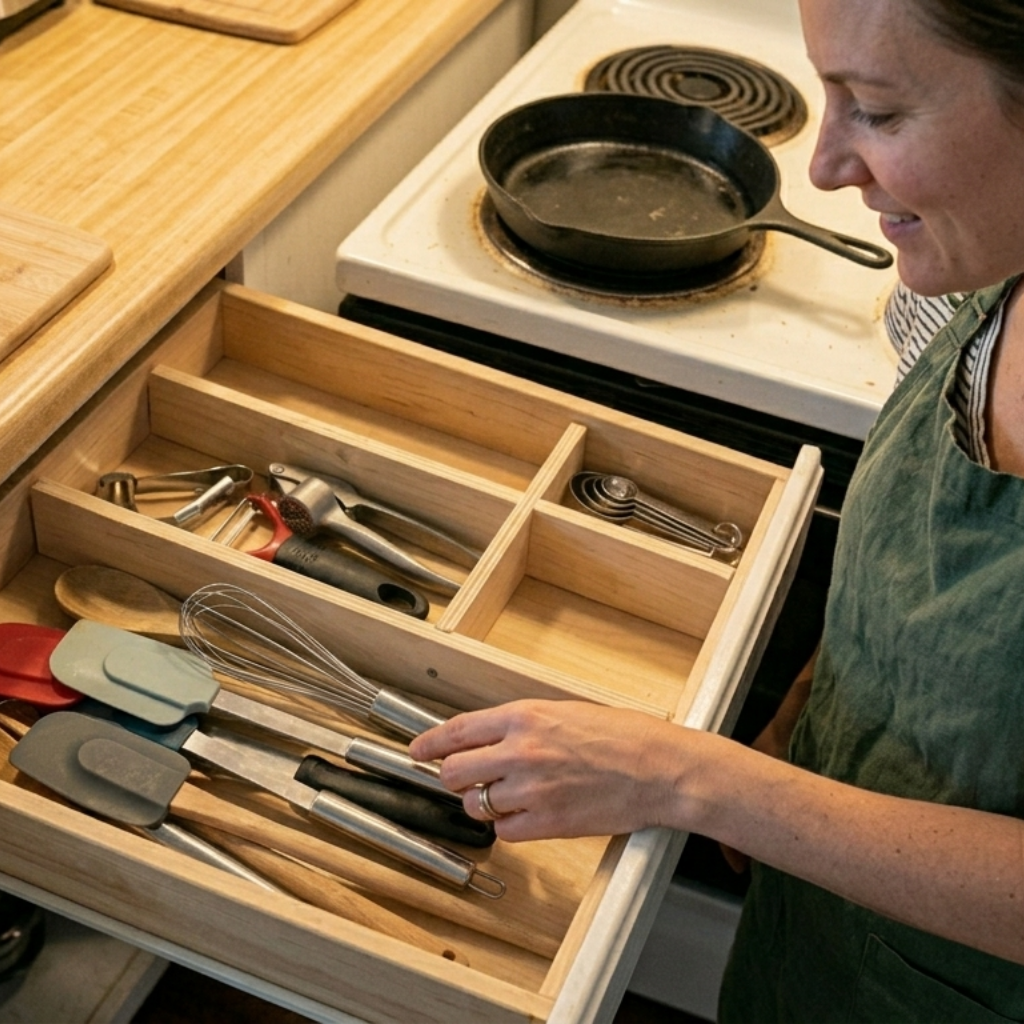
You organize your kitchen drawers. It looks beautiful for three days. Then you need a whisk in a hurry, toss it back imperfectly, and the whole system collapses within a week. The problem isn’t your discipline or commitment. The problem is organizing systems designed for photographs, not daily cooking. They require precision placement and careful maintenance that real cooking doesn’t allow. Drawer organization that actually lasts works with your cooking habits, not against them. It assumes you’ll be rushed, distracted, and unwilling to play Tetris with spatulas while something’s burning on the stove. Here’s why most drawer organization fails, what actually keeps drawers functional long-term, and how to set up systems that survive real kitchen use. Perfect Compartments Create Maintenance Hell Those beautiful drawer organizer systems with precisely-sized slots for every utensil look incredible in before-and-after photos. They fail in actual kitchens because they demand exact placement every time. Custom-fit organizers require identifying which slot belongs to which tool, orienting the tool correctly, and sliding it into its designated space. This works when you’re organizing slowly and deliberately. It fails when you’re cooking three things simultaneously and need to return a spatula quickly. The tighter the fit, the more frustrating the system. That perfectly-sized slot for your fish spatula only accepts the spatula at the correct angle. Put it in slightly rotated and it doesn’t fit. Now you’re fumbling with a greasy spatula while your sauce reduces. Precision systems also break when you add new tools. Buy a second whisk or different-sized spatula and suddenly you’ve got no designated slot. The new item becomes homeless, getting tossed wherever it fits, beginning the drawer’s descent into chaos. Organization that lasts uses zones, not slots. Group similar items together in loose categories without demanding precise placement. Spatulas go in the spatula zone anywhere, not in individually-assigned slots. Wide compartments that hold multiple items of the same type accommodate tools at various angles and positions. You’re dropping items into a zone, not threading them into specific slots. Shallow Organizers For Deep Drawers Guarantee Failure Standard drawer organizers sit shallow in deep drawers, leaving several inches of unused space below. This invites layering, which destroys organization immediately. You buy a utensil organizer that’s two inches deep. Your drawer is six inches deep. That four-inch gap below the organizer becomes tempting storage for overflow items. Initially you resist. Then you acquire a new tool that doesn’t fit in the organizer. “Just temporarily,” you think, sliding it underneath. Then another tool. Then a random kitchen gadget. Within weeks you’ve got a hidden layer of chaos beneath your organized surface. Deep drawers need either organizers that span full depth or intentional use of vertical space with stackable systems. Half-depth organizers in deep drawers are organizational traps. If you’ve got deep drawers, use tall organizers or bins that prevent layering. The goal is making layering physically impossible, not relying on your future self to resist temptation. Alternatively, dedicate deep drawers to large items that actually need the depth: large serving utensils, rolling pins, or bulky kitchen tools. Save shallow drawers for the precision organization that shallow organizers support. Too Many Categories Mean Nothing Has a Home Organizing guides tell you to separate whisks, spatulas, spoons, tongs, peelers, zesters, and measuring spoons into individual compartments. This creates so many categories that placing items correctly becomes a puzzle. Your brain during cooking operates in simplified mode. You’re tracking multiple tasks, monitoring temperatures, and timing various components. Your mental bandwidth for “which compartment does the slotted spoon belong in” is approximately zero. Too many categories increase friction. Is the slotted spoon a spoon or a spatula? Does the silicone scraper go with spatulas or with whisks? These ambiguous items bounce between categories, creating placement inconsistency. Successful organization uses three to five broad categories maximum. “Stirring tools,” “measuring tools,” “cutting tools,” and “miscellaneous” works better than ten specific categories requiring constant decision-making. Broad categories forgive mistakes. Tossing a whisk into the general “stirring tools” zone succeeds even if it lands next to spatulas. Perfect placement isn’t required. You can subdivide within broad categories using visual separation (different colored bins or simple dividers), but the primary organization should be simple enough that rushing doesn’t break the system. Measuring Tools Don’t Belong With Cooking Tools Most drawer organization systems mix measuring cups and spoons with cooking utensils. This creates access conflicts because you use these tools at different times during different tasks. Measuring happens during prep before cooking starts. You’re standing at your prep area measuring ingredients into bowls. Cooking utensils are used at the stove during active cooking. Mixing these tools in the same drawer means accessing the drawer from different locations at different times. Your measuring cup drawer should be near your prep area, not your stove. Separating measuring tools into dedicated drawer near your mixing/prep zone improves workflow. When gathering ingredients, you’re not digging through spatulas to find measuring spoons. This separation also prevents cross-contamination of organizational systems. Cooking utensils get greasy and sauce-covered; they’re cleaned quickly and returned slightly damp. Measuring tools stay cleaner because they’re used during prep, not cooking. Dedicate one small drawer or one large drawer section near your primary prep area exclusively to measuring tools. Everything else goes in cooking utensil drawers near the stove. The Junk Drawer Is Necessary, Not Failure Every kitchen organization guide promises to eliminate your junk drawer. This is unrealistic and counterproductive. The junk drawer serves an important function. Kitchens accumulate miscellaneous items: birthday candles, bag clips, corn holders, specialty tools used quarterly. These items need storage but don’t fit into any logical category. Without a designated miscellaneous drawer, these items infiltrate your organized drawers. The corn holders end up with spatulas. The bag clips migrate to the utensil drawer. Your organization breaks down accommodating items that don’t belong. A dedicated miscellaneous drawer contains chaos in one location rather than letting it spread. Everything else stays organized because the random stuff has somewhere to go. The key is intentionality. Designate