The Pantry Organization That Stays Organized (Without Clear Containers)
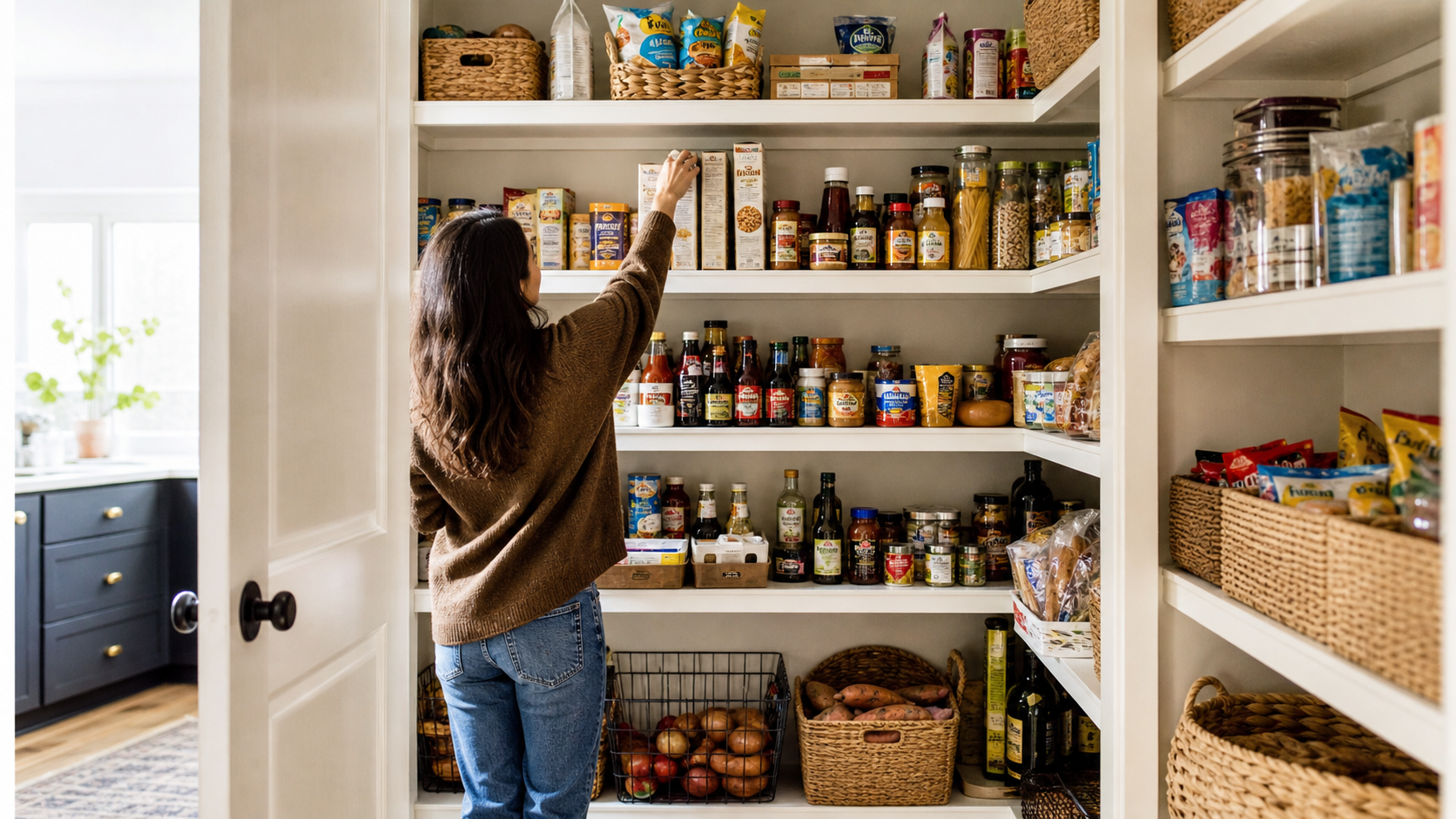
Pinterest pantries look like product photography. Everything decanted into matching clear containers. Perfect labels. Color-coordinated. Zero chance you’ll maintain it past the first grocery run. Those elaborate pantry systems fail because they fight against how you actually use food. They add steps between grocery bags and cooking. They require constant maintenance and perfect discipline. They assume you buy the same items in the same quantities every single week. Real pantry organization works with your habits, not against them. It accommodates irregular shopping, varied package sizes, and cooking patterns that change weekly. It stays organized through actual use rather than falling apart the moment reality hits. Here’s why Instagram pantries fail, what actually keeps pantries functional long-term, and how to organize food storage without buying fifty matching containers. Decanting Everything Creates More Work The aesthetic pantry photos show flour, sugar, pasta, and rice transferred from original packaging into clear containers. This looks beautiful and functions terribly. Transferring food adds steps. Instead of opening package and using contents, you’re opening package, pouring contents into container, labeling container, and discarding package. This happens for every shelf-stable item you buy. You’ll do this enthusiastically for the first shopping trip. By the third trip, half the items stay in original packaging while the other half live in containers. Now you’ve got inconsistent storage making items harder to locate. Package information matters. Cooking instructions, expiration dates, ingredient lists, and nutritional information live on original packaging. Transfer food to containers and you’re searching for discarded boxes every time you need cooking temps or allergen information. Container sizing creates problems. That flour container holds exactly one standard bag. Buy a different brand or size and it doesn’t fit. Now you’ve got partial bags plus containers creating more chaos than original packaging alone. Most people don’t use food fast enough to justify decanting. If you’re buying flour monthly, keeping it in the bag works fine. Decanting makes sense only when buying enormous bulk quantities needing portioning into smaller working amounts. The clear container aesthetic fights against practical food storage. Save your money and cabinet space. Perfect Labels Are Maintenance Hell Elaborate labeling systems require updating labels constantly as you swap between different brands, flavors, and sizes throughout the year. That beautiful chalkboard label saying “pasta” works until you’ve got three pasta shapes stored together. Now you need labels specifying penne, rigatoni, and fusilli. But next month you buy different shapes and need new labels. Printed labels from label makers look perfect initially but become outdated immediately. Product changes, you buy different varieties, labels no longer match contents. Peeling off labels and replacing them becomes a chore you’ll skip. Expiration date tracking on labels assumes you’ll update them. Write purchase dates or expiration dates on containers and you’re committing to maintenance every shopping trip. Miss one update and your system becomes unreliable. Label clarity matters more than label beauty. If you can see the contents through original packaging or clear bags, you don’t need labels. Only label truly ambiguous items where visual identification fails. The time spent labeling and updating labels exceeds the time saved from having labels. Most pantry items are visually identifiable without text labels screaming their identity. Zone Organization Beats Container Organization Instead of matching containers, organize by how you actually cook. Group items used together regardless of what containers they live in. Baking zone contains flour, sugar, baking powder, baking soda, vanilla, chocolate chips—everything you grab when baking. Doesn’t matter if they’re in original packaging, bags, or mismatched containers. They’re together when needed. Pasta zone holds pasta shapes, pasta sauce, canned tomatoes, Italian seasonings. Asian cooking zone groups soy sauce, rice vinegar, sesame oil, rice. Mexican cooking zone contains tortillas, beans, salsa ingredients, taco seasonings. Zone organization works with how you think while cooking. You’re not thinking “I need something from the ‘grains’ category.” You’re thinking “I’m making stir-fry.” Grouping Asian ingredients together supports this thought process. Zones accommodate varied packaging without looking chaotic. Bottles, boxes, bags, and cans sitting together make sense when they’re all part of taco night even if they don’t match aesthetically. Adjusting zones happens naturally as your cooking evolves. Start making more Indian food and create an Indian zone. Stop baking regularly and the baking zone shrinks. Zones adapt to your changing habits without requiring new containers. The zone approach focuses on function over form. It’s less photographable but more usable. Visibility Matters More Than Uniformity You’ll use what you can see. Hidden food gets forgotten and wasted regardless of how perfectly organized the hiding system is. Deep shelves create visibility problems. Items at the back disappear behind front items. Out of sight means out of mind and eventual expiration. Single-row depth prevents hiding. Shallow shelves where everything sits in one row guarantee visibility. Every item remains visible without moving other items. Risers and tiered organizers work when deep shelves can’t be avoided. Stair-step arrangement brings back items forward making them visible despite shelf depth. Clear front containers help only if you can actually see their contents. Containers buried behind other containers provide no visibility advantage over opaque packaging. Vertical space matters for visibility. Tall items block short items. Store tall items toward the back or sides, short items toward the front where you can see them over taller neighbors. The most organized pantry with perfect containers still fails if you can’t see what you have. Visibility prevents buying duplicates of items already owned and ensures food gets used before expiring. Inventory Systems Nobody Maintains Pantry inventory lists promise to track what you have and what needs restocking. In reality, nobody updates them consistently enough to remain accurate. The inventory list works perfectly until the first time you grab something without updating the list. Once the list becomes even slightly inaccurate, trusting it becomes impossible. Multiple household members doom inventory systems. You track items carefully. Your partner grabs pasta without noting it. The list says you have pasta. You don’t have pasta. The system has failed. Scanning apps and smart