
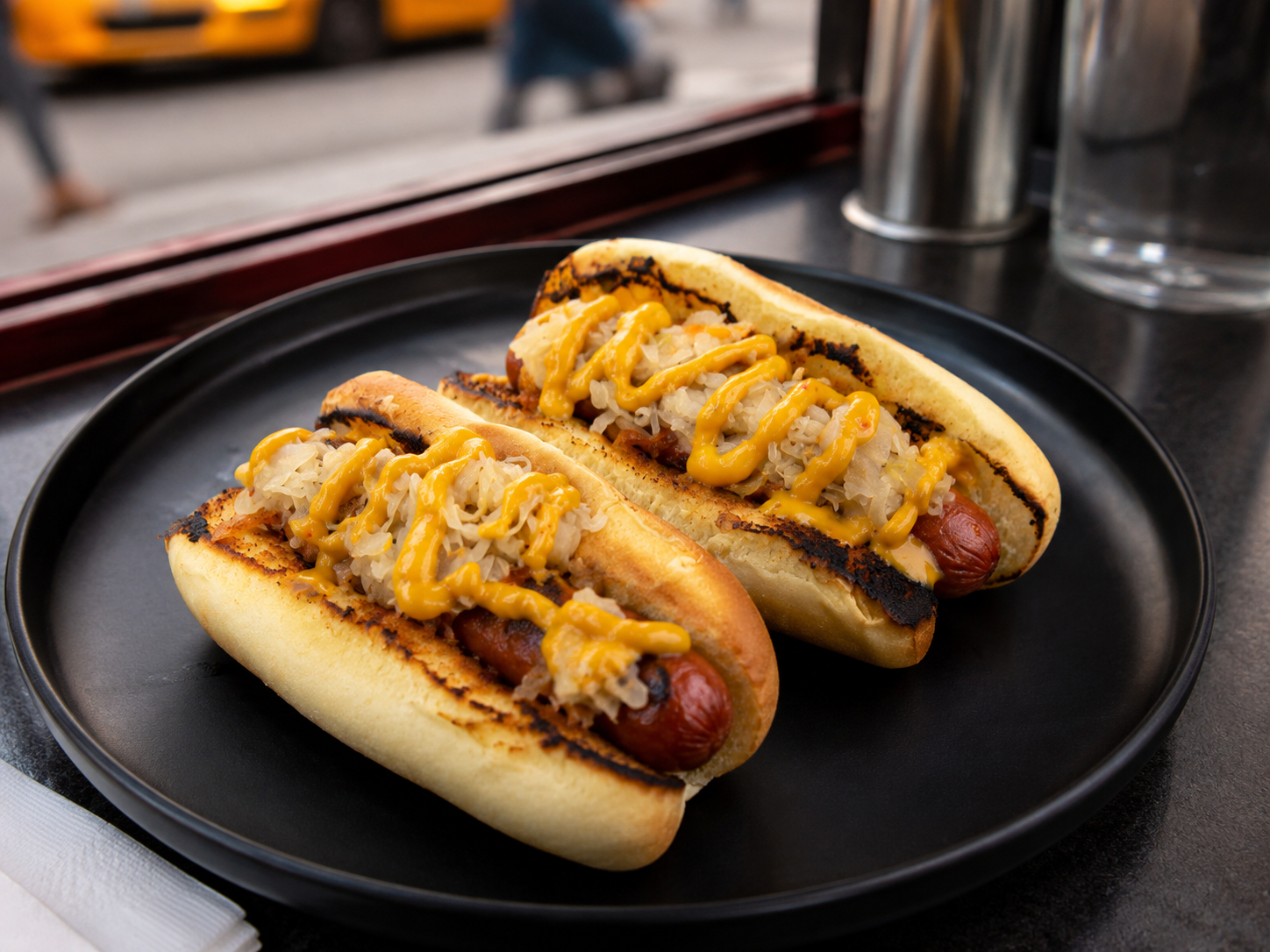
New York Dog: Classic Street Cart Hot Dog with Sauerkraut and Caramelized Onions
Walk down virtually any street corner in New York City and you’ll find a hot dog cart doing brisk business, and what comes off that cart is a specific combination that’s earned its place as one of the most recognizable street food traditions in the country. The New York Dog isn’t complicated, a natural casing beef hot dog, warm tangy sauerkraut, sweet caramelized onions, and a sharp hit of spicy mustard, but the combination of textures and flavors is precisely calibrated. Snap from the casing, tang from the kraut, sweetness from the onions, heat from the mustard. Made at home with a few proper techniques, this version captures everything that makes the cart version worth standing in line for.
The recipe breaks into distinct components that each take a few minutes of attention rather than one long complicated process. The sauerkraut warms through quickly on the stovetop. The onions caramelize slowly into deep golden sweetness while everything else comes together. The hot dogs cook in the air fryer, developing the charred, snappy skin that distinguishes a properly cooked natural casing dog from a boiled one. None of these steps is difficult individually, the result of doing all three properly and assembling them in the right order is what makes this taste like the genuine article rather than an approximation.
Why This Recipe Works So Well
Each component here is doing specific work, and understanding why helps explain what separates a great New York dog from a mediocre one.
Natural casing hot dogs are non-negotiable for this style. The casing is what creates the audible snap when you bite through, a textural signature that skinless hot dogs simply cannot replicate. Air frying these dogs rather than boiling or steaming them (the more common cart method, admittedly, but not the better one for home cooking) develops a light char on the casing exterior while keeping the interior juicy. The result has more flavor and better texture than a boiled dog, even if it diverges slightly from the literal cart technique.
Caramelizing the onions properly, genuinely cooking them down to deep golden brown rather than just softening them, takes real time, and that time is what produces the sweetness that balances the sauerkraut’s acidity. Rushed onions that are merely translucent don’t deliver this contrast; they taste like raw onion with the bite cooked off rather than the rich, jammy sweetness that real caramelization produces. The garlic paste added during this process layers in savory depth that plain caramelized onions don’t have on their own.
Warming the sauerkraut rather than serving it cold matters more than it might seem. Cold sauerkraut straight from the jar or can has a sharper, more aggressive acidity. A few minutes in a warm pan mellows that sharpness slightly while keeping the tang intact, and the warmth means it doesn’t cool down the hot dog and bun when it’s piled on top.
Toasting the buns in a buttered pan rather than serving them straight from the bag adds a layer of texture and flavor that’s easy to skip but makes a real difference. A soft, untoasted bun gets soggy fast under warm toppings. A lightly toasted, golden bun holds up structurally while adding its own flavor to the bite.
Choosing the Right Ingredients
Every component here benefits from a few specific ingredient choices that move this recipe from good to genuinely cart-quality.
Hot Dogs: All-beef natural casing hot dogs are the standard for New York style. The natural casing is essential, it’s the entire textural foundation of the dish. If your grocery store doesn’t carry natural casing dogs, a butcher counter or specialty meat shop usually will. Avoid skinless hot dogs for this recipe specifically; they cook fine but won’t deliver the snap that defines the style.
Sauerkraut: Refrigerated sauerkraut from the deli or specialty section typically has better flavor and texture than shelf-stable canned versions, which can taste flatter and more uniformly sour. Drain it well before warming, excess liquid waters down the flavor and makes the final assembly messier. If you prefer a milder tang, rinsing the sauerkraut briefly before draining softens the acidity.
Onions: Yellow onions are the standard choice for caramelizing, they have the right balance of sugar content and structure to break down properly over heat without disappearing into mush. Sweet onions like Vidalia work too if you want an even sweeter result, though yellow onions develop more complexity through the caramelization process.
Garlic Paste: Adding garlic paste to the onions partway through cooking layers in savory depth without the risk of burning that minced fresh garlic carries when added too early in a hot pan. If using fresh garlic instead, add it later in the cooking process than you would the onions themselves.
Buns: Soft New York style hot dog buns, the kind with a top-loading split rather than a side split, are traditional, but any soft hot dog bun works. What matters more than the specific bun style is toasting it properly so it holds structure under the toppings.
Mustard: Spicy brown mustard is the traditional choice for a New York dog, providing sharper heat and more complexity than classic yellow mustard. This is a place where deli-style or stadium-style spicy brown mustard makes a genuine difference compared to a milder yellow mustard.
Ingredients
Serves 2
For the Hot Dogs:
- 2 beef natural casing hot dogs
- 2 hot dog buns
For the Sauerkraut:
- 1 cup sauerkraut, drained
- 1 tbsp cooking oil
For the Caramelized Onions:
- 1 cup onions, sliced
- 1 tbsp cooking oil
- 1 tbsp garlic paste
- Salt, to taste
For Toasting:
- 2 tbsp butter
To Finish:
- Spicy mustard, to taste
Step-by-Step Instructions
Step 1 — Prep the Hot Dogs
Remove the hot dogs from their packaging and place them on a wire rack. Setting them on a rack rather than directly on a plate allows air to circulate around them, which helps with even cooking once they go into the air fryer.
Step 2 — Warm the Sauerkraut
Measure out 1 cup of sauerkraut and drain any excess liquid thoroughly, press it gently with the back of a spoon or your hands over a strainer to remove as much liquid as possible. Heat 1 tablespoon of oil in a medium pan over medium heat. Add the drained sauerkraut and warm for 3-5 minutes, stirring occasionally, until heated through. Transfer to a bowl and set aside.
Step 3 — Caramelize the Onions
Heat 1 tablespoon of oil in a medium pan over medium heat. Add the sliced onions, a pinch of salt, and the garlic paste, stirring to combine. Cook, stirring occasionally, until the onions begin turning golden brown, this takes patience and shouldn’t be rushed with high heat, which will burn the onions before they properly caramelize. Continue cooking for 5-7 minutes total, stirring occasionally, until the onions are deeply golden and softened throughout. Transfer to a bowl and set aside.
Step 4 — Air Fry the Hot Dogs
Preheat the air fryer to 400°F (205°C) for 5 minutes. Once preheated, place the hot dogs into the basket and cook for approximately 5 minutes, or until they’ve reached your desired level of doneness, look for a light char developing on the casing and a noticeable snap when you press on them. Remove from the air fryer and set aside.
Step 5 — Toast the Buns
Lightly spray or brush a pan with cooking oil, or melt the butter directly in the pan over medium heat. Place the buns cut-side down in the pan and toast until warm and lightly golden, watching closely since this happens quickly. Transfer to a plate and set aside.
Step 6 — Assemble and Serve
Place a toasted bun on a plate and add a hot dog. Spoon the caramelized onions over the hot dog first, then top the onions with the warm sauerkraut. Finish with a generous line of spicy mustard across the top. Serve immediately while everything is warm and the bun is still holding its structure.
Recipe Variations and Combinations
The New York dog is a classic for good reason, but a few variations are worth trying once you’ve got the base technique down.
Topping Variations:
- Chili Onion Dog: Add a spoonful of warm chili beneath the caramelized onions for a heartier, more substantial version that leans into Midwestern chili dog territory while keeping the New York onion-and-kraut base.
- Everything Dog: Layer caramelized onions, sauerkraut, spicy mustard, and a few sport peppers or pickled jalapeños for extra heat and acidity stacked on top of the classic combination.
- Reuben Dog: Swap the spicy mustard for a swipe of Russian dressing and add a slice of Swiss cheese melted briefly over the hot dog before topping with the sauerkraut, channeling Reuben sandwich flavors into hot dog form.
- Bacon-Wrapped New York Dog: Wrap the hot dog in a half strip of bacon before air frying for extra richness and crisp texture alongside the classic toppings.
Serving Suggestions
A proper New York dog pairs naturally with a few classic sides that round out the meal without overcomplicating it.
Classic Pairings: Crinkle-cut fries or a simple side of potato chips are the traditional cart-adjacent pairing. A pretzel on the side leans further into classic street food territory.
For a Crowd: This recipe scales easily, double or triple the onion and sauerkraut quantities and batch the hot dogs through the air fryer in multiple rounds. Keep finished onions and sauerkraut warm in covered bowls or low-heat pans while the remaining hot dogs finish cooking.
Drink Pairings: A cold beer is the classic pairing here, particularly something crisp like a lager or pilsner that won’t compete with the sharp mustard and tangy kraut. Black coffee or a soda water with lemon work well for a non-alcoholic option that mirrors the cart-cart culture this recipe draws from.
Troubleshooting Common Issues
Onions Won’t Caramelize: If your onions are softening but not browning, your heat is likely too low or your pan is overcrowded, causing the onions to steam rather than caramelize. Use a wide pan that gives the onions room to spread out, and don’t rush the process by raising the heat too high, that leads to burning rather than proper caramelization.
Sauerkraut Too Sour: If the sauerkraut’s acidity is overwhelming, rinse it briefly under cold water before draining and warming. This softens the sharpness while keeping the characteristic tang.
Hot Dogs Splitting in the Air Fryer: Natural casing dogs occasionally split if cooked at too high a temperature for too long. If this happens consistently, reduce the temperature slightly to 375°F and extend the cooking time by a minute or two.
Soggy Buns: Make sure the buns are properly toasted before assembly, and serve immediately once assembled rather than letting the finished dogs sit. The warm toppings will soften an untoasted or under-toasted bun within a few minutes.
Storage and Reheating
The components of this recipe store and reheat far better separately than the assembled dish does.
Storing Components: Caramelized onions keep in an airtight container in the refrigerator for up to 5 days and can be frozen for up to 2 months. Warmed sauerkraut keeps refrigerated for up to a week. Cooked hot dogs keep refrigerated for 3-4 days.
Reheating: Warm the caramelized onions and sauerkraut separately in small pans over low heat until heated through. Reheat hot dogs in the air fryer at 350°F for 2-3 minutes to restore some of the original texture rather than microwaving, which leaves them soft rather than snappy.
Buns: Toast fresh buns for each serving rather than trying to reheat previously toasted ones — they don’t hold their texture well after sitting.
Perfect for Any Occasion
The New York dog brings genuine street cart flavor into a home kitchen with components that, while requiring a bit of patience for the onions, are otherwise quick and straightforward. It works as a fast weeknight dinner, a casual lunch, or a fun addition to a backyard cookout where the components can be set up buffet-style for guests to build their own. Once you’ve got the caramelized onion technique down, this becomes a recipe worth keeping in regular rotation.