
Apple Season Is Here, and the Fridge Setup That Keeps Them Crisp for Weeks
Every October, the same scene plays out in American kitchens. A bag of apples comes home from the orchard, the farmers market, or a freshly stacked grocery display, and most of it lands in a bowl on the counter, where it looks wonderful for about a week. By the second week the skins have started to wrinkle, the flesh has gone soft, and the crunch that made the apples worth buying has faded into something closer to flour.
Apple season runs from late summer through the end of the fall harvest, and October is among its busiest months, which also makes it a time when a great deal of good fruit quietly goes to waste. The difference between apples that stay crisp for a few days and apples that stay crisp for a few weeks rarely comes down to the apple itself. It comes down to where the fruit is kept, and a refrigerator organized around that goal can hold apples at their best several times longer than a countertop bowl ever will.
Why the Fruit Bowl Works Against You
Apples are still alive after harvest. They continue to respire, slowly converting starch to sugar, losing acidity, and releasing ethylene, the ripening gas that speeds aging in the fruit around them. Temperature is the main throttle on all of it. Storage guidance from the apple industry consistently shows that fruit ages several times faster at room temperature than in the cold, which is why a countertop apple can go from firm to mealy in the time it takes a refrigerated one to barely change.
Orchards and packers understand this well. Commercial storage rooms hold apples at temperatures close to freezing with high humidity, which is how fruit picked in October can still be crisp in the spring. A home refrigerator is not a controlled atmosphere room, but it borrows the same principles: cold, humid, and stable. A fruit bowl is perfectly reasonable for the handful of apples a household will eat over the next few days. Anything beyond that belongs in the refrigerator.
Start With the Apple, Not the Fridge
Good storage begins at the counter, and a few habits before the fruit goes in decide how the next month goes. Varieties differ more than most shoppers realize. Firm, late-harvest apples such as Fuji, Granny Smith, and Pink Lady are known as reliable keepers, while earlier and softer varieties such as Gala and McIntosh are better eaten within the first couple of weeks. Honeycrisp is prized for its snap, but it is also more sensitive to cold injury than most, so it does better in the refrigerator’s moderate range than in its very coldest corner.
Sort before storing. A single bruised or punctured apple gives off more ethylene and can begin to rot, and mold spreads readily to the fruit touching it. Pull anything soft or damaged and turn it into applesauce or a baked dessert that week. Resist the urge to wash apples before they go in, too. Moisture on the skin invites mold, and the natural waxy coating on a fresh apple is part of what protects it. Rinse each one right before eating.
Getting the Temperature Right
Food safety guidance calls for a refrigerator at or below 40°F, and apples keep best toward the colder end of that range. Setting the compartment around 36°F to 37°F slows ripening noticeably while staying safely above the point where apples begin to freeze, which is a little below 30°F. A small appliance thermometer is worth a few dollars here, since the display shows the target and the thermometer shows what the compartment is actually doing.
Location matters as much as the setting. The door is the warmest and most variable part of a refrigerator, swinging open every time someone reaches for the milk, so apples never belong in a door bin. The produce drawers, where the temperature is steadier and the air holds more moisture, are the right home for them.
Where the Cosmo COS-RFFV283RBK Fits
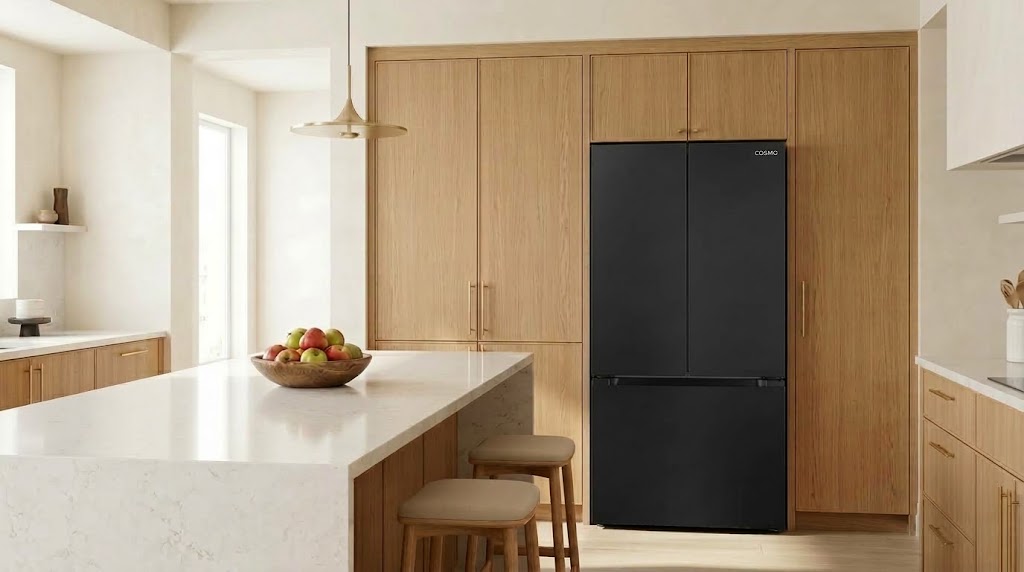
That combination of steady cold, protected humidity, and room to organize is what a well-designed French door refrigerator is built to provide. Cosmo’s COS-RFFV283RBK, a 36-inch French door refrigerator from the Vista Collection, suits a household bringing home a serious apple haul. Its 27.4 cubic foot capacity includes 18.6 cubic feet of fresh food space, enough to set aside a full drawer for apples without crowding out the rest of the week’s groceries. Fully enclosed crisper drawers help keep fruits and vegetables fresher for longer, which is a sensible starting point for the cool, humid environment apples prefer, and the adjustable fresh food shelves above them can be repositioned for a tall jug of fresh cider or a tray of prepped pie filling.
Digital touch controls set the refrigerator and freezer temperatures precisely rather than by guesswork, so dialing in that 36°F to 37°F target takes a moment instead of a week of small adjustments. A door alarm beeps if a door is left ajar, a small feature with real value on the afternoon someone is unloading a trunk full of orchard bags and walking in and out of the kitchen. The unit also includes an internal water dispenser that keeps the exterior seamless, LED lighting throughout, recessed door handles, and a fingerprint- and smudge-resistant matte black finish, all in an ENERGY STAR rated refrigerator.
Setting Up the Crisper Drawer
If the refrigerator has two produce drawers, dedicate one to apples. That single decision does more for a produce haul than any gadget. Apples are among the highest ethylene producers in the kitchen, while leafy greens, broccoli, carrots, and cucumbers are all sensitive to the gas and deteriorate faster when stored beside them. We covered the science in The Ingredients You’re Storing Wrong (And What It’s Costing You), but the practical rule is simple: apples in one drawer, vegetables in the other. From there, a few habits make the difference between two weeks and six.
- Give them air, not exposure. Store apples loosely in a perforated produce bag or in a single layer, so air can circulate while the fruit stays protected from drying out.
- Wrap the prized ones. For a variety destined for long storage, wrap each apple in a sheet of paper towel or plain paper. It limits contact between fruit and slows the spread of rot if one apple turns.
- Keep them away from strong smells. Apples pick up odors from neighbors such as onions and cabbage, and a flavor that belongs in a stew has no place in a fresh apple.
- Check once a week. Look over the drawer, pull anything soft, and eat the oldest fruit first so nothing sits forgotten at the back.
What to Do With Apples Past Their Prime
An apple that has lost its snap is not a lost apple. Softer fruit is often at its best for applesauce, baking, and pie, where texture matters less and sweetness has had time to develop. This is also where the freezer earns its place in apple season. Slice the apples, toss them lightly with lemon juice to slow browning, and freeze them in a single layer on a sheet pan before transferring the slices to a bag, which keeps them from freezing into one solid block. Unsweetened applesauce freezes well in flat containers, and the COS-RFFV283RBK’s slide-out freezer drawer, with 8.8 cubic feet of freezer capacity, keeps those bags and containers organized in one place instead of buried. The same logic drives the trend we explored in The Freezer Is the New Meal Plan: food stored with a plan is food that actually gets used.
Fresh cider deserves a note of its own. Unpasteurized cider is perishable, so it belongs in the refrigerator rather than on the counter, and it is best finished within about a week. A tall jug fits comfortably on an adjustable shelf once a shelf has been moved to make room for it.
A Short Checklist for the Season
Apple season is brief, and the fruit is at its peak right now, so it is worth setting up storage before the bags come home rather than after. Sort the fruit as soon as it arrives. Keep a small bowl on the counter for the week ahead and move everything else to the refrigerator. Set the compartment near 37°F and confirm it with a thermometer. Give apples their own produce drawer, keep them out of the door, and check them weekly.
None of it requires special equipment, but it does reward a refrigerator with reliable temperature control and enough interior flexibility to give one kind of produce its own space. For households planning to make the most of an orchard trip this year, the COS-RFFV283RBK offers 27.4 cubic feet of French door storage, enclosed crisper drawers, precise digital controls, and a freezer drawer for everything that goes into the pie, the sauce, and the weeks beyond, so the last apple of the season is as crisp as the first.