
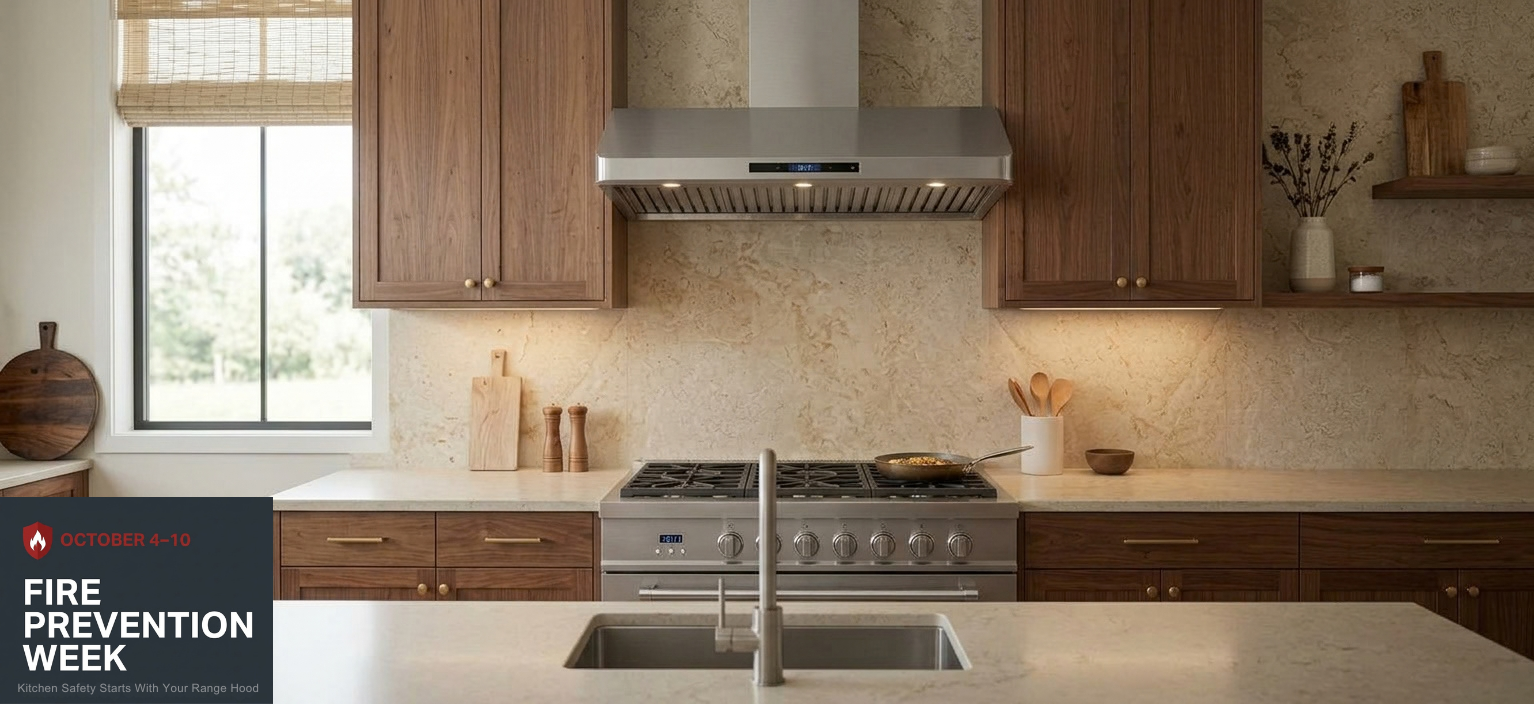
Fire Prevention Week Starts With Safer Cooking and Clearer Air
In 2026, the National Fire Protection Association is focusing on safe charging for devices powered by lithium ion batteries. Phones, tablets, cordless vacuums, and power tools often share counter space with meal preparation, so charging habits belong in any conversation about a safer kitchen.
Cooking brings everyday risks. A hot pan, unattended oil, or a towel too close to a burner can turn a familiar meal into an emergency. A range hood can capture airborne grease, smoke, and odors, helping keep the cooking area comfortable and easier to maintain. It does not prevent or put out a fire, but good equipment and attentive habits can work together.
A Familiar Room With Real Fire Risks
Cooking is the leading cause of reported home fires in the United States. In its analysis of 2017 through 2021 incidents, the NFPA estimated an average of 158,400 reported home cooking fires each year. Ranges and cooktops were involved in 53 percent of those fires. The same report identifies unattended cooking as the leading contributing factor. These figures describe a real hazard, but they also point to an everyday opportunity: many incidents begin in familiar circumstances that people can learn to recognize.
A pan of oil heats while someone answers the door. A pot boils over while a cook steps into another room. A dish towel slides close to a flame. None of these moments means a fire is inevitable, and no single appliance can remove the need for attention. They are reminders to keep the cooking zone clear, stay nearby, and make decisions before a distraction takes over.
Stay Present at the Stove
Stay in the kitchen when frying, boiling, grilling, or broiling food. If you need to leave, turn off the burner first. For simmering, roasting, or baking, check the food regularly, set a timer, and remain at home. A timer helps with memory, but it is not a substitute for checking on what is cooking.
Keep paper towels, packaging, utensils, oven mitts, and dish cloths away from burners. Turn pan handles toward the center of the stove. Wear short or close fitting sleeves, and establish a three foot zone around the cooking area for children and pets. Wipe spills when the surface is cool, and do not use the oven or stovetop as storage.
These habits also make ventilation more effective. When cooking creates steam or smoke, switch on the hood before the air spreads through the room. Use a lower setting for gentle simmering and a stronger setting for searing or several active burners. Leave it running briefly after cooking to clear lingering fumes, following the appliance instructions.
What a Range Hood Can and Cannot Do
Cosmo’s COS-QS48 is a 48 inch under cabinet range hood featured in a recent Cosmo product article. Its two motors provide up to 500 CFM of airflow, and its four speed fan lets a cook adjust ventilation to the meal. A backlit LCD touch panel and wireless remote make it possible to change settings without reaching across hot cookware. Three LED lights illuminate the cooking surface.
Three permanent ARC FLOW stainless steel filters capture airborne grease and are dishwasher safe. The hood is designed for top venting, sending captured air through ductwork to the exterior when installed in that configuration. Confirm the hood, duct route, clearances, and electrical setup suit the kitchen, and follow the installation guide.
A range hood is ventilation equipment, not a fire suppression system. It cannot make unattended cooking safe, stop a pan fire, or replace a smoke alarm. Grease that collects on filters and nearby surfaces also needs attention. The useful role of the COS-QS48 is more modest and practical: its width suits larger cooking surfaces, its fan offers several ventilation levels, and its removable filters can be cleaned. These features can support a kitchen that is easier to keep clear and comfortable while cooking.
Keep Filters and Cooking Surfaces Clean
Grease buildup can smoke during later cooking and add fuel to a fire if it catches. Check filters regularly, especially after frequent frying or high heat cooking. Remove and clean them as directed in the owner’s manual, and let them dry fully before reinstalling. Wipe the hood underside, backsplash, and nearby cabinets with a suitable cleaner, keeping moisture away from the controls.
Clean the cooktop only after it has cooled, and remove crumbs or spilled food before the next meal. Check that the fan and lights are working as expected. If airflow seems weak, inspect the filter and consult the manual or a qualified installer about the ducting. A hood that is incorrectly sized or installed may not capture cooking byproducts as intended, so measure the cooking surface and verify fit before choosing equipment.
Charge Devices Away From Cooking Heat
The 2026 Fire Prevention Week theme, “Charge into Fire Safety: Safe Charging Is a Superpower,” calls attention to lithium ion batteries in household devices. A charging phone on a kitchen counter may seem harmless, but charging should happen away from hot appliances, splashes, and clutter. NFPA recommends using the manufacturer’s charger, choosing a hard flat surface, and unplugging the device when it is fully charged.
- Give charging its own spot. Use a clear counter or table well away from the range, oven, toaster, and sink. Do not charge a device on a stovetop or beside a hot pan.
- Use an approved cord and adapter. Choose the charger supplied with the device or one approved by its manufacturer. A damaged cable or poorly matched adapter is a reason to stop and replace it.
- Keep the surface open. Charge on a hard, flat area where heat can escape. Beds, pillows, couches, and piles of fabric can trap warmth around a device.
- Unplug when charging is done. Follow the device maker’s instructions, and avoid leaving a battery powered device charging unattended for long periods.
- Respond to warning signs. Stop using a device that becomes unusually hot, swells, leaks, smells strange, hisses, or smokes. If it is smoking or burning, move away, alert others, and call emergency services from a safe location.
Know the Plan Before a Fire Starts
Working smoke alarms provide an early warning. Install them on every level, inside each bedroom, and outside sleeping areas. Test them monthly and replace batteries or units as directed. Keep alarms at least 10 feet from cooking appliances when possible to reduce nuisance alarms, while following local requirements and the alarm instructions.
If a small grease fire starts in a pan, turn off the heat if safe and slide a lid over it. Do not move the pan or remove the lid until it is completely cool. Never pour water on burning oil or grease. For an oven fire, turn it off and keep the door closed. If the fire does not go out promptly, or you have any doubt, get everyone outside, close the door behind you, and call 911. Do not reenter.
Make Safety Part of Every Meal
Fire Prevention Week runs October 4 through 10 in 2026, but the habits it promotes matter all year. Stay close to the stove, keep flammable items away from heat, clean cooking grease, charge devices on a clear hard surface, and make sure smoke alarms work. Talk through an escape plan with everyone at home so no one has to invent one during an emergency.
For a kitchen with a 48 inch cooking surface, Cosmo’s COS-QS48 brings broad coverage, four fan speeds, bright task lighting, and washable permanent filters into one under cabinet design. Choose ventilation that fits the cooking area, install and maintain it according to the manufacturer’s guidance, and remember that awareness at the stove remains the first line of fire prevention. A safer kitchen comes from the equipment you maintain and the small choices you repeat each day.