
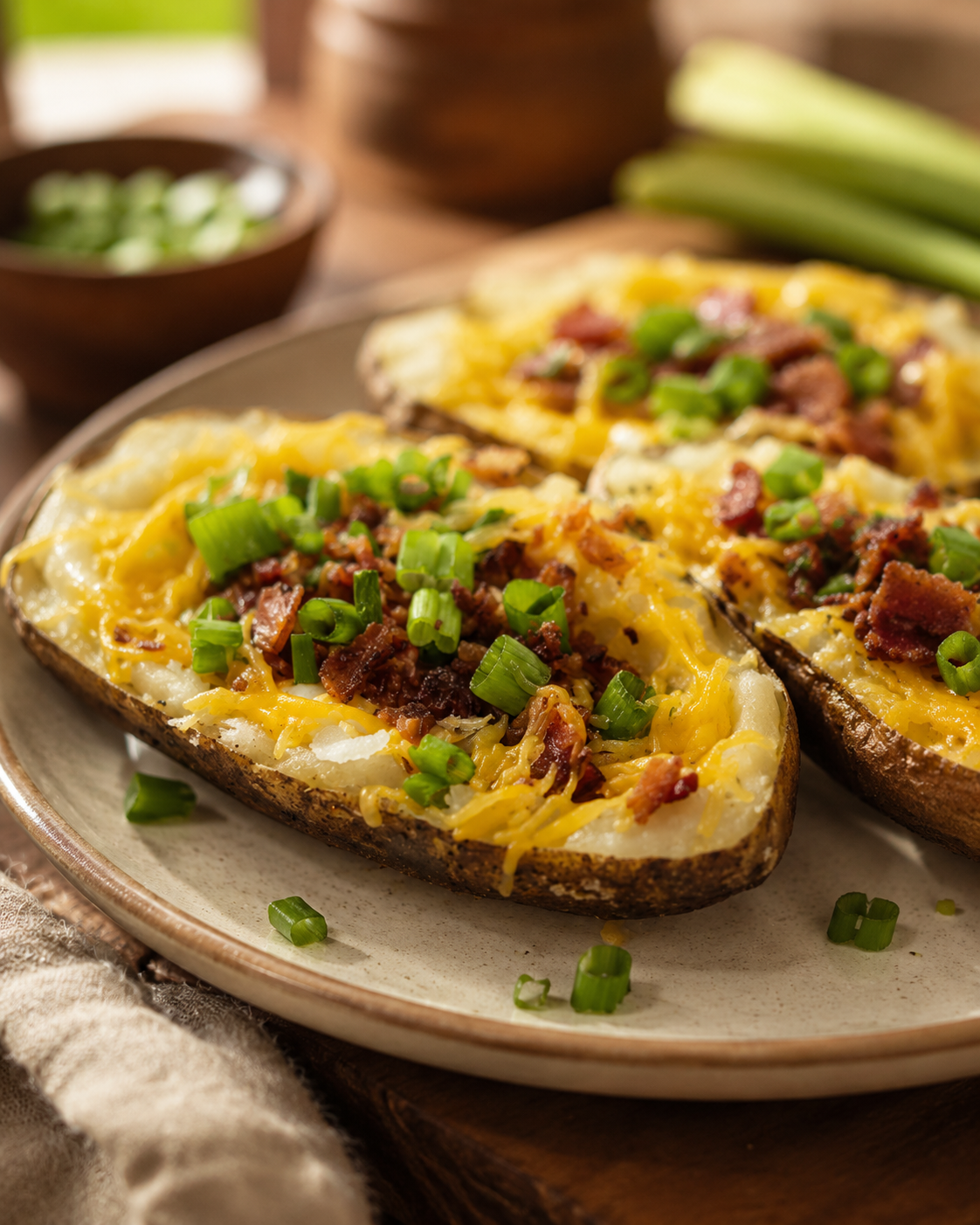
Loaded Potato Skins: Crispy Air Fryer Potato Skins with Bacon, Cheddar, and Sour Cream
Potato skins occupy a specific place in comfort food that nothing else quite fills. The combination of a crispy, seasoned shell, a thin layer of fluffy potato, melted cheddar, crispy bacon, and cool sour cream hits every texture and temperature contrast simultaneously in a way that makes them disappear from a plate faster than almost anything else you can put in front of people. Made properly, with potatoes cooked until genuinely tender, skins that have real structure, and toppings added in the right sequence, loaded potato skins are as satisfying coming out of your own kitchen as any version you’d order at a restaurant.
The air fryer handles both the potatoes and the bacon in this recipe, and using it for both components isn’t just about convenience. Air-frying whole potatoes creates skins with better texture than oven-baking, the circulating heat dries the exterior during cooking, producing a shell that holds its shape when halved and scooped rather than collapsing under toppings. The bacon crisps in the same unit while the potatoes finish their last stretch, making smart use of the cooking time without requiring a separate pan. Everything from raw potatoes to fully loaded skins takes under an hour, most of which requires no active attention at all.
Why This Recipe Works So Well
The combination of techniques and ingredient choices here produces loaded potato skins that consistently beat shortcuts and approximations.
Starting with jumbo potatoes matters more than it seems. Large potatoes create substantial skins with enough interior to scoop while still leaving a meaningful layer of potato against the skin. Smaller potatoes produce thin skins that either tear during scooping or leave so little potato inside that they lose the textural contrast between crispy exterior and soft interior that makes potato skins worth eating. Jumbo russeting potatoes have the thick skins and starchy interiors that hold up through the air frying process and maintain structure when halved and loaded.
The olive oil and seasoning step before wrapping is doing real work. Coating the exterior with olive oil before foil-wrapping keeps the skin from drying out during the long cook, ensuring it stays pliable enough to scoop without cracking. The salt and pepper season the skin itself, not just the toppings, so every bite of the shell carries flavor rather than relying entirely on what goes on top.
Butter and garlic paste applied directly to the scooped interior before any other topping goes on creates a flavor base that soaks into the remaining potato layer. Cheese and bacon placed on top of this base rather than directly on dry potato flesh produces a different result — the butter fat helps the cheese melt more evenly and the garlic flavors the entire interior rather than sitting as a separate topping.
Sour cream added last, after everything else, maintains its cool temperature and clean tang against the warm toppings. Mixing it in or applying it before other toppings buries it and loses the temperature contrast that makes it work.
Choosing the Right Ingredients
Every component in loaded potato skins is simple, but small choices within each category affect the finished result enough to be worth considering.
Potatoes: Jumbo russet potatoes are the right choice here — their thick skins and high starch content produce the best texture after air frying. Waxy potatoes like Yukon Golds have thinner skins and denser flesh that doesn’t scoop as cleanly or crisp as effectively. Size matters practically too: jumbo potatoes produce halves substantial enough to hold toppings without bending under the weight. Avoid any potato with soft spots, green patches, or significant bruising.
Bacon: Standard cut bacon crisps more predictably in the air fryer than thick-cut, which can remain chewy in the center while the edges over-cook. Three strips provides enough bacon for two loaded potatoes — four halves total — without overwhelming the other toppings. Cook until genuinely crispy rather than just done: crispy bacon crumbles into every bite rather than pulling out as a single strip when you eat the skin.
Cheddar Cheese: Shredded sharp cheddar melts cleanly on warm potato skins and has enough flavor to hold up against the other strong components. Pre-shredded cheddar works fine here — the added starches in commercial pre-shredded cheese actually help it melt more smoothly on the potato rather than pooling into a greasy layer. Extra sharp cheddar adds more flavor presence if you prefer it.
Garlic Paste: Garlic paste incorporates into the butter more evenly than minced fresh garlic, distributing flavor across the entire interior surface rather than concentrating in spots. Store-bought garlic paste works well. If you only have fresh garlic, mince it as finely as possible or crush it to a paste with the flat of a knife and salt before using.
Green Onions and Chives: Both bring freshness and mild onion flavor that cuts through the richness of butter, cheese, and bacon. Green onions add slightly more punch and textural presence. Chives are more delicate in both flavor and texture. Using both creates more complexity than either alone — the combination appears consistently in good potato skin recipes for this reason.
Sour Cream: Full-fat sour cream has better body and tang than reduced-fat versions, which can seem watery. A generous spoonful per half is the right quantity — enough to contribute its cool, creamy contrast without drowning the other toppings.
Ingredients
Serves 2-4
- 2 jumbo russet potatoes
- 2 tbsp olive oil
- Salt and pepper, to taste
- 1 tbsp butter, softened
- 1 tsp garlic paste
- ½ cup shredded cheddar cheese
- 3 strips bacon
- 2 green onions, chopped
- 2 tbsp fresh chives, chopped
- Sour cream, to taste
Step-by-Step Instructions
Step 1 — Prep the Potatoes and Bacon
Wash and dry the potatoes thoroughly — any moisture on the skin before oiling creates steam during cooking rather than allowing the exterior to dry properly. Rub each potato all over with olive oil, making sure the entire surface is coated. Season generously with salt and pepper, pressing lightly so the seasoning adheres to the oiled skin. Wrap each potato individually in aluminum foil and place them on a cooking tray.
While the potatoes are prepping, chop the green onions and chives and combine them in a bowl. Set aside. Lay 3 strips of bacon flat on a separate cooking tray and set aside until needed.
Step 2 — Air Fry the Potatoes
Place the foil-wrapped potatoes in the air fryer at 400°F (205°C) and cook for 50 minutes, or until a knife inserted through the foil meets no resistance and the potatoes feel tender throughout when pressed gently. Cooking time varies slightly based on potato size — jumbo potatoes on the larger end may need a few extra minutes. Don’t rush this step: undercooked potatoes produce dense, gummy interiors that don’t scoop cleanly and won’t have the soft, fluffy texture loaded potato skins require.
At the 35-minute mark, place the bacon tray into the air fryer alongside the potatoes. Cook the bacon for approximately 15 minutes or until fully crispy. The bacon finishes as the potatoes complete their last stretch, so both are ready at the same time. Remove the potatoes and bacon from the air fryer and set both aside to cool slightly — the potatoes need to be handleable for the next step, so give them 3-5 minutes before cutting.
Step 3 — Halve and Scoop
Place the cooked potatoes on a large plate. Using a large knife, cut each potato in half lengthwise — be careful as they will be very hot even after resting. Use tongs or gloves to hold the potato steady while cutting if needed.
Using a spoon, scoop out the interior of each half, leaving approximately a quarter-inch layer of potato flesh against the skin. This layer is important — too thin and the skin becomes fragile and tears; too thick and the skin loses the ratio of crispy exterior to topping that makes potato skins work. Set the scooped potato flesh aside for another use — mashed potatoes, potato soup, or potato cakes.
Step 4 — Butter, Season, and Load
While the skins are still warm, spread a small amount of softened butter and garlic paste inside each scooped half using a butter knife. The warmth of the potato melts the butter immediately and draws the garlic paste into the remaining flesh. Add a pinch of salt and pepper over the buttered interior if desired.
Add shredded cheddar cheese generously across each skin, covering the buttered interior. Crumble the crispy bacon over the cheese. The warmth from the potato skin begins melting the cheese as you work — if you want the cheese fully melted, return the loaded skins to the air fryer at 350°F for 2-3 minutes before adding the cold toppings.
Step 5 — Finish and Serve
Scatter the chopped green onions and chives across the loaded skins. Add a generous spoonful of sour cream to each half, either centered or in a line across the top. Serve immediately on the large plate — loaded potato skins are at their best when the contrast between hot potato and bacon, melted cheese, and cool sour cream is at its fullest.
Recipe Variations and Combinations
Loaded potato skins are one of those recipes where the base technique stays consistent while the topping combinations can vary considerably.
Topping Variations:
- BBQ Chicken Skins: Replace bacon with shredded rotisserie chicken tossed in barbecue sauce, swap cheddar for smoked gouda, and top with pickled red onion instead of green onion. The smoky-sweet profile makes a complete departure from the classic version.
- Jalapeño Popper Skins: Fill scooped skins with cream cheese mixed with diced jalapeño, top with shredded cheddar and bacon, and finish with pickled jalapeño slices. The cream cheese filling mirrors jalapeño popper flavors directly.
- Buffalo Chicken Skins: Toss shredded rotisserie chicken in buffalo sauce, pile onto skins with blue cheese crumbles instead of cheddar, and finish with celery-infused sour cream or ranch instead of plain sour cream.
- Breakfast Skins: Swap bacon for crumbled breakfast sausage, top with scrambled egg and cheddar, and finish with hot sauce instead of sour cream. The same technique works for a completely different meal occasion.
- Veggie Loaded Skins: Skip the bacon entirely and build toppings from sautéed bell peppers, black beans, corn, and pepper jack cheese for a vegetarian version with enough substance to satisfy alongside the classic.
Serving Suggestions
Loaded potato skins work across a wide range of situations, from casual weeknight snacking to hosting.
As an Appetizer: Two halves per person works as a starter before a main course. Serve on a large shared plate with extra sour cream on the side for dipping.
As a Main Course: Four halves — one whole potato — makes a satisfying meal alongside a simple green salad. The toppings provide enough protein and richness to stand on their own.
Game Day and Entertaining: Double or triple the recipe — cooking two trays of potatoes while bacon crisps alongside handles larger batches efficiently. Keep cooked skins warm in the air fryer at a low setting while assembling the full batch before serving everything together.
Dipping Sauces Beyond Sour Cream: Ranch dressing, chipotle mayo, or hot sauce all work as alternative or additional dipping options alongside the classic sour cream.
Troubleshooting Common Issues
Skins Tearing During Scooping: The skin tears when potatoes are either undercooked (flesh too dense and resistant) or the scooping layer is left too thin. Make sure potatoes are completely tender before scooping, and leave a deliberate quarter-inch layer rather than scraping all the way to the skin.
Cheese Not Melting: The residual heat from freshly air-fried potatoes should soften pre-shredded cheese fairly quickly. If skins have cooled too much before loading, return them to the air fryer at 350°F for 2-3 minutes after adding cheese and bacon to melt everything before finishing with cold toppings.
Bacon Not Crispy: If bacon comes out chewy rather than crispy, extend the cooking time in 2-minute increments. Bacon thickness and fat content vary by brand, affecting how long it needs at 400°F. Make sure the strips lie flat on the cooking tray without overlapping, as overlapped bacon steams rather than crisps.
Soggy Skins: Sogginess usually comes from excess moisture in the potato or from toppings weighing down thin-walled skins. Ensure potatoes are dried thoroughly before oiling, and don’t skip the foil-wrapping step which regulates moisture during the long cook. Leaving a substantial wall of potato flesh when scooping also helps the skin hold its shape.
Storage and Reheating
Loaded potato skins are best assembled and eaten immediately, but the components store well separately for easy assembly later.
Storing Cooked Potatoes: Fully cooked, halved, and scooped potato skins store in an airtight container in the refrigerator for up to 3 days. Keep them un-topped for best results — toppings added before storage make them soggy.
Reheating Skins: Return refrigerated skins to the air fryer at 375°F for 4-5 minutes to restore crispiness before loading. Microwaving cold skins makes them soft rather than crispy, so the air fryer is the right tool for reheating here too.
Storing Toppings Separately: Cooked bacon keeps refrigerated in an airtight container for up to 5 days, reheating in the air fryer for 1-2 minutes to restore crispiness before use. Green onions and chives keep well in the refrigerator for several days. Assemble toppings fresh each time for best results.
Making Ahead for a Group: Cook and scoop potatoes up to a day ahead and refrigerate. When ready to serve, reheat skins in the air fryer, then load and serve immediately. This approach handles the time-consuming step in advance and makes serving a larger group manageable without rushing.
Perfect for Any Occasion
Loaded potato skins fit more occasions than most recipes manage. They’re fast enough for a weeknight when you want something satisfying without much effort, impressive enough to serve guests, and flexible enough that variations cover virtually any flavor direction you want to take them. The air fryer handles both main components simultaneously, and the assembly step takes under five minutes. From raw potatoes to a loaded plate takes less than an hour — most of which requires no active cooking at all.