
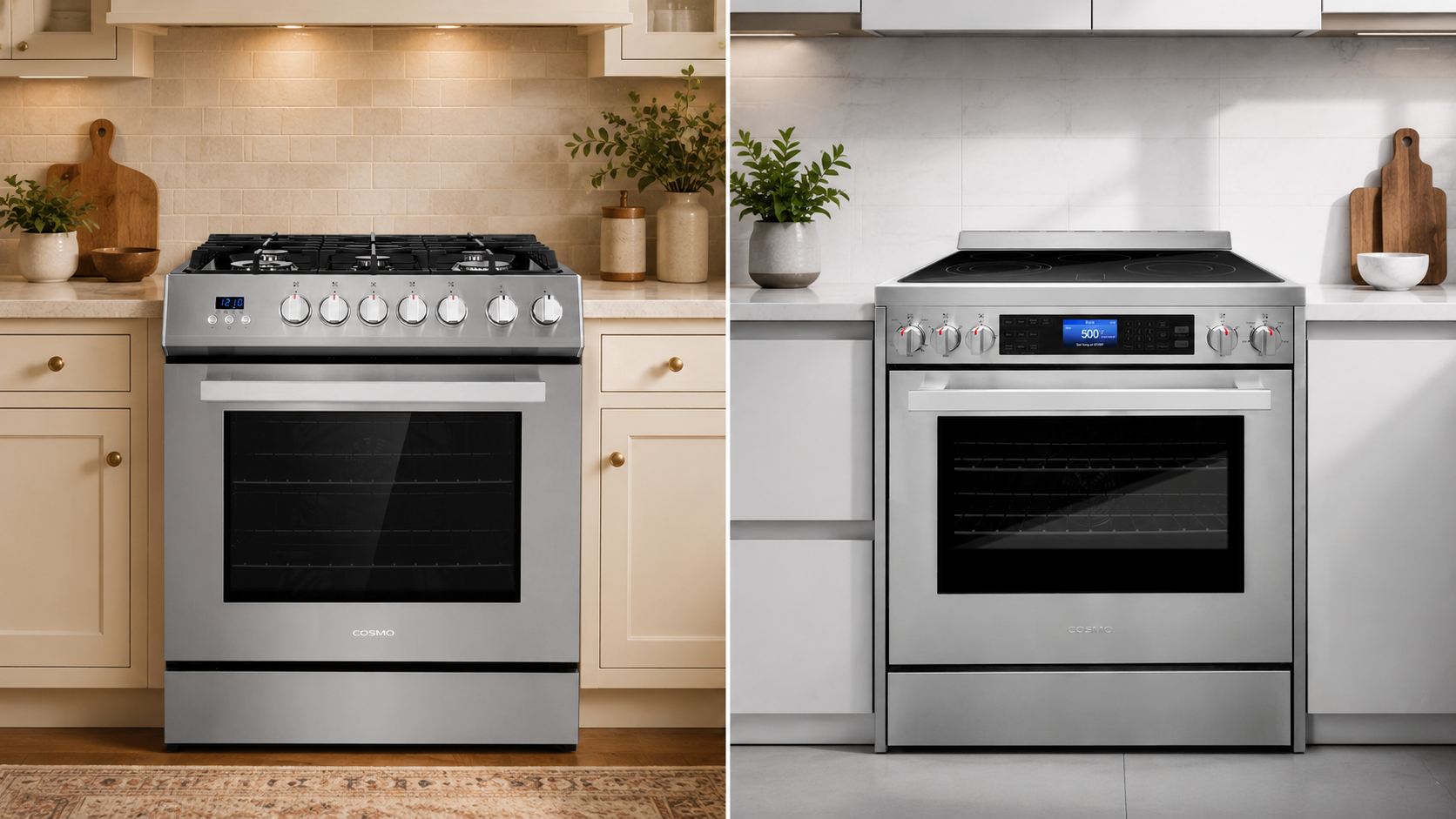
What Happens to Your Kitchen When You Switch From Gas to Electric (Or Back Again)
Switching cooking fuel types is one of the more disruptive kitchen changes a household can make, and it’s happening more frequently than at any previous point in residential appliance history. Some households are switching from gas to electric or induction driven by environmental considerations, building electrification requirements, or new construction that defaults to all-electric systems. Others are switching from electric to gas when they move into homes with existing gas service or when they renovate kitchens specifically to add gas cooking capability. In both directions, the transition involves more than swapping one appliance for another — it changes how the kitchen functions, how cooking feels, and what the space requires to support a different energy source.
Most of the available information about this transition focuses on the cooking performance comparison between fuel types, which is genuinely useful but incomplete. The practical experience of living through the switch, what changes immediately, what takes adjustment, what you gain and lose that you didn’t anticipate, gets less attention. Understanding these dimensions helps you prepare for a transition rather than discovering them one by one after the new appliance is already installed.
What Changes Immediately When You Switch From Gas to Electric
The differences that hit you in the first week are mostly about heat response and visual feedback, the two areas where gas and electric cooking feel most different during active cooking sessions.
Heat Response Speed: Electric elements, whether coil or ceramic glass, respond more slowly to control adjustments than gas flames. When you reduce heat on a gas burner, the flame shrinks immediately and the pan temperature begins dropping within seconds. When you reduce heat on an electric element, the element takes time to cool, anywhere from 30 seconds to several minutes depending on element type and how high it was running. New electric cooks consistently over-reduce heat because they compensate for a temperature change that hasn’t happened yet, then under-reduce after learning this, cycling through corrections before developing intuition for the lag. This adjustment period typically takes 2-4 weeks of regular cooking.
The Opposite Problem When Switching to Gas: Cooks switching from electric to gas often find themselves cooking at temperatures higher than they intend because gas responds faster than their electric muscle memory expects. An adjustment that would have taken 30 seconds to take effect on the old electric element happens immediately on gas. Dishes that simmered well on electric at a medium-high setting now need to run lower on gas for equivalent results.
Visual Feedback Loss (Electric) or Gain (Gas): Gas flames provide constant visual information about heat output. You can see a tiny flame maintaining a gentle simmer, a medium flame for sautéing, and a large flame for rapid boiling. This visual information becomes embedded in cooking intuition, you stop reading control knob positions and start reading flames. Switching to electric removes this feedback entirely, replacing it with numbered dial positions and the color of a heating element that provide less intuitive information about actual heat output. The reverse is true when switching to gas from electric, many cooks find the visual flame feedback makes cooking feel more natural and controllable after years of relying purely on knob positions.
Spill Behavior: Gas cooktops with grates create crevices where spills reach beneath grates and into burner areas if unsealed. Electric smooth-top surfaces are completely flat, spills stay on the surface where they’re visible and easy to wipe. This is an immediate and often surprising practical difference for gas cooks switching to electric. The reverse, electric cooks switching to gas, discover that pots slide more than expected on flat ceramic surfaces and that keeping the cooktop truly clean requires more attention to what falls beneath the grates.
Infrastructure Changes That Must Happen Before the Appliance Arrives
The physical requirements of switching fuel types often require advance planning that buyers underestimate when focused on appliance selection.
Switching From Gas to Electric: A standard 120V outlet powers ignition systems on gas ranges but the cooking itself requires no additional electricity. Electric ranges and cooktops run on 240V circuits drawing 40-50 amps, a dedicated circuit that most homes with existing gas ranges simply don’t have in the kitchen. Adding a 240V circuit requires an electrician, potential electrical panel work if the panel lacks available capacity, and permit pulling in most jurisdictions. Costs range from $200-800 for straightforward installations to several thousand dollars if the panel needs upgrading. This electrical work must happen before the new appliance can be installed and used. Planning for this lead time prevents the scenario where a new range sits unconnected waiting for electrical work.
Switching From Electric to Gas: Homes without existing gas service require a gas utility connection, typically a street-level connection fee plus trenching and pipe installation to the home, which can cost $1,000-5,000 or more depending on distance and local conditions. Homes with gas service elsewhere (water heater, furnace) but no kitchen gas line need interior piping extended to the kitchen, a job for licensed plumbers that adds several hundred to a few thousand dollars. Gas line work requires permits, inspections, and licensed contractors in virtually all jurisdictions. Like the electrical situation, this work must precede appliance installation.
The Abandonment Question: Switching from gas to electric leaves a gas line stub in the kitchen that needs proper capping and a former outlet location that may need addressing. Switching from electric to gas leaves a 240V outlet that won’t be used by the new range. Neither of these leftover infrastructure elements is a serious problem, but knowing they’ll exist prevents confusion after installation.
Ventilation Reconsideration: Switching fuel types is an appropriate moment to reassess kitchen ventilation even if you’re not changing the hood itself. Gas cooking produces combustion byproducts that electric cooking doesn’t, making adequate ventilation specifically more important for gas than electric in health terms. Electric cooking still produces steam, grease particles, and odors that need extraction, so ventilation matters in both directions, but households switching to gas should verify their existing ventilation is adequate for gas-specific combustion byproducts rather than assuming the existing setup handles the new fuel type equivalently.
The Cookware Situation
Cookware compatibility is one of the most frequently under-researched aspects of fuel switching, and discovering after installation that your existing pots and pans don’t work creates significant frustration.
Switching to Induction Specifically: Induction cooktops only work with magnetic cookware, cast iron, magnetic stainless steel, and enameled cast iron. Copper, aluminum, glass, and non-magnetic stainless steel don’t work at all. The quick test is whether a kitchen magnet sticks firmly to the pan’s base. If a household is switching from gas or traditional electric to induction with a kitchen full of copper or aluminum cookware, the transition budget needs to include cookware replacement costs that can easily rival or exceed the cooktop itself. Discovering this after ordering the induction cooktop but before assessing existing cookware is a very common and expensive oversight.
Switching to or From Ceramic Glass Electric: Ceramic glass surfaces require flat-bottomed cookware for proper heat transfer and to prevent scratching. Gas cooktops with raised grates accommodate round-bottom woks and irregular pan bases that don’t work on flat electric surfaces. Cast iron cookware works on ceramic glass but must be lifted rather than slid to prevent scratching. Households with large cast iron collections switching from gas to electric glass surfaces need to adjust how they handle these pieces.
Wok Cooking Impact: Round-bottom woks are designed for gas cooktop grates that position them above flames. These woks don’t work on flat electric surfaces at all without a dedicated wok ring, and the flat-bottom woks designed for electric surfaces produce different cooking results. Households that cook with woks regularly face the largest practical cooking change when switching from gas to flat-surface electric, and this consideration should factor heavily in fuel type decisions for households where wok cooking is regular practice.
The Cooking Techniques That Change Most
Some cooking techniques translate naturally between fuel types while others require meaningful adjustment or become genuinely harder to execute.
Techniques That Stay Similar: Oven cooking is largely unaffected by the fuel change since most ranges pair gas or electric stovetops with separately powered ovens that operate comparably regardless of what’s happening on the cooktop. Roasting, baking, broiling, and braising results don’t change significantly based on whether the range underneath is gas or electric. Stovetop techniques that happen at relatively stable temperatures, simmering soups, cooking grains, maintaining gentle heat under a double boiler, also translate well because the fuel-type differences in heat response matter less when you’re not making rapid adjustments.
Techniques That Require Adjustment: Searing proteins requires the highest available heat and benefits from fuel types that deliver it quickly and sustain it through the thermal load of cold meat hitting a hot pan. Gas handles this well at any output level; electric ceramic glass can achieve similar results but requires longer preheat times and benefits from preheating the pan thoroughly before adding food. The adjustment is in timing and anticipation rather than in final results, but it takes deliberate recalibration.
Techniques That Genuinely Change: Direct flame cooking, charring peppers over a gas flame, toasting tortillas directly on grates, lighting marshmallows, disappears entirely when switching to electric. These techniques rely on direct contact with an open flame that electric cooktops simply can’t replicate. Conversely, maintaining extremely low temperatures, chocolate tempering, holding a béarnaise warm without breaking, becomes easier on induction than gas because induction’s precise low-end control exceeds what gas can maintain at minimum flame.
Pasta and Boiling Water: Large quantities of water take longer to boil on standard electric elements than on high-output gas burners. This is a commonly cited gas advantage that induction largely eliminates, induction boils water faster than gas in many comparisons. But switching from gas to standard electric results in a noticeable time increase for boiling large pasta pots that frustrates many cooks until they adjust timing expectations.
The Air Quality Change You May Not Have Expected
One of the less-discussed but increasingly important dimensions of fuel switching involves indoor air quality changes that affect the kitchen environment beyond cooking performance.
Gas Combustion Byproducts: Gas combustion produces carbon monoxide, nitrogen dioxide, and formaldehyde inside your home. Research into this topic has intensified in recent years, with studies finding that indoor nitrogen dioxide levels from gas cooking regularly exceed EPA outdoor air quality standards even in kitchens with ventilation running. These concentrations are particularly relevant for households with children, elderly members, or anyone with respiratory conditions. The risk is manageable with adequate ventilation but not eliminable through ventilation alone as long as gas combustion is happening.
Switching Away From Gas: Households switching from gas to electric or induction eliminate combustion byproduct generation entirely. Electric cooking still produces airborne grease particles, steam, and VOCs from cooking food that require ventilation, but it produces none of the combustion-specific pollutants that gas generates. For households making this switch partly for health reasons, this represents a real and measurable indoor air quality improvement.
Switching to Gas: Households adding gas cooking to previously all-electric kitchens are introducing combustion byproducts into their home air for the first time. This makes ventilation not just desirable but genuinely important for health rather than primarily for comfort and odor control. Installing or upgrading to an adequately sized range hood should be treated as part of the gas installation budget rather than an optional addition. Cooking on gas without ventilation running is a habit that all-electric households don’t need to develop but gas households need to build deliberately.
Managing The Transition Period
The first month after switching fuel types is the adjustment window where most of the friction happens. Managing this period deliberately produces better outcomes than fighting through it frustrated.
Give Yourself Permission to Cook Differently: New fuel type cooking feels different not because you’ve become a worse cook but because your calibrated intuition was built on the old fuel type. Treating the first few weeks as a learning period rather than a series of cooking failures changes the emotional experience significantly. Most cooks develop comfortable intuition with a new fuel type within 4-6 weeks of regular cooking.
Start With Forgiving Recipes: Recipes that don’t require precise heat control, braises, soups, baked dishes, provide lower-stakes opportunities to learn how the new fuel type behaves without the pressure of technique-sensitive preparations. Building familiarity with the new system’s heat response on these recipes before attempting high-precision work accelerates the adjustment curve.
Recalibrate Timing Rather Than Technique: Most recipe timing was developed on the fuel type most common when the recipe was written. Boiling times, searing windows, and heat reduction sequences may need adjustment. Rather than assuming the recipe is wrong, investigate whether the timing difference is attributable to fuel type differences in heat output and response.
Document What Works: Keeping brief notes on what settings and timing worked for regularly cooked dishes during the adjustment period creates a reference that eliminates repeated re-learning. Once you’ve established that your pasta water reaches a boil in 12 minutes at high on the new electric cooktop versus 8 minutes on the old gas burner, noting this down prevents the same recalibration next time.
The Kitchen Environment Changes You Didn’t Anticipate
Beyond cooking technique, fuel switching changes the kitchen environment in ambient ways that affect daily experience without being directly about how food cooks.
Heat in the Kitchen: Gas releases significantly more heat into the kitchen environment than electric or induction because gas combustion efficiency is lower, roughly 40% of gas energy reaches the food while the rest heats the kitchen. Switching from gas to electric or induction reduces kitchen heat during cooking measurably, making summer cooking more comfortable and reducing cooling load during warm months. The reverse, switching from electric to gas, increases kitchen warmth during cooking in ways that some cooks appreciate in winter and find uncomfortable in summer.
Humidity and Moisture: Electric cooking, particularly electric ovens and boiling on electric elements, releases humidity into the kitchen environment that gas combustion partially offsets through the dry heat of burning. In practice this difference is minor but occasionally noticeable in kitchens with humidity-sensitive materials like hardwood floors or wooden cabinetry.
Sound Environment: Gas burner ignition clicking, flame sounds at high output, and the occasional flame-out sound are part of the gas cooking acoustic environment. Electric cooktops are essentially silent during operation. Induction adds a faint humming or buzzing from magnetic field operation that some people notice and others don’t. These sound differences are minor but part of the overall sensory experience change that switching fuel types involves.
The switching decision, in either direction, is ultimately about matching a fuel type to your cooking priorities, your home’s infrastructure, your household’s health considerations, and your personal preferences. None of these factors points universally to one right answer, which is why thoughtful people cooking excellent food exist on both sides of the gas-versus-electric question. What matters is making the switch with clear expectations about what will change, what will require adjustment, and what infrastructure needs addressing before the new appliance lands in your kitchen.