Fire Prevention Week Comes to the Air Fryer, and Safer Crisping Starts With Smart Placement
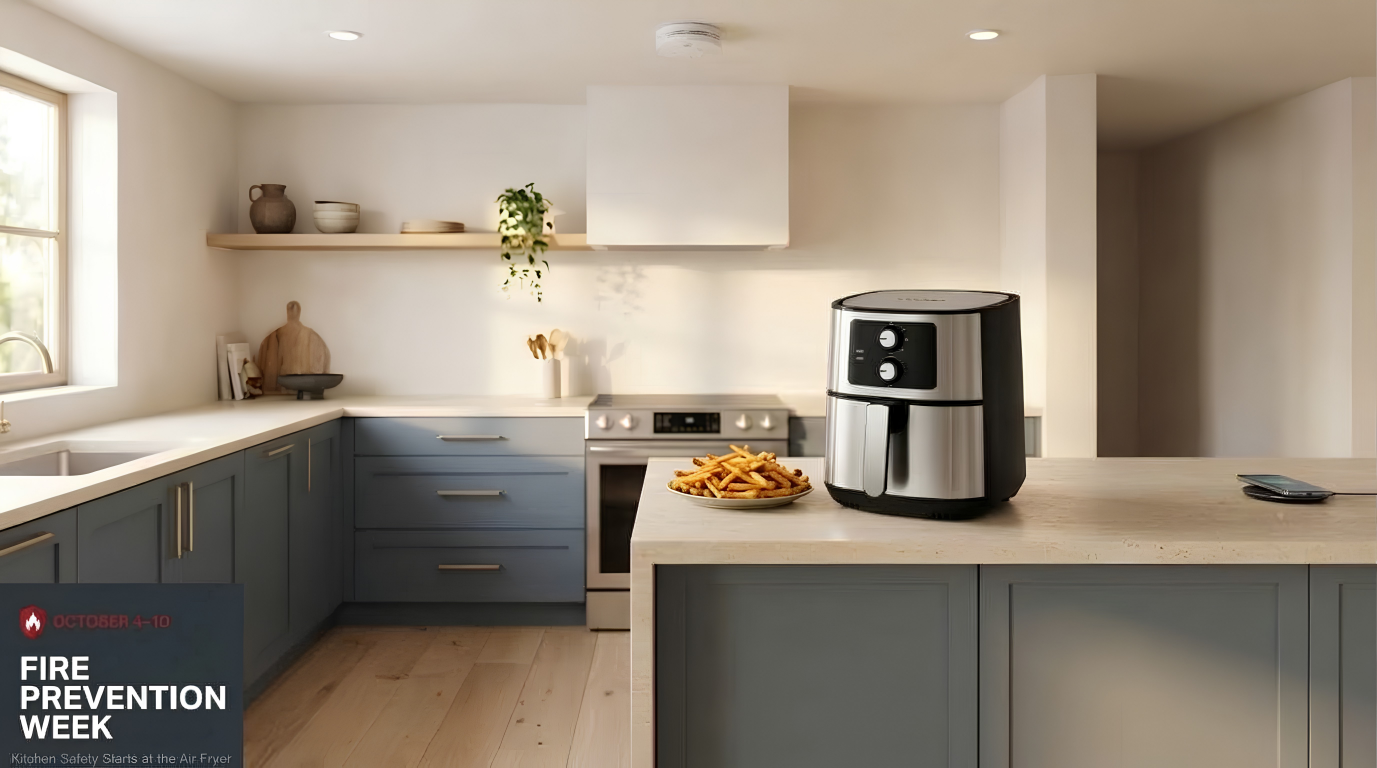
Fire Prevention Week is in its final days, running October 4 through 10, and the National Fire Protection Association has centered this year’s campaign on a habit nearly every household repeats daily. The 2026 theme, Charge into Fire Safety: Safe Charging Is a Superpower, focuses on lithium ion batteries and the everyday choices that keep phones, tablets, and cordless tools from overheating. In most homes, those devices charge on the same counter that holds the appliances that run the hottest. One of those appliances has quickly become an everyday essential. The air fryer now handles weeknight vegetables, frozen snacks, leftovers, and game day wings. Because it sits on the counter, runs hot, and is often used casually, it deserves a place in this week’s conversation. Why the Air Fryer Belongs in the Fire Safety Conversation An air fryer replaces a pot of hot oil with a compact chamber of fast moving hot air, removing one of the most familiar cooking fire risks. That does not make it risk free. Inside the housing, a heating element sits just above the food while a fan circulates air around it, so anything that drifts upward or collects below can overheat. Most air fryer problems follow a few predictable patterns. Grease and crumbs build up in the basket or pan and smoke during the next cycle. Loose parchment or foil is lifted by the fan into the heating element. The unit is pushed against a wall or tucked under a cabinet, trapping the hot air it vents. Each can be prevented with a small adjustment. The broader numbers explain why the counter deserves attention. NFPA estimates that from 2020 through 2024, kitchen and cooking equipment was involved in 48 percent of home structure fires each year, and unattended cooking remains a leading contributing factor. A countertop appliance with a timer can make it tempting to walk away, which is why the habits around it matter as much as the appliance itself. Give the Air Fryer Room to Breathe Placement is the first safety decision. An air fryer draws air in and pushes hot air out, usually through vents at the back or top of the unit, so it needs open space on every side. Set it on a flat, stable, heat resistant surface, away from the wall, the backsplash, and the edge of the counter, and follow the clearance distances listed in the owner’s manual. Avoid running it beneath upper cabinets, where rising heat and steam can collect against the underside of the cabinetry. Keep paper towels, mail, dish cloths, and plastic containers well away from the exhaust while the unit runs. Never operate an air fryer on the stovetop, even when the burners are off, since it is easy for someone to turn on the wrong knob. The power connection matters just as much. NFPA recommends plugging major heat producing appliances directly into a wall outlet, never into an extension cord or power strip. Choose an appliance listed by a qualified testing laboratory, check the cord regularly, and replace the appliance if the cord is frayed, kinked, or damaged. Everyday Habits That Prevent Air Fryer Fires Start with what goes in the basket. Avoid overfilling it, since food pressed against the top of the chamber sits too close to the heating element and cooks unevenly. Liners deserve extra care. Use only parchment or liners the manufacturer approves, never place a liner in the basket during preheating, and always weigh it down with food. A loose sheet can be lifted by the fan into the heating element in seconds. Foil should not block the airflow at the bottom of the basket, and paper towels do not belong inside the chamber at all. Bacon, wings, and sausages release grease that collects below the basket and can smoke heavily. Drain it between batches. Finally, stay in the room. A timer makes it easy to set a cook and walk away, but checking the food, especially toward the end of the cycle, catches problems before they grow. When the cycle ends, pull the basket out slowly and keep your face and hands clear of the steam. Cleaning Is a Fire Safety Step Leftover grease and crumbs are among the most common causes of smoke in an air fryer. Residue that stays in the basket or pan reheats with every cycle until it begins to char. Let the unit cool completely, unplug it, and clean the basket and pan after each use. Every so often, check the inside of the chamber and the area around the heating element for buildup, following the manual’s instructions and keeping water away from the electrical parts. How the Cosmo COS-58AFAKSS Supports Safer Habits Cosmo’s COS-58AFAKSS is a 5.8 quart electric hot air fryer with a stainless steel finish, designed for households that cook for several people at once. Its 1400 watt heating system and high speed air circulation handle frying, baking, grilling, and roasting with little to no added oil, which means one less pot of hot grease on the stovetop. Several of its features connect directly to the habits above. Separate knobs control temperature and time, so settings are easy to read at a glance. The temperature dial adjusts from 180°F to 400°F, allowing gentler settings for reheating and delicate foods instead of defaulting to maximum heat. The timer runs up to 30 minutes, and the auto shut-off feature turns off the heating element when the countdown ends, which helps protect against overcooking if a distraction runs longer than planned. That feature works best as a backup to attention, not a replacement for it. Cleaning is straightforward. The non-stick coated basket and grill pan are dishwasher safe, which makes it easier to clear grease after every use. Cosmo lists the unit as ETL Listed, which aligns with NFPA’s advice to choose appliances tested by a qualified laboratory. At 12.9 by 11.4 by 14.7 inches, plan for that footprint plus the recommended clearance. Charging and the Air Fryer Do Not Share