
Kitchen

The Vanishing Kitchen: Why 2026’s Best-Designed Homes Are Hiding Their Hardest-Working Appliances

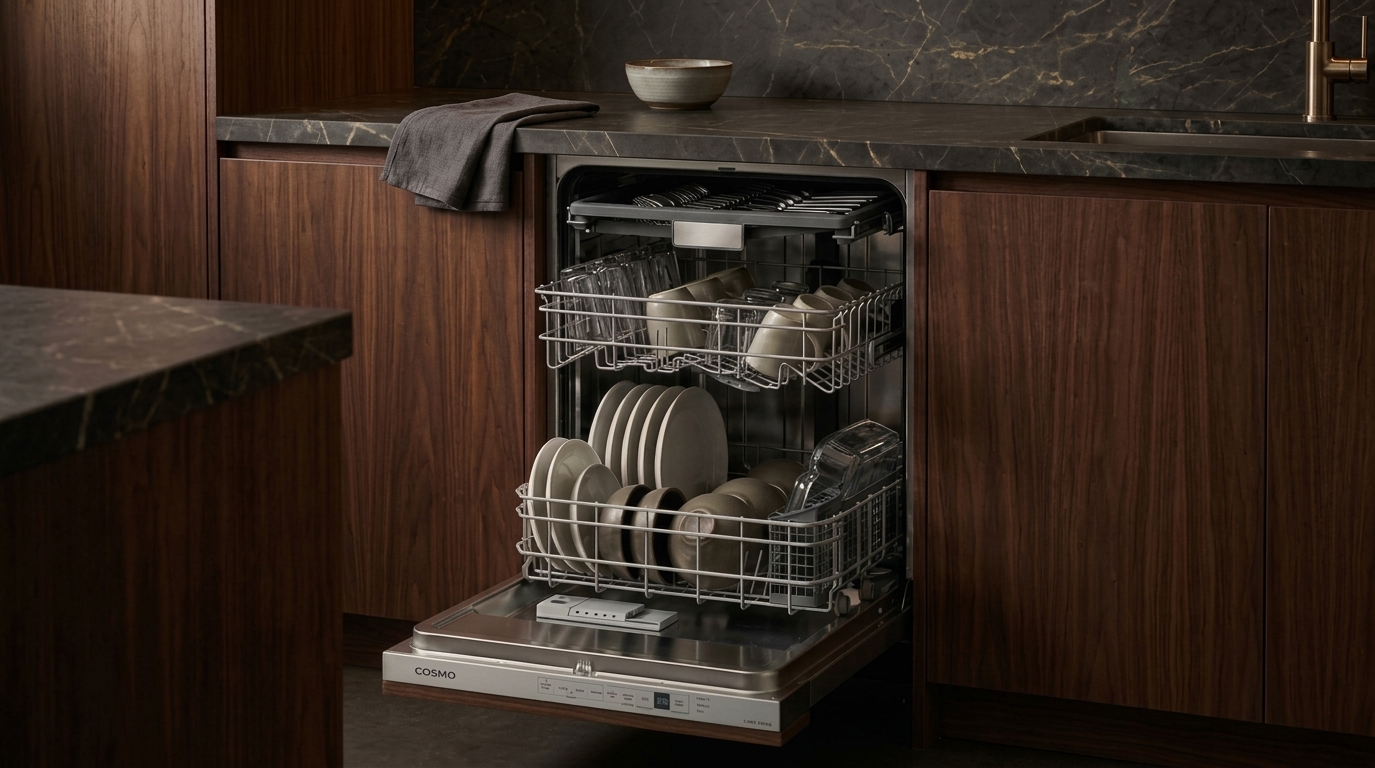
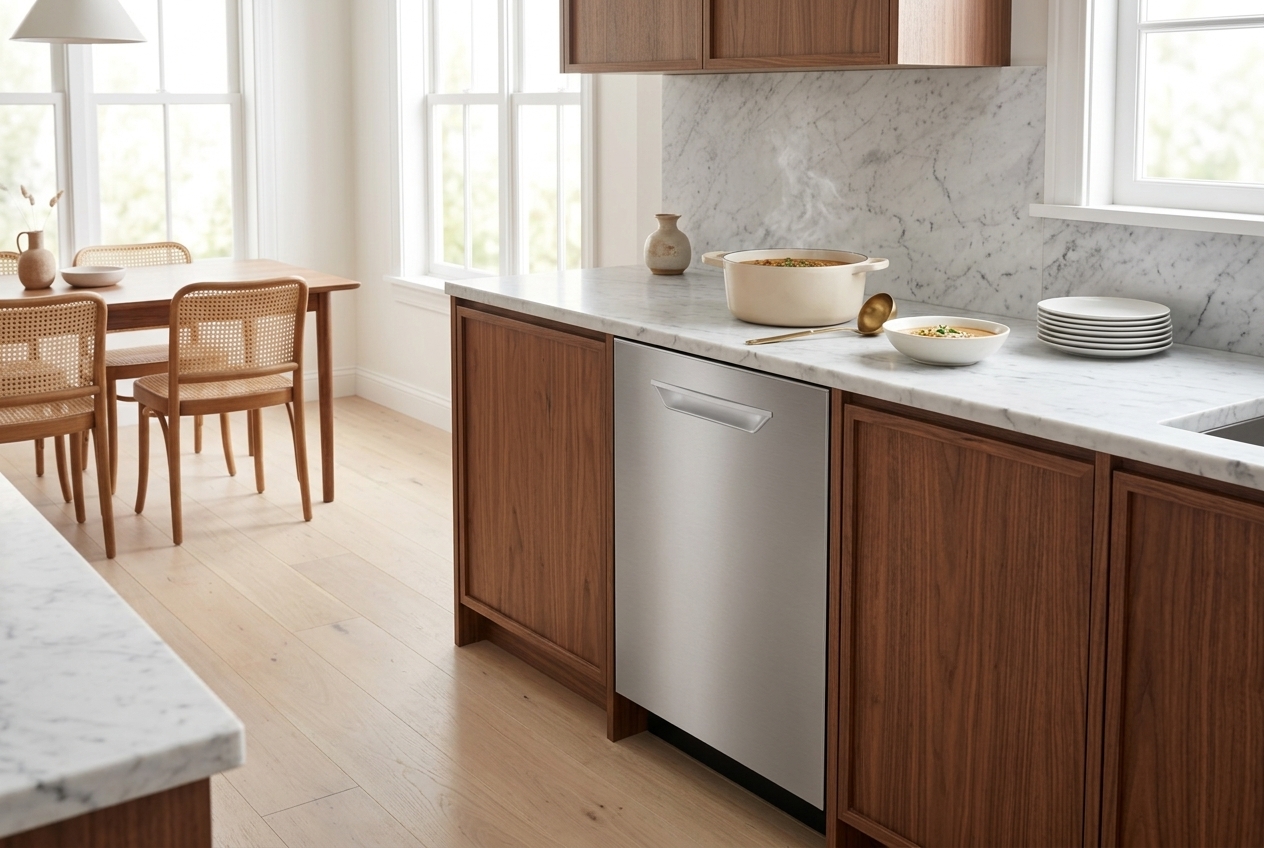
For most of the last decade, a kitchen appliance’s design job was to be seen. A statement range, a glass-front refrigerator, a bank of touchscreens across the counter, all of it built to announce itself the moment someone walked into the room. Heading into the back half of 2026, a quieter and, in a lot of ways, more demanding design standard has taken over. The best kitchens this year are not the ones with the most visible technology. They are the ones where the hardest-working appliances disappear entirely, tucked behind flush panels, hidden control strips, and cabinetry built specifically so the kitchen looks composed whether or not anyone just finished cooking in it. A Trend About What a Kitchen Does Not Show Design coverage tracking 2026 kitchens keeps circling back to the same idea from different directions. Some of it gets filed under “quiet luxury,” an approach that favors understated materials and craftsmanship over anything that reads as a statement piece, with designers advising homeowners to “clear worktops of clutter, store appliances out of sight where possible, and let your beautiful materials breathe.” Other coverage calls it “hidden function,” a more architectural version of the same instinct: build the kitchen so that daily mess has a designated home, rather than relying on a household’s discipline to keep counters clear after every meal. The specific vocabulary varies. The underlying behavior does not. Homeowners renovating in 2026 are asking designers, consistently, for a kitchen that looks calm by default, not one that only looks calm right after it has been cleaned. That is a real shift from where kitchen design was sitting even a few years ago, when a visible, feature-forward appliance was treated as the reward for a successful renovation. A kitchen island built around a dramatic hood, a refrigerator with a screen bolted to the door, a dishwasher with a blinking control panel facing straight into the dining room: all of it was, until recently, evidence that a household had upgraded. In 2026, that same visible technology increasingly reads as noise rather than achievement. The appliance a homeowner is proudest of now is often the one a guest would not notice unless they were told where to look. Why This Is Happening Now, Specifically A few things are converging to push this trend past a design-magazine talking point and into actual renovation requests. Open-concept living is a large part of it. A kitchen that opens directly into a living or dining space is visible constantly, not just during a dinner party, and a control panel or a cluttered counter that would have been forgivable in a closed-off kitchen a generation ago is now on display around the clock. A kitchen built to be looked at all day has a very different design standard than one that only had to look good for company. There is also a fatigue factor working in the same direction. Households that spent the last several renovation cycles adding visible technology, touchscreens, app-connected displays, blinking indicator lights, have started reporting the opposite instinct: a desire for surfaces that stay quiet unless something actually needs attention. A control panel that lights up and beeps every time a cycle starts is a feature a household notices for the first month and tunes out, or resents, for the years after. Designers describing this shift point specifically to hardware and material choices doing more of the visual work now, matte finishes, natural stone, understated cabinet pulls, precisely because they do not compete for attention the way a screen or a bank of buttons does. Where a Dishwasher Actually Fits Into This Of every appliance in a kitchen, the dishwasher has the hardest job to hide. A range gets used for an hour at dinner and then closes. A refrigerator’s door faces one direction. A dishwasher, by contrast, sits at counter height, typically along the most visible run of cabinetry in the room, and its control panel has traditionally been the one thing on the front of a kitchen that is never fully turned off, a lit display, a row of buttons, a status light cycling through a wash. For a kitchen trying to read as calm and composed at every hour, that is a genuine design problem, not a minor one. This is exactly the gap Cosmo’s COS-DWI240TTRBK, a 24-inch built-in dishwasher, was built to close. Its controls sit on top of the door rather than the front, a soft-touch panel with an LED display that stays completely hidden the moment the door swings shut, which means the appliance that runs longest and most visibly in a typical kitchen contributes nothing to the counter-level clutter a household is trying to eliminate. In place of a blinking front panel, a small FloorGlow indicator projects a subtle light onto the floor to show a cycle is running, informative without putting a display back on the front of the kitchen. A recessed door handle continues the same idea at the hardware level, keeping the unit’s face as close to a flush, uninterrupted line of cabinetry as a dishwasher can get. The rest of the unit backs up that visual restraint with real performance rather than trading one for the other. Eight wash cycles, including a dedicated Crystal Care setting for glassware and a Zone Wash option for heavily soiled cookware, run through a three-rack system with stemware holders and a silverware basket, giving a 15-place-setting capacity enough flexibility that a household can run fewer, fuller loads rather than constantly cycling a half-empty machine. An Auto Open Dry function pops the door slightly at the end of a cycle to let steam escape and dishes finish drying passively, without a heating element running longer than it needs to, and NSF-certified sanitize technology handles a 99.99 percent bacteria reduction cycle for cutting boards, baby bottles, or anything else that needs more than a standard wash. An Energy Star rating keeps the unit efficient on top of all of it, and the whole thing runs

National Grilled Chicken Day Isn’t Just for the Backyard, and This Year’s Kitchen Should Prove It

A Holiday Built by the Restaurant That Made Grilled Chicken Famous Most food holidays arrive with vague origins, a marketing calendar entry nobody can quite trace back to a source. National Grilled Chicken Day, observed on September 9th, is a rare exception. El Pollo Loco, the fast-casual chain that built its entire menu around citrus-marinated, fire-grilled chicken, formally declared the date in recent years as a way of pushing back against a grilling culture that treats beef as the default and chicken as the compromise. The chain’s argument, echoed across the trade coverage of the announcement, is that grilled chicken has spent decades as the healthier alternative on the menu rather than the dish anyone actually got excited about, and that the technique deserves better than an afterthought squeezed onto the grate next to the burgers. It is a fair complaint, and one that home cooks quietly agree with more than restaurant menus suggest. Chicken has been the best-selling meat in America for years running, and grilled chicken breast in particular shows up in more weeknight dinners than almost anything else a household cooks. Yet it remains one of the easiest things to get wrong on a home grill or griddle, prone to drying out, sticking, or finishing unevenly in a way a burger rarely does. A holiday built specifically around grilled chicken is a useful excuse to actually get it right, rather than defaulting to the same rushed, overcooked version most households have made a hundred times without thinking much about it. Search “how to grill chicken” and the results converge on a surprisingly short list of rules, repeated across nearly every serious food publication with a testing kitchen behind it. The Kitchen’s grilling guides emphasize pounding chicken breasts to an even thickness before they ever touch heat, since an uneven cut cooks unevenly no matter how good the grill is, and they push a brine or a simple marinade rest of at least thirty minutes as the difference between chicken that stays juicy and chicken that seizes up the moment it hits direct heat. Serious Eats, whose testing-driven approach to grilling has become something of a reference point for home cooks trying to move past guesswork, is emphatic on a single number: chicken breast pulled off the heat at 160 to 165 degrees Fahrenheit and rested for a few minutes carries over to a safe, fully cooked finish without the dry, chalky texture that comes from cooking straight to temperature over direct flame. Both publications land on the same underlying point from different angles, that grilled chicken rewards patience and a thermometer more than it rewards a hot grate and good intentions. The other detail that shows up again and again in that coverage is about contact, not just heat. Chicken skin and flesh stick to a cool or unseasoned cooking surface in a way that beef, with its higher fat content, mostly does not, and food writers covering both outdoor grills and indoor griddles consistently point to a properly preheated, well-oiled surface as the real fix, more than any marinade or seasoning choice. Get the surface hot enough and prepped correctly, and a chicken breast releases cleanly with real grill marks. Get it wrong, and half the crust stays behind on the grate while the chicken tears apart on the way to the plate. The Chicken That Never Makes It to the Grill Here is where National Grilled Chicken Day runs into a problem the holiday’s own name does not account for. A meaningful share of the households who would happily grill chicken on September 9th are not going to, because an outdoor grill is not always part of the picture. Apartment dwellers without balcony access, renters under an HOA that restricts open flame, households dealing with a rainy or already-cooling September evening, or simply anyone who does not want to fire up a full propane grill for a Tuesday dinner, all default to the stovetop instead, and a stovetop pan rarely produces anything close to the char and texture that made grilled chicken worth declaring a holiday over in the first place. That gap is exactly what a built-in griddle on a home range is designed to close. Cosmo’s COS-EPGR486G, a 48-inch professional-style double gas range, includes a dedicated 15,000 BTU griddle built directly into its six-burner cooktop, a real, high-heat cooking surface sitting right alongside the range’s main burners rather than a separate countertop appliance that has to be dragged out, plugged in, and found room for. That distinction matters more than it sounds like it should. A griddle a household actually has installed and ready to go gets used on a random Wednesday night. A griddle stored in a cabinet under the stairs gets reserved for weekend pancakes, if it gets used at all. The griddle’s 15,000 BTU output gives it the kind of sustained, even heat that a nonstick pan on a standard burner struggles to match, hot enough to build real color and a proper crust on chicken breasts and thighs without babysitting hot spots the way an undersized pan does. Because it sits flush with the cooktop rather than requiring its own footprint, a household can run the griddle for chicken breasts on one side while a pot of rice or a pan of vegetables works on the adjacent burners, the same kind of simultaneous cooking a backyard grill setup normally allows but a single skillet on a single burner does not. Two Ovens Solve the Rest of the Meal Grilled chicken rarely arrives at the table alone, and this is where the COS-EPGR486G’s second oven earns its place in the conversation rather than sitting there as a spec sheet number. The range’s primary oven, at 4.8 cubic feet with a convection fan and four cooking functions, handles a tray of roasted vegetables or a pan of cornbread at the same time the griddle is working through a batch of chicken breasts, while the 2.2 cubic foot secondary oven underneath

Why American Kitchens Are Falling Back in Love With the Knob

A Trend Running in the Opposite Direction For most of the last decade, the story of the American kitchen has been a story of adding connectivity. Ovens that could be preheated from a phone in the parking lot, refrigerators with cameras and touchscreens bolted to the door, coffee makers that needed an app just to brew on schedule. The pitch was always convenience, and for a while, homeowners bought it. Heading into 2026, that story is starting to bend the other way. Designers wrapping up their 2026 trend forecasts keep landing on the same, slightly surprising point: smart kitchen appliances, the very feature that dominated renovation wish lists a few years ago, are now the thing homeowners are asking their designers to dial back. Clients are telling their kitchen designers, in plain terms, that they want a kitchen where they do not need their phone to turn on the coffee maker. That is not a rejection of technology in general. It is a rejection of technology bolted onto tasks that never needed it in the first place, and it is showing up in the specific choices homeowners are making about the appliances that anchor a kitchen, starting with the range. Why the Backlash Is Bigger Than One Complaint It would be easy to write this off as a handful of frustrated homeowners annoyed by a laggy app or a firmware update that broke overnight. The pattern is broader than that, and it lines up with something happening well beyond the kitchen. Across home design generally, there is a documented pull back toward analog experiences, deliberately simple, tactile interactions that do not route through a screen, a login, or a cloud server that might not exist in five years. A kitchen appliance is a purchase most households live with for a decade or more, and an increasing number of them do not want that decade-long relationship mediated by an app that could be discontinued, a Wi-Fi network that could go down at exactly the wrong moment, or a touchscreen that could fail outright and take basic functionality down with it. The complaints that show up again and again are specific rather than vague. A touch panel that misreads a wet or greasy finger mid-recipe. A companion app that requires an account, a firmware update, and a signed-in phone just to set a timer, a task a mechanical dial has handled without complaint for a hundred years. A smart refrigerator screen that homeowners describe using for exactly nothing beyond the calendar magnet it replaced. None of these are hypothetical annoyances. They are the specific, recurring reasons designers cite when clients ask for something simpler the second time around, after living with the connected version first. What “Simple” Actually Means in a 2026 Kitchen The shift away from smart is not a shift toward stripped-down or low-end. That distinction matters, because the appliances homeowners are choosing instead are not the budget models from a decade ago. They are full-featured, professional-grade equipment that happens to route its controls through a knob or a physical switch rather than a capacitive touch panel or an app. A sealed gas burner with a metal control knob does exactly what a homeowner needs it to do, adjusts instantly, works with wet or greasy hands, and keeps working in a power outage or a dead Wi-Fi router, all without asking anyone to open an app first. This is really a story about where technology earns its place and where it does not. Precision temperature sensing inside a convection oven, automatic flame monitoring that relights a burner the instant it senses a gas leak, sealed burner design that keeps spills out of the internal assembly: these are places where genuine engineering improves how a kitchen performs, and homeowners are not asking designers to strip any of that out. What they are pushing back on is technology added purely for the sake of a feature list, a touchscreen for tasks a dial already handled well, an app for a function nobody actually wanted to manage from a phone. Cosmo’s COS-GRP366, a 36-inch freestanding gas range from the brand’s Italian burner lineup, is built around exactly this distinction between engineering that earns its place and connectivity that does not. Its six sealed burners are genuinely Italian-made, sitting on heavy-duty cast iron grates, and every one of them is controlled by a full metal knob rather than a touch panel, adjusted with a twist that works instantly whether a hand is dry, wet, or covered in flour. Underneath that simple control sits real engineering: an auto re-ignition system that continuously monitors each burner’s flame and automatically relights it if it goes out, preventing gas from accumulating the way an unmonitored burner could allow. That is the kind of feature homeowners in this trend actually want, technology working quietly in the background to make the appliance safer, not technology that adds a screen between a homeowner and the burner they are trying to light. The 4.5 cubic foot convection oven underneath carries the same philosophy through six cooking modes, fan-assisted heating for even results, and an integrated broiler for high-heat, top-down finishing, along with interior lighting and multiple rack positions, all managed through the same style of metal knob rather than a digital display stack. The range’s finished sides and rear panel let it stand freely without being boxed into cabinetry, and for households that want to make the range feel specifically their own without sacrificing the tactile control at the center of this trend, Cosmo offers color handle and knob kits in black and rose gold as a separate customization option, small, physical, low-tech touches for a kitchen built around exactly that idea. A Few Practical Notes for Anyone Weighing This Trade-Off Not every smart feature deserves to be thrown out along with the ones that do not work. The distinction worth making is between connectivity that changes how well an appliance performs its actual job, like automatic flame monitoring or precise

Popular Labor Day Recipes: What American Kitchens Are Actually Cooking This Weekend

A Holiday Built Around a Short List of Classics Labor Day does not have the sprawling menu traditions of a Thanksgiving table or the fireworks-adjacent chaos of a Fourth of July spread. What it has instead is a tight, well-worn rotation of dishes that shows up in some form at nearly every backyard gathering across the country: burgers and hot dogs off the grill, a pot of baked beans, a bowl of pasta or potato salad, corn on the cob, and something sweet before everyone scatters for the drive home. That consistency is part of what makes Labor Day recipes worth talking about. They are not exotic, and they are not trying to be. They are the dishes a household already knows how to make well, repeated one more time before the calendar turns toward fall. That repetition, though, is exactly what raises the stakes in the kitchen. A host cooking the same handful of crowd favorites for the third or fourth time this summer is not looking for a new recipe to learn. They are looking for the version that comes together without drama, on a stove and in an oven that can keep pace with several dishes needing different heat at once. Burgers and Hot Dogs, Started Inside Before They Ever Touch the Grill The centerpiece of most Labor Day spreads is still whatever comes off the grill, and burgers and hot dogs remain the two most reliable options for a reason: they scale easily, they please a crowd with mixed tastes, and they do not require much beyond a hot flame and a few condiments. What often gets overlooked is how much of a good burger happens before it ever reaches the grates. A smash-style patty needs a scorching hot cast iron surface to develop a real crust, and on the COS-RGS366SS, the 22,000 BTU power burner gets a cast iron griddle or skillet hot enough to crust a patty in under a minute, the difference between a smash burger with real texture and one that just steams in its own juices. Hot dogs benefit from the same kind of attention, particularly for a household doing a Chicago-style or New York street cart version with caramelized onions folded in. Onions need a slow, patient cook to actually caramelize rather than just soften, and that is a job for one of the range’s lower-output burners, the 3,500 BTU simmer burner in particular, which holds a steady, gentle heat for as long as real caramelization takes without a host needing to hover over the pan. Baked Beans and the Case for a Burner Built to Simmer Few dishes say Labor Day as clearly as a pot of baked beans, and few expose the limits of an underpowered range as quickly. Beans need low, even heat sustained for a long stretch, whether finishing on the stovetop after a slow oven bake or holding at serving temperature while the rest of the meal comes together. A burner that cannot hold a true simmer forces a host to babysit the pot, stirring constantly to keep the bottom from scorching. This is where the spread across the COS-RGS366SS’s six burners does real work. Rather than six burners tuned to roughly the same middle-of-the-road output, the range runs from that 3,500 BTU simmer burner up to a 22,000 BTU high-output burner, with two 12,000 BTU burners, an 18,000 BTU burner, and a 6,000 BTU burner filling in between. A pot of beans can hold a gentle, scorch-free simmer on the low end while a stockpot of water for corn comes to a hard boil on the high-output burner a few inches away, without either dish waiting its turn. For a menu that needs several distinct heat levels running at once, that range between burners matters more than how many burners sit on the cooktop. Corn on the Cob, Cooked the Way the Crowd Actually Wants It Corn on the cob is close to a Labor Day requirement, and it is also forgiving enough that it tends to get relegated to whatever burner is free rather than the one that would cook it fastest. A large stockpot of water takes a meaningfully long time to reach a hard boil on a standard mid-output burner, and for a host timing corn against burgers coming off the grill, that lag matters. The COS-RGS366SS’s 22,000 BTU burner brings a full pot to a boil dramatically faster, which keeps corn from becoming the dish that holds up the rest of the meal. For households that prefer roasted or grilled corn, the oven’s broil setting, powered by a 13,500 BTU broil burner, gets husked ears close enough to char for real caramelization without needing outdoor grill space that is likely already occupied by burgers and hot dogs. Pasta Salad, Potato Salad, and the Side Dishes That Round Out the Table Every Labor Day table has its version of the cold side, whether that is a mayonnaise-based potato salad, a vinegar-forward pasta salad, or a bean and corn salad built for a warm afternoon. These dishes ask the least of the range, but they still rely on properly cooked pasta or potatoes as their foundation, and undercooked or mushy starch is the most common way a good side salad goes wrong. A burner capable of holding a full rolling boil, rather than one that dies down the moment a pot of pasta or potatoes goes in, keeps cook times predictable, which matters when a side needs to be done, cooled, and dressed well before guests arrive. The oven’s 6.1 cubic foot cavity earns its keep here too: a tray of roasted potatoes for a warm potato salad, or a pan of cornbread to sit beside the beans, can bake alongside ribs or a casserole rather than waiting for oven space to free up, since two rack positions give a host room to run more than one dish at the same temperature at once. Ribs and Pulled Pork, When the Menu

The Kitchen Nobody Sees Is the One Doing the Work

Walk into a kitchen designed in the last year or two, and there is a decent chance the kitchen you are standing in is not actually the one doing most of the work. Behind a door, tucked past the pantry, or hidden along a hallway to the dining room, a growing number of homes now have a second, smaller kitchen whose entire job is to stay out of sight: a scullery, or its slightly more polished cousin, the butler’s pantry. It is one of the more interesting shifts happening in American home design right now, and it says less about luxury than it does about a very ordinary problem that open-concept kitchens created for themselves. A Kitchen Built to Be Looked At Has a Problem Open-concept living solved a lot of things. It also created an issue nobody quite anticipated: the kitchen became the room everyone sees, all the time, which means it also has to look presentable, all the time. A kitchen that opens directly into the living and dining space cannot hide a sink full of prep dishes, a counter covered in delivery boxes, or the small appliance graveyard that accumulates behind every stand mixer and air fryer. For a kitchen that used to be a closed-off, purely functional room, that is a new and fairly constant kind of pressure. The data backs up how real this has become. The American Institute of Architects’ Home Design Trends Survey has documented a clear rise in homeowner demand for what it categorizes as secondary culinary spaces, separate kitchen facilities, prep and storage areas, and what architects have started calling “messy kitchens” or sculleries, with meaningful increases reported in the square footage households are now dedicating to them. That is a notable shift for a feature that, a decade ago, mostly showed up in homes large enough to have a dedicated staff kitchen. It has since moved into a much broader range of new builds and renovations, driven by a much more universal complaint: an open kitchen only works if the mess has somewhere else to go. Two Different Rooms, Two Different Jobs It is worth being specific about what these spaces actually are, because “butler’s pantry” and “scullery” get used almost interchangeably in a lot of design coverage despite doing genuinely different jobs. A butler’s pantry, historically and still today, tends to sit between the kitchen and the dining room and functions as a staging and serving zone: beverage service, coffee capability, glass-front cabinetry for the pieces a household actually wants to show off, and enough counter space to plate a meal before it goes out to guests. A scullery, sometimes called a prep kitchen or, more bluntly, a messy kitchen, is the working half of the equation: a secondary sink, real ventilation, a dishwasher, and, increasingly, its own refrigeration, built specifically to contain the noise, the odor, and the visible clutter of actual cooking and cleanup. Most households building or renovating with this trend in mind end up somewhere in between, a single secondary room that borrows a bit from each category, but the underlying logic is consistent either way: the show kitchen stays composed, and the space behind it absorbs everything that would otherwise make that impossible. Why Refrigeration Is the Piece That Gets Underestimated Of everything that goes into a scullery or working pantry, refrigeration is the piece households tend to plan for last and need most. A dedicated prep sink is an obvious, visible feature. A second refrigerator or freezer, by contrast, sounds like overkill right up until a household is hosting a holiday weekend, stocking a freezer full of make-ahead sides, or simply trying to keep a week of real grocery shopping from crowding into unusable chaos in a refrigerator that also has to look tidy every time the door opens in front of guests. This is exactly the gap a second, working-grade refrigerator is built to close. Overflow beverages, backup produce, a tray of something prepped a day ahead, and the sheer volume of food a household accumulates around a gathering all have somewhere to go that is not the refrigerator everyone can see into from the dining table. It is a genuinely practical solution to a problem that is, at its core, about volume and visibility at the same time. Cosmo’s COS-FDR225RHSS, a 22.5 cubic foot four-door French door refrigerator in counter-depth stainless steel, is well suited to exactly this second-kitchen role. Its French door layout, a wide-opening top section split across two doors rather than one, handles the oversized platters, sheet pans, and serving trays that a scullery or working pantry is specifically meant to store ahead of a gathering, rather than forcing a household to awkwardly angle them into a single-door layout. At 15.9 cubic feet of refrigerator space plus 6.6 cubic feet of freezer capacity across two fully extendable slide-out freezer drawers, it has enough real capacity to function as genuine overflow storage rather than a token backup unit. The details matter for a working space specifically. Four spill-proof, adjustable glass shelves and adjustable door bins make it easy to organize backup groceries, make-ahead trays, and beverages without turning the unit into a jumble the way an undersized secondary fridge often does. A single automatic ice maker with a removable 12-cube tray takes one recurring hosting task off a household’s list entirely, useful in a scullery specifically because it means the show kitchen’s refrigerator never has to be the one supplying ice all afternoon. A soft-close door mechanism and a door-ajar alarm keep a secondary space that sees less regular attention from running inefficiently, and a fingerprint and spot-resistant stainless steel finish holds up in a room that, unlike the front kitchen, is not getting wiped down after every use. An ENERGY STAR rating at 588 kWh annually also matters more here than it might elsewhere, since a second full-size refrigerator is, by definition, added household energy use, and an efficient one keeps that cost from becoming a real

Raising a Glass: What National Red Wine Day Is Really Celebrating

Every August 28th, red wine gets a day of its own on the food and beverage calendar. National Red Wine Day does not carry the pomp of a harvest festival or the marketing weight of a major spirits holiday, but it has quietly become one of the more genuine observances on the list, precisely because it does not ask anyone to do anything they were not already inclined to do. Pour a glass, let it breathe for a few minutes, and take a little more notice of what is actually in it than a Tuesday evening usually allows. That is really the whole holiday, and its simplicity is part of the appeal. Red wine’s story stretches back further than almost any other beverage humans still drink today. Archaeological evidence places winemaking in the region of modern-day Georgia and Armenia as far back as 6,000 BCE, and from there the practice spread through Mesopotamia, Egypt, and eventually the Mediterranean basin, where Greek and Roman cultures elevated wine from a fermented staple into something bound up with hospitality, ritual, and status. By the time European settlers brought vines to the Americas, wine already carried thousands of years of cultural weight behind it. The United States took its own path into wine culture more slowly than Europe did, shaped by Prohibition, shifting agricultural policy, and a domestic industry that had to rebuild itself almost from scratch through much of the twentieth century. California’s emergence as a serious wine region in the 1970s changed that trajectory permanently, and American red wine, from Napa cabernets to Oregon pinot noirs to increasingly respected bottles out of Washington, Texas, and Virginia, has spent the decades since building a reputation that now holds its own on any world stage. National Red Wine Day, observed each year on August 28th, is a relatively modern addition to the food holiday calendar, but it sits on top of that much older tradition, giving Americans a specific date to acknowledge a beverage that has been part of daily life, celebration, and quiet routine for centuries. Why Red, Specifically Red wine gets its color, and a good deal of its character, from something white wine skips entirely: extended contact with grape skins during fermentation. That contact pulls tannins and anthocyanins into the wine, the compounds responsible for both its color and much of its structure, the dry, slightly gripping sensation on the palate that distinguishes a robust cabernet from a lighter pinot noir. Those same compounds are also why red wine tends to reward patience in a way white wine often does not. A young red can taste tight and sharp-edged, while the same bottle given a few years, or even a few hours of proper decanting, can open into something considerably rounder and more complex. This is also where red wine diverges from white in a more practical sense: how it should be stored and served. Red wine is generally served warmer than white, typically in the 60 to 68 degree Fahrenheit range depending on the variety, a lighter-bodied pinot noir sitting toward the cooler end and a full-bodied cabernet or syrah toward the warmer end. That is a narrower and more specific window than most people assume, and it is considerably warmer than a standard refrigerator, which runs cold enough to mute a red wine’s aromatics and flavor almost entirely. It is also cooler than most American homes tend to run, particularly in the stretch of the calendar when National Red Wine Day actually falls, which means a bottle left on a counter or a kitchen shelf through most of the summer is very likely being served several degrees warmer than it should be. The Storage Problem Nobody Notices Until It Matters Households that drink wine occasionally rarely think much about how it is stored, and for a bottle or two consumed within a week of purchase, it genuinely does not matter that much. The picture changes for anyone who has started keeping a small collection on hand, whether that is a handful of reds set aside for the holidays or a rotating stock replenished every time a favorite bottle goes on sale. Temperature swings, light exposure, and the vibration of a kitchen refrigerator’s compressor cycling on and off all work against a red wine sitting in storage for weeks or months rather than days, and the effects tend to show up quietly, a bottle that tastes slightly flatter or less balanced than it should, rather than announcing themselves obviously. This is part of why a dedicated wine cooler has moved from a specialty item to a fairly common kitchen fixture over the past several years, and it is worth understanding what actually separates a purpose-built cooler from simply finding room in the refrigerator. A cooler built for wine, rather than food, holds a steady temperature within the range red and white wine actually want, avoids the light exposure a standard refrigerator door does nothing to prevent, and gives a collection room to sit undisturbed rather than getting shuffled around every time someone reaches past it for milk or leftovers. Cosmo’s COS-24BIWCS-BK, a 24-inch built-in wine cooler finished in matte black from the brand’s Lumin Collection, is built around exactly that need. It holds up to 52 bottles across a 145-liter interior, with a single-zone compressor system and advanced fan cooling that keeps temperature steady between 41 and 68 degrees Fahrenheit, comfortably spanning the range most reds are meant to be served in. A three-layer insulated glass door with a hidden hinge mechanism blocks the UV exposure that damages wine over time, while six beechwood shelves on telescopic sliding rails let a bottle be pulled fully out for a closer look without disturbing the rest of the collection sitting behind it. The matte black finish gives it a slightly different presence than the brand’s stainless steel version of the same unit, one that tends to disappear into a darker cabinetry run or stand out as a deliberate design statement, depending

The BLT Deserves More Respect Than It Gets

Of all the sandwiches that have earned a permanent place on American menus, the BLT might be the least fussed-over. It rarely gets the reverent treatment a good burger or a well-built panini receives. There is no national day built into most people’s calendars for it, no cult following arguing about the “correct” build the way people argue about pizza toppings or barbecue regions. And yet it endures, quietly, on diner menus, lunch counters, and home kitchens across the country, largely unchanged for the better part of a century. That staying power is worth paying attention to, because a sandwich this simple only survives that long if it is actually, genuinely good, and because getting a BLT right turns out to depend on a surprising amount of technique for something built from three ingredients and two slices of bread. A Sandwich Older Than It Looks The BLT’s ingredients trace back further than the sandwich itself. Bacon and tomato pairings show up in American cookbooks as far back as the late 1800s, and club sandwiches built around bacon, lettuce, and tomato were common by the early twentieth century, often served open-faced or stacked three layers deep on toast points at hotel restaurants and tea rooms. The BLT in its now-familiar closed, two-slice form became a fixture of American diner culture as sliced bread and the modern toaster made quick, consistent toasting a home and restaurant staple rather than a specialty. By the mid-twentieth century, the BLT had settled into the shape most people recognize today: crisp bacon, cool lettuce, ripe tomato, and mayonnaise, stacked between two pieces of toasted bread, simple enough to make in minutes and satisfying enough to earn a permanent spot on nearly every diner and deli menu in the country. Part of what has kept the BLT so durable is exactly that simplicity. It does not require a specialty ingredient, an unusual technique, or advance planning. It scales from a single lunch to a table of six with no real change in method. And it happens to hit a combination that is hard to replicate elsewhere: salty and smoky against cool and fresh, crisp against soft, all held together by a layer of mayonnaise that ties the whole thing together rather than sitting on top of it. It is a sandwich built entirely around contrast, and contrast is exactly what makes it satisfying. Why a “Simple” Sandwich Is Easy to Get Wrong The trouble with a three-ingredient sandwich is that there is nowhere for a mistake to hide. A slightly limp piece of bacon, a tomato that was sliced too far ahead of time and has gone watery, or bread that never developed real structure under the toaster all show up immediately, because there is nothing else in the sandwich to distract from them. Most disappointing BLTs fail for one of the same handful of reasons: bacon that is cooked unevenly, chewy in some spots and raw-soft in others, rather than uniformly crisp; bread that is toasted just enough to feel warm but not enough to actually hold up to the moisture from the tomato and mayonnaise; or a tomato that was salted too early and released its liquid straight into the bread before the sandwich was ever assembled. Getting a BLT right is really about controlling heat with more precision than the sandwich’s reputation suggests. Bacon wants a steady, even surface over enough sustained heat to render its fat and crisp without scorching one end before the other side has caught up, which is much harder to manage on a burner that runs hot in the center and cool at the edges, or one that cannot hold a steady temperature once a full pan of bacon strips is added and starts pulling heat away. Bread wants real, consistent heat as well, whether that comes from a broiler or a hot oven, enough to dry out and crisp the surface fully rather than leaving a soft center that wilts the moment tomato juice touches it. Where the Range Actually Matters This is where the cooktop and oven underneath a BLT do more work than most people give them credit for. Cosmo’s COS-244AGC, a 24-inch compact gas range built for exactly this kind of everyday cooking, is a useful example of what that means in practice. Its 17,400 BTU triple ring burner puts out enough sustained, evenly distributed heat to render a full pan of bacon strips without the center scorching while the edges lag behind, which is the single biggest factor in getting bacon that is crisp edge to edge rather than crisp in patches. The two 6,900 BTU semi-rapid burners give a second pan enough power to warm bread in butter or toast it directly in a skillet, while the 5,000 BTU auxiliary burner is sized right for something gentler running alongside, warming mayonnaise-based sauce or keeping a component at a low simmer without needing to babysit it. Heavy-duty cast iron grates underneath hold that heat steady once a full pan is on the burner, rather than letting the flame’s output sag the moment real weight and cold ingredients hit the pan. The oven does its share of the work too. A dedicated 5,800 BTU broil burner gives bread the kind of direct, high heat needed to dry and crisp the surface fully in a couple of minutes rather than leaving it merely warm, and the COS-244AGC’s rapid convection function circulates that heat evenly across two rack positions, which matters when toasting several slices of bread at once for a full table rather than one sandwich at a time. A 2.7 cubic foot oven cavity is compact enough for a 24-inch range but still gives enough room to lay bread flat rather than stacking it, and an interior oven light makes it easy to catch the exact moment toast goes from golden to overdone without opening the door and losing heat. For anyone building several BLTs back to back for a family lunch or a

Kickoff-Ready: Getting Your Air Fryer Set for College Football Season

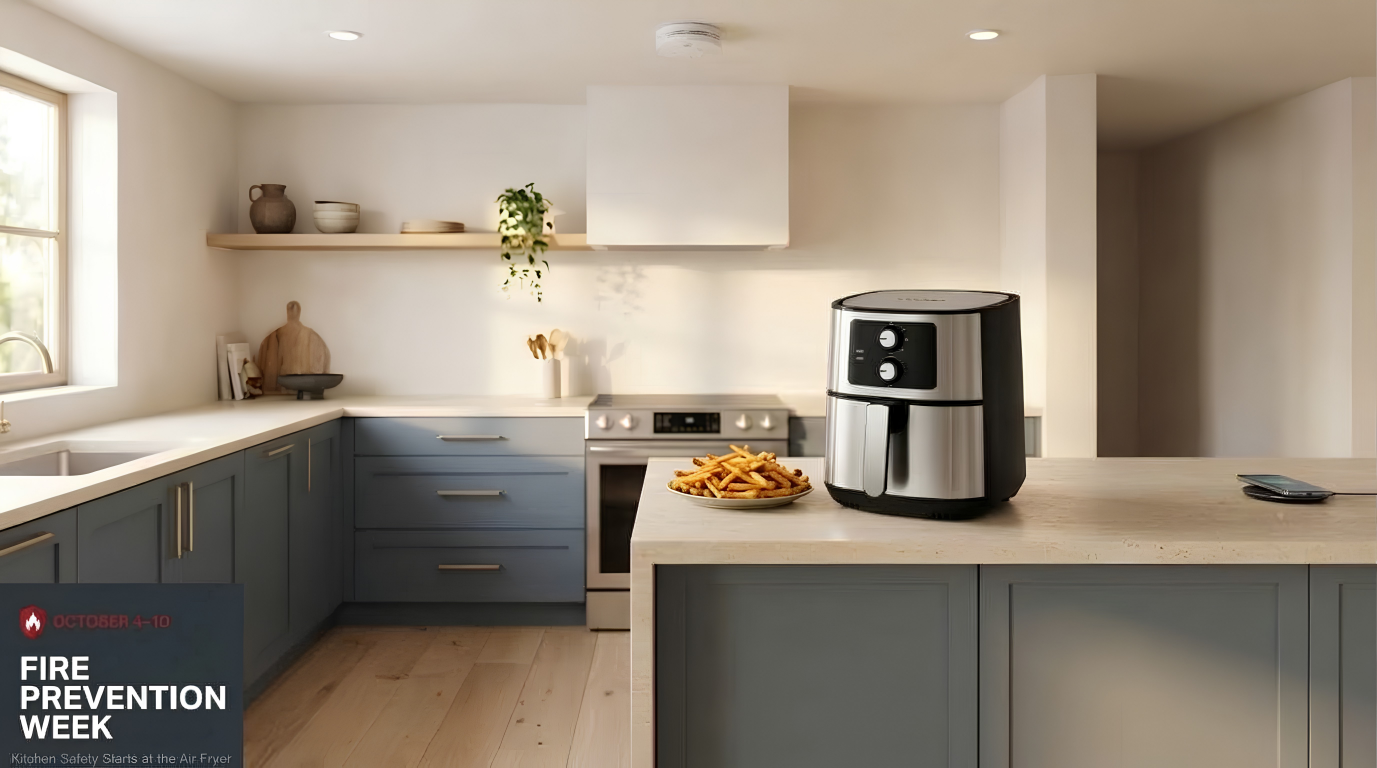
A Saturday Built Around Snacks, Not Just a Score College football’s Week 0 kicks off this Saturday, August 29, 2026, and for a growing number of American households, the return of the season is as much a cue to plan the snack table as it is to check the schedule. The days of a single hot dish and a bag of chips have given way to something closer to a running buffet: wings in one bowl, mozzarella sticks in another, a tray of pretzel bites making the rounds before halftime even arrives. That shift did not happen by accident. It happened because the kitchen finally caught up to what game day actually demands, and the appliance most responsible for that catch-up has been sitting on counters for years without most hosts realizing just how much weight it can carry on a Saturday afternoon. The Scale of a Single College Football Saturday It is easy to underestimate just how much a single college football Saturday actually feeds. Through the middle of the 2025 season, the average SEC game alone drew more than 80,000 fans into one stadium, with the Big Ten close behind at nearly 65,000 per game and the Big 12 and ACC both averaging in the high 40,000s. Those figures only count the fans who made it through the gates. For every person tailgating in a parking lot or filling a stadium seat, several more are watching from a couch, at a friend’s place, or hosting a small group at home, particularly as more marquee matchups have shifted into national primetime windows that make watching from home just as much a part of the ritual as being there in person. That scale repeats nearly every Saturday from late August through the conference championships in early December, not just once a season. Fewer of those Saturdays are spent exclusively at the stadium or the parking lot anymore, either. A meaningful share of college football viewing now happens at home, in front of a television with a group of friends, which shifts the burden of feeding a crowd from a tailgate grill to a home kitchen that was not necessarily built to produce bar-quality wings and fried sides for six or eight people without turning into a full-time job for whoever is hosting. Why the Air Fryer Quietly Became the Default Game-Day Appliance Circana’s Kitchen Audit research offers a useful data point on how deeply the air fryer has embedded itself in everyday cooking: among households that own one, roughly two-thirds report using it within just the past four weeks. That is not the behavior of a novelty appliance bought during a pandemic-era kitchen upgrade and left in a cabinet. That is a workhorse, in active weekly rotation, and game day is one of the clearest reasons why. The appeal for a Saturday spent hosting is fairly direct. A deep fryer demands a pot of oil that takes real time to heat, cools slowly, and leaves a mess that nobody wants to deal with between kickoff and the first commercial break. A conventional oven gets the job done but ties up the one appliance most hosts also need for a dip, a casserole, or anything else in the spread, and it is slow to recover heat between batches. An air fryer solves both problems at once: it crisps frozen and fresh appetizers with little to no oil, it frees the oven for everything else on the menu, and it recovers between batches fast enough that a host can keep a rotation of wings, mozzarella sticks, and pretzel bites moving through a single basket without falling behind the game. What a Game-Day Air Fryer Actually Needs to Handle Not every air fryer is built for the specific demands of a hosting afternoon, and the difference shows up fast once real party volume hits the basket. A unit needs enough capacity to cook a genuine serving in a single batch rather than forcing a host to run four or five rounds through a basket built for one person’s lunch. It needs a wide, dependable temperature range, since wings, frozen mozzarella sticks, and fresh-cut vegetables all want different heat and timing to come out right. And it needs to be simple enough to operate one-handed while also keeping half an eye on the game, because nobody wants to be squinting at a touchscreen menu during a third-down conversion. The COS-58AFAKSS, Set Up for a Full Saturday of Snacks The Cosmo COS-58AFAKSS, a 5.8-quart electric hot air fryer rated at 1400 watts, was built around exactly this kind of everyday, high-volume use. Its basket holds enough food to cover a genuine serving of wings or a full tray of mozzarella sticks in one pass, rather than forcing a host to split a single appetizer across several rounds while guests wait. Separate temperature and timer knobs cover a range from 180°F to 400°F with a 30-minute timer, which is enough spread to move confidently from gently reheating a dip to driving a hard, crackling crust into a fresh batch of wings, and there is no meaningful preheat delay standing between one course and the next. A top-mounted grill element browns from above while the basket crisps from below, so breaded and battered appetizers, the pretzel bites, the stuffed jalapeños, the frozen sampler platter someone always brings, finish evenly without needing to be flipped halfway through a series. An auto shut-off ends the cooking cycle the moment the timer runs out, which matters more on a day full of distractions than it does on an ordinary weeknight, since nobody hosting a watch party wants to be the one who burned a batch of wings during a replay review. The included basket and grill pan are both non-stick and dishwasher-safe, which counts for a lot once the game ends and the sauce, the cheese, and the crumbs left behind need to disappear quickly rather than sit soaking in the sink overnight. The unit is also ETL listed

Why the Beverage Station Has Become the Kitchen Feature American Homeowners Want Most in 2026

For most of the last two decades, the wine rack lived wherever there was leftover space, on top of the refrigerator, tucked into a builder-grade cabinet insert, hanging from the ceiling over an island. It was a nice-to-have, rarely a planned feature, and almost never something a homeowner designed a renovation around. That has changed. Walk through any kitchen showroom or scroll through a renovation gallery in 2026 and a new fixture keeps showing up in the plans: a dedicated beverage station, a purpose-built zone with its own cooling, its own storage, and its own place in the layout, sitting right alongside the pantry and the range as one of the features homeowners are specifically requesting rather than squeezing in afterward. The shift is not a small one, and the data behind it explains why appliance makers, including Cosmo, are paying close attention. The Numbers Behind the Shift The 2026 U.S. Houzz Kitchen Trends Study put real numbers behind what designers have been describing anecdotally for the past couple of renovation cycles. Seventy-six percent of homeowners undertaking a kitchen project have incorporated, or plan to incorporate, at least one built-in feature beyond the standard cabinetry and appliances. Pantry cabinets top that list at 47 percent, which makes sense given how much storage a modern kitchen is expected to absorb. But close behind, beverage stations came in at 24 percent, a striking number for a feature that barely registered as its own category in kitchen planning a decade ago. Built-in wine fridges pulled another 17 percent on their own, tied with built-in seating, meaning that once beverage-specific storage and built-in seating are counted together, dedicated drink space is competing directly with some of the most established kitchen must-haves. That is not a fringe number. A quarter of homeowners planning a renovation are now asking their designer or contractor specifically for a place to store, chill, and serve drinks, separate from the refrigerator, separate from a generic cabinet. It is worth sitting with why that request has become so common, because the reasons trace back to a few real, measurable shifts in how Americans actually use their kitchens. Why a Dedicated Beverage Zone Makes Sense Now The most obvious driver is the return of home entertaining as a routine part of American life rather than an occasional event. Coverage of 2026 bar and cocktail trends has pointed repeatedly to a home entertaining resurgence, driven in part by a generation that spent formative years hosting at home during a period when going out was not an option, and never fully went back to treating a night out as the default. Hosting a few friends for drinks on a Friday, rather than meeting them somewhere, has become a normal, recurring plan rather than a special occasion, and a kitchen built for that reality needs somewhere for the bottles, the glassware, and the ice to live that is not a chaotic scramble through three different cabinets and the refrigerator door. The second driver is less obvious but just as important: American drinking habits have diversified in a way that a single refrigerator shelf cannot accommodate. The same bar and cocktail trend coverage tracking 2026 has documented continued growth in the non-alcoholic and low-alcohol category, sitting alongside, not replacing, the wine, beer, and spirits already common in most households. A household hosting today is often stocking wine for some guests, craft beer or seltzer for others, a full non-alcoholic lineup for anyone opting out entirely, and mixers for cocktails on top of all of it. That is a genuinely wider range of beverages than a kitchen was designed to store a generation ago, and cramming all of it into a standard refrigerator crowds out the food storage the refrigerator is actually supposed to handle. A dedicated beverage station solves a real logistics problem, not just an aesthetic one. There is also a straightforward practical case that has nothing to do with entertaining at all. Wine, in particular, does not store well in a standard kitchen refrigerator. A refrigerator built to keep food cold runs colder than wine wants, cycles its temperature more than wine tolerates well, and exposes bottles to the light and vibration every time the door opens, all of which affect how a bottle ages and tastes over time. Homeowners who have started building even a modest wine collection, rather than buying a bottle the day they plan to drink it, run into that problem quickly, and a dedicated cooler solves it in a way a refrigerator shelf simply cannot. What Homeowners Are Actually Asking For Design coverage of the beverage station trend has been consistent about what makes one work well, and it comes down to a few specific things: a home for the appliance itself, usually a built-in wine or beverage cooler rather than a freestanding unit sitting on a counter, real storage nearby for glassware and bar tools, and enough counter space to actually make a drink without displacing whatever else is happening in the kitchen. This has made beverage stations a particularly good fit for the broken-plan and zoned layouts gaining ground in American kitchen design more broadly, where a kitchen retains an open feel while carving out small, purpose-built areas for specific tasks. A beverage station tucked into an island end cap or a run of cabinetry near the dining area lets a household entertain without funneling every guest through the working part of the kitchen to get a drink. That is where the appliance choice actually matters. A beverage station built around a generic mini-fridge or a countertop cooler tends to disappoint quickly, either because it does not hold enough to matter or because it does not actually protect what is stored inside it the way a proper wine cooler does. Homeowners who have gone through the trouble of designing a dedicated space for this are, understandably, looking for a cooler built specifically for the job. This is also where the beverage station trend overlaps with a

Quiet Enough to Stay Open: Why Kitchen Noise Is Reshaping the Open-Concept Floor Plan

Open-concept living defined American home design for the better part of two decades. Knock down the wall between the kitchen and the living room, and suddenly a house feels bigger, brighter, more social, more resellable. That logic held for a long time, and it is still true in a lot of ways. But a quieter shift has been building underneath it, one that has less to do with square footage and more to do with sound. Homeowners who fought to open up their floor plans are now, in growing numbers, asking how to close parts of them back down, and the reason showing up again and again in surveys and design coverage is not clutter or cooking smells, though those matter too. It is noise. A kitchen with no walls around it shares every sound it makes with every other room attached to it, and for a growing number of households, that has become the actual cost of an open floor plan rather than a minor tradeoff. The Open Floor Plan Is Getting Reconsidered Design coverage throughout 2026 has repeatedly pointed to the same pattern: a move away from fully open layouts and toward what designers are calling “broken-plan” living, spaces with soft boundaries, partial walls, sliding panels, or strategically placed cabinetry that let a home flex between fully open and meaningfully separated depending on what is happening in it. The reasoning behind the shift is consistent across the coverage. Hybrid work has put more people in the house during the day, often on calls or trying to concentrate in a room that used to be empty until dinner. Blenders, clanging pans, delivery drop-offs, running dishwashers, all of it now competes directly with a work call happening twenty feet away with nothing but air between the two spaces. As one recent piece on the trend put it plainly, open layouts share everything, and sound has turned out to be the thing households are least willing to keep sharing. This is not a wholesale rejection of open concept. Few homeowners are rebuilding walls that took a contractor a week to remove. What is actually happening is more targeted: a kitchen island might stay open to the dining area but gain a pocket door to the living room, or a working pantry might get walled off specifically to contain the noisiest parts of meal prep and cleanup. The goal is flexibility, an “open mode” for entertaining and an ability to close things down for daily life, rather than a full return to the closed-off kitchens of a previous generation. And within that shift, the appliances that run loudest and longest, especially the dishwasher, have become one of the more specific things homeowners are trying to solve for. Why the Dishwasher Is the Noise Problem Nobody Planned For Of everything running in a kitchen, the dishwasher has a specific problem the others do not: duration. A blender runs for thirty seconds. A stand mixer runs for a few minutes. A dishwasher runs for one to three hours, often starting right after dinner and running well into the part of the evening when a household is trying to wind down, watch something, or put kids to bed in a room that, in an open floor plan, is acoustically connected to the kitchen in a way it never used to be. In a fully enclosed kitchen from a generation ago, that noise was contained behind a door. In an open-concept home, it is background noise for the entire downstairs, for as long as the cycle runs. This is exactly why decibel rating has become a real, researched purchase criterion for dishwashers in a way it rarely was a decade ago, when a dishwasher’s noise level was an afterthought behind price and capacity. The rule of thumb that has emerged among appliance reviewers in 2026 is that anything at or under roughly 44 decibels counts as genuinely quiet for a modern home, quiet enough to run during a dinner party without anyone noticing, while the 45 to 50 decibel range still reads as soft background noise, closer to a quiet conversation than a disruption, noticeable if a room goes silent but not loud enough to compete with a television or a conversation at the table. The difference between a 37 decibel dishwasher and a 45 decibel one, in practical terms, is smaller than the marketing around it suggests. Both disappear once you leave the room. What actually matters is clearing that rough 45 decibel threshold in the first place, the point at which a dishwasher stops being a disruption and starts being something a household simply stops noticing. Where the COS-DIS6502 Fits Cosmo’s COS-DIS6502, a 24-inch built-in dishwasher with a tall tub design, was engineered around exactly that threshold. It runs at 45 decibels, roughly the sound of light rain against a window, a level made possible by pre-installed noise-insulating pads built into the unit rather than added as an aftermarket fix. In an open kitchen sharing space with a living room or a dining area, that is the difference between a dishwasher a household plans meals and conversations around and one that simply runs in the background while the rest of the house goes about its evening. The noise engineering is not the only thing doing that work. The COS-DIS6502’s hidden top control panel keeps the interface concealed when the door is closed, which matters for an open kitchen in the same way the sound insulation does: a visible, blinking control panel facing into a living room reads as noise even when the unit itself is silent, while a flush, controls-hidden door front disappears into the cabinetry the same way the sound does. Inside, a Smart Wash System automatically detects a partial or full load and adjusts the cycle accordingly, which means the dishwasher is not running a longer, louder cycle than a given load actually requires. Three racks, including a top rack with two inches of height adjustment and a dedicated silverware basket,