cooking tips

Why Your Kitchen Layout Makes Cooking Harder

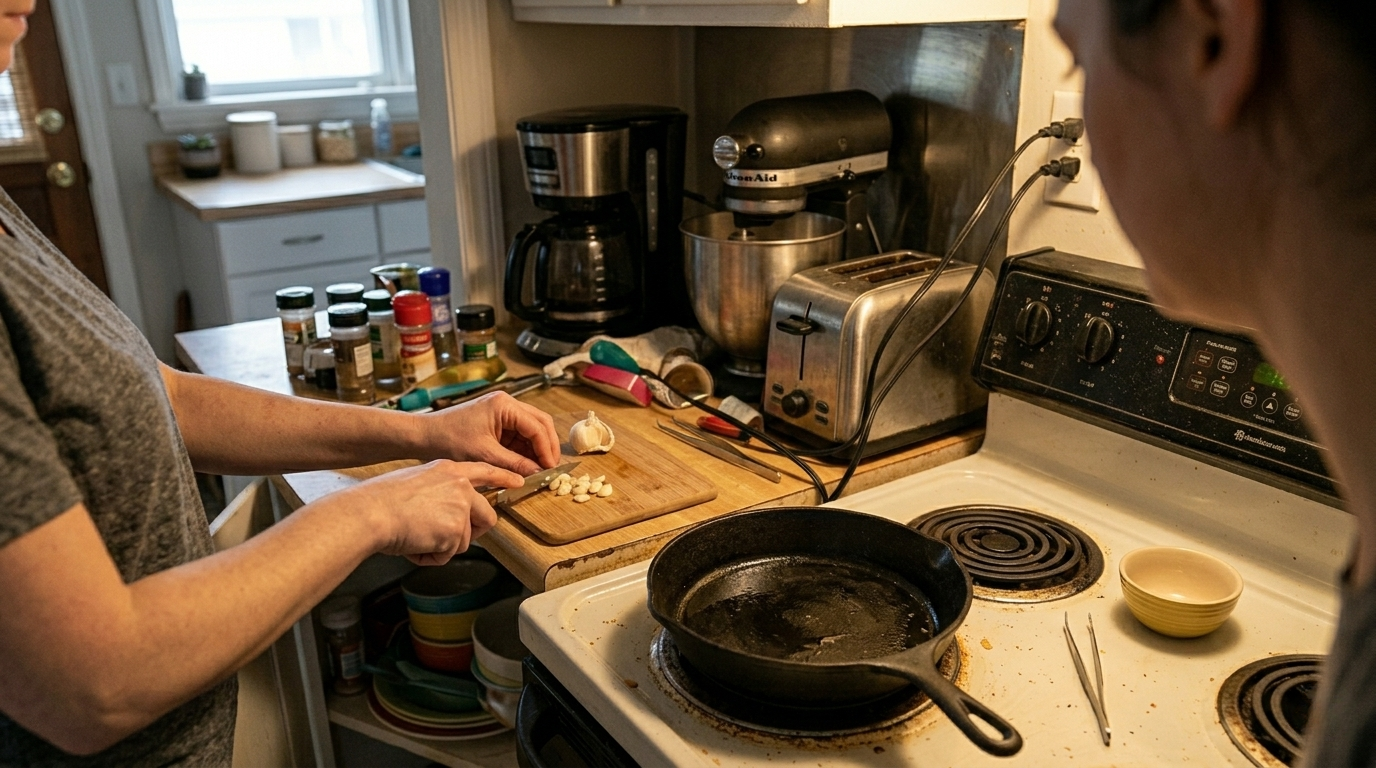
You’ve got decent knives, good pans, working appliances. You follow recipes carefully. Yet cooking still feels awkward and inefficient. The problem might not be your skills or equipment. It might be your kitchen layout forcing you to walk too much, reach too far, and interrupt your workflow constantly. Most home kitchens weren’t designed by people who cook seriously. They were designed to look good in real estate photos and maximize cabinet storage. The result is layouts that create unnecessary steps, dangerous reaches, and workflow interruptions. Here’s what makes cooking harder in poorly-designed kitchens, why standard layouts ignore actual cooking needs, and what you can fix without renovating. The Refrigerator Is Too Far From Everything Walk into most kitchens and the refrigerator sits at one end while the stove sits at the opposite end. This creates exhausting back-and-forth trips every time you cook. Think about a typical cooking sequence. Retrieve vegetables from refrigerator, walk to sink to wash them, walk to cutting board to chop them, walk back to refrigerator for protein, walk to stove to cook. You’ve crossed the kitchen five times before cooking even starts. Professional kitchens cluster refrigeration near prep areas. Home cooks walk marathons because refrigerators get placed based on cabinet layouts and electrical outlet locations, not cooking workflow. Each unnecessary trip adds time and disrupts focus. You’re mentally tracking cooking progress while physically retrieving ingredients across the room. This divided attention leads to mistakes like overcooked onions or forgotten ingredients. The refrigerator-to-prep-to-stove triangle should be tight. Ideal distance totals 12-25 feet for all three legs combined. Many home kitchens exceed this by placing refrigerator far from primary work areas. If you can’t move your refrigerator, adapt your workflow. Stage all ingredients on counter near stove before starting to cook, eliminating mid-cooking refrigerator trips. The Sink Isn’t Where You Actually Prep Standard kitchen design puts the sink under a window for aesthetic reasons. This forces you to prep food wherever counter space exists, which often isn’t near the sink. Washing vegetables at the sink then carrying them across the kitchen to cutting board creates dripping mess. Chopping produces scraps that need disposal, requiring trips back to sink or trash. The sink should sit adjacent to your primary prep area, not isolated in its own zone. Professional cooks keep prep within arm’s reach of water and waste disposal. Many kitchens have ample counter space beside the stove but minimal space beside the sink. This backwards priority means you’re prepping far from water source then walking ingredients to heat source. Deep sinks create ergonomic problems too. Reaching into deep basin to wash large items strains your back. Shallow prep sinks or dual-basin configurations work better for actual cooking tasks. Consider adding a cutting board that fits over your sink if counter space beside sink is limited. This creates temporary prep area directly over water and waste disposal. Your Stove Sits in a Corner or Against a Wall Stoves placed in corners or tight against walls limit access and create dangerous reaching angles over active burners. Corner stoves force you to reach across multiple burners to access back burners. This puts your arm over open flames or hot pots every time you stir something cooking at the back. Wall-mounted stoves without adequate side clearance mean you’re reaching from one direction only. Professional ranges have approach space from multiple sides allowing safer access. The range hood’s positioning matters too. Low hoods help ventilation but reduce visibility and access to back burners. You’re cooking half-blind. Inadequate counter space flanking the stove creates nowhere to set hot pans when removing them from burners. You’re carrying hot cookware across the kitchen searching for landing space. Ideally, stoves have 15-18 inches of counter space on at least one side, preferably both sides. This provides pot-setting space and ingredient staging area within arm’s reach while cooking. If your stove lacks side counter space, add a rolling cart positioned beside it during cooking. This temporary surface provides the landing zone and staging area the permanent layout omits. Cabinet Storage Ignores Cooking Frequency Most kitchens dedicate prime real estate to items used rarely while forcing frequently-used items into inconvenient locations. Pots and pans belong near the stove. Yet many kitchens store them in cabinets across the room or in lower cabinets requiring bending and digging. Meanwhile, fancy serving platters used twice annually occupy prime locations. Spices should live near cooking area. Common kitchen layouts put spice storage far from stove, interrupting cooking flow every time you need to season food. Everyday dishes and glasses should be near dishwasher for easy unloading. Storing them far away adds steps to post-cooking cleanup. The “work triangle” concept (sink-stove-refrigerator) addresses appliance placement but ignores storage. You can have a perfect triangle yet still walk unnecessarily if your storage doesn’t support your workflow. Reorganize cabinets based on use frequency rather than matching dish sets or traditional storage conventions. Daily-use items get prime real-estate. Occasional-use items get less convenient storage. Upper cabinets within arm’s reach should hold items you grab while cooking: oils, vinegars, frequently-used spices, go-to pans. Lower cabinets work for items retrieved during prep: mixing bowls, baking sheets, storage containers. Counter Space Isn’t Continuous Broken counter runs interrupted by appliances or sink create workflow problems requiring shifting food and equipment between disconnected surfaces. You need continuous counter space for multi-step tasks. Kneading bread dough, rolling pasta, or arranging ingredients for complex recipes requires uninterrupted work surface. Many kitchens break counter runs with range placement, creating two separate prep zones instead of one continuous surface. This forces choosing which side to work on rather than spreading out naturally. Small counter segments between appliances become dead zones too small for actual work. That 8-inch gap beside the stove holds dish soap but can’t accommodate cutting board or mixing bowl. Island or peninsula additions help only if they’re positioned within the work triangle. Islands far from primary work area become overflow surfaces that don’t integrate into cooking workflow. Minimum useful counter space measures at
The Mise en Place Myth: Why Prep-Everything-First Doesn’t Always Work

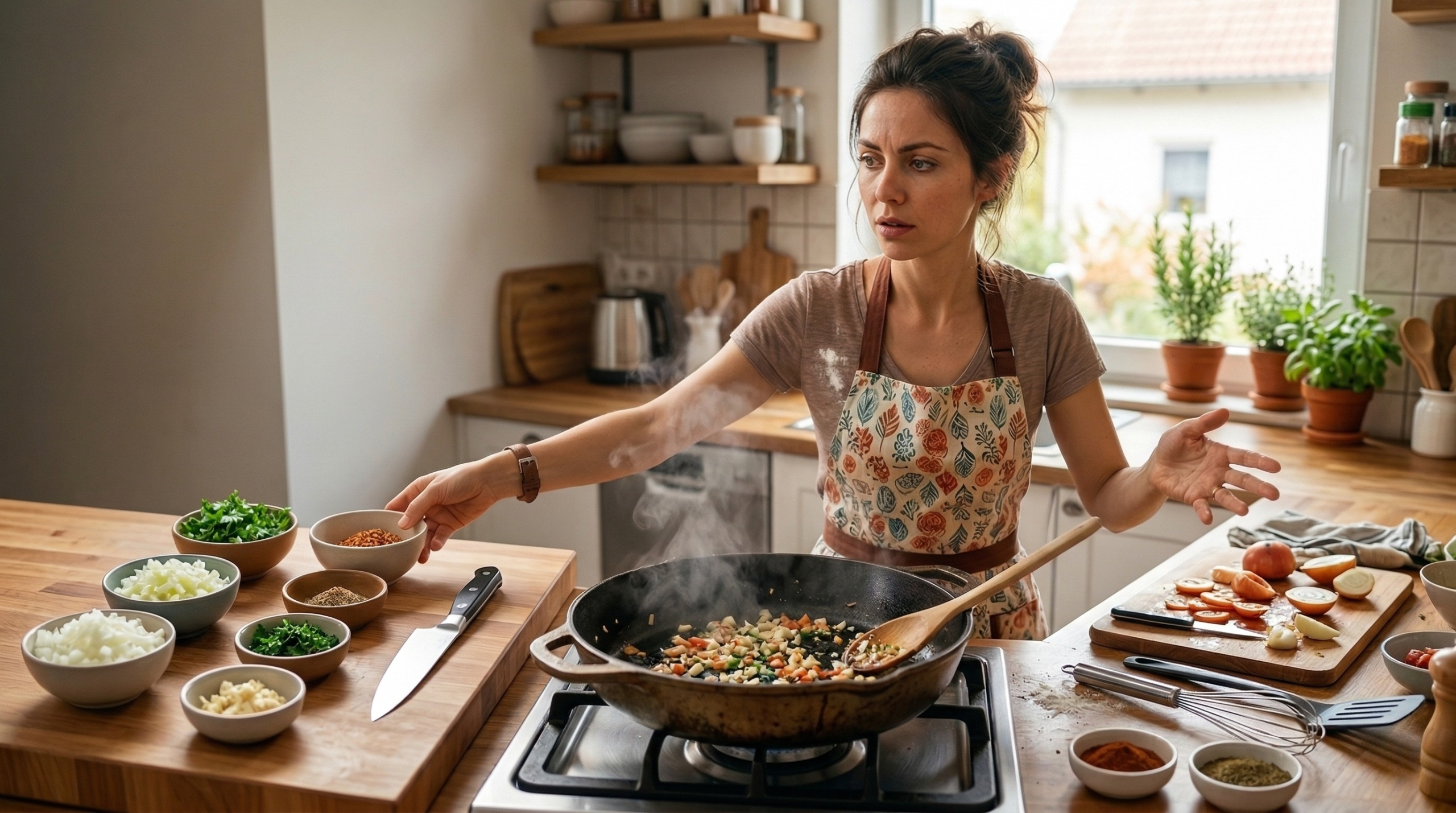
Professional chefs prep everything before they start cooking. You’ve seen it on cooking shows—neat little bowls of chopped vegetables, measured spices, prepped proteins all lined up before heat touches pan. Then you try it at home. You spend 45 minutes chopping, measuring, and organizing. Your counter looks like a bowl store exploded. Half your ingredients sit getting warm or oxidizing while you finish prep. And somehow the actual cooking still feels rushed. The problem isn’t your knife skills. The problem is blindly applying restaurant kitchen logic to home cooking without understanding why restaurants work that way or how your kitchen differs. Here’s the truth about mise en place, when complete pre-prep actually helps versus hurts, and how to adapt the concept for home cooking efficiency. Restaurant Kitchens Aren’t Home Kitchens Restaurants prep everything first because they’re cooking the same dishes repeatedly under time pressure for paying customers who expect fast service. Restaurant line cooks work during service rush cooking identical orders back-to-back. Prepping once lets them execute quickly when orders arrive. They make the same pasta dish 50 times per night—complete prep makes sense. Restaurants have prep cooks whose entire job involves chopping vegetables and measuring ingredients. Line cooks receive already-prepped ingredients. The division of labor spreads prep burden across multiple people. Restaurant mise en place prevents mistakes during rush. When cooking under pressure with tickets piling up, having everything measured prevents forgetting ingredients or adding wrong amounts. Restaurants optimize for speed during service, not efficiency of total labor. They accept longer total prep time because it enables faster cooking when customers are waiting. Your home kitchen operates differently. You’re cooking one or two portions, not fifty. You’re the prep cook and line cook. You’re not racing against customer expectations. Different constraints require different strategies. Downtime During Cooking Is Wasted Prep Time Most recipes include natural waiting periods where you’re not actively doing anything—perfect opportunities for prep work without adding total cooking time. Onions take ten minutes to soften properly. You can chop garlic, measure spices, and prep other vegetables during those ten minutes instead of standing watching onions. Water takes time to boil. While waiting for pasta water, you can grate cheese, chop herbs, or prepare sauce ingredients rather than prepping everything before you start. Meat needs time to brown undisturbed. Flipping chicken too early prevents proper browning. Use that hands-off time productively prepping what comes next. Ovens need preheating time. While the oven reaches temperature, prep your ingredients instead of prepping before you turn the oven on. Rice cookers, slow cookers, and other set-it-and-forget-it equipment create prep windows. Use their cooking time for other preparation instead of front-loading everything. Sequential prep during natural downtime means your total time from starting to eating stays roughly the same, but you’re not creating artificial prep time before cooking begins. Some Ingredients Suffer From Early Prep Certain ingredients degrade when prepped too far in advance, making complete mise en place actively harmful to final dish quality. Cut avocados oxidize and brown within minutes. Prep avocado right before using, not at the start of your prep session. Sliced apples and pears discolor quickly. Chop them last to maintain appearance and prevent browning. Minced garlic loses pungency and develops harsh flavors when sitting. Chop garlic right before it hits the pan for best flavor. Fresh herbs wilt and blacken when chopped early. Prep herbs at the last minute to maintain color and aroma. Salad greens get soggy when dressed too early. Keep components separate until serving time. Some vegetables release moisture when salted and chopped. Prepping too early creates watery mess rather than neat mise. Complete advance prep forces you to compromise ingredient quality. Strategic last-minute prep maintains optimal flavor and texture. Partial Mise Works Better for Home Cooks Instead of all-or-nothing approach, prep strategically based on cooking sequence and ingredient needs. Prep long-cooking components first. If recipe starts with onions cooking for 15 minutes, chop those onions before anything else. Prep quick-cooking ingredients during the onion cooking time. Group ingredients by cooking stage. Prep everything for step one together. Prep step two ingredients while step one cooks. Prep step three during step two. Measure dry ingredients in advance. Spices, flour, and shelf-stable items can sit measured without quality loss. Prep these first if it helps organization. Keep proteins refrigerated until needed. Don’t let chicken or fish sit at room temperature for 30 minutes while you prep vegetables. Prep proteins right before cooking. Wash and dry produce in advance but don’t chop until needed. Clean vegetables store better than chopped vegetables. Do the washing early, the cutting strategically. This hybrid approach gives you organization benefits without quality compromises or artificial waiting time. Your Recipe Determines Your Strategy Different recipes require different prep approaches based on cooking intensity and timing demands. Stir-fries need complete mise. When cooking happens in three minutes over high heat, stopping mid-cooking to chop something means burned food. Everything must be prepped and ready. Braises allow progressive prep. When something simmers for two hours, you have abundant time for prep during cooking. Front-loading makes no sense. Baking often requires complete mise. When ratios and techniques are precise, having everything measured prevents mistakes. Measure before mixing. One-pan meals with sequential cooking work well with progressive prep. Brown meat, remove it, prep vegetables while pan cools slightly, continue cooking. The sequence builds in prep time. Recipes with many components benefit from partial advance prep. If making main dish plus two sides, prepping some elements early prevents last-minute chaos. Read your recipe before deciding prep strategy. Let the cooking method and timing dictate your approach. Mise en Place Is About Readiness, Not Bowls The core concept behind mise en place isn’t having pretty bowls, it’s being ready to execute without scrambling or forgetting things. Mental mise matters more than physical mise. Knowing what ingredients you need and what order they’re added prevents mistakes regardless of when you chop them. Reading the recipe through completely before starting provides mental organization. Understanding the flow prevents

One Pan Air Fryer Omelette: The Hands-Off Breakfast Hack

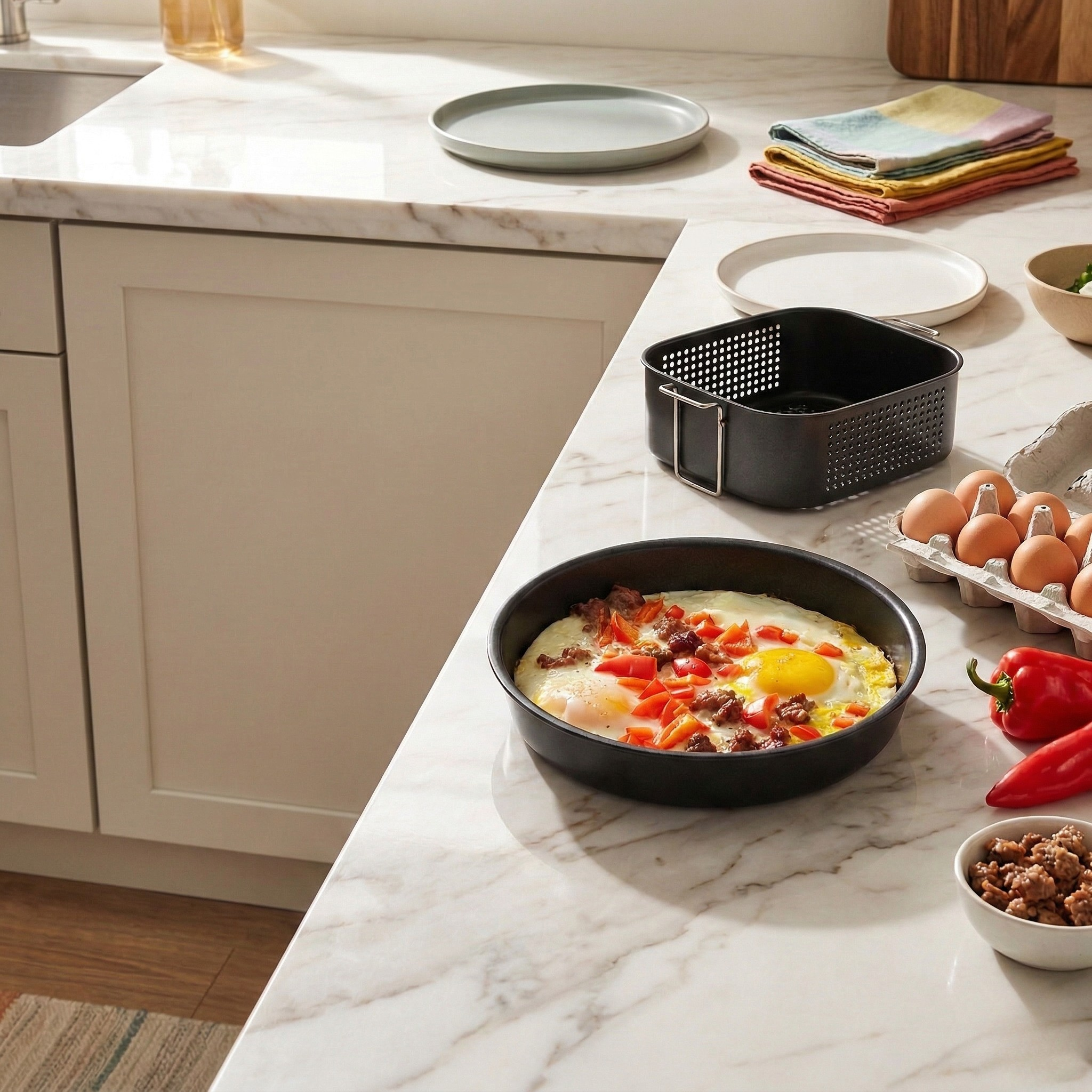
Stovetop omelettes demand attention. You’re standing there, watching heat, tilting the pan, timing the flip perfectly. Miss any step and you’ve got scrambled eggs instead. Air fryer omelettes solve this. Load your ingredients, set the temperature, walk away. The circulating heat cooks everything evenly without flipping, stirring, or hovering over a hot stove. Here’s how to make a fluffy, golden-edged omelette in your air fryer with minimal effort and zero flipping skills required. What You’ll Need Ingredients: Equipment: Step-by-Step Instructions Step 1: Prep Your Pan Grease your small air fryer-safe pan thoroughly with butter or oil. This step matters—properly greased pan means your omelette slides right out when done. Skipping this creates stuck eggs and frustration. Step 2: Layer Your Ingredients Add diced bell pepper, onions (or sprinkle onion powder if using), and chopped sausage directly into the greased pan. Spread ingredients evenly across the bottom creating foundation for your omelette. Step 3: Add the Eggs Crack 3 eggs directly into the pan over your ingredients. The eggs will settle around the vegetables and sausage creating cohesive omelette rather than separated layers. Step 4: Season and Top Season with garlic salt to taste. Top generously with shredded cheese. The cheese melts during cooking creating gooey center. Step 5: Air Fry Place the pan in your air fryer basket. Set temperature to 300°F and cook for 8-12 minutes. Start checking at 8 minutes—cooking time varies based on your specific air fryer model and pan size. The omelette is done when eggs are fully set (no liquid egg visible) and cheese is melted and slightly golden on top. Step 6: Remove and Serve Carefully remove the hot pan from the air fryer. Let cool for one minute, then slide the omelette onto a plate. The well-greased pan should release the omelette easily. Serve immediately while hot. Why Air Fryer Method Works Air fryers circulate hot air around food creating even cooking on all surfaces simultaneously. Unlike stovetop where heat comes only from bottom, air fryer cooks top and bottom at once. This eliminates the flip. Traditional omelettes require careful flipping to cook the top without overcooking the bottom. Air fryer handles both sides automatically. The enclosed cooking environment traps moisture creating fluffy texture. Open stovetop cooking allows moisture to escape. Air fryer keeps it in. Set-it-and-forget-it convenience means you can prep other breakfast items while omelette cooks. Make coffee, toast bread, set the table—no standing guard required. Customization Options This base recipe adapts to whatever ingredients you have available. Protein variations: Swap sausage for bacon, ham, chorizo, or skip meat entirely for vegetarian version. Cooked chicken or turkey works too. Vegetable options: Add mushrooms, spinach, tomatoes, jalapeños, or whatever vegetables need using. Pre-cook dense vegetables like broccoli or potatoes before adding. Cheese choices: Any melting cheese works. Try cheddar, mozzarella, pepper jack, feta, or goat cheese depending on your preference. Seasoning adjustments: Beyond garlic salt, try black pepper, paprika, Italian seasoning, or hot sauce mixed into eggs before cooking. Dairy additions: Whisk one tablespoon milk or cream into eggs before pouring for extra fluffy texture. Common Mistakes to Avoid Overfilling the pan causes spillover. Keep ingredients and eggs within three-quarters of pan depth. Omelette expands slightly during cooking. Skipping the greasing step creates stuck eggs. Even non-stick pans benefit from light butter or oil coating ensuring easy release. Opening air fryer repeatedly during cooking releases heat extending cook time. Check once at 8-minute mark, then again at 10 or 12 if needed. Setting temperature too high cooks eggs too fast creating rubbery texture. The 300°F temperature cooks gently creating tender results. Forgetting pan is hot causes burns. Use oven mitts removing pan from air fryer. Handle stays hot several minutes after cooking. Timing Adjustments Your specific air fryer model affects cooking time. Some run hotter than others requiring less time. Check at 8 minutes for first attempt. If eggs still look wet or liquid, continue cooking checking every 2 minutes until set. Thicker omelettes (more ingredients, larger pan) need closer to 12 minutes. Thinner omelettes (fewer ingredients, shallow pan) finish around 8-9 minutes. Room temperature eggs cook faster than cold eggs straight from refrigerator. Add minute or two if using cold eggs. Watch the Video Tutorial Serving Suggestions Serve this omelette with toast, fresh fruit, or breakfast potatoes for complete meal. Add salsa, sour cream, or hot sauce on top for extra flavor. Pair with coffee or orange juice for classic breakfast combination. Pack leftovers for grab-and-go breakfast. Omelette reheats well in microwave for 30-45 seconds. Air fryer omelettes deliver restaurant-quality results without the technique requirement of stovetop versions. Load ingredients, set timer, walk away. Perfect fluffy omelette every time with zero flipping stress and minimal cleanup. Your air fryer handles the hard part while you handle everything else on your breakfast to-do list.

The Cooking Skills No One Teaches You (But Everyone Assumes You Know)

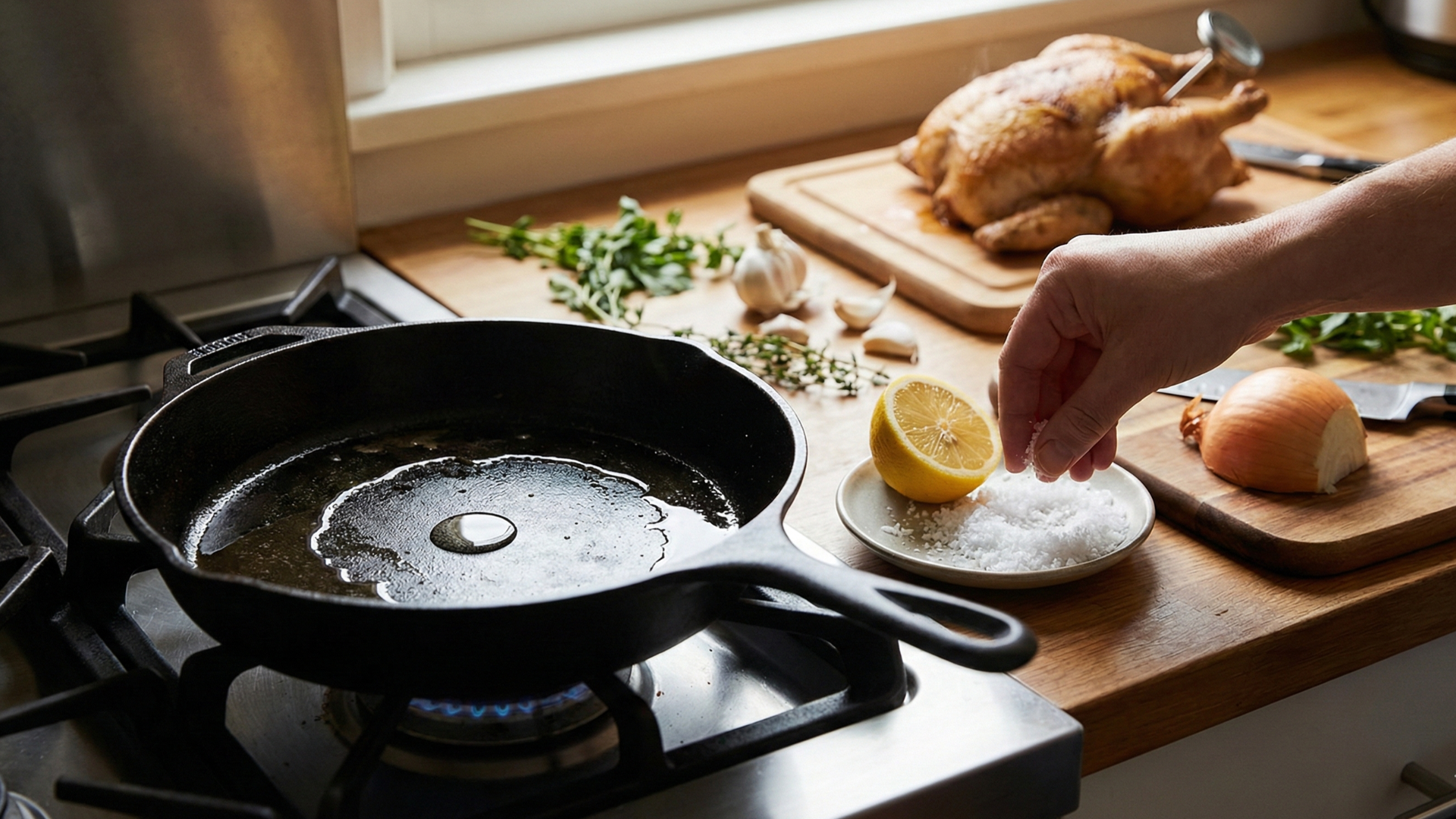
Recipe instructions operate on the assumption that cooks understand certain fundamental concepts and techniques that often never get explicitly taught or explained. This creates a strange gap where recipes tell you to “sauté until fragrant” or “cook until done” without explaining what fragrant smells like, how you know when something is done, or what you’re actually trying to accomplish at each step. These assumed skills—the things experienced cooks do automatically without conscious thought—rarely appear in recipes because they seem too basic to mention, yet their absence leaves many home cooks guessing and second-guessing throughout the cooking process. The result is uncertainty and inconsistent results not because recipes are being followed incorrectly but because the unstated knowledge between the written steps never got communicated. Understanding these assumed skills bridges the gap between following recipes mechanically and actually cooking with comprehension. When you know what each instruction means in practical terms and what you’re looking for at each stage, cooking becomes less mysterious and results become more reliable. How to Actually Preheat a Pan Recipes say “heat a pan over medium heat” and immediately proceed to the next step as if pan temperature is instantly achieved. The unstated reality is that proper preheating takes time and matters significantly to results. Pans need several minutes to reach temperature evenly. A thin pan might heat in 2-3 minutes while a heavy pan could need 5-7 minutes depending on the material and thickness. Putting food in too early means cooking in a pan that’s still heating up, creating uneven results. Testing pan temperature prevents adding food too soon. For sautéing, water droplets should sizzle and evaporate quickly but not instantly vaporize. For searing, a water droplet should ball up and roll around the pan. These simple tests tell you when the pan is actually ready rather than guessing. Burner size matching pan size affects heating efficiency. A large pan on a small burner heats unevenly with a hot center and cool edges. Matching pan size to burner ensures even heating across the cooking surface. The material matters because stainless steel, cast iron, nonstick, and carbon steel all heat differently and hold heat differently. Cast iron takes longest to heat but holds temperature best. Nonstick heats quickly but doesn’t tolerate high temperatures. Understanding your pan helps you preheat appropriately. Visual cues like shimmer in oil indicate the pan has reached cooking temperature. Oil should flow smoothly and shimmer slightly when the pan is properly heated for most cooking tasks. Nobody tells you this explicitly, but experienced cooks know to wait for the pan rather than rushing to add ingredients. Those few minutes of proper preheating separate good results from disappointing ones. What “Season to Taste” Really Means Recipes end with “season to taste” assuming you understand how to evaluate seasoning and what you’re adjusting for, but this is actually a complex skill involving multiple elements. Salt brightens flavors and balances sweetness but also makes everything taste more like itself. Under-salted food tastes flat and one-dimensional even if all other seasonings are present. Proper salting creates vibrancy and dimension in flavor. Tasting multiple times throughout cooking shows you how flavors develop and concentrate. What tastes properly seasoned at the beginning might taste bland after reducing. Seasoning isn’t one-time but ongoing as liquids evaporate and flavors concentrate. Acid balancing with lemon juice, vinegar, or wine brightens dishes in ways salt alone cannot. When food tastes heavy or dull despite adequate salt, acid is often what’s missing. A squeeze of lemon or splash of vinegar can transform a dish. Adjusting gradually with small additions prevents over-seasoning. Add a small amount, stir, wait a moment, then taste again. You can always add more but cannot remove excess seasoning easily. Temperature affects taste perception—food needs more seasoning when served hot or cold compared to warm. Soup that tastes perfectly seasoned warm will taste bland when served hot. Season slightly more aggressively for foods served very hot or cold. Tasting from a spoon you’ve used to stir provides false feedback because residual flavors on the spoon affect what you taste. Use a clean spoon for each taste test to get accurate seasoning assessment. This “simple” final instruction actually requires understanding salt, acid, balance, and how flavors develop through cooking—none of which the recipe explains. How to Know When Food Is Done “Cook until done” appears in countless recipes without explaining what done looks like, feels like, or how you determine it for different foods. Visual cues vary by food type. Fish becomes opaque and flakes easily. Chicken releases clear juices rather than pink. Vegetables change from raw color to vibrant color when properly cooked. Learning these visual indicators for different foods tells you when cooking is complete. Texture changes signal doneness in ways recipes rarely describe. Properly cooked pasta has slight resistance when bitten. Vegetables should have some tooth while being cooked through. Meat firms up as it cooks with specific texture changes at different temperatures. Internal temperature provides objective measurement removing guesswork. Chicken is safe at 165°F but ideal at 160°F with carryover. Medium-rare steak is 130-135°F. Bread is done when internal temperature reaches 190-200°F. Temperature removes uncertainty. Carryover cooking continues after removing food from heat. Meat temperature rises 5-10°F after leaving the heat source. Removing food slightly before target temperature accounts for carryover and prevents overcooking. Resting allows juices to redistribute and cooking to finish gently. Meat needs resting time equal to roughly half the cooking time. The rest period isn’t wasted time but essential to final results. Timing provides rough guidance but shouldn’t override visual and tactile cues. Every stove differs, every pan differs, every piece of meat differs. Use times as estimates but rely on actual doneness indicators rather than blindly following minutes. Nobody explicitly teaches these evaluation methods, but knowing when food is actually done versus trusting recipe times alone dramatically improves cooking results. What Different Heat Levels Actually Mean “Medium heat” or “medium-high heat” assumes shared understanding of what these terms mean, but heat levels

Why Expensive Ingredients Don’t Make You a Better Cook

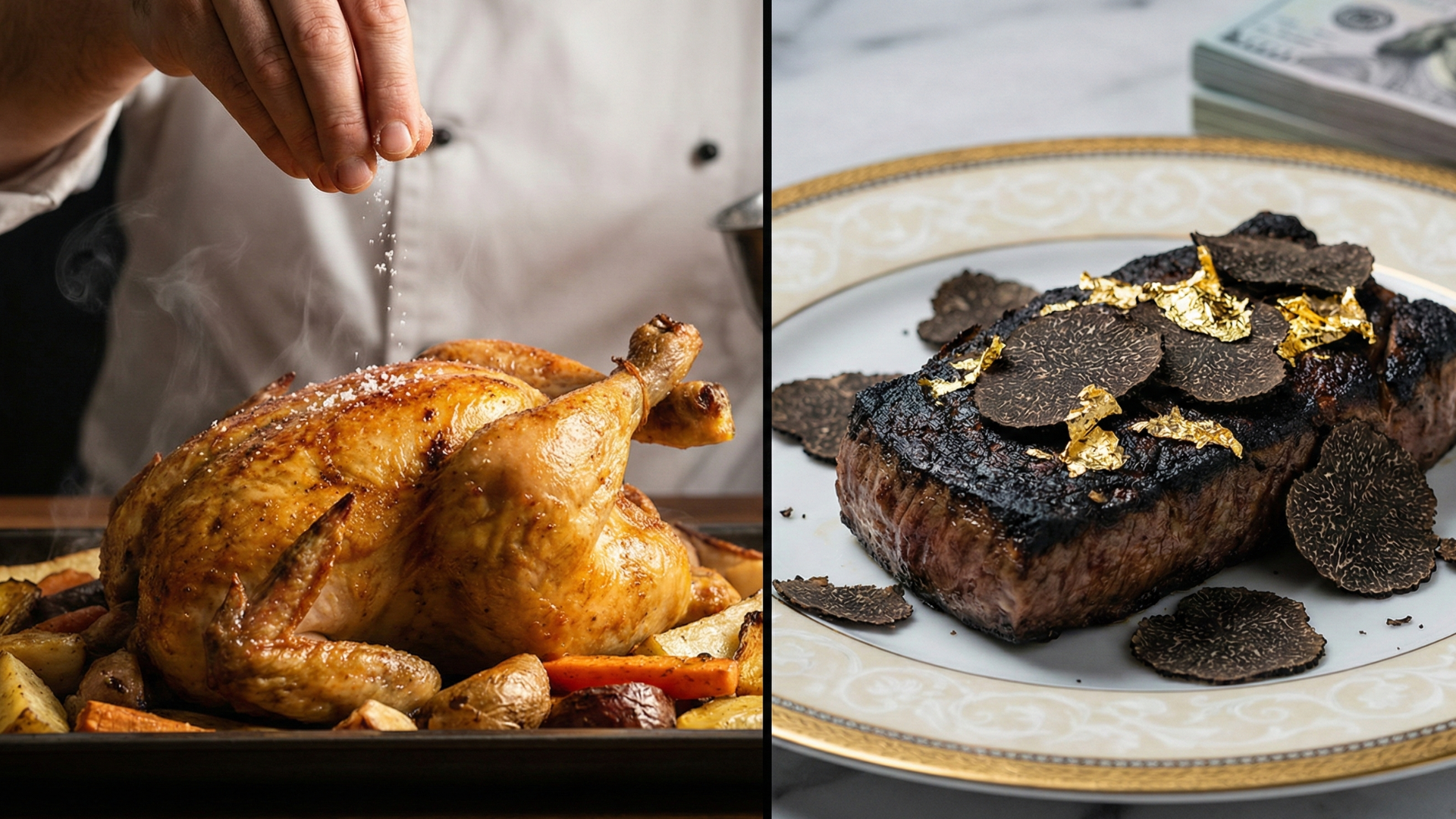
The assumption that premium ingredients automatically produce superior results pervades cooking culture, creating the belief that buying better costs more and that budget constraints prevent good cooking. This narrative benefits specialty food retailers and creates aspirational shopping habits, but it misrepresents how cooking actually works and what separates good results from mediocre ones. Technique, timing, and understanding what you’re doing matter far more than ingredient price points for most home cooking situations. Expensive ingredients can enhance dishes when used appropriately, but they cannot compensate for poor execution and often get wasted when cooks don’t understand how to handle them properly. The gap between ingredient cost and cooking results is larger than food marketing suggests. A skilled cook produces better meals with standard ingredients than an inexperienced cook produces with premium ones. Understanding this distinction helps you invest cooking energy where it actually improves results rather than assuming that spending more money solves cooking challenges. Technique Trumps Ingredients in Most Situations Proper cooking methods transform ordinary ingredients into good food while poor technique ruins expensive ingredients just as effectively as cheap ones. Heat control matters more than ingredient quality for most cooking tasks. Knowing when to use high heat versus low heat, understanding how pans retain and distribute heat, recognizing when food is properly seared versus burned—these skills affect results regardless of what you’re cooking. Seasoning appropriately with salt makes more difference to flavor than buying premium ingredients. Under-seasoned expensive steak tastes worse than properly salted standard steak. Salt enhances and balances flavors in everything you cook, making it the most impactful flavor element in your kitchen. Timing doneness correctly prevents ruining good ingredients. Overcooked expensive fish becomes dry and disappointing just like overcooked cheap fish. Knowing when food is done—through temperature, texture, or visual cues—preserves quality regardless of what you paid for ingredients. Understanding cooking processes like browning, deglazing, reducing, and emulsifying creates flavor through technique. These methods develop complexity from basic ingredients without requiring expensive specialty items. Knife skills affect cooking results by ensuring even cooking and proper texture. Uniformly cut vegetables cook evenly while haphazardly chopped ones create texture inconsistencies and uneven doneness regardless of vegetable quality. Building flavors through layering aromatics, acids, fats, and seasonings creates depth that expensive single ingredients cannot provide. Knowing how to develop flavor through cooking process matters more than starting with premium ingredients. The cook who understands these fundamentals produces better food with ordinary ingredients than someone who buys expensive items but doesn’t know how to handle them properly. Expensive Ingredients Often Get Wasted Through Misuse Premium ingredients require appropriate handling and preparation that inexperienced cooks often don’t provide, resulting in wasted money and disappointing results. High-end proteins get overcooked constantly because people don’t understand doneness temperatures or resting periods. A $40 steak cooked to 180°F internal temperature tastes worse than a $12 steak cooked to 135°F and rested properly. Delicate ingredients like fresh herbs, specialty greens, or premium produce deteriorate quickly when stored improperly. Buying expensive ingredients without knowing how to store them means watching them spoil before you use them. Subtle flavor differences in premium ingredients disappear when overwhelmed by heavy sauces or aggressive seasonings. Using truffle oil on heavily seasoned pasta wastes the truffle because you can’t taste it through everything else. Expensive cuts of meat get treated like lesser cuts requiring long cooking times. Cooking tender premium cuts low and slow turns them dry and tough when they should be cooked quickly at high heat. Specialty ingredients get used in inappropriate applications where their unique qualities don’t matter. Using expensive olive oil for high-heat cooking destroys its flavor compounds—you might as well use regular oil. Premium ingredients often shine best with minimal preparation. Buying them then cooking them elaborately can mask rather than highlight what you paid for. The expensive ingredient needed simple treatment, not complex preparation. The waste comes from not understanding how ingredients work rather than from the ingredients themselves being problematic. Standard Ingredients in Good Recipes Outperform Premium Ingredients in Bad Ones Recipe quality and cooking method matter more than ingredient cost for determining final results. Well-developed recipes using ordinary ingredients produce consistent good results. A tested recipe with proper ratios, cooking times, and technique guidance succeeds with standard ingredients. Poor recipes fail regardless of ingredient quality. Using expensive butter in a bad cake recipe still produces bad cake. The recipe’s structural problems—wrong ratios, incorrect technique, poor method—create failure that ingredients cannot fix. Recipe testing and development creates reliability. Recipes from sources that actually test their formulas work better than recipes thrown together without verification, regardless of suggested ingredients. Understanding why recipes work allows substitution of standard ingredients for premium ones. When you know the recipe’s underlying logic, you can adapt ingredient choices while maintaining good results. Traditional recipes evolved using available affordable ingredients. Classic dishes became classics using whatever people had access to, not specialty items. These recipes work because they’re fundamentally sound, not because they require expensive ingredients. Home cooks often achieve better results following reliable recipes with basic ingredients than attempting ambitious recipes with premium ingredients they don’t know how to handle. The recipe quality determines the outcome more than the ingredient quality in most home cooking situations. Ingredient Quality Matters Most Where Ingredients Aren’t Transformed The situations where premium ingredients genuinely improve results involve minimal cooking that showcases the ingredient rather than transforming it. Fresh raw applications like salads, caprese, or crudo highlight ingredient quality because there’s no cooking to develop flavor. When ingredients are eaten raw or barely cooked, their inherent quality matters significantly. Simple preparations with few ingredients put the spotlight on each component. Pasta with garlic and olive oil showcases the olive oil quality. Margherita pizza highlights the tomato and mozzarella. These simple dishes benefit from better ingredients because there’s nowhere to hide. Finishing elements added at the end taste exactly like themselves without transformation. The final drizzle of olive oil, the shaving of Parmesan, the squeeze of lemon—these additions aren’t cooked, so their quality is directly

Cooking Techniques for Different Legumes: A Comprehensive Guide

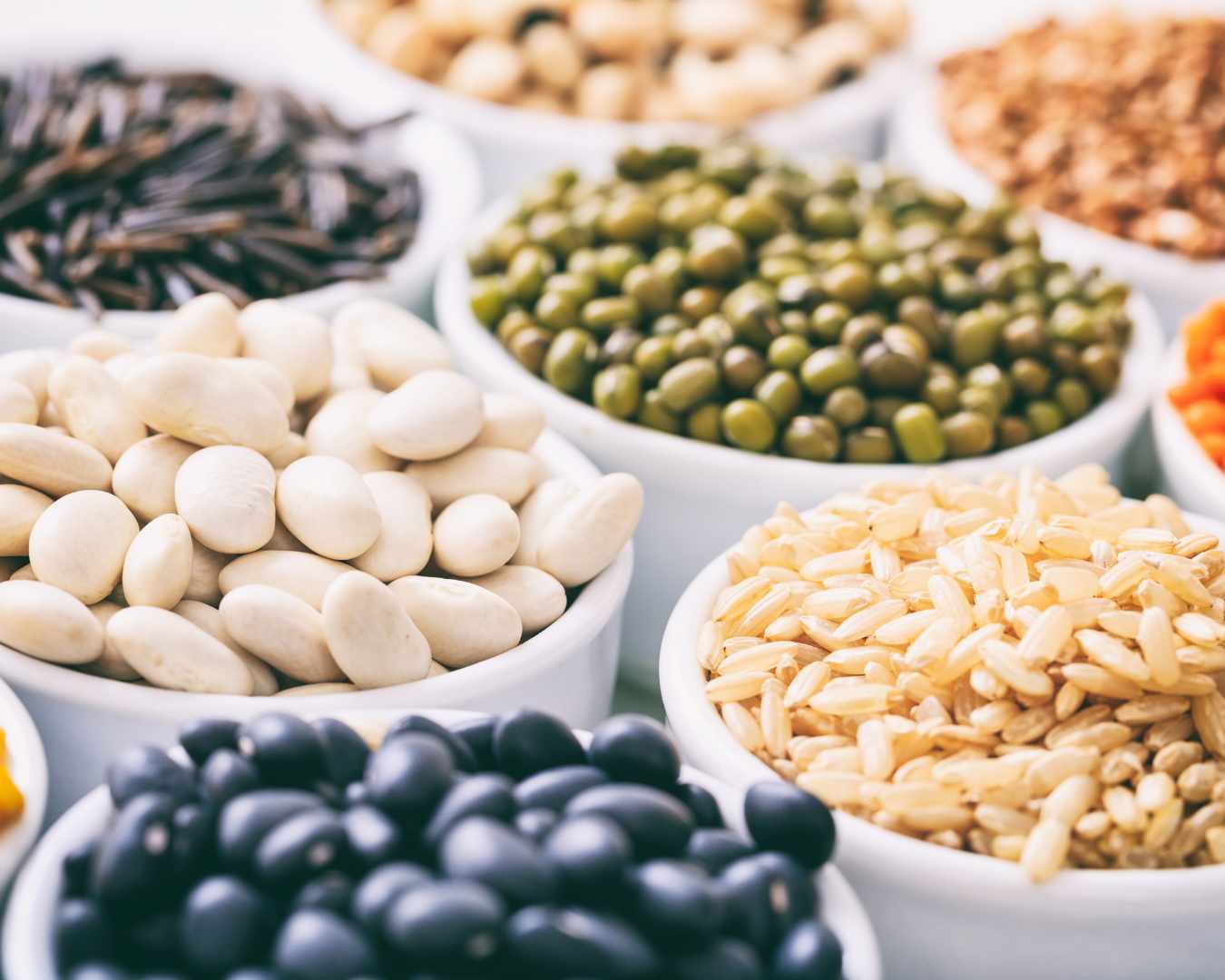
Legumes are a versatile and nutritious staple in many diets around the world. They come in various types, including beans, lentils, peas, and chickpeas, each requiring unique cooking methods to achieve the best results. Understanding the different techniques for preparing legumes can enhance their texture, flavor, and nutritional value. Here’s a comprehensive guide to cooking various types of legumes. Beans Types: Black beans, kidney beans, pinto beans, navy beans, chickpeas (garbanzo beans), etc. Cooking Techniques: Lentils Types: Green lentils, red lentils, brown lentils, black lentils (Beluga lentils), etc. Cooking Techniques: Peas Types: Green peas, split peas, chickpeas, black-eyed peas, etc. Cooking Techniques: Cooking Tips for All Legumes Mastering the different cooking techniques for legumes ensures you get the most out of their texture, flavor, and nutritional benefits. Whether you’re preparing beans for a hearty stew, lentils for a nutritious salad, or peas for a quick side dish, understanding the right methods can elevate your culinary creations. Experiment with these techniques and enjoy the versatility and health benefits that legumes bring to your table.