cooking

Ahi Shoyu Poke for Poke Day, With Crisp Wonton Chips and Perfect Sushi Rice

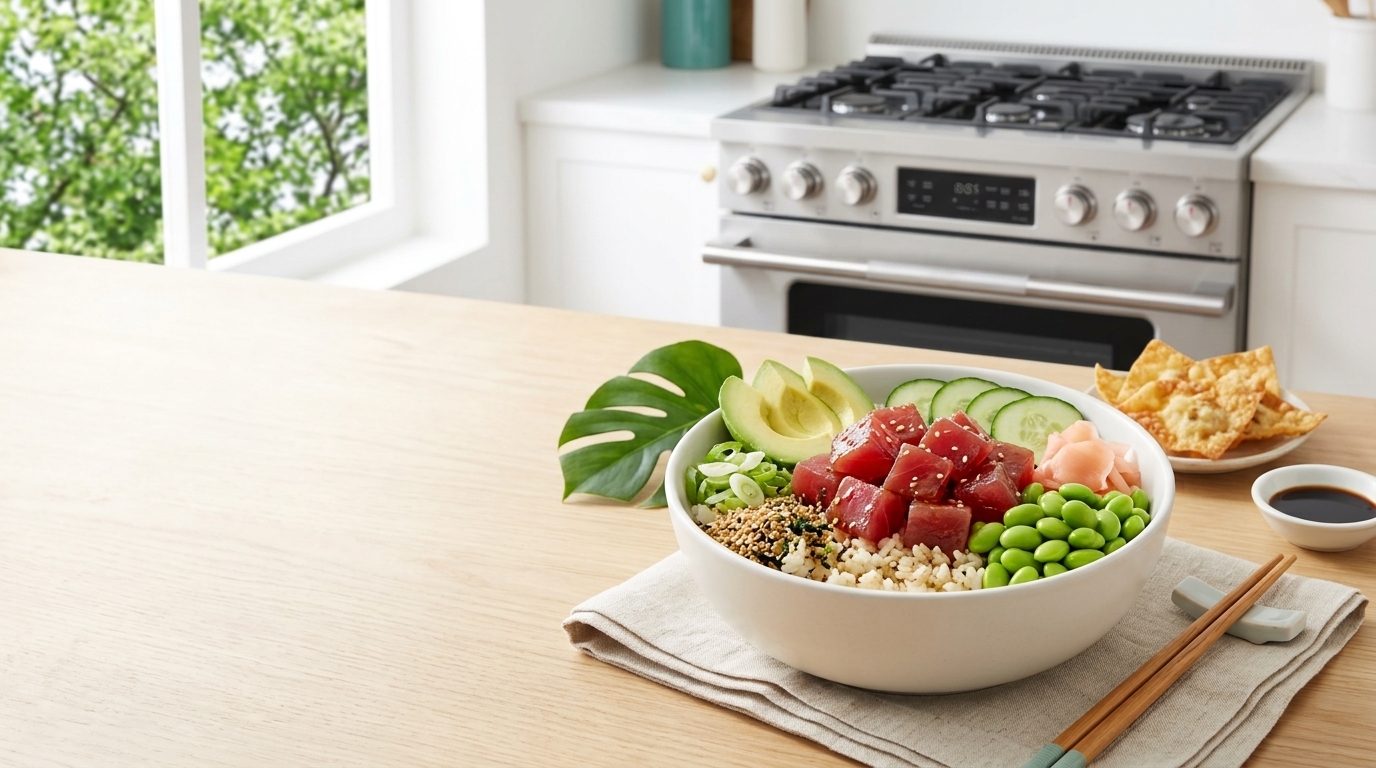
Poke, pronounced poh-KAY, comes from the Hawaiian verb meaning to slice or cut crosswise into pieces, and the dish it names is one of the oldest and most enduring foods of the islands. Long before Western contact, Native Hawaiian fishermen cut freshly caught reef fish into bite-sized pieces and seasoned them simply with coarse sea salt, limu (edible seaweed), and inamona, a paste of roasted and crushed kukui nut. Octopus and skipjack tuna, known locally as aku, were among the traditional choices, and the preparation was as much about respect for the catch as it was about flavor. Nothing was hidden, and nothing was wasted. The dish changed as Hawaii did. Japanese, Chinese, Korean, and Filipino laborers who arrived to work the plantations from the late nineteenth century onward brought soy sauce, sesame oil, and green onion, and over the decades those ingredients became so embedded that shoyu poke now reads as the classic version. Yellowfin ahi eventually became the fish of choice. Today poke is sold by the pound at island grocery counters, packed into plastic containers for beach days, and set out at family gatherings, birthdays, and graduations, where it functions as a symbol of hospitality and community. In the last decade it traveled far beyond Hawaii, first to West Coast poke shops and then to menus and home kitchens across the country. The Recipe for Ahi Shoyu Poke Bowls Every September 28, Poke Day gives home cooks a reason to try it themselves, and the dish is far more approachable than its restaurant reputation suggests. This version keeps the traditional soul of shoyu poke, then builds a complete meal around it with seasoned sushi rice and crisp wonton chips. Cosmo’s kitchen blog already has a salmon and avocado version if you prefer that direction. This recipe leans toward the classic ahi approach and makes four servings. For the poke For the rice and chips For serving Method Buying and Handling Raw Fish Safely Because poke is served raw, the fish matters more than any other ingredient. Buy from a fishmonger you trust and ask specifically for tuna intended to be eaten raw. Look for a deep, translucent red color with a clean, briny smell, and avoid anything dull, brown, or fishy. Keep it on ice on the way home, store it in the coldest part of the refrigerator, and use it the same day. The same principle behind The Ingredients You’re Storing Wrong applies here. Raw fish is also not recommended for pregnant women, young children, older adults, or anyone with a weakened immune system. Timing also matters for the rest of the meal. Rice and wonton chips can be made an hour or two ahead, and the toppings can be prepped in the morning, so the only last-minute task is dressing the fish. Set out the components buffet style and let guests build their own bowls, which suits a group with different tastes, and offer extra soy sauce, chili flakes, and lime wedges on the side. If serving raw fish is not right for your table, sear the tuna instead. Season a thick steak with salt and pepper, sear it for 60 to 90 seconds per side in a very hot skillet, slice it, and serve it over the same rice with the same toppings and dressing. The Range Behind the Bowl Poke itself needs no heat, but nearly everything around it does, and that is where a capable range earns its place. Cosmo’s COS-RGS366SS, a 36-inch gas range from the Stellar Collection, handles each supporting task in this recipe. Sushi rice depends on gentle, steady heat, and this range’s six burners span a wide output. A 3,500 BTU simmer burner holds a covered pot at the low, even temperature that keeps rice from scorching on the bottom. If you choose the seared ahi variation, the 22,000 BTU high-output burner on heavy-duty cast iron grates delivers the intense heat a cast iron skillet needs to sear a tuna steak in about a minute per side, leaving the center cool and rare. That range of control, from a whisper to a roar on the same cooktop, is hard to fake. The oven side is just as useful. The range’s 6.1 cubic foot convection oven includes an air fry function with a dedicated tray, which is a natural fit for wonton chips. Circulating hot air crisps thin wrappers evenly in minutes, using a fraction of the oil of a deep fryer and without dragging a countertop air fryer out of storage. The same function can crisp shallots or thin-sliced sweet potato as alternative toppings. The oven’s rack positions and the range’s storage drawer keep sheet pans within reach, and the digital touch controls, clock, and timer make it easy to time the chips against the rest of the prep. Front-mounted metal knobs handle the burners, so adjusting the flame is simple even with wet hands after rinsing rice. There is a practical benefit to working this way, too. A meal that involves raw fish, rice, and a crisp element can easily turn into a juggling act, with several dishes needing attention at different moments. Having the burners and the oven both up to the job means the rice can rest on the stovetop while the chips finish in the oven, and nothing has to wait its turn in a separate appliance. It keeps a weeknight version of the dish realistic, and it scales comfortably when the guest list grows for a weekend gathering. Cleanup is straightforward too. The steam clean function loosens splatters with heat and moisture, and the brushed stainless steel finish fits into nearly any kitchen. For a fuller look at what the range can do through the roasting season, see First Day of Fall. A Simple Way to Celebrate Poke rewards good ingredients, a sharp knife, and restraint. Season it lightly, serve it cold over warm rice, and let the fish speak for itself. For households that want the whole meal, the rice, the
Bringing Tableside Flambé Home: What Your Range Actually Needs to Pull It Off Safely

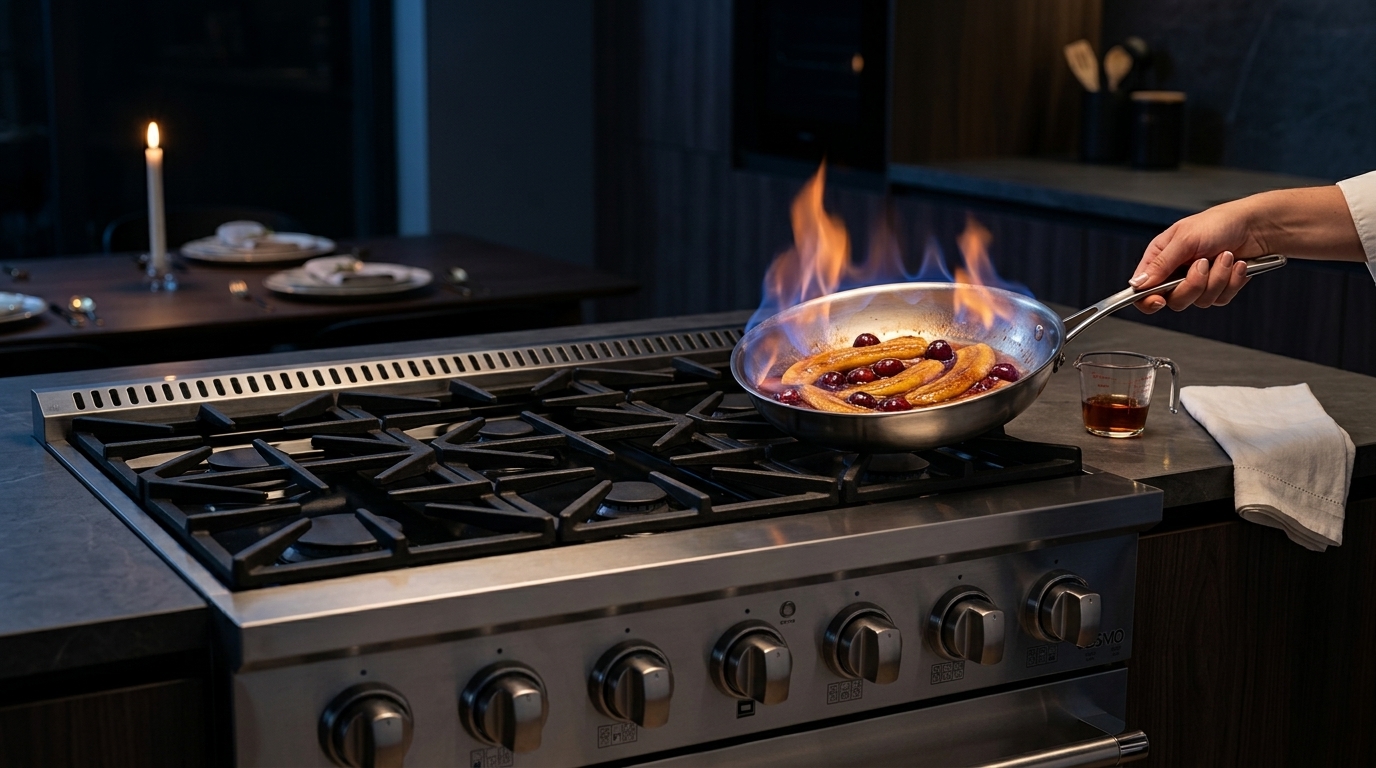
There is a specific kind of theater a flambé brings to a table, the room going quiet for a second as a server tips a pan and a controlled sheet of blue-orange flame rolls across a cherries jubilee or a pan of bananas foster. It reads as a restaurant trick, the kind of thing that belongs to someone with a captain’s cart and a fire extinguisher within arm’s reach, not a Tuesday dinner at home. That reputation is mostly undeserved. Flambéing is a fairly simple technique once the mechanics are understood, and the real barrier for most home cooks is not skill. It is a stovetop that was never built to give a cook the fast, precise control that lighting alcohol on fire actually requires. What Flambé Is Actually Doing Strip away the showmanship and flambéing is a fairly ordinary chemical event. A splash of high-proof alcohol, usually a fruit brandy, rum, or a liqueur, goes into a hot pan already holding fruit, a sauce, or a piece of meat, and the alcohol vapor rising off the pan ignites, burning off quickly while leaving behind a deeper, more concentrated flavor than the alcohol could contribute unburned. The flame itself lasts only fifteen to thirty seconds before the alcohol content burns away and the fire extinguishes on its own. Nothing about that description involves danger by design. The danger shows up when the pan is too hot before the alcohol goes in, when the alcohol is poured straight from the bottle instead of measured out, or when a cook is working over a burner that cannot be adjusted or shut off the instant something goes sideways. That last point is the one most home flambé guides skip past, and it is the one that actually determines whether the technique goes well. A recipe can tell a cook to remove the pan from heat before adding alcohol, to measure the pour in advance, and to keep a lid within reach. None of that advice does much good if the burner underneath the pan cannot respond as quickly as the cook needs it to. Why the Stove Matters More Than the Recipe Every serious flambé guide converges on the same handful of rules, and nearly all of them come back to timing. Alcohol should be measured into a cup rather than poured from the bottle, so a flame traveling up the alcohol stream never has a bottle to travel back to. The pan itself should come off direct heat, or the burner should be turned down, in the moment before the alcohol is added, since a pan that is too hot can ignite the alcohol vapor before a cook is ready for it. A long lighter or match, rather than a stovetop’s own flame, is the safer ignition source on an electric or induction surface, and even on gas, pulling the pan slightly away from the burner before adding alcohol keeps the vapor from catching prematurely. Loose sleeves get rolled up, hair gets tied back, and anything flammable gets cleared from the space above and around the pan before the alcohol ever comes out of the bottle. Every one of those steps assumes a cook who can move the pan, adjust the flame, or kill the heat entirely within a second or two of deciding to. That is where a home range with sluggish, imprecise burner control becomes the actual liability in the process, not the alcohol itself. A burner that takes several seconds to drop from high to low, or a single all-purpose burner asked to handle a hard reduction and then a delicate flambé finish without missing a beat, turns a fifteen-second technique into a much longer window where something can go wrong. The alcohol keeps cooking off while a cook waits for the heat to actually respond, and a pan sauce that should have stayed exactly where it needed to be either scorches or never develops the reduction a flambé dish depends on. Where the COS-GRP366 Fits Cosmo’s COS-GRP366, a 36-inch professional-style gas range with six sealed Italian-made burners, is built around exactly the kind of range and responsiveness a flambé technique actually needs. Its burner lineup runs from a 20,000 BTU high-output burner down through a 15,000 BTU burner, a 12,000 BTU burner, two 9,000 BTU burners, and a 6,000 BTU burner, which matters for a flambé dish in a way that is easy to overlook. The dish rarely starts as a flambé. It starts as a sauté or a reduction that needs real heat, a pan of bananas caramelizing in butter and sugar or a reduction of pan juices building toward the finish, and only in the final moment does the cook need to pull that same burner down to a controlled, moderate flame before the alcohol goes in. A range with a wide spread of burner outputs, rather than six burners tuned to nearly the same range, gives a cook that kind of headroom on a single burner instead of needing to shuffle a hot pan across the cooktop at the exact moment precision matters most. Metal control knobs on the COS-GRP366 respond instantly to a twist in either direction, a meaningful difference from a touch panel that has to register a tap and confirm a setting change before the burner actually responds, a lag that matters far more during a fifteen-second flambé than it does during an ordinary sauté. The range’s auto re-ignition system, which continuously monitors each burner’s flame and automatically relights it if a draft or a spill causes it to blow out, adds a layer of protection specific to open-flame cooking, catching a flame that might otherwise go dark without a cook noticing right away. The range’s 5.4 cubic foot convection oven, with its 22,000 BTU bake burner and even, fan-assisted heat distribution, rounds out the rest of a dinner built around a flambéed finish, whether that means keeping a tray of accompaniments warm or finishing the dish that came before the

National Beef Stroganoff Day: The Dish That Lives or Dies on What Happens After the Sour Cream Goes In

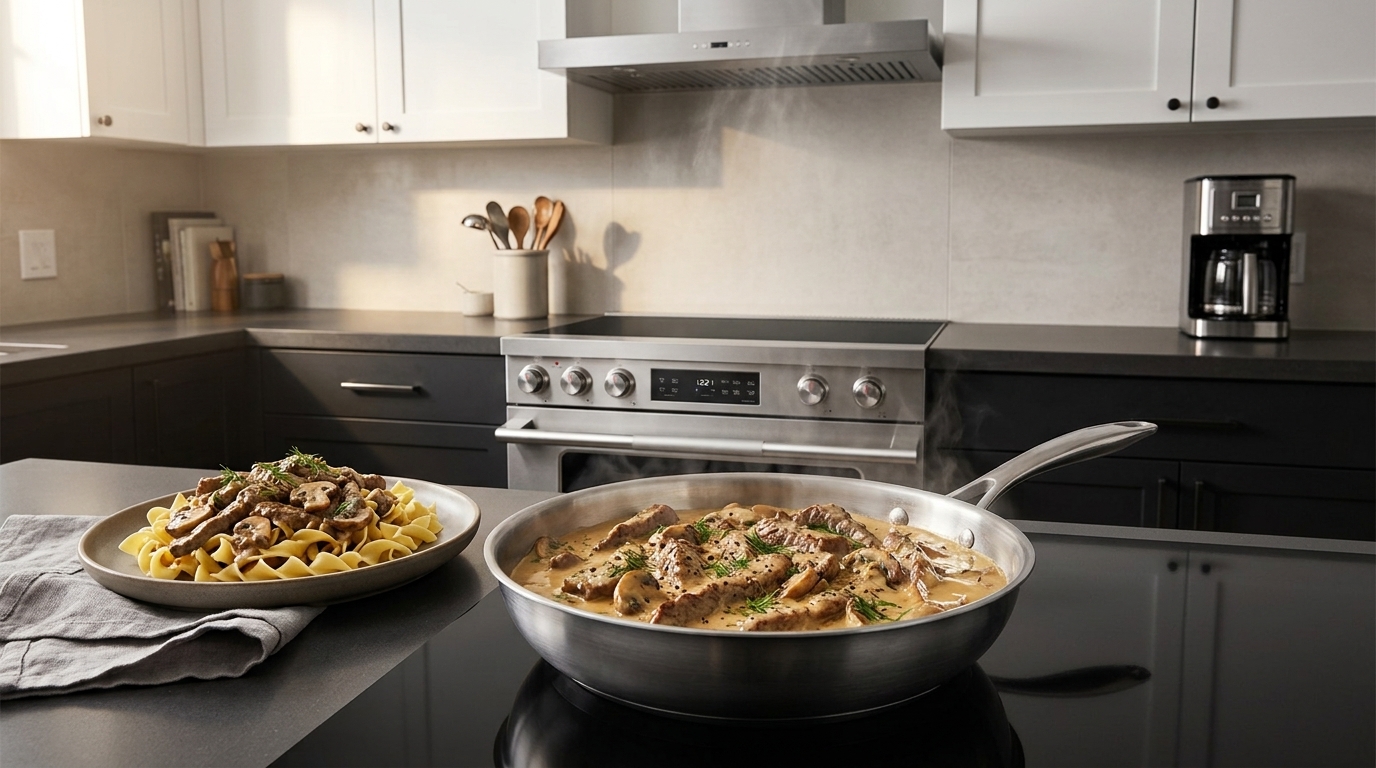
Most food holidays celebrate something a home cook already makes without thinking twice about it. National Beef Stroganoff Day, observed on September 21st, is a little different. Stroganoff is a dish nearly every American household recognizes by name, tender beef and mushrooms in a rich, tangy cream sauce over egg noodles, but one that fewer households actually make from scratch than the recipe’s popularity would suggest. Part of that gap comes down to a single, easy-to-miss detail in the technique: stroganoff’s sauce is built on sour cream, and sour cream does not behave the same way heavy cream or a basic pan sauce does once it hits real heat. Get that one step wrong, and a dish built around silky, tangy richness turns grainy and broken. Get it right, and stroganoff earns every bit of the reputation that has kept it on American dinner tables for more than a century. A Russian Import With an American Second Life Beef stroganoff traces back to 19th-century Russia, most commonly credited to the kitchens associated with the Stroganov family, though the exact origin story has always been more folklore than documented fact. The dish that reached America by the mid-20th century, strips of beef sautéed with onions and mushrooms, finished in a sour cream sauce, was already a departure from the earlier Russian versions, which sometimes used a mustard-forward sauce rather than the cream-based one that eventually became standard. What stuck, and what turned stroganoff into a fixture of mid-century American cookbooks, was the combination of an approachable ingredient list with a genuinely elegant result. It read as special-occasion food while using cuts of beef and pantry staples most households already had on hand, which is exactly why it became a Cold War-era dinner party favorite and, not long after, a weeknight regular served over egg noodles instead of rice. That dual identity, humble ingredients producing a dish that tastes considerably more refined than its grocery list suggests, is still the best argument for making stroganoff at home rather than ordering something similar at a restaurant. Good beef stroganoff is not an expensive dish. It is a technique-dependent one, and the technique is almost entirely about heat management rather than any hard-to-source ingredient or complicated multi-day process. Where Most Home Versions Go Wrong Ask any experienced home cook why their stroganoff came out grainy or thin instead of silky, and the answer nearly always traces back to the same mistake: the sour cream went into a pan that was too hot, or it sat over heat too long after being stirred in. Sour cream is a cultured dairy product with a relatively low tolerance for high heat. Push it past a gentle simmer, and the proteins that give it that smooth, tangy body start to separate, curdling into small white flecks suspended in a thin, broken liquid instead of melting seamlessly into the pan sauce. Once that happens, there is no fixing it. The dish is still edible, but it has lost the texture that makes stroganoff worth making in the first place. This is why so many stroganoff recipes read like a warning label by the time they get to the final step: remove the pan from heat, or reduce to the lowest possible setting, before the sour cream goes in, and never let the sauce come back to a boil afterward. That instruction is easy to write and considerably harder to execute on a standard stovetop, where the gap between a gentle simmer and a rolling boil on a single burner setting can be narrower than most home cooks expect, especially on a gas burner where visual flame height does not always correlate cleanly to the actual heat reaching the pan. A cook distracted for even a minute, stirring noodles or plating a side dish, can come back to a sauce that has quietly slipped past the point of no return. Precise, Instant Heat Changes the Outcome This is exactly the kind of failure point that a genuinely responsive cooktop is built to eliminate, and it is the strongest practical argument for cooking stroganoff on induction rather than gas or a standard electric coil. Cosmo’s COS-RIS365SS, a 36-inch freestanding induction range, gives a home cook direct, immediate control over the exact moment the sauce needs to drop from an active simmer to a bare, sauce-holding warmth. Because induction heats a pan by generating a magnetic field directly in the cookware itself rather than heating the air and the burner surface first, adjusting the dial changes the temperature at the food almost instantly, without the lag of a gas flame slowly settling to a new height or an electric coil taking a minute or two to cool from its previous setting. For a sauce with a narrow safe zone like stroganoff’s, that responsiveness is the difference between a sauce that stays exactly where it needs to be and one that overshoots by the time a cook notices and reacts. The range’s burner lineup backs up that precision with real range, not just fine control at the low end. Its five induction elements include one 2,500-watt burner and two 1,600-watt burners alongside two 1,200-watt units, enough output to properly sear beef strips over high, dry heat before the sauce stage ever begins, a step that matters as much to the finished dish as the sour cream technique does. Beef that goes into a crowded, lukewarm pan steams instead of browning, and stroganoff without a real sear on the beef loses much of the savory depth that makes the finished sauce worth building around. Getting both ends of that range, a hard sear early and a controlled, gentle finish later, out of the same burner without swapping pans or waiting on a cooktop to catch up is a genuine advantage for a dish built entirely around two very different heat requirements happening ten minutes apart. The range’s 6.1 cubic foot convection oven and included storage drawer round out a kitchen setup built for

National Monte Cristo Day: Why America’s Strangest Sandwich Deserves a Comeback

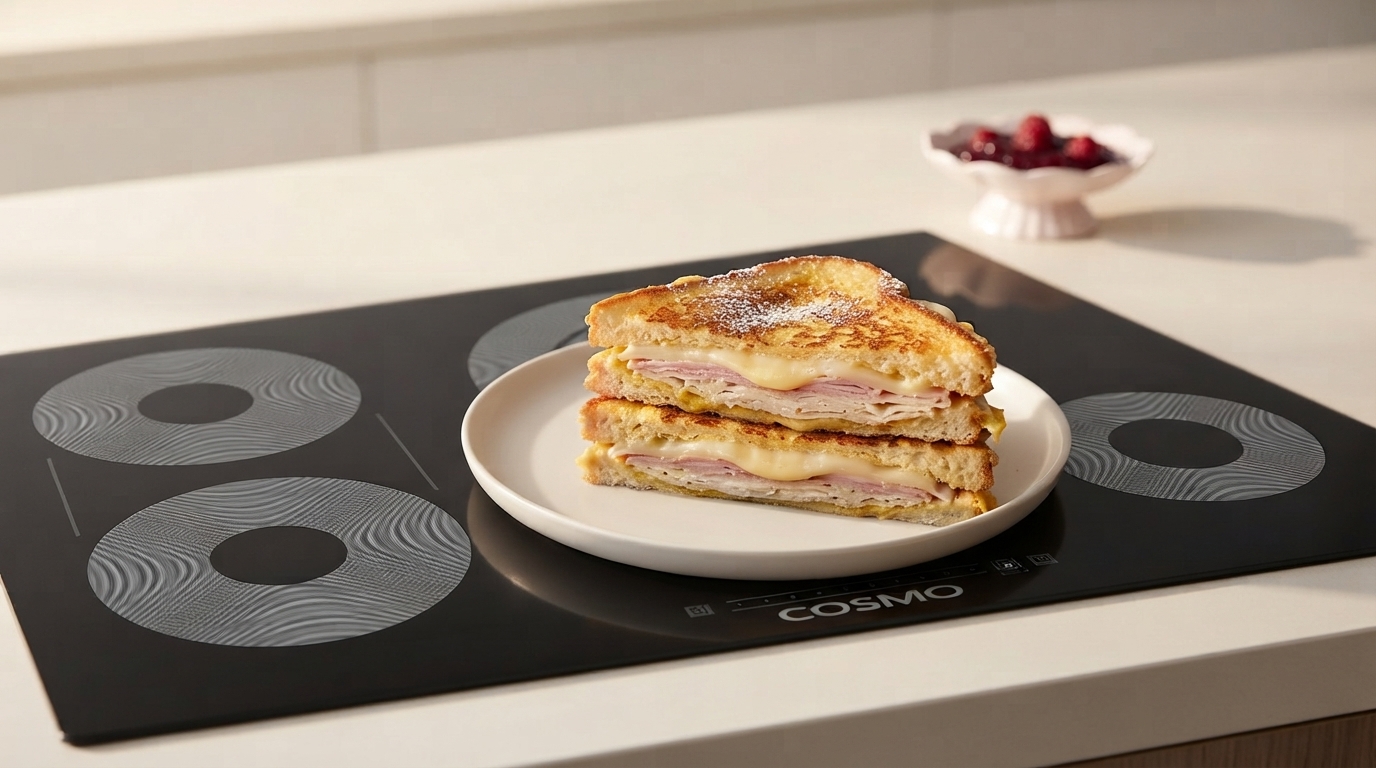
Every food holiday calendar is crowded with days built around something simple: a fruit, a cut of meat, a regional specialty everyone already understands at a glance. September 17 is different. National Monte Cristo Day celebrates a sandwich that has spent most of its life confused about what it actually is, part diner classic, part French toast, part deep-fried indulgence, and dusted with powdered sugar as if daring anyone to take it seriously. That confusion is exactly what makes it worth revisiting. The Monte Cristo is one of the few sandwiches built entirely around a cooking technique rather than a specific filling, and getting that technique right at home is a genuinely useful kitchen skill, not just a novelty for one day a year. What a Monte Cristo Actually Is Strip away the theatrics and a Monte Cristo is a ham and cheese sandwich, usually built with turkey or ham, sometimes both, layered with Swiss or Gruyère, that gets dipped in an egg batter closer to French toast custard than anything resembling a standard sandwich preparation. The whole thing is then griddled or fried in butter until the bread turns golden and slightly custardy, the cheese melts through the layers, and the outside develops a texture somewhere between a grilled cheese and a savory French toast. Restaurants that serve it well finish the plate with a dusting of powdered sugar and a small dish of raspberry or currant jam alongside, leaning fully into the sweet-savory contrast rather than apologizing for it. Food historians trace the sandwich back to the French croque-monsieur, by way of American diners and Southern California drive-ins in the mid-twentieth century, where it picked up its egg-batter treatment and its slightly theatrical presentation. Disneyland’s version, deep-fried rather than griddled and served with strawberry preserves, is probably the most famous American iteration and the reason a lot of people have heard of the sandwich at all without ever having made one. That lineage is part of why the Monte Cristo tends to divide people so cleanly. It reads as either a genuinely great use of leftover ham and cheese or a slightly unhinged experiment in what a sandwich is allowed to be, and honestly, both reactions are fair. A Sandwich That Lives or Dies on Heat Control What separates a good Monte Cristo from a soggy, undercooked mess comes down almost entirely to technique, and specifically to heat control during the cooking step. A slice of bread dipped in egg custard behaves differently on a hot surface than a dry slice of bread does. Too much heat too fast and the outside scorches while the center stays wet and eggy, essentially raw custard sandwiched between two burnt slices. Too little heat and the bread absorbs the egg mixture without ever developing the structure that holds a sandwich together, leaving something closer to bread pudding than a sandwich a person can actually pick up. This is the specific gap that separates a Monte Cristo made on a standard stovetop burner from one made with real, deliberate heat control. A traditional coil or open-flame burner tends to run hot in the center and cooler at the edges, which is a minor inconvenience for most cooking and a genuine problem for a dish that needs even, moderate heat across the entire surface of the pan for several minutes at a stretch. Restaurant kitchens solve this with a flat-top griddle, a continuous cooking surface that holds a steady temperature edge to edge, which is exactly why the Monte Cristo shows up so much more often on diner menus than in home kitchens. Most home stovetops simply are not built to replicate that surface. Bringing Griddle-Level Heat Control Into a Home Kitchen That gap is closing faster than most home cooks realize, largely because of a feature that has quietly become common on modern electric cooktops: the ability to bridge two burners into a single unified heating zone. Cosmo’s COS-304TBECC, a 30-inch electric cooktop with four burners and a black ceramic glass surface, includes exactly this kind of sync burner, a function that connects two adjacent elements into one continuous heating area sized for a griddle, a fish poacher, or any other oversized cookware that would otherwise straddle two separate burners at two separate temperatures. For a dish like a Monte Cristo, where a full flat-bottom griddle pan needs consistent heat from one edge to the other, that bridged zone is the difference between a sandwich that cooks evenly and one that scorches on one side while staying pale on the other. The cooktop’s touch controls matter just as much here as the sync burner itself. Because a Monte Cristo needs steady, moderate heat rather than a quick sear, the finer temperature graduations of a touch-based electric control give a cook more precision than a mechanical knob typically allows, the difference between a dial that jumps from medium to medium-high with nothing in between and a control that can hold a specific, consistent setting for as long as a batch of sandwiches takes to cook through. The cooktop’s triple-zone element, with its small, medium, and large selectable heating areas on a separate burner, also solves a smaller but real problem in a Monte Cristo kitchen: keeping a small saucepan of raspberry jam warm alongside the griddle without dedicating a full-size burner to a job that needs a fraction of the heat. None of this is complicated technology in the abstract. It is simply heat control built to match what a specific dish actually needs, rather than forcing a home cook to improvise around a stovetop designed primarily for pots and pans rather than a flat griddle surface. Making One Well, Start to Finish For anyone tackling a Monte Cristo for National Monte Cristo Day, the technique is straightforward once the heat is under control. Build the sandwich first, ham, turkey, or both, layered with a good melting cheese like Swiss or Gruyère between slices of a sturdy white or egg bread that

Warm Minimalism Is Replacing Stark Modern: The Kitchen Trend Softening 2026’s Clean Lines

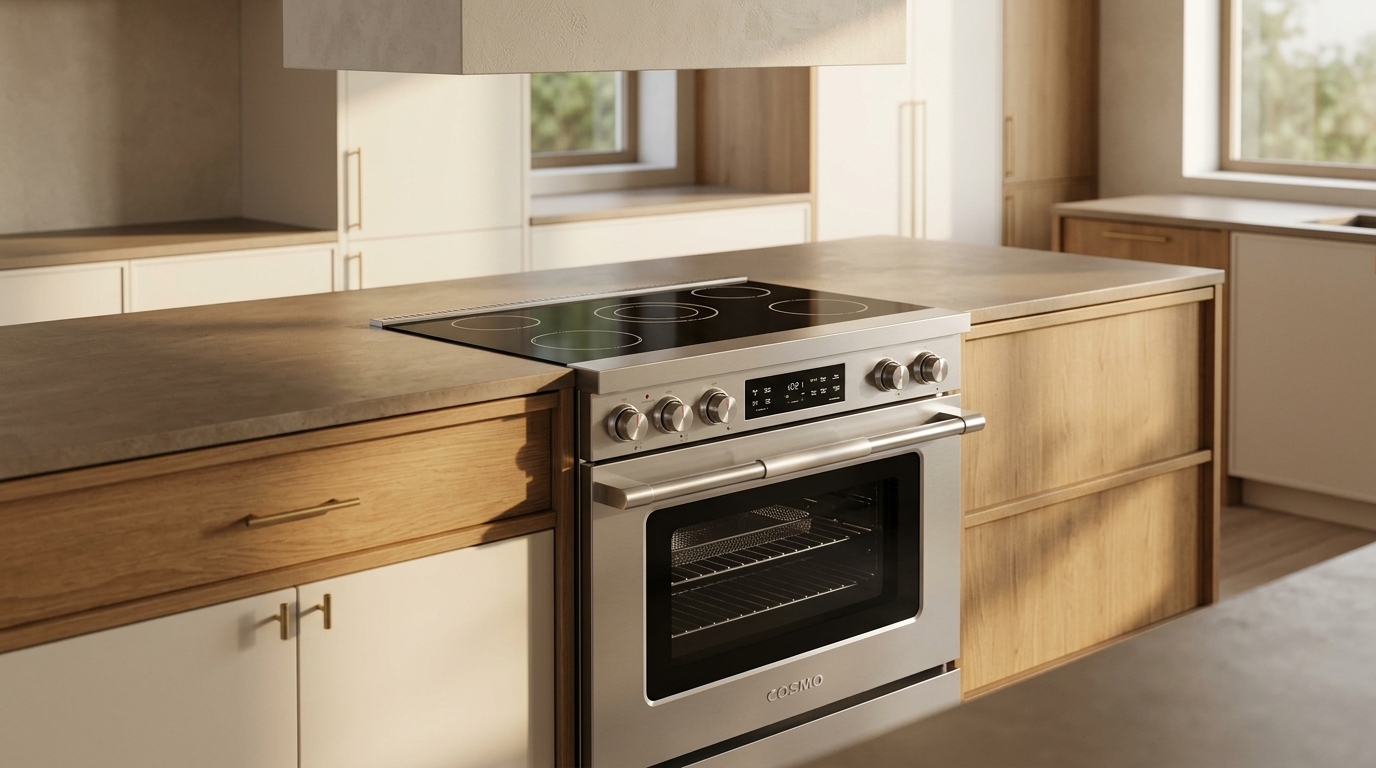
For most of the last decade, minimalist kitchens have meant the same handful of ingredients: white lacquer cabinetry, polished chrome hardware, glossy quartz in a cool gray, and enough negative space to make a room feel more like a showroom than a place anyone actually cooks. That look photographed well, and it dominated renovation inspiration boards for years. Heading into 2026, designers are describing a clear evolution of it rather than a rejection of it. The clean lines are staying. The clinical, cold feeling that used to come attached to them is not. Design coverage this year keeps landing on the same term for what has replaced it: warm minimalism, a kitchen that keeps the restraint and simplicity of a minimalist layout but swaps in materials and tones that feel inviting rather than sterile. Matte plaster walls instead of glossy tile. Honed limestone or warm-veined marble instead of stark white quartz. Brushed brass or bronze hardware instead of polished chrome. The underlying discipline of minimalism, few visible objects, clean sightlines, nothing on the counter that does not need to be there, has not gone anywhere. What has changed is the palette doing the work. Why the Cold Version of Minimalism Stopped Working It is worth being specific about what homeowners are actually pushing back on, because the complaint is not about simplicity itself. A well-edited kitchen with few visible objects and clear counters is still exactly what most households say they want. The issue is with a specific version of that idea, one built almost entirely around cool tones and hard, reflective surfaces, that ended up reading as impersonal rather than calm. A kitchen finished in white gloss, chrome, and gray stone can look striking in a photograph and still feel like the least comfortable room in the house to actually spend time in, especially once the novelty of the look wears off after a few years of daily use. That disconnect is the specific thing warm minimalism is correcting. Designers writing about the trend in 2026 describe it less as a stylistic pivot and more as a course correction, homeowners realizing that a kitchen can be simple without being cold, and that texture, warmth, and a bit of tactile interest are not the enemy of a clean, uncluttered room. A honed stone counter, a wood island, or a plaster hood surround does not clutter a minimalist kitchen any more than a white lacquer one did. It just changes how the room feels to stand in. The Materials Actually Driving the Shift A handful of specific choices show up again and again in the kitchens design publications are pointing to as this trend’s clearest examples. Matte and honed stone finishes are replacing high-polish quartz and granite, trading shine for a softer, more matte reflection that reads as calmer under both daylight and warm interior lighting. Warm wood tones, oak, walnut, and other natural grains, are showing up on islands, open shelving, and even full cabinet runs in kitchens that would have specified white lacquer a few years ago, a shift that lines up directly with the broader move toward wood-tone cabinetry documented across major design surveys this year. Plaster and lime-wash wall finishes, with their soft, slightly irregular texture, are replacing the flat, uniform tile backsplashes that defined the previous decade of minimalist kitchens. And hardware finishes have moved decisively toward brushed brass, warm bronze, and soft matte black, away from the polished chrome and nickel that used to be the default neutral. None of these choices add visual clutter in the way a maximalist kitchen would. A warm minimalist kitchen still has clear counters, hidden storage, and a restrained material palette, usually two or three finishes total rather than five or six. The difference is that every one of those finishes now leans warm rather than cool, and the room ends up feeling considerably more livable without giving up any of the discipline that made minimalism appealing in the first place. Where Appliances Fit Into a Warmer, Quieter Kitchen Appliances carry real weight in a kitchen built around this idea, because they are some of the largest, most visually dominant surfaces in the room. A cooktop covered in visible grates, burner caps, and control knobs breaks up a warm minimalist kitchen’s clean sightlines in the same way a cluttered countertop would, regardless of how warm the surrounding cabinetry and stone happen to be. This is part of why induction cooking has become such a natural fit for the trend. A flush ceramic glass surface with no exposed burners or grates reads as a single, uninterrupted plane rather than a cluster of hardware sitting on top of the counter, which is exactly the kind of visual quiet a warm minimalist kitchen is built around. The cooktop can sit next to a wood island or a plaster hood surround without introducing the busy, industrial look that a traditional grate-covered range often brings into an otherwise calm room. Cosmo’s COS-RIS365SS, a 36-inch induction range from the Stellar Collection, is built around exactly that kind of visual restraint. Its five-burner ceramic glass cooktop sits completely flush, with no grates, caps, or exposed hardware breaking up the surface, so it reads as a single clean plane rather than a collection of parts, a detail that matters considerably more in a warm minimalist kitchen than it did in the stark, hardware-forward kitchens minimalism used to mean. The induction burners themselves, a 2,500-watt element, two 1,600-watt elements, two 1,200-watt elements, and a 3,600-watt sync bridge for oversized cookware like griddles, heat cookware directly through electromagnetic energy, which means the cooktop itself stays cooler to the touch and cleans in a single wipe rather than requiring the grate removal and scrubbing a gas range demands. The 6.1 cubic foot convection oven underneath carries that same quiet functionality through a genuinely wide range of use, bake, convection bake, broil, air fry, delay start, and keep warm, all run through a digital display rather than a bank of

The Double Oven Debate Is Back, and Entertaining Season Is the Reason Why

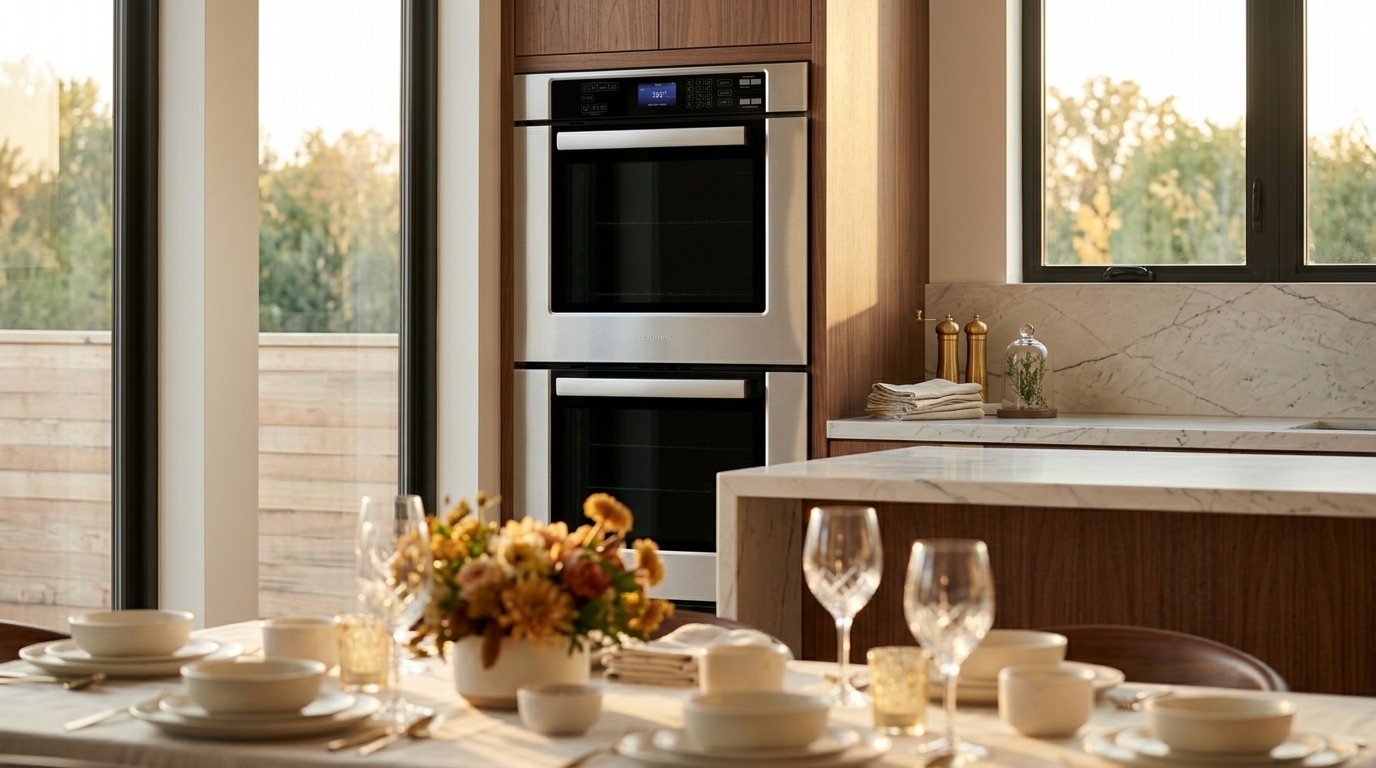
A Feature That Was Supposed to Be Fading For a few years now, the double oven has had an odd status in kitchen design conversations. It shows up on plenty of wish lists, and just as often gets talked out of the plan. Compact single ovens got better, air fryers and multicookers absorbed some of the workload a second oven used to handle, and a number of kitchen designers spent the last several renovation cycles steering households toward one very good oven instead of two adequate ones. Heading into the fall of 2026, that conversation is shifting again, and not in the direction most of that advice pointed. Coverage of 2026 kitchen appliance trends keeps circling back to the same households: the ones hosting more, cooking for more people at once, and running into the same problem every time a holiday or a dinner party requires a main dish and two sides to hit the table warm at the same moment. For those households, a second oven has stopped being a luxury line item and started being the thing that actually solves a real, recurring scheduling problem in the kitchen. September, specifically, is when that problem starts showing up again. It is the month batch baking ramps up, the month a household starts test-running the dishes it plans to serve at Thanksgiving, and the month “how do I cook a roast and two side dishes at completely different temperatures without a four-hour relay” stops being hypothetical. Why the Argument Against a Second Oven Was Never About Capability The case against a double oven was rarely that one oven could not cook well. It was almost always about space, cost, and the sense that a second full-size oven sat empty most of the year, a large, expensive appliance justified by maybe a dozen days annually. That argument holds up fine for a household that cooks for two or three people on a normal Tuesday. It holds up much less well the moment a household counts how many days a year it is actually hosting, prepping ahead for a gathering, or trying to get a casserole and a tray of rolls out of the oven at the same time without either one finishing wrong. The households renewing interest in double ovens in 2026 tend to describe the same specific frustration: a single oven forces a choice between cooking everything at one temperature, which means something is always slightly overdone or underdone, or cooking in relays, which means the first dish is cold by the time the second one is ready. Neither option is a hardship on an ordinary weeknight. Both become a real problem the moment a household is feeding eight people instead of three, which is exactly the situation fall and winter entertaining season creates for a few months every year, even in households that otherwise cook fairly simply the rest of the time. The Compact-Appliance Counterargument, and Where It Actually Falls Short To be fair to the other side of this debate, there is a legitimate alternative gaining ground alongside it: rather than one large second oven, build a bank of smaller specialized appliances, a compact steam oven, a warming drawer, a speed oven, each handling a narrower job. That approach genuinely works for some households, particularly ones with the cabinetry budget and wall space to stack three or four separate units. It is also, in practice, a more expensive and more complicated build than it sounds, and it solves a different problem than a double oven does. A warming drawer keeps food hot. A speed oven reheats quickly. Neither one gives a household two full ovens capable of running two different recipes, at two different temperatures, for two different lengths of time, simultaneously, which is the specific capability a household actually needs the week it is hosting a real dinner. For a household weighing the two paths honestly, the deciding question is not which setup sounds more advanced. It is how often the household is cooking multiple substantial dishes at once, and for how many people. A household that hosts occasionally but seriously, holidays, birthdays, a rotating dinner-party habit, tends to get more consistent use out of one genuine second oven than out of several narrower single-purpose units that each do one smaller job well. Where the COS-30EDWC Fits Cosmo’s COS-30EDWC, a 30-inch double electric wall oven, is built around exactly the scenario driving renewed interest in this feature: two full 5-cubic-foot cavities, upper and lower, each capable of running its own temperature and cooking mode independently. That is enough room in each oven to actually matter, a full sheet pan of sides in one cavity while a roast or a turkey runs in the other, rather than a second cavity so small it only handles reheating. Both ovens run Turbo True European Convection, a fan-assisted circular heating element that distributes heat evenly across the cavity and, according to the manufacturer’s testing, cooks roughly 25 degrees cooler and about 10 percent faster than a conventional oven, a meaningful difference on a day when timing several dishes against each other is the entire challenge. Seven cooking functions per oven, bake, broil, warm, proof, convection bake, convection broil, and convection roast, give a household the range to run genuinely different recipes in each cavity rather than two identical settings running in parallel. A built-in temperature probe in the upper oven takes the guesswork out of a roast or a turkey specifically, the dish most likely to be the one a household cannot afford to get wrong in front of guests. The details underneath that core capability are built for a kitchen that is actually in use during a gathering, not just showing well before one. A brilliant blue porcelain interior with six rack positions per oven and large windows with interior lighting means a household can check two dishes at once without opening either door and losing heat. Digital soft-touch controls, a self-cleaning function with a high-temperature cycle, delay start,

National Grilled Chicken Day Isn’t Just for the Backyard, and This Year’s Kitchen Should Prove It

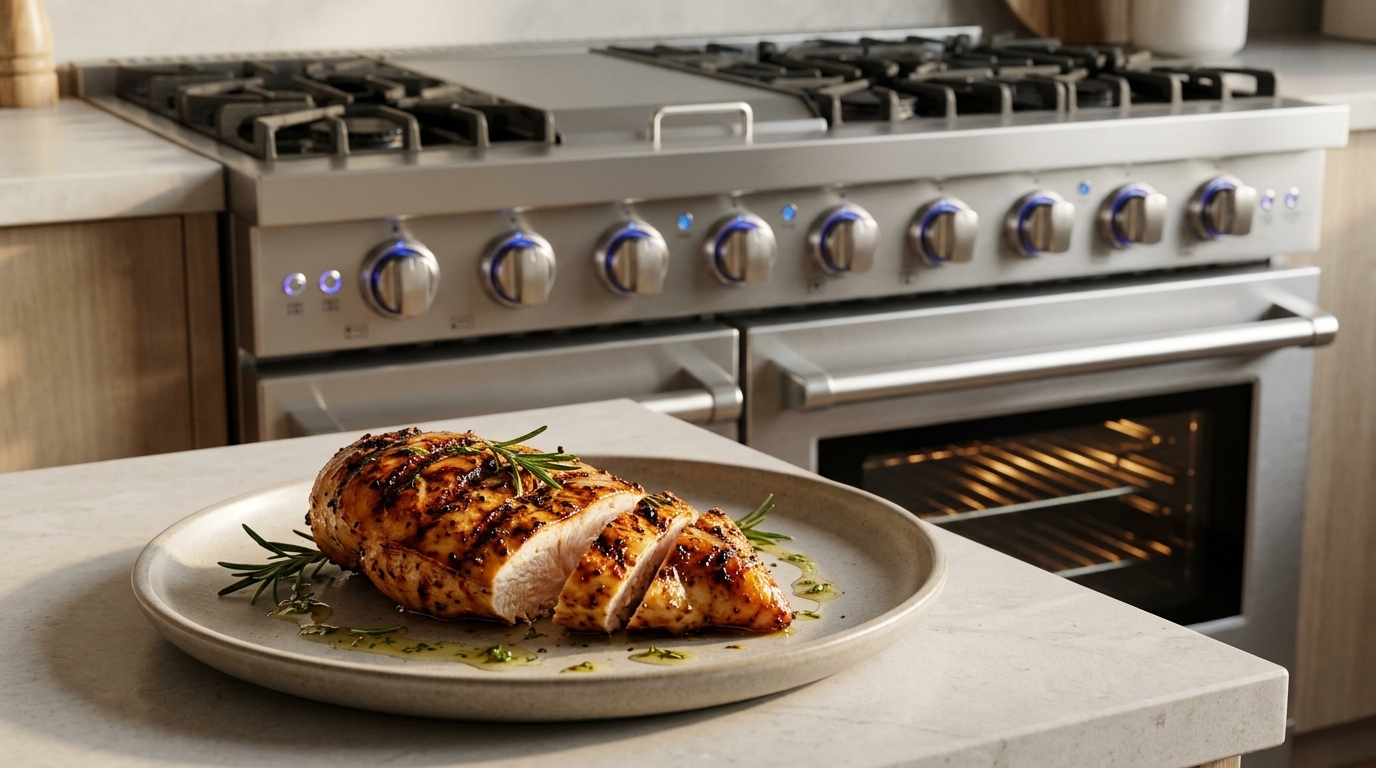
A Holiday Built by the Restaurant That Made Grilled Chicken Famous Most food holidays arrive with vague origins, a marketing calendar entry nobody can quite trace back to a source. National Grilled Chicken Day, observed on September 9th, is a rare exception. El Pollo Loco, the fast-casual chain that built its entire menu around citrus-marinated, fire-grilled chicken, formally declared the date in recent years as a way of pushing back against a grilling culture that treats beef as the default and chicken as the compromise. The chain’s argument, echoed across the trade coverage of the announcement, is that grilled chicken has spent decades as the healthier alternative on the menu rather than the dish anyone actually got excited about, and that the technique deserves better than an afterthought squeezed onto the grate next to the burgers. It is a fair complaint, and one that home cooks quietly agree with more than restaurant menus suggest. Chicken has been the best-selling meat in America for years running, and grilled chicken breast in particular shows up in more weeknight dinners than almost anything else a household cooks. Yet it remains one of the easiest things to get wrong on a home grill or griddle, prone to drying out, sticking, or finishing unevenly in a way a burger rarely does. A holiday built specifically around grilled chicken is a useful excuse to actually get it right, rather than defaulting to the same rushed, overcooked version most households have made a hundred times without thinking much about it. Search “how to grill chicken” and the results converge on a surprisingly short list of rules, repeated across nearly every serious food publication with a testing kitchen behind it. The Kitchen’s grilling guides emphasize pounding chicken breasts to an even thickness before they ever touch heat, since an uneven cut cooks unevenly no matter how good the grill is, and they push a brine or a simple marinade rest of at least thirty minutes as the difference between chicken that stays juicy and chicken that seizes up the moment it hits direct heat. Serious Eats, whose testing-driven approach to grilling has become something of a reference point for home cooks trying to move past guesswork, is emphatic on a single number: chicken breast pulled off the heat at 160 to 165 degrees Fahrenheit and rested for a few minutes carries over to a safe, fully cooked finish without the dry, chalky texture that comes from cooking straight to temperature over direct flame. Both publications land on the same underlying point from different angles, that grilled chicken rewards patience and a thermometer more than it rewards a hot grate and good intentions. The other detail that shows up again and again in that coverage is about contact, not just heat. Chicken skin and flesh stick to a cool or unseasoned cooking surface in a way that beef, with its higher fat content, mostly does not, and food writers covering both outdoor grills and indoor griddles consistently point to a properly preheated, well-oiled surface as the real fix, more than any marinade or seasoning choice. Get the surface hot enough and prepped correctly, and a chicken breast releases cleanly with real grill marks. Get it wrong, and half the crust stays behind on the grate while the chicken tears apart on the way to the plate. The Chicken That Never Makes It to the Grill Here is where National Grilled Chicken Day runs into a problem the holiday’s own name does not account for. A meaningful share of the households who would happily grill chicken on September 9th are not going to, because an outdoor grill is not always part of the picture. Apartment dwellers without balcony access, renters under an HOA that restricts open flame, households dealing with a rainy or already-cooling September evening, or simply anyone who does not want to fire up a full propane grill for a Tuesday dinner, all default to the stovetop instead, and a stovetop pan rarely produces anything close to the char and texture that made grilled chicken worth declaring a holiday over in the first place. That gap is exactly what a built-in griddle on a home range is designed to close. Cosmo’s COS-EPGR486G, a 48-inch professional-style double gas range, includes a dedicated 15,000 BTU griddle built directly into its six-burner cooktop, a real, high-heat cooking surface sitting right alongside the range’s main burners rather than a separate countertop appliance that has to be dragged out, plugged in, and found room for. That distinction matters more than it sounds like it should. A griddle a household actually has installed and ready to go gets used on a random Wednesday night. A griddle stored in a cabinet under the stairs gets reserved for weekend pancakes, if it gets used at all. The griddle’s 15,000 BTU output gives it the kind of sustained, even heat that a nonstick pan on a standard burner struggles to match, hot enough to build real color and a proper crust on chicken breasts and thighs without babysitting hot spots the way an undersized pan does. Because it sits flush with the cooktop rather than requiring its own footprint, a household can run the griddle for chicken breasts on one side while a pot of rice or a pan of vegetables works on the adjacent burners, the same kind of simultaneous cooking a backyard grill setup normally allows but a single skillet on a single burner does not. Two Ovens Solve the Rest of the Meal Grilled chicken rarely arrives at the table alone, and this is where the COS-EPGR486G’s second oven earns its place in the conversation rather than sitting there as a spec sheet number. The range’s primary oven, at 4.8 cubic feet with a convection fan and four cooking functions, handles a tray of roasted vegetables or a pan of cornbread at the same time the griddle is working through a batch of chicken breasts, while the 2.2 cubic foot secondary oven underneath

Burgers, Hot Dogs, and the Grill That Keeps a Labor Day Cookout Moving

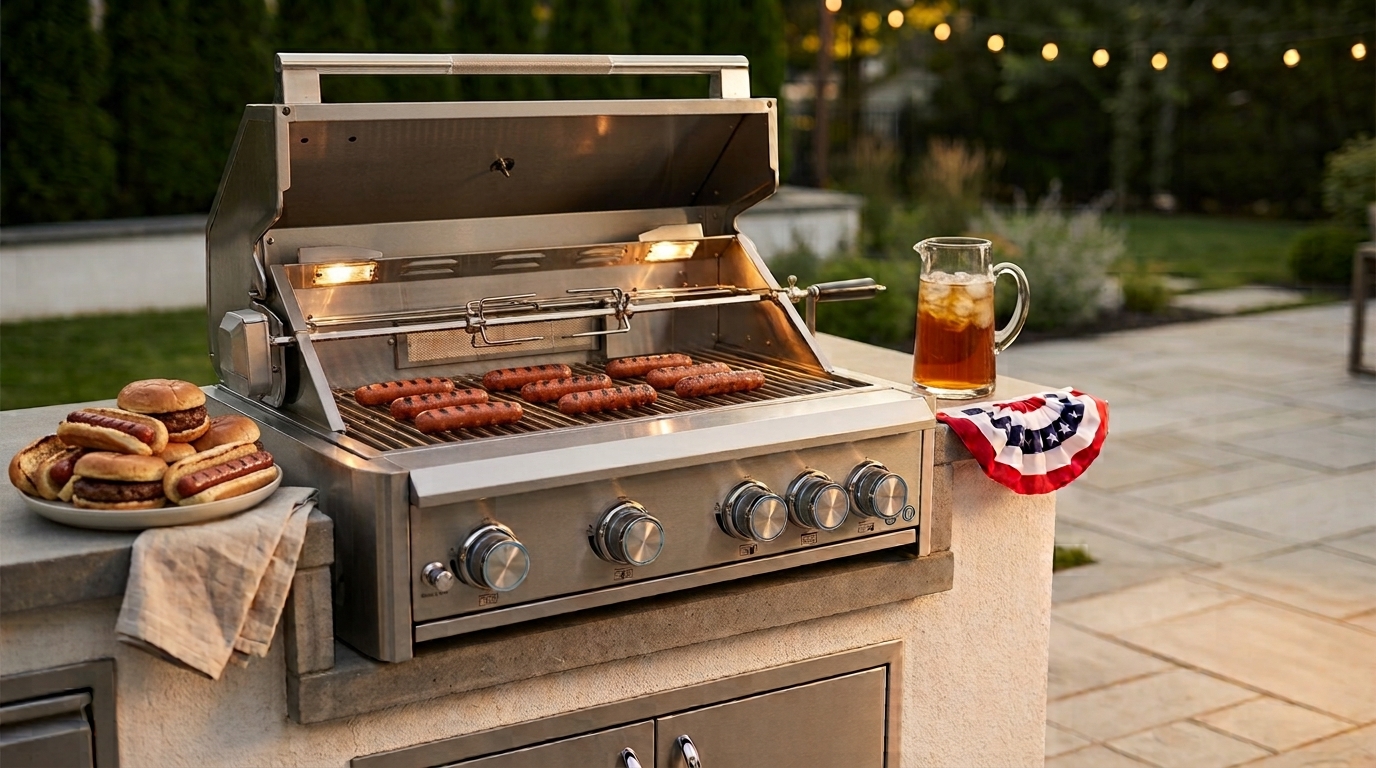
The Last Big Cookout of the Season Of all the holidays built around outdoor food, Labor Day carries a specific kind of finality. Memorial Day is the first real invitation to fire up the grill after a long winter, but Labor Day weekend lands at the close of summer, the unofficial last call before school schedules, cooler evenings, and shorter days start reshaping how families eat. That timing is why so many households treat it as the biggest backyard gathering of the year. Extended family shows up. Neighbors wander over. A guest list that would never fit around a Tuesday dinner table fits comfortably in a backyard with a grill going and a cooler full of drinks. Surveys on American grilling habits consistently rank Labor Day among the top three grilling holidays of the year, trailing only the Fourth of July and Memorial Day, and the menu on those grills is remarkably consistent. Burgers and hot dogs remain the two most commonly grilled foods in the country, and on a weekend built around feeding a crowd quickly, they rarely compete for space on the grate. Nobody needs a plate and a fork to eat a hot dog standing up in a backyard, and one tray of patties can suit a picky ten-year-old and a particular adult alike. What looks like the simplest possible menu, though, puts a specific kind of pressure on a grill. What a Burger and Hot Dog Crowd Actually Asks of a Grill The math behind a Labor Day cookout is different from an ordinary weeknight, since by early September most hosts have already run their grill hard all summer and know where its limits sit. A crowd of twenty-five people is not twenty-five burgers cooked one after another. It is a first wave of hot dogs for the kids who arrived hungry, two dozen patties that need to come off close enough together that the first are not cold by the time the last are done, buns that need toasting, and a tray of vegetables for anyone eating lighter. All of it wants the grate at the same time. That is the real bottleneck, and it is a space problem before it is a heat problem. A grill that fits eight patties forces a host into shifts, and cooking in shifts is how a cookout turns into an afternoon of handing out food one plate at a time instead of eating with the people who showed up. This is where Cosmo’s COS-BGGN325K, a 32-inch built-in propane gas grill, is built around the shape of a holiday crowd rather than a single weeknight dinner. Its 480 square inches of primary cooking surface, backed by a 158.8 square inch warming rack, gives a host enough room to run a full batch of burgers and a long row of hot dogs at the same time without playing a constant game of musical grates. Four Burners, One Job Each A grill built for a crowd this size needs more than raw surface area, though. It needs burners that can do different jobs at once, the same principle that makes a good indoor range work for a holiday spread. The COS-BGGN325K’s main cooking area runs on three conventional 12,000 BTU burners plus a 13,500 BTU infrared burner, giving a host real flexibility across the grate rather than one uniform heat zone. That matters more for burgers and hot dogs than it might seem, because the two want opposite things. A burger wants hard, direct heat for a short time to build a crust before the inside overcooks. A hot dog is already cooked and only needs to heat through and take on color, which means a lower, steadier zone where it can turn without splitting or charring on one side. Run both over the same flame and one suffers. Combined, the four main burners put out roughly 49,500 BTU, enough to keep a Labor Day-sized spread moving without any one item holding up the rest. The Sear That Separates a Good Burger From a Gray One The difference between a memorable backyard burger and a forgettable one usually comes down to a few seconds of heat. A patty that hits a grate that is not hot enough releases moisture, steams in its own juices, and comes off gray and flat-tasting no matter how good the beef was going in. A patty that hits a genuinely hot surface builds a browned crust quickly, which is where most of the flavor in a grilled burger comes from, and finishes before the interior has time to dry out. The COS-BGGN325K’s 13,500 BTU infrared burner is built for exactly that job, searing quickly and locking in juices the way a dedicated steakhouse burner does. On a holiday weekend that means working a hot searing zone at one end of the grate while the conventional burners a few inches away hold hot dogs, buns, and vegetables at a gentler temperature, then moving finished burgers up to the warming rack. A rear infrared burner and motorized rotisserie kit are included as well for hosts who want a slow-turning centerpiece, but for the classic Labor Day menu the useful feature is having that searing zone ready whenever the next batch goes on. Hot Dogs Are a Volume Problem More Than a Cooking Problem Hot dogs rarely get credit for how much of a cookout they carry. They keep kids fed while the burgers cook, they can be eaten one-handed, and they are the fallback for anyone who does not want a full plate. The constraint is almost never technique. It is how many fit on the grate at once and how long they can stay there without getting away from the host. A 480 square inch primary surface leaves room for a long row along one heat zone while burgers work another, and the 158.8 square inch warming rack above holds what is finished at temperature, along with buns that need toasting without burning over direct flame.

The BLT Deserves More Respect Than It Gets

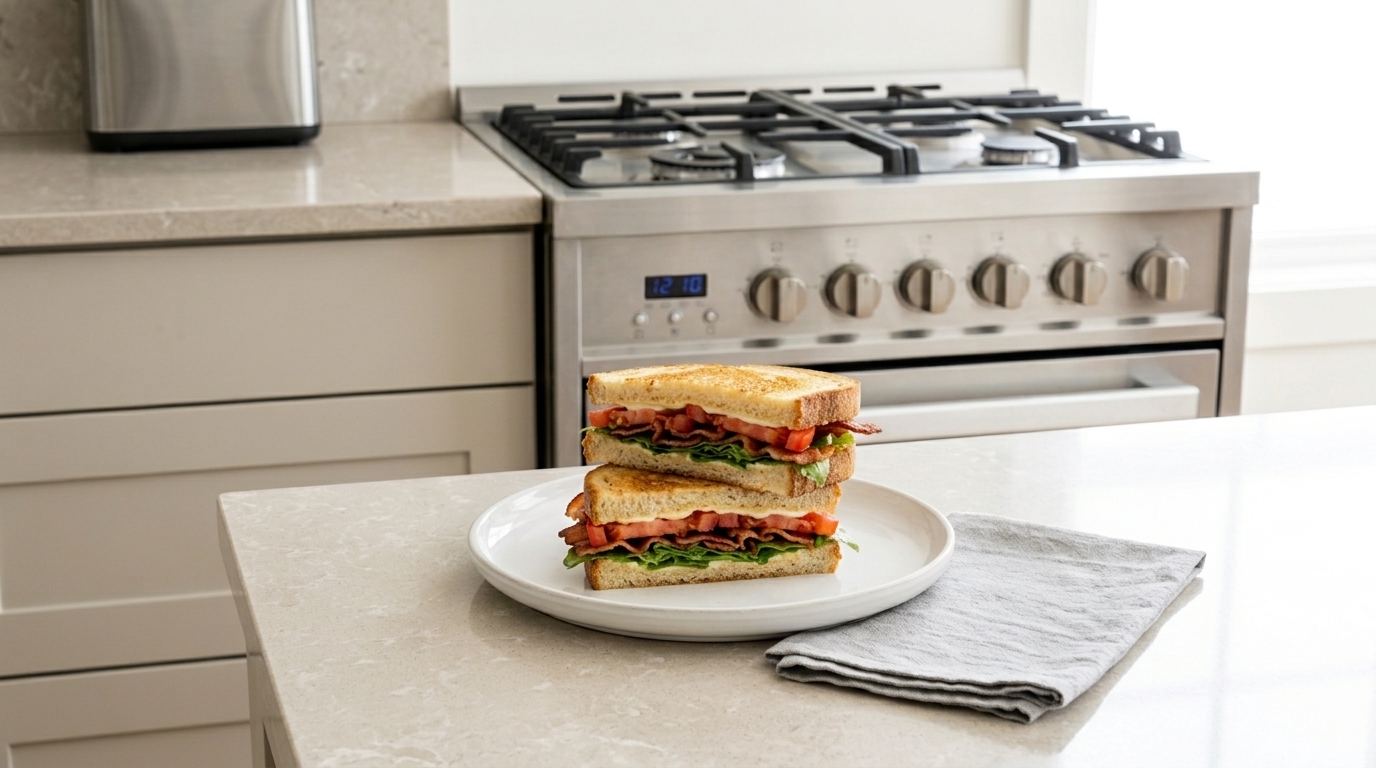
Of all the sandwiches that have earned a permanent place on American menus, the BLT might be the least fussed-over. It rarely gets the reverent treatment a good burger or a well-built panini receives. There is no national day built into most people’s calendars for it, no cult following arguing about the “correct” build the way people argue about pizza toppings or barbecue regions. And yet it endures, quietly, on diner menus, lunch counters, and home kitchens across the country, largely unchanged for the better part of a century. That staying power is worth paying attention to, because a sandwich this simple only survives that long if it is actually, genuinely good, and because getting a BLT right turns out to depend on a surprising amount of technique for something built from three ingredients and two slices of bread. A Sandwich Older Than It Looks The BLT’s ingredients trace back further than the sandwich itself. Bacon and tomato pairings show up in American cookbooks as far back as the late 1800s, and club sandwiches built around bacon, lettuce, and tomato were common by the early twentieth century, often served open-faced or stacked three layers deep on toast points at hotel restaurants and tea rooms. The BLT in its now-familiar closed, two-slice form became a fixture of American diner culture as sliced bread and the modern toaster made quick, consistent toasting a home and restaurant staple rather than a specialty. By the mid-twentieth century, the BLT had settled into the shape most people recognize today: crisp bacon, cool lettuce, ripe tomato, and mayonnaise, stacked between two pieces of toasted bread, simple enough to make in minutes and satisfying enough to earn a permanent spot on nearly every diner and deli menu in the country. Part of what has kept the BLT so durable is exactly that simplicity. It does not require a specialty ingredient, an unusual technique, or advance planning. It scales from a single lunch to a table of six with no real change in method. And it happens to hit a combination that is hard to replicate elsewhere: salty and smoky against cool and fresh, crisp against soft, all held together by a layer of mayonnaise that ties the whole thing together rather than sitting on top of it. It is a sandwich built entirely around contrast, and contrast is exactly what makes it satisfying. Why a “Simple” Sandwich Is Easy to Get Wrong The trouble with a three-ingredient sandwich is that there is nowhere for a mistake to hide. A slightly limp piece of bacon, a tomato that was sliced too far ahead of time and has gone watery, or bread that never developed real structure under the toaster all show up immediately, because there is nothing else in the sandwich to distract from them. Most disappointing BLTs fail for one of the same handful of reasons: bacon that is cooked unevenly, chewy in some spots and raw-soft in others, rather than uniformly crisp; bread that is toasted just enough to feel warm but not enough to actually hold up to the moisture from the tomato and mayonnaise; or a tomato that was salted too early and released its liquid straight into the bread before the sandwich was ever assembled. Getting a BLT right is really about controlling heat with more precision than the sandwich’s reputation suggests. Bacon wants a steady, even surface over enough sustained heat to render its fat and crisp without scorching one end before the other side has caught up, which is much harder to manage on a burner that runs hot in the center and cool at the edges, or one that cannot hold a steady temperature once a full pan of bacon strips is added and starts pulling heat away. Bread wants real, consistent heat as well, whether that comes from a broiler or a hot oven, enough to dry out and crisp the surface fully rather than leaving a soft center that wilts the moment tomato juice touches it. Where the Range Actually Matters This is where the cooktop and oven underneath a BLT do more work than most people give them credit for. Cosmo’s COS-244AGC, a 24-inch compact gas range built for exactly this kind of everyday cooking, is a useful example of what that means in practice. Its 17,400 BTU triple ring burner puts out enough sustained, evenly distributed heat to render a full pan of bacon strips without the center scorching while the edges lag behind, which is the single biggest factor in getting bacon that is crisp edge to edge rather than crisp in patches. The two 6,900 BTU semi-rapid burners give a second pan enough power to warm bread in butter or toast it directly in a skillet, while the 5,000 BTU auxiliary burner is sized right for something gentler running alongside, warming mayonnaise-based sauce or keeping a component at a low simmer without needing to babysit it. Heavy-duty cast iron grates underneath hold that heat steady once a full pan is on the burner, rather than letting the flame’s output sag the moment real weight and cold ingredients hit the pan. The oven does its share of the work too. A dedicated 5,800 BTU broil burner gives bread the kind of direct, high heat needed to dry and crisp the surface fully in a couple of minutes rather than leaving it merely warm, and the COS-244AGC’s rapid convection function circulates that heat evenly across two rack positions, which matters when toasting several slices of bread at once for a full table rather than one sandwich at a time. A 2.7 cubic foot oven cavity is compact enough for a 24-inch range but still gives enough room to lay bread flat rather than stacking it, and an interior oven light makes it easy to catch the exact moment toast goes from golden to overdone without opening the door and losing heat. For anyone building several BLTs back to back for a family lunch or a

Kickoff-Ready: Getting Your Air Fryer Set for College Football Season

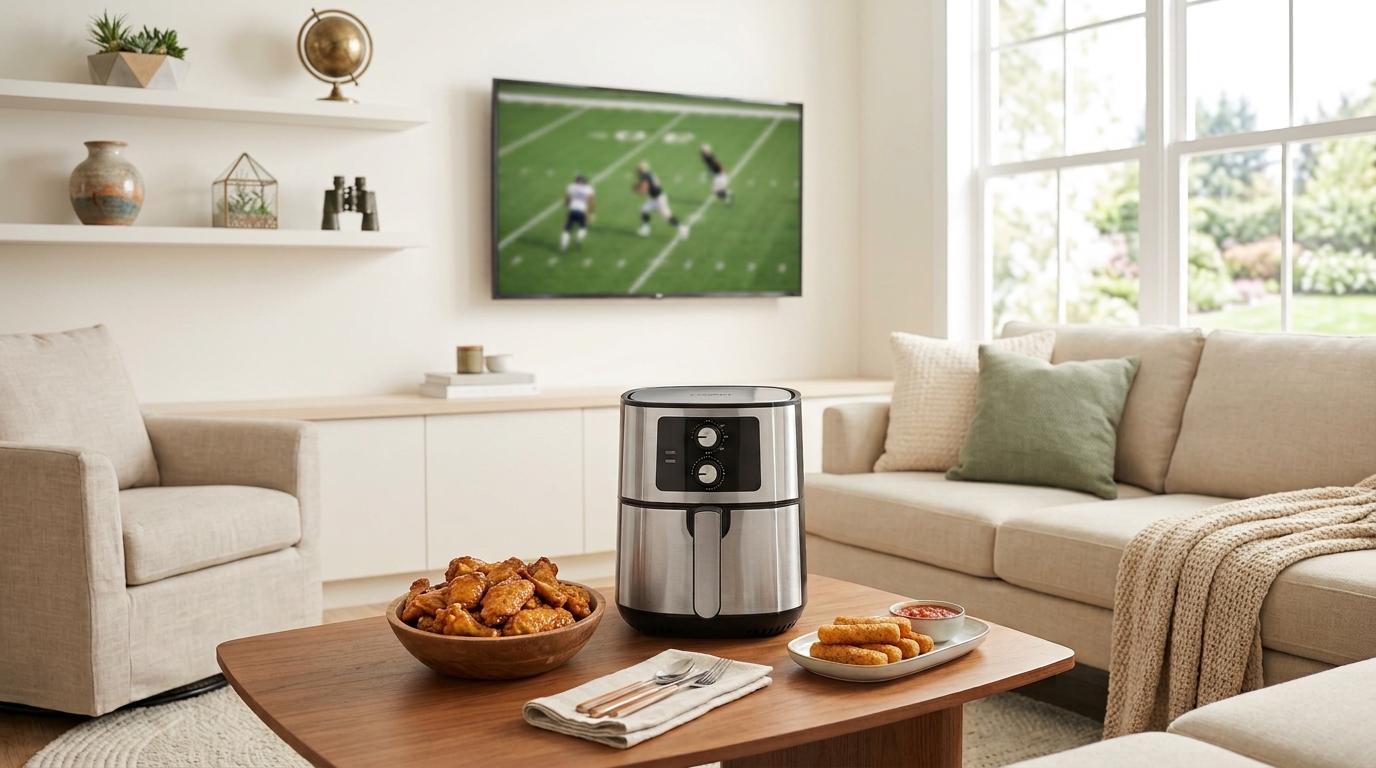
A Saturday Built Around Snacks, Not Just a Score College football’s Week 0 kicks off this Saturday, August 29, 2026, and for a growing number of American households, the return of the season is as much a cue to plan the snack table as it is to check the schedule. The days of a single hot dish and a bag of chips have given way to something closer to a running buffet: wings in one bowl, mozzarella sticks in another, a tray of pretzel bites making the rounds before halftime even arrives. That shift did not happen by accident. It happened because the kitchen finally caught up to what game day actually demands, and the appliance most responsible for that catch-up has been sitting on counters for years without most hosts realizing just how much weight it can carry on a Saturday afternoon. The Scale of a Single College Football Saturday It is easy to underestimate just how much a single college football Saturday actually feeds. Through the middle of the 2025 season, the average SEC game alone drew more than 80,000 fans into one stadium, with the Big Ten close behind at nearly 65,000 per game and the Big 12 and ACC both averaging in the high 40,000s. Those figures only count the fans who made it through the gates. For every person tailgating in a parking lot or filling a stadium seat, several more are watching from a couch, at a friend’s place, or hosting a small group at home, particularly as more marquee matchups have shifted into national primetime windows that make watching from home just as much a part of the ritual as being there in person. That scale repeats nearly every Saturday from late August through the conference championships in early December, not just once a season. Fewer of those Saturdays are spent exclusively at the stadium or the parking lot anymore, either. A meaningful share of college football viewing now happens at home, in front of a television with a group of friends, which shifts the burden of feeding a crowd from a tailgate grill to a home kitchen that was not necessarily built to produce bar-quality wings and fried sides for six or eight people without turning into a full-time job for whoever is hosting. Why the Air Fryer Quietly Became the Default Game-Day Appliance Circana’s Kitchen Audit research offers a useful data point on how deeply the air fryer has embedded itself in everyday cooking: among households that own one, roughly two-thirds report using it within just the past four weeks. That is not the behavior of a novelty appliance bought during a pandemic-era kitchen upgrade and left in a cabinet. That is a workhorse, in active weekly rotation, and game day is one of the clearest reasons why. The appeal for a Saturday spent hosting is fairly direct. A deep fryer demands a pot of oil that takes real time to heat, cools slowly, and leaves a mess that nobody wants to deal with between kickoff and the first commercial break. A conventional oven gets the job done but ties up the one appliance most hosts also need for a dip, a casserole, or anything else in the spread, and it is slow to recover heat between batches. An air fryer solves both problems at once: it crisps frozen and fresh appetizers with little to no oil, it frees the oven for everything else on the menu, and it recovers between batches fast enough that a host can keep a rotation of wings, mozzarella sticks, and pretzel bites moving through a single basket without falling behind the game. What a Game-Day Air Fryer Actually Needs to Handle Not every air fryer is built for the specific demands of a hosting afternoon, and the difference shows up fast once real party volume hits the basket. A unit needs enough capacity to cook a genuine serving in a single batch rather than forcing a host to run four or five rounds through a basket built for one person’s lunch. It needs a wide, dependable temperature range, since wings, frozen mozzarella sticks, and fresh-cut vegetables all want different heat and timing to come out right. And it needs to be simple enough to operate one-handed while also keeping half an eye on the game, because nobody wants to be squinting at a touchscreen menu during a third-down conversion. The COS-58AFAKSS, Set Up for a Full Saturday of Snacks The Cosmo COS-58AFAKSS, a 5.8-quart electric hot air fryer rated at 1400 watts, was built around exactly this kind of everyday, high-volume use. Its basket holds enough food to cover a genuine serving of wings or a full tray of mozzarella sticks in one pass, rather than forcing a host to split a single appetizer across several rounds while guests wait. Separate temperature and timer knobs cover a range from 180°F to 400°F with a 30-minute timer, which is enough spread to move confidently from gently reheating a dip to driving a hard, crackling crust into a fresh batch of wings, and there is no meaningful preheat delay standing between one course and the next. A top-mounted grill element browns from above while the basket crisps from below, so breaded and battered appetizers, the pretzel bites, the stuffed jalapeños, the frozen sampler platter someone always brings, finish evenly without needing to be flipped halfway through a series. An auto shut-off ends the cooking cycle the moment the timer runs out, which matters more on a day full of distractions than it does on an ordinary weeknight, since nobody hosting a watch party wants to be the one who burned a batch of wings during a replay review. The included basket and grill pan are both non-stick and dishwasher-safe, which counts for a lot once the game ends and the sauce, the cheese, and the crumbs left behind need to disappear quickly rather than sit soaking in the sink overnight. The unit is also ETL listed